
Contents
Introduction & Spiritual Essence of Kala Bhairavar
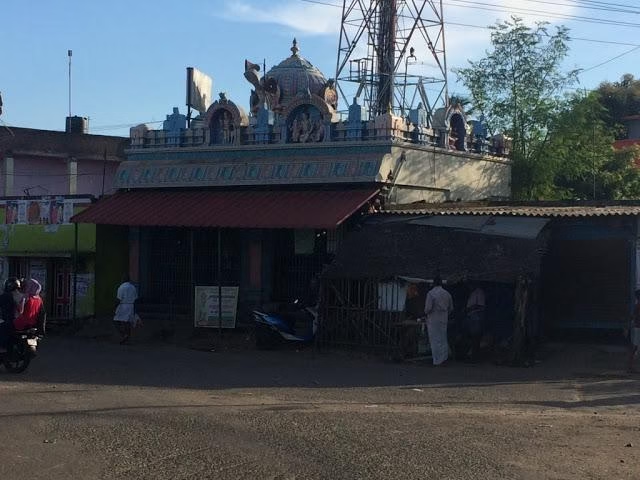
Nestled in the spiritual landscape of Thiruneermalai, Kanchipuram District, the Kala Bhairavar Temple stands as a profound beacon of protection and cosmic time. Dedicated to Lord Kala Bhairavar—a fierce and guardian aspect of Lord Shiva—this temple draws devotees seeking justice, courage, and the dissolution of karma. Unlike the serene forms of Shiva often encountered, Bhairavar represents the ultimatum of time (Kala) and the dissolution of ego.
For the devotee, this temple is not merely a visit but a surrender. Phalaśruti (the spiritual benefits) of worshipping here includes the cleansing of ancestral karma, protection from malefic planetary influences, and the granting of boldness to overcome life’s adversities. The deity here is worshipped as Dandayudhapani Bhairavar, holding the staff of justice, making it a vital site for those entangled in legal disputes or seeking clarity in chaotic times.
Historical Origins & Scriptural Legend
The Vedic Roots of Kala Bhairavar
While specific stone inscriptions regarding the exact date of construction remain elusive in public archives, the temple architecture and the oral traditions (Stthala Purana) trace back to the late Chola period, with significant renovations likely occurring during the Vijayanagara era. The temple is situated in Thiruneermalai, a locale already graced by Vishnu (Neervannar) and Lakshmi (Sengamalavalli Thayar), making it a unique convergence of Shiva and Vishnu energies.
According to temple records and tradition, the presiding deity manifests as a self-existent (Swayambhu) idol. The legend narrates a time when sages performing penance here were tormented by demons. Lord Shiva, in response to their pleas, manifested as Kala Bhairavar—a terrifying, black-complexioned form with fangs, encircled by a garland of skulls, and accompanied by his vehicle, the dog. He vanquished the darkness of ignorance and established the rule of cosmic law.
Scripturally, the Bhairava Maha Purana highlights the eight Bhairavas guarding the cardinal directions, and this temple is considered a powerful southern shrine (though Bhairavar typically guards the cremation grounds, here he blesses the devotees in a sanctified Mandapam).
Architectural Marvels
Dravidian Style and Vastu Elements
The Kala Bhairavar Temple exemplifies the classical Dravidian architectural style. The structure is compact yet spiritually imposing, designed to direct the devotee’s focus toward the central sanctum (Garbhagriha). The Shikhara (tower) above the sanctum, while not towering like the Rajagopuram of massive temples, bears the intricate carvings typical of the Vijayanagara period.
The Mandapa (hall) features stone pillars adorned with mythological sculptures depicting the stories of Shiva and the epics. The Vastu Shastra of the temple aligns with the concept of the Cardinal Directions, with the shrine oriented to allow sunlight to illuminate the feet of the deity during specific equinoxes.
The idol itself is approximately 6 feet tall, facing south. The deity holds the Danda (stick), Kapala (skull), and performs the Varada (boon-giving) and Abhaya (protection) mudras. The distinct feature is the presence of a dog (vehicle) carved beside him, a symbol of loyalty and vigilance.
Darshan & Ritual Logistics
Devotees visiting the Kala Bhairavar Temple can participate in various Sevas (ritual services). It is advisable to check the temple’s local administration or official website for real-time updates on special Abhishekams.
Daily Temple Timings
While timings are subject to change during festivals, the general schedule is as follows:
| Session | Timings |
|---|---|
| Morning Darshan | 06:00 AM – 12:00 PM |
| Afternoon Break | 12:00 PM – 04:00 PM |
| Evening Darshan | 04:00 PM – 08:00 PM |
Key Sevas and Online Booking
The following rituals are commonly performed:
- Abhishekam: Ritual bathing of the deity with water, milk, and honey.
- Archana: Recitation of the 108 names of Bhairavar.
- Deepa/Naivedyam: Offering of lamps and food.
Booking Process: For the convenience of devotees, many Tamil Nadu temples are moving towards online booking via the HR&CE (Hindu Religious and Charitable Endowments) Department portal. However, for smaller temples like Thiruneermalai, it is recommended to contact the temple trust directly via phone or book at the counter upon arrival.
2026 Festival Calendar
Assuming the current year is 2026, devotees should mark these dates:
- Maha Shivaratri: February 26, 2026 (The most significant celebration; expect special night-long prayers).
- Pradosham: Bi-monthly 13th lunar days (Check monthly Tamil calendar).
- Navaratri: October 2026 (While primarily for the Goddess, evening Aarti is conducted).
- Arudra Darshanam: December 2026 (Celebrating the cosmic dance of Shiva).
Practical Visitor Guidance
Visiting Kala Bhairavar requires a respectful approach due to the intense spiritual nature of the deity.
Etiquette and Rules
- Dress Code: Traditional attire is mandatory. Men should wear Dhoti or trousers with a shirt; women should wear Saree, Salwar Kameez, or full-length skirts. Avoid shorts or sleeveless tops.
- Photography: Generally prohibited inside the sanctum sanctorum. Flash photography is banned to preserve the ancient murals.
- Mobile Lockers: There are limited facilities for electronic storage. It is best to travel light.
- Crowd Management: The temple is relatively less crowded compared to major Chennai temples, but Friday evenings see a spike in visitors.
Seasonal Advice
- Summer (March–June): Thiruneermalai can be hot. Carry a water bottle and an umbrella. Early morning visits (before 9 AM) are ideal.
- Monsoon (October–December): The weather is pleasant, but be cautious of slippery paths in the outer precincts.
Pilgrimage Connectivity
How to Reach Thiruneermalai
The Kala Bhairavar Temple is strategically located near Chennai, making it accessible for a day trip.
- By Air: The nearest airport is Chennai International Airport (MAA), located approximately 9 km away.
- By Rail: The closest railway station is Pallavaram Railway Station (5 km). Major terminals like Chennai Egmore (26 km) and Chennai Central (30 km) connect to Pallavaram via local trains.
- By Road: The temple is situated 100 meters from the Thiruneermalai Bus Stop. Specific bus routes include 55A, 55B, and 155A from Pallavaram Bus Depot. Drivers can take the GST Road (NH 48) and divert at Pallavaram towards Thiruneermalai.
Nearby Sacred Sites
Enhance your pilgrimage by visiting these nearby temples:
- Thiruneermalai Neervannar Temple: Just a short walk away, this Vishnu temple is the primary draw of the area, featuring the Kakasura Thandavam panel.
- Mangadu Kamakshi Amman Temple: Located about 10 km away, a powerful center for the Goddess.
- Pallavaram Cave Temple: An ancient rock-cut cave temple dedicated to Lord Murugan, 5 km from here.
Frequently Asked Questions (FAQs)
Is there a VIP darshan entry available?
As Kala Bhairavar Temple is a smaller shrine managed by the local trust, there is no formal VIP entry system like in mega-temples. However, Abhishekam ticket holders generally get priority access during ritual times.
What are the best hours to avoid crowds?
The best time for a peaceful Darshan is Tuesday or Friday morning between 7:00 AM and 8:30 AM. Sunday afternoons can be crowded due to local visitors.
Is non-vegetarian food allowed near the temple?
Being a Lord Shiva shrine, strict vegetarianism is observed within the temple premises and nearby stalls. Alcohol and meat are strictly prohibited.
How is Kala Bhairavar different from Lord Shiva?
While Lord Shiva represents the tranquil and meditative aspect of the divine, Kala Bhairavar is his fierce form, representing the destructive aspect of time necessary for the dissolution of the universe. He is the guardian of the directions.
Photo Gallery

How to Reach
Kala Bhairavar Temple is a Hindu Temple dedicated to Lord Bhairava, a fierce form of Lord Shiva located at Thiruneermalai in Kanchipuram District of Tamilnadu. The Temple is located at about 5 Kms from Pallavaram, 10 Kms from Mangadu, 14 Kms from Poonamallee, 17 Kms from Thirumazhisai, 18 Kms from Taramani, 15 Kms from Guindy and 28 Kms from Chennai. The Temple is located at about 100 meters Thiruneermalai Bus Stop, 5 Kms from Pallavaram Bus Depot and 23 Kms from Chennai Mofussil Bus Terminus, Koyambedu. There are MTC buses to Thiruneermalai from Poonamallee, Kundrathur, Pallavaram and Tambaram.
You can reach the temple either by car, taxi or take a bus from Pallavaram bus depot. One can take bus 55A, 55B, 155A & J66 from Pallavaram Bus Stand to reach the temple. In the Guindy – Tambaram GST Road, take the road opposite Pond’s factory (towards West) at Pallavaram and go further for about 3-4 kms to reach the temple. The Temple is located at about 5 Kms from Pallavaram Railway Station, 26 Kms from Egmore Railway Station and 30 Kms from Chennai Central Railway Station. The Temple is located at about 9 Kms from Chennai International Airport.
Recent Posts

Shri Kaamkoteeshwar Mandir, Varanasi – History & Significance
In the heart of Kashi, the eternal city of Lord Shiva, where the Ganges flows with celestial grace, stands the Shri Kaamkoteeshwar Mandir. This sacred Sannidhi is not merely a temple but a profound spiritual bridge between the Northern…

ओ सांवरे तूने ही मुझको संभाला – Lyrics & Meaning
ओ सांवरे तूने ही मुझको संभाला – A Prayer to Shyam Origin & Spiritual Essence Why This Bhajan Resonates Devotees chant this when overwhelmed by life’s storms—the refrain ‘तूने ही मुझको संभाला’ is the soul’s sigh of relief: “You…

कथा ये है महाराज मेरे की – Lyrics & Meaning
कथा ये है महाराज मेरे की छत्रपति संभाजी महाराज – A Prayer to Chhatrapati Sambhaji Maharaj Origin & Spiritual Essence Why This Bhajan Resonates Devotees chant this when their spirit feels tested—its powerful refrain “महाराज मेरे” is a soul’s…

Rigveda Samhita Yathartha Anuvada (ऋग्वेद संहिता यथार्थ अनुवाद) – Complete Set with Anvayartha & Hindi/English Translation
The Rigveda is the oldest surviving scripture of humanity and the foundational text of Sanātana Dharma. For serious students, scholars, UPSC aspirants studying ancient Indian history, Sanskrit learners, and spiritual seekers, a precise and grammatically structured translation is indispensable.…

आना भी अकेला है जाना भी अकेला है – Lyrics & Meaning | BharatTemples
आना भी अकेला है जाना भी अकेला है – A Prayer to the Divine Witness Origin & Spiritual Essence Why This Bhajan Resonates Devotees turn to this bhajan in moments of deep reflection—when life’s attachments begin to ache. The…

माता शेरावाली के द्वार जो भी जाता है – Lyrics & Meaning
माता शेरावाली के द्वार जो भी जाता है – A Prayer to Maa Sherawali Origin & Spiritual Essence Why This Bhajan Resonates Devotees turn to this bhajan in times of fear or uncertainty—its promise that no one leaves Maa’s…

मार लेना सपणी उबार लेणा भवरा – Lyrics & Meaning
मार लेना सपणी उबार लेणा भवरा – A Prayer to the Divine Beloved Origin & Spiritual Essence Why This Bhajan Resonates Devotees chant this in moments of deep vulnerability—its cry of “मार लेना सपणी, उबार लेणा भवरा” is the…

हमें श्याम सुंदर भरोसा तुम्हारा – Lyrics & Meaning
हमें श्याम सुंदर भरोसा तुम्हारा – A Prayer to Shyam Sundar Origin & Spiritual Essence Why This Bhajan Resonates Devotees chant this when feeling alone—its refrain ‘de do sahara’ is the soul’s cry for divine support. Lyrics in Hindi…

Mere Satguru Ne Di Thi Davai Lyrics in Hindi & Meaning
Mere Satguru Ne Di Thi Davai: Invoking the Guru’s Liberating Wisdom This soul-stirring bhajan venerates the Satguru (True Spiritual Master) as the divine physician who dispenses the only remedy for life’s deepest sufferings. Composed by Sant Karmaveer Tufani, it…

Janm Diyo Thari Maa Dukh Dekhiyo Lyrics in Hindi & Meaning
जन्म दियो थारी माँ दुख देखियो (Maa’s Grief Upon Birthing You) This soul-stirring Chetavani Bhajan (admonitory hymn) is addressed to the Divine Mother (Maa) – a call for repentance when children forget their filial duties in the dark age…