
Contents
- 1 The Divine Abode of Valour: Veera Anjaneya Temple, Thirumazhisai
The Divine Abode of Valour: Veera Anjaneya Temple, Thirumazhisai
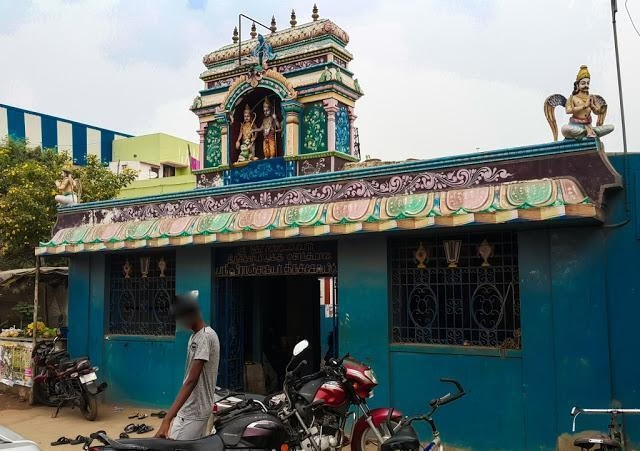
In the spiritual landscape of Tamil Nadu, where the divine and terrestrial converge, stands the majestic Veera Anjaneya Temple in Thirumazhisai. Dedicated to Lord Hanuman, the embodiment of strength, devotion, and servitude, this temple serves as a beacon for devotees seeking courage and liberation from karma. As we navigate 2026, this comprehensive guide aims to serve both the physical pilgrim and the digital seeker, blending ancient wisdom with modern logistical clarity.
1. Introduction & Spiritual Essence
The primary deity of this sacred shrine is Veera Anjaneya (Valiant Hanuman). Unlike many other forms, the term “Veera” specifically highlights his heroic nature in the service of Lord Rama. In the context of this temple, the deity is revered as a powerful protector who removes obstacles and instills fearlessness in his devotees.
Phalaśruti: The Fruits of Visitation
Devotees flock to this temple not merely for blessings but for Atma Shuddhi (purification of the soul). According to scriptural traditions, worshipping Hanuman at this specific site in Thirumazhisai is believed to:
- Cleanse Ancestral Karma: It is a potent site for performing rituals for ancestors (Pithru Karyam), helping to liberate them from cycle of rebirth.
- Grant Protection: As a Graha Dosha Nivarana (remedial measure for planetary afflictions), worship here shields devotees from negative energies.
- Foster Devotion: It strengthens Bhakti, mirroring the unwavering dedication Hanuman showed towards Rama.
| Date built: | – |
|---|---|
| Deity: | Veera Anjaneya |
| Architectural style: | Dravidian architecture |
| Major festivals | – |
| Locale: | Thirumazhisai |
| District:: | Thiruvallur |
| Address: | – |
| Phone | – |
2. Historical Origins & Scriptural Legend
While precise dating of the temple’s construction is often submerged in local oral history rather than inscriptions, tradition holds that this shrine is of significant antiquity, associated with the Bhakti movements that swept across Tamil Nadu.
The Sthala Purana (Local Legend)
The name Thirumazhisai is derived from the Tamil words Thiru (holy) and Mazhai (rain). Legend suggests that this region was blessed with timely rains due to the penance of sages residing here, and Hanuman is enshrined as the guardian of this fertility and prosperity.
Architectural Lineage
The temple structure reflects the glorious era of the Vijayanagara and subsequent Nayak dynasties, who were great patrons of art and temple construction. The architectural style is distinctly Dravidian, characterized by monumental gateways and detailed sculptural work.
3. Architectural Marvels
The temple stands as a testament to Silpa Sastra (traditional architecture). It is a classic example of Dravidian Architecture, emphasizing verticality and intricate ornamentation.
Key Features:
- The Rajagopuram: The entrance tower is a visual spectacle, adorned with vibrant statues of deities and mythological narratives. It draws the eye upward, symbolizing the ascent of the mind towards the divine.
- The Sanctum (Garbhagriha): The inner sanctum houses the main deity, Veera Anjaneya, sculpted with high relief. Unlike the seated Anjaneya found in many southern temples, the idol here is often depicted in a standing posture, ready for battle.
- Mandapas: The temple features spacious Mandapas (halls) with carved pillars. These pillars are not merely structural; they are acoustic wonders designed to amplify the resonance of chanting and percussion during rituals.
Note: While many temples in this region are recognized by the Archaeological Survey of India (ASI) for their heritage value, specific UNESCO status for this particular shrine is not applicable. However, it remains a protected heritage site under local temple trusts.
4. Darshan & Ritual Logistics
Visiting the Veera Anjaneya Temple is a structured spiritual experience. Below is the schedule for daily rituals and sevas.
Daily Timings
| Session | Timings |
|---|---|
| Morning Darshan | 06:00 AM – 12:00 PM |
| Mid-day Break | 12:00 PM – 04:00 PM |
| Evening Darshan | 04:00 PM – 08:30 PM |
| Special Note (2026) | Timings may extend on full moon days (Pournami). |
Key Sevas & Online Booking
Devotees can participate in various rituals. While some are performed by the temple priests, others allow personal participation.
- Abhishekam: Ritual bathing of the deity with milk, honey, and sandalwood paste. Best performed on Tuesdays and Saturdays.
- Archana: Chanting of names (Hanuman Chalisa or specific Anjaneya mantras). Can be done daily.
- Deepa Aradhana: Offering of lamps, specifically during twilight.
Online Booking:
In 2026, the temple utilizes state-wide portals for Tamil Nadu temples. To book Sevas online, visit the official HR & CE (Hindu Religious and Charitable Endowments) Department website for Tamil Nadu. Search for “Thirumazhisai Veera Anjaneya Temple” to select your desired seva and time slot.
2026 Major Festival Dates
Plan your visit around these auspicious days for heightened spiritual energy:
- Hanuman Jayanthi: May 23, 2026 (Date varies by Panchangam).
- Rama Navami: April 6, 2026. Celebrated with special Garuda Seva.
- Skanda Shashti: November 3, 2026 (Tentative).
- Deepavali: October 23, 2026.
5. Practical Visitor Guidance
To ensure a seamless darshan, please adhere to the following guidelines:
Dress Code:
Modest attire is required. Men should wear dhotis or trousers with shirts; women should wear sarees, half-sarees, or churidars. Avoid shorts and sleeveless tops.
Photography & Electronics:
Photography is strictly prohibited inside the Garbhagriha (sanctum). Mobile phones are allowed in the outer precincts but must be switched to silent mode. Many temples offer locker facilities for electronic devices near the entrance.
Crowd Management & Seasonal Advice:
- Best Hours: The least crowded time is between 10:00 AM and 11:30 AM.
- Summer (March–June): Thirumazhisai gets humid. Carry a reusable water bottle; public water dispensers are available in the Prakaram (corridor).
- Monsoon (November–December): Light rain is common. Wear non-slip footwear.
6. Pilgrimage Connectivity
Thirumazhisai is a strategic location on the western corridor of Chennai, making it highly accessible.
How to Reach
- By Air: Chennai International Airport (MAA) is approximately 24 km away (45-60 mins via GST Road/Poonamallee High Rd).
- By Rail: The nearest major station is Chennai Central (26 km) or Chennai Egmore (24 km). For suburban travel, Avadi Railway Station is the closest (13 km).
- By Road: The temple is located on the Poonamallee – Thiruvallur – Thirupathi Highway. Specific bus routes include:
Nearby Sacred Sites (Pilgrimage Circuit)
When visiting Thirumazhisai, devotees are encouraged to visit the nearby temples to complete a full Darshanam:
- Jagannatha Perumal Temple: Located just 250 meters away, dedicated to Lord Vishnu.
- Othandeeswarar Temple: Located 100 meters away, an ancient Shiva temple associated with the legend of a hunter (Sarabhu).
- Veetrirundha Perumal Temple: Located 250 meters away, depicting Lord Vishnu in a reclining posture.
7. Frequently Asked Questions (FAQ)
1. Is there a VIP Darshan entry at Veera Anjaneya Temple?
While the temple does not have a commercial “VIP” ticket system like Tirupati, there is a priority line for senior citizens and specially-abled devotees. Special entry tickets for festivals are usually announced via the HR & CE portal.
2. Can I book Abhishekam for my family online?
Yes. The Tamil Nadu HR & CE portal supports online booking for most Sevas, including Abhishekam. You will receive a confirmation QR code to present at the temple counter upon arrival.
3. What is the significance of the name “Thirumazhisai”?
The name is deeply rooted in Tamil geography. “Mazhisai” implies a place blessed with rain, symbolizing fertility and the grace of the deities worshipped here.
4. Are there food facilities available?
The temple does not have a full-fledged Anna Dhana (free meals) hall daily, but during special festivals and Saturdays, Prasadam (sweet Pongal or Puliyodarai) is distributed. For regular meals, devotees can visit the nearby street vendors or the Annapoorna hotel complex in Poonamallee.
5. Is the temple accessible for wheelchairs?
The main sanctum is accessible via ramps in the outer corridors. However, due to the ancient nature of the inner sanctum, wheelchair access inside the Garbhagriha may be restricted. Volunteers are usually available to assist.
Contact Details
For specific inquiries regarding timings or rituals, please contact the Temple Executive Officer:
Official Address:
Veera Anjaneya Temple,
Thirumazhisai,
Thiruvallur District, Tamil Nadu – 600124.
Recent Posts

Shri Kaamkoteeshwar Mandir, Varanasi – History & Significance
In the heart of Kashi, the eternal city of Lord Shiva, where the Ganges flows with celestial grace, stands the Shri Kaamkoteeshwar Mandir. This sacred Sannidhi is not merely a temple but a profound spiritual bridge between the Northern…

ओ सांवरे तूने ही मुझको संभाला – Lyrics & Meaning
ओ सांवरे तूने ही मुझको संभाला – A Prayer to Shyam Origin & Spiritual Essence Why This Bhajan Resonates Devotees chant this when overwhelmed by life’s storms—the refrain ‘तूने ही मुझको संभाला’ is the soul’s sigh of relief: “You…

कथा ये है महाराज मेरे की – Lyrics & Meaning
कथा ये है महाराज मेरे की छत्रपति संभाजी महाराज – A Prayer to Chhatrapati Sambhaji Maharaj Origin & Spiritual Essence Why This Bhajan Resonates Devotees chant this when their spirit feels tested—its powerful refrain “महाराज मेरे” is a soul’s…

Rigveda Samhita Yathartha Anuvada (ऋग्वेद संहिता यथार्थ अनुवाद) – Complete Set with Anvayartha & Hindi/English Translation
The Rigveda is the oldest surviving scripture of humanity and the foundational text of Sanātana Dharma. For serious students, scholars, UPSC aspirants studying ancient Indian history, Sanskrit learners, and spiritual seekers, a precise and grammatically structured translation is indispensable.…

आना भी अकेला है जाना भी अकेला है – Lyrics & Meaning | BharatTemples
आना भी अकेला है जाना भी अकेला है – A Prayer to the Divine Witness Origin & Spiritual Essence Why This Bhajan Resonates Devotees turn to this bhajan in moments of deep reflection—when life’s attachments begin to ache. The…

माता शेरावाली के द्वार जो भी जाता है – Lyrics & Meaning
माता शेरावाली के द्वार जो भी जाता है – A Prayer to Maa Sherawali Origin & Spiritual Essence Why This Bhajan Resonates Devotees turn to this bhajan in times of fear or uncertainty—its promise that no one leaves Maa’s…

मार लेना सपणी उबार लेणा भवरा – Lyrics & Meaning
मार लेना सपणी उबार लेणा भवरा – A Prayer to the Divine Beloved Origin & Spiritual Essence Why This Bhajan Resonates Devotees chant this in moments of deep vulnerability—its cry of “मार लेना सपणी, उबार लेणा भवरा” is the…

हमें श्याम सुंदर भरोसा तुम्हारा – Lyrics & Meaning
हमें श्याम सुंदर भरोसा तुम्हारा – A Prayer to Shyam Sundar Origin & Spiritual Essence Why This Bhajan Resonates Devotees chant this when feeling alone—its refrain ‘de do sahara’ is the soul’s cry for divine support. Lyrics in Hindi…

Mere Satguru Ne Di Thi Davai Lyrics in Hindi & Meaning
Mere Satguru Ne Di Thi Davai: Invoking the Guru’s Liberating Wisdom This soul-stirring bhajan venerates the Satguru (True Spiritual Master) as the divine physician who dispenses the only remedy for life’s deepest sufferings. Composed by Sant Karmaveer Tufani, it…

Janm Diyo Thari Maa Dukh Dekhiyo Lyrics in Hindi & Meaning
जन्म दियो थारी माँ दुख देखियो (Maa’s Grief Upon Birthing You) This soul-stirring Chetavani Bhajan (admonitory hymn) is addressed to the Divine Mother (Maa) – a call for repentance when children forget their filial duties in the dark age…