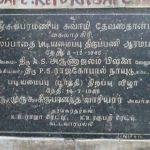
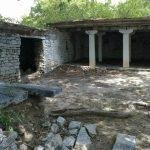
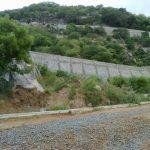
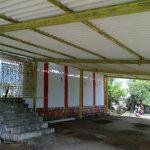
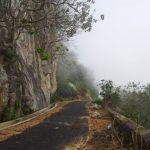
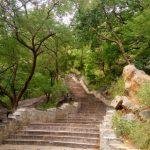
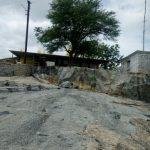
Perched atop the serene Kailasagiri hills in Gadambur, Vellore, the Subramanya Swamy Temple stands as a beacon of hope and healing for devotees of Lord Murugan. Also revered locally as the Gadambur Temple, this sacred abode is known as a Swayambhu (self-manifested) site where the divine presence is felt deeply in the silence of the hills.
Primary Deity: The sanctum houses Lord Subramanya (Murugan) in his majestic form. Unlike many temples, the idol here is believed to be self-existent, radiating a unique energy that attracts pilgrims from all over Tamil Nadu and beyond.
Phalaśruti: The Boon of Visiting
Why do devotees undertake the climb to Kailasagiri? The temple is renowned for its miraculous healing properties. Tradition holds that the hills are rich with rare medicinal herbs. It is specifically believed that:
Healing of Incurable Diseases: Devotees suffering from chronic illnesses, particularly lung conditions and other physical ailments, have reported significant relief after performing pradakshina (circumambulation) and walking the steps to the hilltop.
Cleansing Ancestral Karma: Performing Abhishekam for Lord Murugan here is believed to alleviate Pitru Dosha (ancestral afflictions), bringing peace to departed souls and prosperity to the current generation.
Blessings of Progeny: Childless couples who surrender their worries at the feet of the Lord are often blessed with the boon of children, a recurring miracle cited in temple lore.
Historical Origins & Scriptural Legend
The history of Kailasagiri is a tapestry woven with both documented records and rich oral traditions.
While specific dynastic inscriptions are yet to be fully cataloged by the ASI (Archaeological Survey of India), local temple records suggest the current structure was established during the British period, approximately 200 years ago. The grand Gopuram and structural upgrades seen today are the result of renovations funded by generous devotees in the late 20th and early 21st centuries.
The Sthala Purana: Legends of Kailasagiri
The Lost Shiva Temple: Ancient folklore speaks of a magnificent Shiva temple that once stood atop this hill, surrounded by seven sacred ponds (Theppa Kulam, Surya Kulam, and Yanai Kulam, among others). Historical accounts suggest that Mughal rulers demolished this ancient structure, discarding the debris into the ponds. Centuries later, during the British era, the current Subramanya Swamy Temple was constructed, rising from the ashes of the past to restore sanctity to the peak.
The Siddhar Connection: The hill is a haven for Siddhars (enlightened yogis). In 1942, a sage meditated here and realized the potent energy of the location, advising devotees to celebrate the Aadi Kiruthigai festival. Since then, the festival has grown exponentially, with over 3,000 Kavadis (traditional offerings) carried by devotees annually.
Achudhananda Swamy’s Samadhi: Devotees believe that Sri Achudhananda Swamy, a disciple of Sri Nijananda Swamy, attained Nirvikalpa Samadhi (a state of superconsciousness) on this hill, further cementing its status as a site of high spiritual vibration.
Architectural Marvels
The temple showcases the quintessential Dravidian architectural style, characterized by its towering gateway and vibrant sculptural work.
The Gopuram: The temple is approached via a scenic Ghat Road that winds up the hill. The entrance is marked by a welcoming arch. The Rajagopuram (main tower) is adorned with colorful sculptures of deities from the Hindu pantheon.
The Sanctum: The Vimana (tower above the sanctum) follows the Dravidian style, housing the main deity facing East. The inner sanctum is relatively compact, creating an intimate atmosphere for Darshan.
Mandapas: A spacious Mandapa (hall) allows for rituals and gatherings. The pillars feature intricate carvings depicting scenes from the Skanda Purana and the life of Lord Murugan.
Notable Sculptures: The temple complex includes shrines for Lord Ganesha and Navagrahas. The surrounding rock faces naturally resemble the contours of meditation caves, adding to the ancient aesthetic.
Darshan & Ritual Logistics (2026 Schedule)
Visitors should note that the temple operates on a specific schedule, as the priest performs pooja and then descends the hill. It is highly recommended to visit during the morning hours.
While traditional in-person bookings are available, the temple administration is increasingly digitizing operations. For 2026, devotees are encouraged to use the official contact methods below to reserve special Sevas.
Abhishekam: Performed with milk, honey, and sandalwood paste.
Archana: Personalized prayers (requires name and star/nakshatra).
Padikasu (Gold/Silver Offerings):
2026 Major Festival Dates
Aadi Kiruthigai: July 26, 2026 (Saturday) – The most significant festival here.
Karthigai Deepam: December 4, 2026 (Friday).
Thai Kiruthigai: January 24, 2026.
Thaipusam: February 11, 2026 (Tuesday).
Practical Visitor Guidance
To ensure a spiritually fulfilling and safe visit to Kailasagiri, please adhere to the following guidelines.
Dress Code: Traditional attire is mandatory. Men should wear Dhoti or pants with a shirt; women should wear Saree, Salwar Kameez, or traditional half-saree. Avoid shorts and modern sportswear.
Photography: Photography is strictly prohibited inside the inner sanctum. You are permitted to take photos in the Mandapa and exterior areas, but please respect the sanctity of the space.
Mobile Phones & Lockers: Cell phones should be kept on silent. While there are no electronic lockers, small bags are allowed. Please leave valuables in your vehicle.
Accessibility: The temple involves a 2 Km Ghat road drive followed by a climb of approximately 300 steps. It is not wheelchair accessible. Elderly visitors can utilize the assistance of fellow devotees or request help from temple volunteers.
Crowd Management & Seasonal Advice
Best Time to Visit: Weekdays are generally quieter. Weekends see a surge in local visitors.
Seasonal Tips:
Summer (May): Temperatures are high; carry sufficient water as the climb is strenuous.
Monsoon: The hill can be slippery; wear shoes with good grip.
Winter: The best time for a comfortable climb.
Pilgrimage Connectivity
The temple is a hidden gem in the Vellore district, easily accessible from major hubs.
How to Reach
By Air:Chennai International Airport is the nearest airport, approximately 180 km away (approx. 3.5 hours drive).
By Rail:Ambur Railway Station is the closest, located about 8 km from the foothills. Auto-rickshaws and local taxis are available to Gadambur.
By Road:
From Chennai: Take NH75 (via Poonamallee – Ranipet – Vellore – Ambur).
From Vellore: The temple is roughly 54 km away. Route: Vellore -> Gudiyatham -> Ambur -> Oomerabad -> Kailasagiri.
Local Route: From Ambur Bus Stand, travel 7 km on the Ambur-Pernambut road. Turn left before Oomerabad Police Station towards Kailasagiri.
Nearby Sacred Sites (Pilgrimage Circuit)
Extend your spiritual journey by visiting these nearby destinations:
Kailasagiri Viewpoint: Apart from the temple, the hill offers panoramic views of the surrounding plains—a perfect spot for silent contemplation.
Ambur Fort (Easily accessible via the same route): A historical site reflecting the region’s past.
Kodandaramaswamy Temple, Vellore: Located about 50 km away, this temple features unique sculptures and a serene atmosphere.
Frequently Asked Questions (FAQs)
1. Is there a VIP Darshan entry available?
Currently, the Subramanya Swamy Temple does not have a specific VIP entry system. All devotees are treated equally, and Darshan is based on the queue system. However, prior notice to the priest can facilitate quicker access to perform special Sevas like Abhishekam.
2. Are there restaurants or hotels nearby?
Basic eateries are available in Ambur (8 km away), famous for its Biryani. There are no hotels or restaurants directly at Kailasagiri or Gadambur. It is advisable to carry snacks and water, but please maintain the temple’s cleanliness.
3. Can I drive my car up to the temple?
Yes, you can drive up the 2 km Ghat road to the base parking area. However, the final ascent to the sanctum requires climbing approximately 300 steps on foot. The Ghat road is narrow, so drive carefully.
4. Is this temple connected to the main Kailasagiri in Andhra Pradesh?
No, this is a distinct temple located in Gadambur, Vellore (Tamil Nadu). While the name “Kailasagiri” (Abode of Shiva) is common in India, this specific site is unique for its Lord Murugan shrine and local legends.
5. What is the emergency contact number for the temple?
Devotees can reach the temple trust at +91 9600212882. For medical emergencies, the Government Hospital in Ambur (8 km) is the nearest facility.
In the heart of Kashi, the eternal city of Lord Shiva, where the Ganges flows with celestial grace, stands the Shri Kaamkoteeshwar Mandir. This sacred Sannidhi is not merely a temple but a profound spiritual bridge between the Northern…
ओ सांवरे तूने ही मुझको संभाला – A Prayer to Shyam Origin & Spiritual Essence Why This Bhajan Resonates Devotees chant this when overwhelmed by life’s storms—the refrain ‘तूने ही मुझको संभाला’ is the soul’s sigh of relief: “You…
कथा ये है महाराज मेरे की छत्रपति संभाजी महाराज – A Prayer to Chhatrapati Sambhaji Maharaj Origin & Spiritual Essence Why This Bhajan Resonates Devotees chant this when their spirit feels tested—its powerful refrain “महाराज मेरे” is a soul’s…
The Rigveda is the oldest surviving scripture of humanity and the foundational text of Sanātana Dharma. For serious students, scholars, UPSC aspirants studying ancient Indian history, Sanskrit learners, and spiritual seekers, a precise and grammatically structured translation is indispensable.…
आना भी अकेला है जाना भी अकेला है – A Prayer to the Divine Witness Origin & Spiritual Essence Why This Bhajan Resonates Devotees turn to this bhajan in moments of deep reflection—when life’s attachments begin to ache. The…
माता शेरावाली के द्वार जो भी जाता है – A Prayer to Maa Sherawali Origin & Spiritual Essence Why This Bhajan Resonates Devotees turn to this bhajan in times of fear or uncertainty—its promise that no one leaves Maa’s…
मार लेना सपणी उबार लेणा भवरा – A Prayer to the Divine Beloved Origin & Spiritual Essence Why This Bhajan Resonates Devotees chant this in moments of deep vulnerability—its cry of “मार लेना सपणी, उबार लेणा भवरा” is the…
हमें श्याम सुंदर भरोसा तुम्हारा – A Prayer to Shyam Sundar Origin & Spiritual Essence Why This Bhajan Resonates Devotees chant this when feeling alone—its refrain ‘de do sahara’ is the soul’s cry for divine support. Lyrics in Hindi…
Mere Satguru Ne Di Thi Davai: Invoking the Guru’s Liberating Wisdom This soul-stirring bhajan venerates the Satguru (True Spiritual Master) as the divine physician who dispenses the only remedy for life’s deepest sufferings. Composed by Sant Karmaveer Tufani, it…
जन्म दियो थारी माँ दुख देखियो (Maa’s Grief Upon Birthing You) This soul-stirring Chetavani Bhajan (admonitory hymn) is addressed to the Divine Mother (Maa) – a call for repentance when children forget their filial duties in the dark age…