
Contents
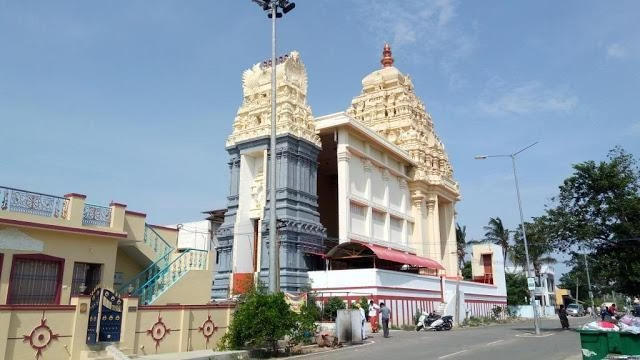
Viswaroopa Panchamuga Anjaneya Swamy Temple is a unique and spiritually potent Hindu sanctuary located in Thiruvallur, Tamil Nadu. Devoted to Lord Hanuman, this temple is renowned for housing a massive 40-foot monolithic idol of Panchamuga Anjaneya Swamy (five-faced Hanuman), drawing devotees seeking protection from negative influences and fulfillment of deep spiritual aspirations.
1. Introduction & Spiritual Essence
The Viswaroopa Panchamuga Anjaneya Swamy Temple is dedicated to Lord Hanuman (Anjaneya Swamy) in his formidable, five-faced (Panchamukha) manifestation. This form is not merely aesthetic but deeply rooted in scriptural potency, representing the combined powers of five divine avatars.
The Deity and Form
The central deity is a 40-foot tall monolithic murti (statue) of Anjaneya Swamy. Unlike standard depictions, this idol depicts the Panchamukha form, featuring faces of Hanuman, Narasimha (the lion), Garuda (the eagle), Varaha (the boar), and Hayagriva (the horse). This form is considered a powerful shield against the “evil eye” and planetary afflictions.
Phalaśruti: Why Devotees Visit
According to temple lore and devotional belief, worshipping here yields specific spiritual benefits (Phalaśruti):
- Karmic Cleansing: It is believed that visiting this temple helps cleanse ancestral karma (Pitru Dosha).
- Protection: The Panchamukha form offers complete protection from negative energies and black magic.
- Success & Health: Devotees pray here for educational success, relief from prolonged illnesses, and removal of obstacles in professional life.
- Instilling Courage: Lord Hanuman is the embodiment of courage (Veera); devotees visit to overcome fear and anxiety.
2. Historical Origins & Scriptural Legend
While the specific architectural construction date falls within the modern era (late 20th/early 21st century), the spiritual history and legends associated with the land are ancient.
The Panchamukha Legend
According to scriptural tradition, the origin of the five-faced Hanuman traces back to the Ramayana. During the war between Lord Rama and Ravana, the sorcerer king Mahiravana (Ahiravana) of Pathala (the netherworld) abducted Rama and Lakshmana. To rescue them, Hanuman assumed the Panchamukha form to extinguish five lamps burning in five directions simultaneously, thereby vanquishing Mahiravana. This form represents the synchronization of all five elemental energies.
The Legend of Rudhra Vanam
The location of the temple is steeped in the legend of Rudhra Vanam. Tradition holds that this area was once a dense forest where the great sage Agastya Muni performed intense penance.
Legend narrates that while Lord Hanuman was carrying the Sanjeevi Hill
Renovations and Architecture
The temple is built adhering to the principles of Dravidian architecture. The sanctum (Garbhagriha) was designed to house the massive monolithic idol. According to temple records, the installation of the 40-foot idol was a significant engineering feat, accomplished through the collective efforts of the local trust and devotees.
3. Architectural Marvels
The Viswaroopa Panchamuga Anjaneya Swamy Temple is a testament to traditional Agamic architecture, specifically tailored to the worship of Hanuman.
Dravidian Style and Vastu
The temple follows the Dravidian style of architecture, characterized by pyramidal towers (Shikharas) and ornate carvings. The layout is designed according to Vastu Shastra to ensure positive energy flow, with the main entrance aligned to allow sunlight to fall directly on the feet of the deity during morning hours.
The Main Shrine (Garbhagriha)
The focal point is the 40-foot monolithic idol of Panchamuga Anjaneya Swamy. The sculpture intricately details the five faces:
- East: Hanuman face (removes sins)
- South: Narasimha face (removes fear)
- West: Garuda face (removes poison/black magic)
- North: Varaha face (removes poverty)
- Upward: Hayagriva face (bestows knowledge)
Mandapas and Sculptures
The temple complex includes a spacious Mandapa (hall) for conducting group prayers and rituals. The pillars of the mandapa feature carvings of various avatars of Vishnu and Shiva, reflecting the syncretic nature of the temple. Unlike historical ASI-protected monuments, this is a living temple of contemporary construction, maintaining strict adherence to traditional norms rather than archaeological status.
4. Darshan & Ritual Logistics
To facilitate a smooth pilgrimage, devotees should be aware of the timings and seva bookings. Note that timings may vary slightly during festival seasons.
Daily Temple Timings
| Session | Opening Time | Closing Time |
|---|---|---|
| Morning | 05:00 AM | 12:30 PM |
| Evening | 04:00 PM | 09:30 PM |
Key Sevas and Pooja Timings
- Kalasanthi Pooja: 07:30 AM
- Abhishekam (Holy Bath): 09:30 AM (This is the primary seva; requires prior booking).
- Sayaratchai Pooja: 06:00 PM
- Arthajama Pooja: 09:00 PM
Online Seva Booking
While traditional in-person bookings are available, the temple management has increasingly digitized operations. For online seva booking, devotees are advised to visit the official temple trust website or authorized portals (like ttdevasthanam.tnhrce.org or local trust sites) which manage bookings for special Abhishekam and Archana services.
2026 Festival Dates (Major Observances)
Assuming the current year is 2026, devotees planning a visit during these times should book accommodations in advance.
- Hanuman Jayanti: April 12, 2026 (Specific to Tamil calendar, Chithirai)
- Deepavali: October 21, 2026
- Pongal (Thai Pongal): January 14, 2026
- Shravana Saturdays: July – August 2026 (Peak season for Hanuman temples)
5. Practical Visitor Guidance
Ensuring a respectful and hassle-free visit is essential for both devotees and the sanctity of the temple.
Dress Code and Etiquette
Visitors must adhere to a traditional dress code. Men should wear Dhoti or formal trousers with a shirt; women should wear Saree, Salwar Kameez, or formal traditional attire. Shorts and sleeveless tops are strictly prohibited.
Photography and Mobiles
- Photography: Photography inside the sanctum is strictly prohibited. It may be allowed in the outer praharam (circumambulation path), but respect the privacy of other devotees.
- Mobile Lockers: Electronic items and mobile phones are not permitted inside the main shrine. The temple provides secure mobile lockers near the entrance. Please utilize them to maintain the sanctity of the darshan.
Accessibility
The temple complex is single-storied with ramps available for wheelchair access to the main mandapam. However, the sanctum area has limited space.
Crowd Management & Seasonal Advice
- Best Hours: For a peaceful darshan, visit between 9:00 AM and 11:00 AM or 2:00 PM and 4:00 PM. Avoid weekends and full moon days (Pournami) if possible.
- Summer (May–June): Thiruvallur gets quite hot. Carry a water bottle and wear a head cover (scarf/cap). The temple provides free water.
- Monsoon (Oct–Dec): Carry an umbrella. The area can get slippery; footwear should have good grip.
6. Pilgrimage Connectivity
How to Reach Thiruvallur
The temple is strategically located on the Chennai-Tirupati corridor.
By Road
The temple is located at about 1.5 km from Thiruvallur Oil Mill Bus Stop and 5 km from Thiruvallur Bus Stand. It lies on the Chennai-Tirupati Highway (connecting NH71 and NH16). Regular buses run from Chennai (CMBT) and Koyambedu to Tirupati/Thiruthani passing through Thiruvallur. Share autos are readily available from the bus stand and railway station.
By Train
The nearest railway station is Thiruvallur Railway Station (located 2 km away). It is a railhead on the suburban line connecting Chennai Arakkonam Junction.
By Air
The nearest airport is Chennai International Airport (MAA), located approximately 46 km away (about 1 hour 15 minutes drive via the outer ring road).
Nearby Sacred Sites (Pilgrimage Circuit)
To maximize your spiritual journey, consider visiting these nearby temples:
- Veera Raghava Perumal Temple (Thiruevvul Divya Desam): Located adjacent to this temple. A historic Vishnu temple where Lord Rama is worshipped as Veera Raghava Perumal.
- Kadambathur Thiruvidaikazhi Murugan Temple: Located 18 km away, famous for its connection to the saint Poet Arunagirinathar.
- Thiruvalangadu Vadaranyeswarar Temple: Located 18 km away, this is a Shiva temple of historical importance known for its huge hall with 100 pillars.
7. Frequently Asked Questions (FAQs)
1. Is there a VIP Darshan entry at Viswaroopa Panchamuga Anjaneya Swamy Temple?
Yes, the temple management offers a Special Entry Darshan (often referred to as VIP darshan) for a nominal fee. This allows devotees to bypass the general queue during non-peak hours. Tickets can be purchased at the counter near the entrance or via the online portal.
2. Can non-Hindus enter the temple?
Generally, this is a Hindu temple practicing traditional Vedic rites. While restrictions are often relaxed for tourists outside the sanctum, entry into the inner sanctum (Garbhagriha) is usually reserved for Hindus. Please check with the temple administration upon arrival.
3. Is accommodation available near the temple?
Thiruvallur town offers several lodges and guest houses. For pilgrims, the Tamil Nadu Tourism Development Corporation (TTDC) guest house and private hotels near the bus stand are available. It is advisable to book in advance during festivals.
4. What is the process for hair offering (Mundan)?
Hair offering is a common vow (Pet) for devotees visiting Hanuman temples. The temple has a dedicated area for this ritual. It is performed by trained barbers under hygienic conditions. The offering is typically done after Abhishekam.
5. Are there food facilities available inside the temple?
Yes, the temple trust often provides Annadhanam (free meals) to devotees during lunch hours (around 12:00 PM to 1:30 PM). However, for specific meals like Tirupati Balaji style Laddu, availability depends on the daily stock. Small shops outside the temple sell snacks and water.
Recent Posts

Shri Kaamkoteeshwar Mandir, Varanasi – History & Significance
In the heart of Kashi, the eternal city of Lord Shiva, where the Ganges flows with celestial grace, stands the Shri Kaamkoteeshwar Mandir. This sacred Sannidhi is not merely a temple but a profound spiritual bridge between the Northern…

ओ सांवरे तूने ही मुझको संभाला – Lyrics & Meaning
ओ सांवरे तूने ही मुझको संभाला – A Prayer to Shyam Origin & Spiritual Essence Why This Bhajan Resonates Devotees chant this when overwhelmed by life’s storms—the refrain ‘तूने ही मुझको संभाला’ is the soul’s sigh of relief: “You…

कथा ये है महाराज मेरे की – Lyrics & Meaning
कथा ये है महाराज मेरे की छत्रपति संभाजी महाराज – A Prayer to Chhatrapati Sambhaji Maharaj Origin & Spiritual Essence Why This Bhajan Resonates Devotees chant this when their spirit feels tested—its powerful refrain “महाराज मेरे” is a soul’s…

Rigveda Samhita Yathartha Anuvada (ऋग्वेद संहिता यथार्थ अनुवाद) – Complete Set with Anvayartha & Hindi/English Translation
The Rigveda is the oldest surviving scripture of humanity and the foundational text of Sanātana Dharma. For serious students, scholars, UPSC aspirants studying ancient Indian history, Sanskrit learners, and spiritual seekers, a precise and grammatically structured translation is indispensable.…

आना भी अकेला है जाना भी अकेला है – Lyrics & Meaning | BharatTemples
आना भी अकेला है जाना भी अकेला है – A Prayer to the Divine Witness Origin & Spiritual Essence Why This Bhajan Resonates Devotees turn to this bhajan in moments of deep reflection—when life’s attachments begin to ache. The…

माता शेरावाली के द्वार जो भी जाता है – Lyrics & Meaning
माता शेरावाली के द्वार जो भी जाता है – A Prayer to Maa Sherawali Origin & Spiritual Essence Why This Bhajan Resonates Devotees turn to this bhajan in times of fear or uncertainty—its promise that no one leaves Maa’s…

मार लेना सपणी उबार लेणा भवरा – Lyrics & Meaning
मार लेना सपणी उबार लेणा भवरा – A Prayer to the Divine Beloved Origin & Spiritual Essence Why This Bhajan Resonates Devotees chant this in moments of deep vulnerability—its cry of “मार लेना सपणी, उबार लेणा भवरा” is the…

हमें श्याम सुंदर भरोसा तुम्हारा – Lyrics & Meaning
हमें श्याम सुंदर भरोसा तुम्हारा – A Prayer to Shyam Sundar Origin & Spiritual Essence Why This Bhajan Resonates Devotees chant this when feeling alone—its refrain ‘de do sahara’ is the soul’s cry for divine support. Lyrics in Hindi…

Mere Satguru Ne Di Thi Davai Lyrics in Hindi & Meaning
Mere Satguru Ne Di Thi Davai: Invoking the Guru’s Liberating Wisdom This soul-stirring bhajan venerates the Satguru (True Spiritual Master) as the divine physician who dispenses the only remedy for life’s deepest sufferings. Composed by Sant Karmaveer Tufani, it…

Janm Diyo Thari Maa Dukh Dekhiyo Lyrics in Hindi & Meaning
जन्म दियो थारी माँ दुख देखियो (Maa’s Grief Upon Birthing You) This soul-stirring Chetavani Bhajan (admonitory hymn) is addressed to the Divine Mother (Maa) – a call for repentance when children forget their filial duties in the dark age…