
Contents
- 1 Chidambareswarar Temple, Thottikalai: A Definitive Pilgrimage Guide
Chidambareswarar Temple, Thottikalai: A Definitive Pilgrimage Guide
By Lead Heritage Architect & SEO Strategist | BharatTemples.com
1. Introduction & Spiritual Essence
Amidst the serene landscapes of Thiruvallur district lies the ancient Chidambareswarar Temple in Thottikalai, a sanctuary where the cosmic rhythms of Lord Nataraja echo through the Dravidian corridors. While often overshadowed by the grandeur of larger metropolitan shrines, this temple holds a profound spiritual magnetism rooted in Vedic tradition.
The Presiding Deity
The primary deity is Chidambareswarar (a form of Lord Shiva), revered here as Thiyagesa Peruman (The Lord who moves in the divine ether). The consort is Shivakama Sundari (also known as Shivakami), embodying divine grace and compassion.
Phalaśruti: The Fruits of Pilgrimage
According to ancient spiritual texts and local tradition, visiting this temple yields specific benefits for the devotee:
- Cleansing Ancestral Karma: Devotees perform rituals to pacify Pitru Doshas (ancestral afflictions), believing that the energy here helps release lineage-based burdens.
- Attainment of Wisdom: As Lord Brahma worshipped here to receive the Amirtha Kalasam (the pot of nectar), pilgrims seek clarity of mind and spiritual awakening.
- Removal of Illusion: The name “Chidambaram” signifies the sky of consciousness. Worshipping here is believed to dissolve Maya (illusion) and reveal inner truth.
2. Historical Origins & Scriptural Legend
While the exact construction date is debated, the temple follows architectural styles indicative of the Post-Chola period (circa 12th–15th Century CE), with significant renovations likely carried out under the Later Vijayanagara and Nayak rulers who patronized Shaivism in the Tamil region.
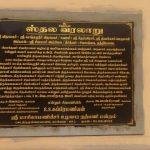
Scriptural References & Sthala Purana
The temple’s Sthala Purana (local oral legend) is deeply woven into Puranic lore:
The Legend of Brahma: Tradition holds that Lord Brahma, the creator, faced a crisis of ego and lost his capacity to witness creation. Seeking redemption, he installed a Shiva Lingam here and performed severe penance. Pleased by his devotion, Lord Shiva appeared as Thiyagesa Peruman and restored the nectar of life (Amirtham) to the universe, represented by the Amirtha Kalasam.
The Nataraja Connection: Unlike typical Shiva temples, the murti here reflects Shiva in his form as the Cosmic Dancer (Ananda Tandavam). Legend states that Lord Shiva performed a dance here mirroring his celestial performance in Chidambaram, granting him the name Chidambareswarar.
3. Architectural Marvels
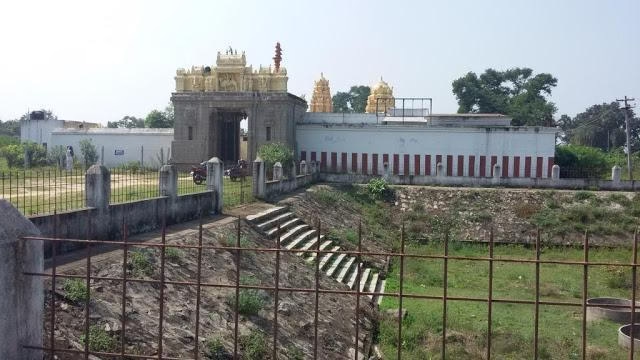
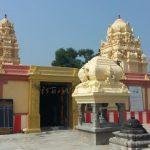
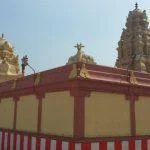
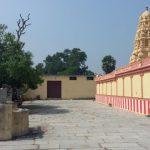
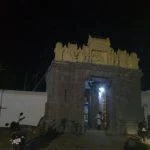
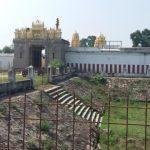
The temple is a classic example of Dravidian Architecture, characterized by its towering gateway towers and concentric courtyards.
Structural Highlights
- The Shikhara (Vimana): The garbhagriha (sanctum sanctorum) features a tiered vimana typical of Tamil temple architecture, adorned with intricate stucco work depicting deities and mythological narratives.
- The Mandapas: The temple includes a Maha Mandapa used for music and dance performances, honoring the legend of the cosmic dance. The stone pillars are carved with depictions of musical instruments and dancers.
- Sculptures: Notable is the shrine for Sengazhuneer Vinayagar (Lord Ganesha associated with the lotus), found within the premises.
Note: While specific ASI/UNESCO tags vary for lesser-known rural shrines, the architectural integrity follows the traditional Agniya Kona placement principles of Vastu Shastra.
4. Darshan & Ritual Logistics (2026 Update)
For the year 2026, the temple follows a standard daily ritual cycle. Please note: Exact timings may vary during festival seasons.
| Session | Timings | Activity |
|---|---|---|
| Morning | 06:00 AM – 12:00 PM | Ushatkalam, Abhishekam, Archana |
| Afternoon | 12:00 PM – 04:00 PM | Temple Rest / Special Pujas |
| Evening | 04:00 PM – 08:30 PM | Sayarakshai, Deepa Aradhana |
Key Sevas & Online Booking
Devotees can book the following Sevas. While online infrastructure is developing for smaller temples in 2026, bookings are generally handled via local trust representatives or the HR&CE (Hindu Religious and Charitable Endowments) department portal.
- Abhishekam: Performed on Mondays and during Pradosham.
- Archana: Daily recitation of Shiva Sahasranamam.
- Rudrabhishekam: Recommended for prosperity and health.
Major Festivals in 2026
Mark your calendars for these spiritual celebrations:
- Margazhi Thiruvathirai (December 2025 – January 2026): The most significant festival here, celebrating Shiva’s cosmic dance. The temple is decorated with flowers and traditional Kuthu Vilakku lamps.
- Vasanthotsavam (Spring Festival – April 2026): A celebration of renewal where the deities are taken in a procession around the temple streets.
- Shivaratri (February 26, 2026): Continuous chanting and night-long vigils.
5. Practical Visitor Guidance
To ensure a seamless and respectful visit, please adhere to the following guidelines.
Code of Conduct & Dress Code
Traditional attire is encouraged. Men should wear dhotis or formal trousers with shirts; women should wear sarees, salwar kameez, or full-length skirts. Modesty is paramount in the sanctum.
Photography & Safety
- Photography: Strictly prohibited inside the garbhagriha (inner sanctum) and during the deity procession.
- Electronic Items: Mobile phones are allowed but must be kept silent. Camera usage may be restricted in certain mandapas.
- Footwear: Use the designated shoe-keeping facility available at the entrance.
Crowd Management & Seasonal Advice
- Best Time to Visit: The early morning (6:00 AM – 7:30 AM) offers the most serene darshan before the crowd arrives.
- Summer (May – July): Temperatures in Thiruvallur can soar. Carry a water bottle (offered in leather or cloth, avoiding plastic) and a head covering.
- Monsoon (Oct – Dec): Carry an umbrella; the courtyard can become slippery.
6. Pilgrimage Connectivity
How to Reach Chidambareswarar Temple
The temple is located in Thottikalai Village, accessible via Thiruvallur.
- By Air: Chennai International Airport (MAA) is the nearest airport, approximately 42 km away. Taxis and cabs are available.
- By Rail: The nearest railway station is Thiruvallur Railway Station (TWL) (approx. 12 km). Alternatively, Sevvapet Railway Station is closer (approx. 5 km).
- By Road: The temple is well-connected via National Highway NH-124 (Poonamallee-Vellore Highway) and State Highways. Buses from Thiruvallur and Kilambakkam Junction serve this route regularly.
Nearby Sacred Sites (Pilgrimage Circuit)
Extend your spiritual journey by visiting these nearby shrines:
- Kailasanathar Temple, Thiruvallur: The ancient temple of Lord Shiva in the town center.
- Venkateswara Temple (Mylapore) – Chennai: While further away, many travelers combine this route with a visit to the Chennai Tirumala.
7. Frequently Asked Questions (FAQ)
1. Is there a VIP Darshan entry available?
Generally, smaller temples like Chidambareswarar do not have a formal VIP entry system. Darshan is equal for all devotees. However, for special rituals or group donations, prior notice to the temple trustee allows for organized entry.
2. Are food facilities available at the temple?
While a community kitchen is often active during festivals (Annadanam), daily food availability may be limited. It is advisable to eat at Thiruvallur town before arriving.
3. Can I perform Rudrabhishekam on behalf of my family?
Yes, Rudrabhishekam can be performed. You must book at least 24 hours in advance by contacting the temple administration or the local HR&CE office in Thiruvallur.
4. What is the significance of Sivagangai Theertham?
The Sivagangai Theertham (sacred water body) located within the temple is believed to have purifying properties. Devotees sprinkle this water on themselves to cleanse negative energies before entering the main shrine.
5. Is the temple accessible for senior citizens?
The temple has a level courtyard, but steps lead to the inner sanctum. Devotees with mobility issues can perform darshan from the threshold, but wheelchair access is limited due to the ancient structure.







Recent Posts

Shri Kaamkoteeshwar Mandir, Varanasi – History & Significance
In the heart of Kashi, the eternal city of Lord Shiva, where the Ganges flows with celestial grace, stands the Shri Kaamkoteeshwar Mandir. This sacred Sannidhi is not merely a temple but a profound spiritual bridge between the Northern…

ओ सांवरे तूने ही मुझको संभाला – Lyrics & Meaning
ओ सांवरे तूने ही मुझको संभाला – A Prayer to Shyam Origin & Spiritual Essence Why This Bhajan Resonates Devotees chant this when overwhelmed by life’s storms—the refrain ‘तूने ही मुझको संभाला’ is the soul’s sigh of relief: “You…

कथा ये है महाराज मेरे की – Lyrics & Meaning
कथा ये है महाराज मेरे की छत्रपति संभाजी महाराज – A Prayer to Chhatrapati Sambhaji Maharaj Origin & Spiritual Essence Why This Bhajan Resonates Devotees chant this when their spirit feels tested—its powerful refrain “महाराज मेरे” is a soul’s…

Rigveda Samhita Yathartha Anuvada (ऋग्वेद संहिता यथार्थ अनुवाद) – Complete Set with Anvayartha & Hindi/English Translation
The Rigveda is the oldest surviving scripture of humanity and the foundational text of Sanātana Dharma. For serious students, scholars, UPSC aspirants studying ancient Indian history, Sanskrit learners, and spiritual seekers, a precise and grammatically structured translation is indispensable.…

आना भी अकेला है जाना भी अकेला है – Lyrics & Meaning | BharatTemples
आना भी अकेला है जाना भी अकेला है – A Prayer to the Divine Witness Origin & Spiritual Essence Why This Bhajan Resonates Devotees turn to this bhajan in moments of deep reflection—when life’s attachments begin to ache. The…

माता शेरावाली के द्वार जो भी जाता है – Lyrics & Meaning
माता शेरावाली के द्वार जो भी जाता है – A Prayer to Maa Sherawali Origin & Spiritual Essence Why This Bhajan Resonates Devotees turn to this bhajan in times of fear or uncertainty—its promise that no one leaves Maa’s…

मार लेना सपणी उबार लेणा भवरा – Lyrics & Meaning
मार लेना सपणी उबार लेणा भवरा – A Prayer to the Divine Beloved Origin & Spiritual Essence Why This Bhajan Resonates Devotees chant this in moments of deep vulnerability—its cry of “मार लेना सपणी, उबार लेणा भवरा” is the…

हमें श्याम सुंदर भरोसा तुम्हारा – Lyrics & Meaning
हमें श्याम सुंदर भरोसा तुम्हारा – A Prayer to Shyam Sundar Origin & Spiritual Essence Why This Bhajan Resonates Devotees chant this when feeling alone—its refrain ‘de do sahara’ is the soul’s cry for divine support. Lyrics in Hindi…

Mere Satguru Ne Di Thi Davai Lyrics in Hindi & Meaning
Mere Satguru Ne Di Thi Davai: Invoking the Guru’s Liberating Wisdom This soul-stirring bhajan venerates the Satguru (True Spiritual Master) as the divine physician who dispenses the only remedy for life’s deepest sufferings. Composed by Sant Karmaveer Tufani, it…

Janm Diyo Thari Maa Dukh Dekhiyo Lyrics in Hindi & Meaning
जन्म दियो थारी माँ दुख देखियो (Maa’s Grief Upon Birthing You) This soul-stirring Chetavani Bhajan (admonitory hymn) is addressed to the Divine Mother (Maa) – a call for repentance when children forget their filial duties in the dark age…