
Contents
- 1 Maathoorkonam Mahadevar Temple: A Definitive Pilgrimage Guide
- 1.1 Introduction & Spiritual Essence
- 1.2 Historical Origins & Scriptural Legend
- 1.3 Architectural Marvels
- 1.4 Darshan & Ritual Logistics
- 1.5 Practical Visitor Guidance
- 1.6 Pilgrimage Connectivity
- 1.7 Frequently Asked Questions (FAQ)
- 1.7.1 1. Is there a VIP or Special Entry Darshan available?
- 1.7.2 2. What is the best time of year to visit Maathoorkonam Mahadevar Temple?
- 1.7.3 3. Are non-Hindus allowed inside the temple?
- 1.7.4 4. Is there accommodation available near the temple?
- 1.7.5 5. What are the contact details for the temple office?
Maathoorkonam Mahadevar Temple: A Definitive Pilgrimage Guide
In the serene landscapes of Kanyakumari District, amidst the lush greenery of Muzhucode, lies a sanctuary of timeless spiritual energy—the Maathoorkonam Mahadevar Temple. As we journey through 2026, this sacred abode of Lord Shiva continues to be a beacon for devotees seeking ancestral blessings and inner peace. This guide serves as your comprehensive companion, blending scriptural wisdom with practical logistics for a profound darshan experience.
Introduction & Spiritual Essence
At the heart of the temple resides the Presiding Deity, Mahadevar, a form of Lord Shiva revered as the Supreme One. While the temple is locally known as Maathoorkonam Mahadevar Temple, the deity is often worshipped as Kailasanathar (Lord of Mount Kailash). The murti is a Sanctum Sanctorum (Garbhagriha) facing East, believed to be a Swayambhu (self-manifested) Lingam.
Phalaśruti: The Benefits of Pilgrimage
According to temple records and the oral traditions of the local Tamil community, devotees visit this shrine for specific spiritual benefits:
- Cleansing Ancestral Karma: It is widely believed that performing rituals here washes away sins accumulated through generations, offering peace to the souls of ancestors.
- Resolution of Planetary Afflictions: Worshipping Mahadevar here is said to mitigate the malefic effects of planetary positions in one’s horoscope.
- Blessings of Prosperity: Devotees, particularly farmers and merchants from the Kanyakumari region, pray here for agricultural yield and business stability.
Historical Origins & Scriptural Legend
The history of the Maathoorkonam Mahadevar Temple is shrouded in the mists of antiquity, reflecting the deep-rooted Shaivism in Southern Tamil Nadu.
Architectural Legacy and Builders
While specific inscriptions dating the initial construction are sparse, the architectural style suggests a heritage spanning several centuries, likely established during the post-Vijayanagara period or earlier local dynasties that patronized Shaivism. The temple has undergone restorations to preserve its structural integrity, maintaining the sanctity of the original Dravidian design.
The Legend of Maathoorkonam
Tradition holds that the land of Maathoorkonam was once a dense forest (known as a Kadu) inhabited by sages. Legend speaks of a holy sage who performed intense penance here to please Lord Shiva. Moved by the devotion, Shiva manifested as a radiant Lingam to bless the sage and the surrounding villagers. The name “Maathoorkonam” itself derives from local topography, with “Konam” signifying a valley or a specific agrarian landscape dedicated to the divine.
Architectural Marvels
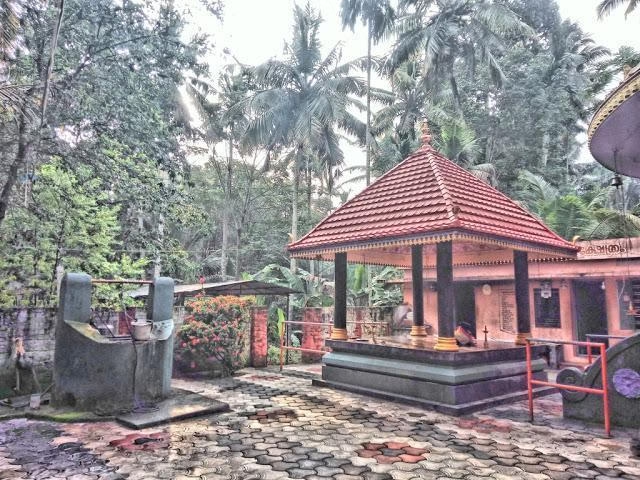
The temple stands as a testament to the Dravidian architectural style, characterized by its pyramid-shaped towers and intricate carvings.
Structural Highlights
- The Sanctum (Garbhagriha): The inner sanctum houses the Mahadevar Lingam, which is perennially moist and cool, a hallmark of natural Shiva Lingams.
- Mandapas: The temple features a pillared Mandapa (hall) used for rituals and gatherings. The ceiling often features frescoes depicting scenes from the Puranas.
- Surrounding Shrines: The complex is fortified with shrines for Lord Ganesha (remover of obstacles), Devi (Mother Goddess), Nagar (Serpent God), and Mandramoorthi (a guardian deity).
Unlike the towering Gopurams of major Nadu temples, this shrine offers a more intimate, village-style sanctity, typical of ancient rural temples in Kanyakumari. While not a UNESCO site, it is a protected monument of local heritage significance.
Photo Gallery

Darshan & Ritual Logistics
Planning your visit requires attention to the daily schedule of the temple. The rituals follow the traditional Agama Shastra.
Daily Timings
Below is the standard schedule for darshan. Please note that timings may vary slightly during festival seasons.
| Session | Timing | Description |
|---|---|---|
| Morning Darshan | 06:00 AM – 12:00 PM | Includes Morning Nitya Puja and Abhishekam. |
| Afternoon Break | 12:00 PM – 04:30 PM | Temple remains closed. |
| Evening Darshan | 04:30 PM – 08:00 PM | Includes Deepa Aradhana and Palliyarai Pooja. |
Key Sevas and Bookings
Devotees can participate in various sevas. While online booking infrastructure varies by local administration updates, standard procedures apply:
- Abhishekam: Ritual bathing of the deity with milk, honey, and sandalwood paste. Best performed on Mondays.
- Archana: Recitation of names (e.g., Shiva Ashtottaram). Can be done individually or for the family.
- Rudra Homam: A fire ritual for purification. Usually requires prior notice of 24 hours.
Note: For the most current online seva booking status, please check the official Tamil Nadu Hindu Religious & Charitable Endowments (HR&CE) website or contact the temple office directly.
2026 Festival Calendar
Major festivals in 2026 will see the temple decorated with lights and special chants.
- Pradosham (Every 13th & 28th Day): Special Abhishekam at 6:00 PM.
- Maha Shivaratri (February 26, 2026): The most significant event; the temple remains open throughout the night.
- Arudra Darshanam (January 15, 2026): Celebrating the cosmic dance of Shiva (Nataraja).
- Aadi Perukku (July 29, 2026): A river-side ritual observed by local devotees.
Practical Visitor Guidance
To ensure a smooth and respectful visit, please adhere to the following guidelines.
Code of Conduct and Essentials
- Dress Code: Traditional attire is mandatory. Men should wear Veshti (dhoti) or pants with a shirt; women should wear saree, salwar kameez, or traditional dresses. Avoid shorts and sleeveless tops.
- Photography: Photography is strictly prohibited inside the Sanctum Sanctorum. Flash photography is discouraged to maintain the sanctity of the space.
- Mobile Lockers: Due to the small size of the temple, large bags and electronic devices may need to be left in designated lockers or vehicles. Please carry minimal valuables.
- Accessibility: The temple is an ancient structure with steps at the entrance. While accessible, those with severe mobility issues may require assistance.
Crowd Management & Seasonal Advice
The Kanyakumari climate is tropical. For the most peaceful experience:
- Best Hours: Visit immediately after opening (6:00 AM) or during the first hour of evening darshan (4:30 PM).
- Seasonal Tips:
- May – June (Summer): Carry water and an umbrella; the heat can be intense.
- November – January (Post-Monsoon): Ideal weather for travel; expect higher tourist footfall.
Pilgrimage Connectivity
Located in the tranquil village of Muzhucode, the temple is well-connected by road and is a perfect stop in a regional pilgrimage circuit.
How to Reach
The temple is strategically located near major towns in Kanyakumari District:
- By Air: The nearest airport is Trivandrum International Airport (TRV) in Kerala, located approximately 47 km away. Taxis and buses are readily available.
- By Rail: The nearest railway junction is Kuzhithurai (approx. 11 km). From there, local buses or auto-rickshaws can take you to Muzhucode.
- By Road: The temple is accessible via the NH 66 (formerly NH 47). It is situated approximately 1.5 km from Arumanai and 9 km from Marthandam.
Nearby Sacred Sites
Enhance your pilgrimage by visiting these nearby temples:
- Thiruvattaru Adikesava Perumal Temple: Located about 9 km away, this is a major Divya Desam dedicated to Lord Vishnu.
- Thiruppathisaram Mahadeva Temple: An ancient Shiva temple roughly 12 km away, known for its unique architectural alignment.
- Kulasekharam Kali Temple: A significant Shakti shrine about 15 km from Muzhucode, revered for powerful rituals.
Frequently Asked Questions (FAQ)
1. Is there a VIP or Special Entry Darshan available?
As of 2026, the temple primarily follows a general darshan protocol. However, devotees can opt for specific Seva (Pooja) tickets which grant priority access during the ritual time. Please check with the temple counter upon arrival.
2. What is the best time of year to visit Maathoorkonam Mahadevar Temple?
The period between October and March offers the most pleasant weather. However, for a spiritually charged atmosphere, visiting during Maha Shivaratri (February/March) is highly recommended.
3. Are non-Hindus allowed inside the temple?
Generally, Hindu temples in Tamil Nadu adhere to traditional entry norms. Non-Hindus are often allowed entry into the complex, but may be restricted from entering the inner sanctum (Garbhagriha). It is advisable to consult the temple authorities or a local guide for the specific policy at this temple.
4. Is there accommodation available near the temple?
While there are no lodging facilities immediately adjacent to the temple, Marthandam and Nagercoil offer numerous hotels and lodges catering to pilgrims, located within a 15-20 minute drive.
5. What are the contact details for the temple office?
For real-time updates regarding rituals or closures, you may contact the local temple administration or the Kanyakumari HR&CE office. (Note: As specific phone numbers were not provided in the source data, please inquire at the local administration office in Muzhucode).
Original Source Reference: tamilnadu-favtourism.blogspot.com
Recent Posts

Shri Kaamkoteeshwar Mandir, Varanasi – History & Significance
In the heart of Kashi, the eternal city of Lord Shiva, where the Ganges flows with celestial grace, stands the Shri Kaamkoteeshwar Mandir. This sacred Sannidhi is not merely a temple but a profound spiritual bridge between the Northern…

ओ सांवरे तूने ही मुझको संभाला – Lyrics & Meaning
ओ सांवरे तूने ही मुझको संभाला – A Prayer to Shyam Origin & Spiritual Essence Why This Bhajan Resonates Devotees chant this when overwhelmed by life’s storms—the refrain ‘तूने ही मुझको संभाला’ is the soul’s sigh of relief: “You…

कथा ये है महाराज मेरे की – Lyrics & Meaning
कथा ये है महाराज मेरे की छत्रपति संभाजी महाराज – A Prayer to Chhatrapati Sambhaji Maharaj Origin & Spiritual Essence Why This Bhajan Resonates Devotees chant this when their spirit feels tested—its powerful refrain “महाराज मेरे” is a soul’s…

Rigveda Samhita Yathartha Anuvada (ऋग्वेद संहिता यथार्थ अनुवाद) – Complete Set with Anvayartha & Hindi/English Translation
The Rigveda is the oldest surviving scripture of humanity and the foundational text of Sanātana Dharma. For serious students, scholars, UPSC aspirants studying ancient Indian history, Sanskrit learners, and spiritual seekers, a precise and grammatically structured translation is indispensable.…

आना भी अकेला है जाना भी अकेला है – Lyrics & Meaning | BharatTemples
आना भी अकेला है जाना भी अकेला है – A Prayer to the Divine Witness Origin & Spiritual Essence Why This Bhajan Resonates Devotees turn to this bhajan in moments of deep reflection—when life’s attachments begin to ache. The…

माता शेरावाली के द्वार जो भी जाता है – Lyrics & Meaning
माता शेरावाली के द्वार जो भी जाता है – A Prayer to Maa Sherawali Origin & Spiritual Essence Why This Bhajan Resonates Devotees turn to this bhajan in times of fear or uncertainty—its promise that no one leaves Maa’s…

मार लेना सपणी उबार लेणा भवरा – Lyrics & Meaning
मार लेना सपणी उबार लेणा भवरा – A Prayer to the Divine Beloved Origin & Spiritual Essence Why This Bhajan Resonates Devotees chant this in moments of deep vulnerability—its cry of “मार लेना सपणी, उबार लेणा भवरा” is the…

हमें श्याम सुंदर भरोसा तुम्हारा – Lyrics & Meaning
हमें श्याम सुंदर भरोसा तुम्हारा – A Prayer to Shyam Sundar Origin & Spiritual Essence Why This Bhajan Resonates Devotees chant this when feeling alone—its refrain ‘de do sahara’ is the soul’s cry for divine support. Lyrics in Hindi…

Mere Satguru Ne Di Thi Davai Lyrics in Hindi & Meaning
Mere Satguru Ne Di Thi Davai: Invoking the Guru’s Liberating Wisdom This soul-stirring bhajan venerates the Satguru (True Spiritual Master) as the divine physician who dispenses the only remedy for life’s deepest sufferings. Composed by Sant Karmaveer Tufani, it…

Janm Diyo Thari Maa Dukh Dekhiyo Lyrics in Hindi & Meaning
जन्म दियो थारी माँ दुख देखियो (Maa’s Grief Upon Birthing You) This soul-stirring Chetavani Bhajan (admonitory hymn) is addressed to the Divine Mother (Maa) – a call for repentance when children forget their filial duties in the dark age…