
Contents
Introduction & Spiritual Essence
In the ancient temple town of Palani, nestled in the foothills of the Eastern Ghats, lies a hidden spiritual jewel known as the Veleeshwarar Temple. While Palani is globally renowned for the Murugan temple, the Veleeshwarar shrine offers a profound counterpoint—a serene sanctuary dedicated to Lord Shiva (Eeshwarar). The primary deity here, Veleeshwarar, is a Swayambhu Lingam (self-manifested), embodying the formless aspect of the Supreme Being.
Unlike the bustling crowds of the main hill temple, this shrine offers an atmosphere of deep meditation and introspection. The name “Veleeshwarar” is often associated with the sanctity of the space and the ruling deity of the region.
Phalaśruti: The Benefits of Darshan
Devotees visit the Veleeshwarar Temple seeking specific spiritual and material blessings:
- Ancestral Liberation: It is believed that offering prayers here helps cleanse Pitru Dosha (ancestral karma), ensuring peace for departed souls.
- Mental Clarity: As a Shiva temple, it is a potent site for gaining focus and removing negative energies.
- Vermilion Ritual: A specific local tradition involves offering vermillion (Kungumam) to the presiding deity for the fulfillment of wishes.
Historical Origins & Scriptural Legend
According to temple records and local history, the Veleeshwarar Temple is an ancient structure, though specific dynastic inscriptions are less documented compared to larger complexes. The temple likely dates back several centuries, with architectural elements suggesting contributions from the Pandya and later Nayak dynasties, who were prolific builders of Shiva temples in this region.
The Sthala Purana
Tradition holds that this site was sanctified by the great sage Kalangi Maharishi. Legend states that the sage worshipped Lord Shiva here for years. Pleased with his penance, Shiva manifested as a Swayambhu Lingam and blessed him. The temple is also deeply connected to the folklore of Palani, where the Veleeshwarar form is often linked to the spiritual power residing in the hills.
Another popular local legend suggests that this temple represents the “North” aspect of the divine compared to the main Palani Murugan temple (the South), balancing the spiritual energy of the region.
Architectural Marvels
The temple exhibits the classic features of traditional Dravidian architecture, though on a more intimate scale.
- Sanctum Sanctorum (Garbhagriha): The inner chamber houses the Swayambhu Lingam facing East. The sanctum is enclosed by a narrow Pradakshina (circumambulation) pathway.
- Exterior Structure: The temple features a modest Shikhara (tower) above the sanctum. The outer walls, though ancient, are adorned with minimal sculptures, preserving the rustic charm of the site.
- Mandapas: A small Maha Mandapa precedes the sanctum, allowing devotees to sit for prayers. The corridor leads directly from the entrance, following a linear Vastu layout aligned with East-facing traditions.
Currently, the temple is maintained by local devotees and trusts, preserving the authentic heritage of the Palani region.
Darshan & Ritual Logistics
To ensure a smooth spiritual experience, devotees should note the following timings. As of 2026, these are the standard operating hours.
Daily Timings
| Session | Timing |
|---|---|
| Morning Darshan | 6:00 AM – 11:00 AM |
| Afternoon Closure | 11:00 AM – 4:00 PM |
| Evening Darshan | 4:00 PM – 8:00 PM |
Key Sevas & Online Booking
While Veleeshwarar is a smaller shrine, fundamental Vedic rituals are performed daily. For complex rituals, pilgrims often visit the main Palani temple, but here you can perform:
- Abhishekam (Ritual Bathing): Performed on Monday mornings (usually requires prior notice).
- Archana (Chanting): Available throughout the day. Common offerings include Bilva leaves and raw milk.
Online Booking: While specific bookings for this small temple are usually on-site, integrated booking for Palani temples is often managed through the Palani Hill Temple Council. Pilgrims are advised to check the official Tamil Nadu HR&CE website or the Palani Arulmigu Dhandayuthapani Swamy app for combined pilgrim passes.
2026 Important Festival Dates (Tentative)
- Thai Poosam: February 11, 2026
- Panguni Uthiram: March 28, 2026
- Maha Shivaratri: February 26, 2026 (Major celebration)
- Karthigai Deepam: November 5, 2026
Practical Visitor Guidance
Visiting a heritage site like Veleeshwarar requires preparation to ensure respect for the sanctity of the space.
Dress Code & Etiquette
- Attire: Traditional Indian clothing is recommended (Dhoti/Saree). Western attire should be modest (covered shoulders and knees).
- Photography: Photography is generally prohibited inside the sanctum to maintain the sanctity of the deity. External courtyard photography may be permitted.
- Mobile/Storage: There are no automated lockers at this specific smaller shrine. It is advised to carry minimal valuables and use designated mobile storage areas provided by the local Palani police if available, or leave valuables in your vehicle.
Crowd Management & Best Time to Visit
- Best Hours: Early morning (6:00 AM – 7:30 AM) offers the most peaceful darshan.
- Seasonal Advice: Summers (April–June) in Palani are extremely hot; carry water and an umbrella. Monsoon (October–December) brings cool breezes but occasional rain.
Pilgrimage Connectivity
Palani is a major pilgrimage hub in Tamil Nadu, well-connected by rail, road, and air.
How to Reach Veleeshwarar Temple
The Veleeshwarar Temple is located within the Palani town area, easily accessible from the main bus stand and the temple foothills.
| Date built: | – |
|---|---|
| Deity: | Veleeshwarar |
| Architectural style: | – |
| Major festivals | – |
| Locale: | palani |
| District:: | Dindigul |
| Address: | – |
| Phone | – |
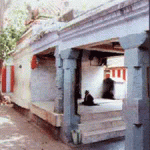
A way in the south between two east facing shops leads to the Velisar Koil. A corridor enclosing a small sanctum with a lingam forms the shrine. Now we will have to go to Palani town.
Karuppannasami and a Vinayaga are caught in the congested bazaars before the Yadava Mutt. To the north of this Mutt is a Bairava temple. Palani is beckoning. Let us hasten.
By Air: The nearest airport is Coimbatore International Airport (CBE), approximately 100 km away. Flights connect daily to Chennai, Bangalore, Hyderabad, Mumbai, Delhi, and international hubs.
By Train: Palani Railway Station (Station Code: PNQ) is well-connected to Madurai, Coimbatore, and Chennai. The Palani Express connects Chennai Central to Palani directly.
By Road: Palani is situated on the NH-81 (connecting Coimbatore to Tiruchirappalli). State transport (TNSTC) and private buses operate frequently from Madurai (65 km), Coimbatore (100 km), and Tiruchirappalli (110 km).
Nearby Sacred Sites
- Palani Murugan Temple (Arulmigu Dhandayuthapani Swamy Temple): The primary hilltop shrine (1 km from town center).
- Idumban Temple: Located halfway up the Palani hill, dedicated to the disciple of Lord Murugan.
- Kalugasalamoorthy Temple (Vazhuthur): A temple dedicated to the bootham (divine sage) associated with Palani.
Photo Gallery
Frequently Asked Questions (FAQs)
1. Is there a VIP Darshan entry at Veleeshwarar Temple?
As this is a smaller shrine compared to the main Palani temple, VIP entry systems are generally not applicable. However, the crowd is usually minimal, allowing for easy access to the sanctum.
2. What is the significance of the name “Veleeshwarar”?
In the context of Palani, the name is deeply tied to the region’s folklore and the ruling deities. It signifies a form of Shiva who protects the divine energy of the hills.
3. Can I perform Shradh/Tharpanam at this temple?
Yes, rituals for ancestors (Pitru Tarpanam) are auspicious here. It is advisable to contact the temple priest a day in advance to arrange for materials.
4. Is the temple accessible for elderly devotees?
Yes, the Veleeshwarar Temple is located in the plains of Palani town, making it easily accessible for the elderly and those who cannot climb the hill.
5. Where can I stay near the temple?
Palani has numerous guest houses run by trusts (like the MSPL trust) and private hotels. It is recommended to book accommodation in advance during festival seasons like Thai Poosam.
Recent Posts

Shri Kaamkoteeshwar Mandir, Varanasi – History & Significance
In the heart of Kashi, the eternal city of Lord Shiva, where the Ganges flows with celestial grace, stands the Shri Kaamkoteeshwar Mandir. This sacred Sannidhi is not merely a temple but a profound spiritual bridge between the Northern…

ओ सांवरे तूने ही मुझको संभाला – Lyrics & Meaning
ओ सांवरे तूने ही मुझको संभाला – A Prayer to Shyam Origin & Spiritual Essence Why This Bhajan Resonates Devotees chant this when overwhelmed by life’s storms—the refrain ‘तूने ही मुझको संभाला’ is the soul’s sigh of relief: “You…

कथा ये है महाराज मेरे की – Lyrics & Meaning
कथा ये है महाराज मेरे की छत्रपति संभाजी महाराज – A Prayer to Chhatrapati Sambhaji Maharaj Origin & Spiritual Essence Why This Bhajan Resonates Devotees chant this when their spirit feels tested—its powerful refrain “महाराज मेरे” is a soul’s…

Rigveda Samhita Yathartha Anuvada (ऋग्वेद संहिता यथार्थ अनुवाद) – Complete Set with Anvayartha & Hindi/English Translation
The Rigveda is the oldest surviving scripture of humanity and the foundational text of Sanātana Dharma. For serious students, scholars, UPSC aspirants studying ancient Indian history, Sanskrit learners, and spiritual seekers, a precise and grammatically structured translation is indispensable.…

आना भी अकेला है जाना भी अकेला है – Lyrics & Meaning | BharatTemples
आना भी अकेला है जाना भी अकेला है – A Prayer to the Divine Witness Origin & Spiritual Essence Why This Bhajan Resonates Devotees turn to this bhajan in moments of deep reflection—when life’s attachments begin to ache. The…

माता शेरावाली के द्वार जो भी जाता है – Lyrics & Meaning
माता शेरावाली के द्वार जो भी जाता है – A Prayer to Maa Sherawali Origin & Spiritual Essence Why This Bhajan Resonates Devotees turn to this bhajan in times of fear or uncertainty—its promise that no one leaves Maa’s…

मार लेना सपणी उबार लेणा भवरा – Lyrics & Meaning
मार लेना सपणी उबार लेणा भवरा – A Prayer to the Divine Beloved Origin & Spiritual Essence Why This Bhajan Resonates Devotees chant this in moments of deep vulnerability—its cry of “मार लेना सपणी, उबार लेणा भवरा” is the…

हमें श्याम सुंदर भरोसा तुम्हारा – Lyrics & Meaning
हमें श्याम सुंदर भरोसा तुम्हारा – A Prayer to Shyam Sundar Origin & Spiritual Essence Why This Bhajan Resonates Devotees chant this when feeling alone—its refrain ‘de do sahara’ is the soul’s cry for divine support. Lyrics in Hindi…

Mere Satguru Ne Di Thi Davai Lyrics in Hindi & Meaning
Mere Satguru Ne Di Thi Davai: Invoking the Guru’s Liberating Wisdom This soul-stirring bhajan venerates the Satguru (True Spiritual Master) as the divine physician who dispenses the only remedy for life’s deepest sufferings. Composed by Sant Karmaveer Tufani, it…

Janm Diyo Thari Maa Dukh Dekhiyo Lyrics in Hindi & Meaning
जन्म दियो थारी माँ दुख देखियो (Maa’s Grief Upon Birthing You) This soul-stirring Chetavani Bhajan (admonitory hymn) is addressed to the Divine Mother (Maa) – a call for repentance when children forget their filial duties in the dark age…