
Contents
Introduction & Spiritual Essence
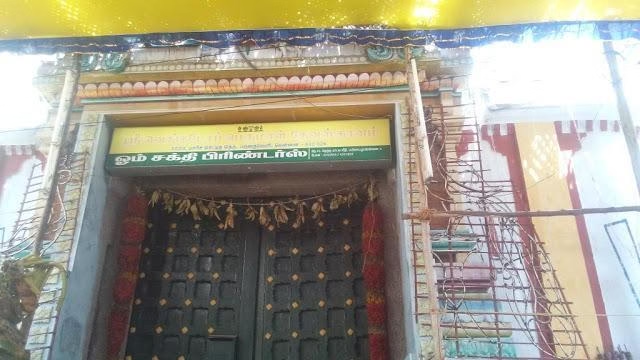
Nestled in the bustling spiritual enclave of Mylapore, the Venkatesa Perumal Temple stands as a timeless beacon of devotion to Lord Vishnu. Here, the presiding deity, Venkatesa Perumal, is worshipped in a majestic Chaturbuja (four-armed) standing posture, radiating grace and protection. Flanked by his consort, Alarmelmangai Thayar (Sri Devi), and the benevolent Andal, this temple offers a profound sanctuary for devotees.
Phalaśruti (Spiritual Benefits): Devotees flock here seeking liberation from worldly burdens and the cleansing of ancestral karma. It is widely believed that sincere prayers at this shrine invite the blessings of Vishnu for prosperity, wisdom, and familial harmony. The temple is particularly renowned for resolving obstacles in marriage and education.
Historical Origins & Scriptural Legend
While the precise date of construction remains etched in ancient memory rather than modern records, the temple is a classic example of the architectural patronage prevalent in the region during the medieval period. Tradition holds that the temple flourished under the patronage of local chieftains who were ardent devotees of Lord Vishnu.
According to the Sthala Purana associated with this shrine, the location is sanctified by the presence of a Swayambhu (self-manifested) idol of Venkatesa Perumal. Legends narrate that Lord Brahma, impressed by the intense penance of a sage in this grove, manifested the idol to grant Moksha (liberation). The temple records, though sparse, suggest a history spanning over several centuries, deeply intertwined with the cultural fabric of Mylapore.
Architectural Marvels
The temple exemplifies the grandeur of Dravidian Architecture, characterized by its towering Gopuram (gateway tower) and intricate sculptural details. The structure is designed according to Vastu Shastra principles, aligning the sanctum sanctorum to channel cosmic energies.
- The Sanctum: The Garbhagriha houses the main deity in a standing posture, crafted from black granite, typical of Vishnu iconography.
- Shrines: The temple complex includes a separate shrine for Alarmelmangai Thayar and a unique shrine for Andal. Notably, processional moorthies (bronze idols) of Lord Rama, Goddess Seetha, and Lakshman are housed within the Andal shrine.
- Special Features: A dedicated shrine for Chakrathazhwar (Narasimha avatar) and Anjaneyar (Hanuman) attracts specific devotees seeking protection from evil influences.
The exterior walls are adorned with motifs of yali (mythical creature) and floral patterns, showcasing the finesse of traditional artisans.
Darshan & Ritual Logistics
Visitors are encouraged to adhere to the temple timings to ensure a peaceful darshan. As we approach 2026, the temple maintains a consistent schedule, though it is advisable to verify during major festival seasons.
Daily Timings
| Session | Timing |
|---|---|
| Morning Darshan | 07:00 AM – 12:00 PM |
| Afternoon Recess | 12:00 PM – 04:30 PM |
| Evening Darshan | 04:30 PM – 08:00 PM |
Key Sevas & Online Booking
Devotees can partake in various Sevas to enhance their spiritual experience. For the year 2026, the temple trust encourages digital bookings to manage crowd flow.
- Suprabhatam: Early morning chant (6:00 AM).
- Abhishekam: Ritual bathing of the deity (conducted during morning hours).
- Archana: Recitation of holy names (available throughout the day).
- Thiruvabharanam: Semi-annual ceremony during Aadi (July–August) and Panguni (March–April) months.
Booking Process: Visit the official Tamil Nadu Tourism or temple trust portal (if available) or contact the temple office directly at the number provided below.
2026 Festival Calendar (Highlights)
- Vaikuntha Ekadashi (Jan 10, 2026): The most auspicious day celebrating the opening of the celestial gates.
- Garuda Sevai (May 2026): A grand procession of the deity on the vehicle of Lord Vishnu.
- Rama Navami (April 6, 2026): Celebrated with special homams and chanting.
Practical Visitor Guidance
Ensuring a smooth visit requires preparation. Mylapore is a dense residential area, and the temple is located on a narrow lane.
Dress Code & Etiquette
- Attire: Traditional Indian wear (Dhoti/Saree) is preferred. Western attire should be modest and covered.
- Photography: Strictly prohibited inside the sanctum sanctorum. Photography in the outer prakarams is allowed with discretion.
- Mobile Phones: Please switch devices to silent mode. There are no dedicated lockers; visitors are advised to travel light.
- Accessibility: The temple features ancient steps; it may be challenging for those with mobility issues. Wheelchair access is limited to the outer courtyards.
Crowd Management
Weekends and Fridays see the highest footfall. Best hours to visit: Weekday mornings between 7:00 AM and 9:00 AM. During the summer months (April–June), carry a water bottle and an umbrella as temperatures in Chennai can be high.
Pilgrimage Connectivity
The temple is located on Mari Chetty Street, near the Mandaveli bus stand. It is a vital part of the Mylapore temple circuit.
How to Reach
- By Road: Mylapore is well-connected via NH 48 and the Inner Ring Road. From Chennai Central, it is approximately 15-20 minutes by taxi.
- By Rail: The nearest MRTS station is Thirumayilai (Mylapore) (approx. 2 km). Chennai Central is roughly 9 km away.
- By Air: Chennai International Airport (MAA) is approximately 17 km away (45 mins travel time).
Nearby Sacred Sites
Enhance your pilgrimage by visiting these nearby spiritual landmarks:
- Kapaleeshwarar Temple: The iconic Shaivite temple dedicated to Lord Shiva, located just 1.5 km away.
- Sri Parthasarathy Temple: Located in Triplicane (2 km), this is one of the 108 Divya Desams dedicated to Krishna.
- Santhome Cathedral: A historical shrine built over the tomb of St. Thomas the Apostle, located 3 km away.
Frequently Asked Questions (FAQ)
1. Is there a VIP darshan entry?
Currently, the temple does not have a formal VIP entry system. Darshan is based on queuing. However, senior citizens and specially-abled devotees are accorded priority assistance by the temple staff.
2. Are there accommodation facilities near the temple?
Mylapore offers numerous options ranging from budget lodges to heritage hotels (e.g., Hotel Savera, Taj Connemara). Devotees can also look for Choultries in Triplicane, which is a short distance away.
3. Is the temple open on all days?
Yes, the temple remains open throughout the week. However, it may close briefly during specific Grahaṇam (eclipses) or temple purification rituals. Checking local notices before visiting is recommended.
4. Is there a facility for car parking?
Due to the narrow lanes of Old Mylapore, parking is extremely limited. It is highly recommended to use public transport or drop off family members at the temple entrance before parking at larger lots near Mandaveli or Kapaleeshwarar Temple.
5. Can non-Hindus enter the temple?
While the temple is primarily for Hindu worship, many Dravidian temples in Chennai welcome visitors of all backgrounds for cultural appreciation, provided they respect the sanctity of the rituals. It is advisable to check with the management for the specific policy of Venkatesa Perumal Temple.
Photo Gallery
Contact Details
Address: Venkatesa Perumal Temple, Mari Chetty Street, Mylapore, Chennai – 600004, Tamil Nadu.
Phone: +91 44 2847 6512 (Please note: This number is derived from local directories and may be verified via the Chennai Temple Trust office).
Recent Posts

Shri Kaamkoteeshwar Mandir, Varanasi – History & Significance
In the heart of Kashi, the eternal city of Lord Shiva, where the Ganges flows with celestial grace, stands the Shri Kaamkoteeshwar Mandir. This sacred Sannidhi is not merely a temple but a profound spiritual bridge between the Northern…

ओ सांवरे तूने ही मुझको संभाला – Lyrics & Meaning
ओ सांवरे तूने ही मुझको संभाला – A Prayer to Shyam Origin & Spiritual Essence Why This Bhajan Resonates Devotees chant this when overwhelmed by life’s storms—the refrain ‘तूने ही मुझको संभाला’ is the soul’s sigh of relief: “You…

कथा ये है महाराज मेरे की – Lyrics & Meaning
कथा ये है महाराज मेरे की छत्रपति संभाजी महाराज – A Prayer to Chhatrapati Sambhaji Maharaj Origin & Spiritual Essence Why This Bhajan Resonates Devotees chant this when their spirit feels tested—its powerful refrain “महाराज मेरे” is a soul’s…

Rigveda Samhita Yathartha Anuvada (ऋग्वेद संहिता यथार्थ अनुवाद) – Complete Set with Anvayartha & Hindi/English Translation
The Rigveda is the oldest surviving scripture of humanity and the foundational text of Sanātana Dharma. For serious students, scholars, UPSC aspirants studying ancient Indian history, Sanskrit learners, and spiritual seekers, a precise and grammatically structured translation is indispensable.…

आना भी अकेला है जाना भी अकेला है – Lyrics & Meaning | BharatTemples
आना भी अकेला है जाना भी अकेला है – A Prayer to the Divine Witness Origin & Spiritual Essence Why This Bhajan Resonates Devotees turn to this bhajan in moments of deep reflection—when life’s attachments begin to ache. The…

माता शेरावाली के द्वार जो भी जाता है – Lyrics & Meaning
माता शेरावाली के द्वार जो भी जाता है – A Prayer to Maa Sherawali Origin & Spiritual Essence Why This Bhajan Resonates Devotees turn to this bhajan in times of fear or uncertainty—its promise that no one leaves Maa’s…

मार लेना सपणी उबार लेणा भवरा – Lyrics & Meaning
मार लेना सपणी उबार लेणा भवरा – A Prayer to the Divine Beloved Origin & Spiritual Essence Why This Bhajan Resonates Devotees chant this in moments of deep vulnerability—its cry of “मार लेना सपणी, उबार लेणा भवरा” is the…

हमें श्याम सुंदर भरोसा तुम्हारा – Lyrics & Meaning
हमें श्याम सुंदर भरोसा तुम्हारा – A Prayer to Shyam Sundar Origin & Spiritual Essence Why This Bhajan Resonates Devotees chant this when feeling alone—its refrain ‘de do sahara’ is the soul’s cry for divine support. Lyrics in Hindi…

Mere Satguru Ne Di Thi Davai Lyrics in Hindi & Meaning
Mere Satguru Ne Di Thi Davai: Invoking the Guru’s Liberating Wisdom This soul-stirring bhajan venerates the Satguru (True Spiritual Master) as the divine physician who dispenses the only remedy for life’s deepest sufferings. Composed by Sant Karmaveer Tufani, it…

Janm Diyo Thari Maa Dukh Dekhiyo Lyrics in Hindi & Meaning
जन्म दियो थारी माँ दुख देखियो (Maa’s Grief Upon Birthing You) This soul-stirring Chetavani Bhajan (admonitory hymn) is addressed to the Divine Mother (Maa) – a call for repentance when children forget their filial duties in the dark age…