
Contents
In the heart of Chennai’s cultural hub, Mylapore, stands a beacon of spiritual harmony and devotion—the Shirdi Sai Baba Temple. Often referred to as the “Shirdi of the South,” this sacred site serves as a sanctuary for seekers from all walks of life. It is not merely a structure of stone and mortar but a living testament to the timeless teachings of Sai Baba of Shirdi.
Introduction & Spiritual Essence
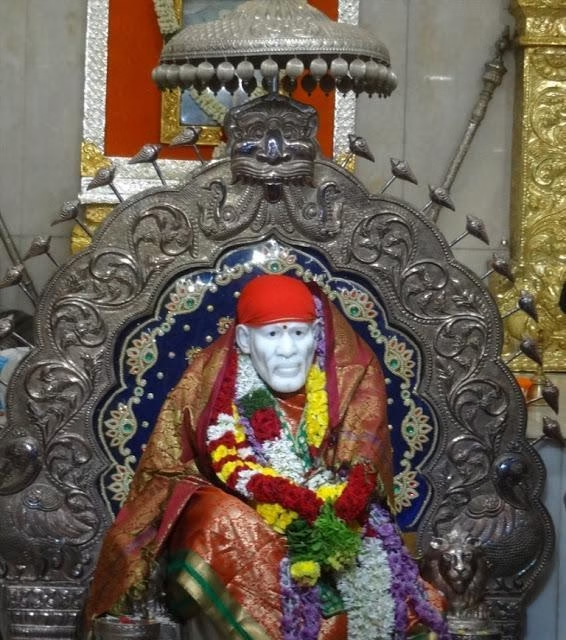
The Shirdi Sai Baba Temple, dedicated to the Indian Saint Sai Baba, is a prominent Hindu temple with a universal appeal. Established in 1952, it is managed by the All India Sai Samaj. The temple is renowned for its consecrated eternal lamp, which has burned continuously since the days of the Saint, symbolizing undying hope and guidance.
Phalaśruti: Why Devotees Visit
Devotees flock to this temple seeking spiritual peace and worldly blessings. The primary significance lies in the temple’s ability to transcend religious boundaries. Sai Baba propagated a religion of love, peace, and harmony, teaching that God is one. Visitors often report:
- Ancestral Karmic Relief: Performing rituals here is believed to cleanse ancestral karma and bring peace to departed souls.
- Resolution of Conflicts: As Baba mediated between Hindus and Muslims, prayers here are believed to resolve conflicts in family and professional life.
- Spiritual Awakening: The large meditation hall fosters deep introspection and connection with the divine.
Historical Origins & Scriptural Legend
Unlike ancient Puranic temples, the history of this temple is rooted in the modern devotional revival of the 20th century. However, its spiritual weight is immense.
The Founder and the Consecration
According to temple records, the temple was founded by Sri Narasimha Swamy, a devout follower from Salem. He began by worshipping a simple picture of Sai Baba under a tamarind tree on the street where the temple now stands. In 1952, aided by a generous Chettiar merchant and his friend J.D. Pannalal, Swamiji constructed the permanent temple. He performed the first consecration, establishing the headquarters of the All India Sai Samaj.
Scriptural and Oral Legend
While the temple itself is modern, it honors the legends of Shirdi. Tradition holds that Sai Baba was born a Hindu and raised by a Muslim Fakir, later becoming a master of Sufi traditions. He performed miracles (Sithu) that bridged the gap between faiths. The local legend of this specific site revolves around the picture worshipped by Swamiji—believed to be imbued with Baba’s grace, directing the construction of the temple exactly as it stands today.
Architectural Marvels
The temple is a beautiful blend of traditional South Indian design and the open, welcoming ethos of its patron saint.
Dravidian Architecture
The structure exhibits classic Dravidian architecture, characterized by its pyramid-shaped towers (Vimana) and spacious enclosures. While it lacks the towering Gopurams of medieval Chola temples, the Shikhara (tower) above the sanctum is ornate and distinct.
Interior Layout
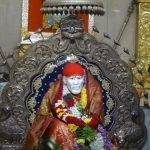
- Garbhagriha (Sanctum Sanctorum): Houses the idol of Sai Baba, adorned with flowers and silks.
- Mandapa (Hall): A large, pillared hall allows for congregational prayers and bhajans. It is designed according to Vastu principles to maximize positive energy flow.
- Meditation Hall: A distinct feature is the dedicated space for silence and meditation, reflecting Baba’s teaching of inner contemplation.
The interiors are simple yet elegant, avoiding excessive ornamentation to focus on the spiritual presence of the deity.
Darshan & Ritual Logistics
Devotees can participate in various sevas (services) performed daily. The atmosphere is charged with devotion, especially on Thursdays, considered the most auspicious day for Sai Baba.
Daily Timings
| Day | Morning Session | Evening Session |
|---|---|---|
| Monday – Saturday | 5:00 AM – 12:00 PM | 5:00 PM – 9:00 PM |
| Thursday | 5:00 AM – 12:00 PM | 5:00 PM – 9:00 PM |
| Sunday | 5:00 AM – 12:00 PM | 5:00 PM – 9:00 PM |
Note: The temple is closed between 12:00 PM and 5:00 PM (except on Thursdays when extended hours may apply).
Key Sevas and Booking
The All India Sai Samaj organizes several rituals. As of 2026, online booking is streamlined through their official portal.
- Abhishekam: Ritual bathing of the idol with water, milk, and honey.
- Archana: Recitation of Sai Baba’s names and prayers.
- Agni Pooja: Performed every Sunday.
How to Book: Devotees can book Sevas via the official All India Sai Samaj website or at the counter inside the temple premises.
2026 Festival Calendar
Major festivals celebrated with great fervor include:
- Sri Rama Navami (Sai Baba’s Birthday): April 6, 2026. This is a major event where Baba’s birthday is celebrated in conjunction with the divine festival of Lord Rama.
- Guru Poornima: July 13, 2026. A day to honor the Guru-Shishya tradition.
- Navarathri: A 10-day celebration ending on Vijayadasami (Oct 1, 2026). The temple is adorned with decorations and cultural performances.
- Death Anniversary of Narasimha Swamiji: Celebrated annually on August 21st.
Practical Visitor Guidance
To ensure a serene darshan experience, please adhere to the following guidelines:
Dress Code & Etiquette
Modest attire is required. Traditional Indian wear is preferred. Western attire should be conservative (avoid shorts/tank tops). Devotees are requested to maintain silence in the meditation hall.
Photography & Mobiles
Photography is generally restricted inside the sanctum. Mobile phones should be kept on silent mode. Lockers are available for storing personal belongings.
Crowd Management
Best Hours to Visit: Mornings between 7:00 AM and 10:00 AM are less crowded. Thursdays witness the highest footfall; visiting late evening (7:00 PM) is recommended for a peaceful experience.
Seasonal Advice: Chennai summers (April–June) are hot. Carry a water bottle and a handkerchief. Hydration is essential while waiting in queues.
Pilgrimage Connectivity
How to Reach
The temple is located at 56, Alamelumangapuram Road, Venkatesa Agraharam Street, Mylapore, Chennai – 600 004.
By Road:
Mylapore is well-connected via the MTC bus network. Key bus routes include 1, 1A, 1C, 1D, 5B, and 21. The nearest major bus stop is Mylapore Bus Stop (500m away).
By Train:
The nearest suburban railway station is Mylapore (Thirumayilai) MRTS Station (650m away). It connects to Chennai Beach and Velachery.
By Air:
Chennai International Airport is approximately 17 km away (approx. 40-50 mins by cab).
Nearby Sacred Sites
Enhance your pilgrimage by visiting these nearby spiritual landmarks:
- Kapaleeshwarar Temple: Just a kilometer away, this ancient Dravidian temple dedicated to Lord Shiva is a masterpiece of architecture.
- Sri Parthasarathy Temple: Located in Triplicane (2 km away), one of the 108 Divya Desams dedicated to Lord Krishna.
- Santhome Cathedral Basilica: A historic shrine built over the tomb of St. Thomas the Apostle, reflecting the city’s religious diversity.
Photo Gallery


Frequently Asked Questions (FAQ)
1. Is there a VIP darshan entry at the temple?
Yes, the temple facilitates special entry darshan for elderly devotees and those with medical conditions. However, the concept is generally limited to Seva ticket holders (Abhishekam/Archana) who get priority access during their specific time slots.
2. Do I need to carry ID proof for entry?
While generally not required for general darshan, carrying a valid government ID is mandatory for booking accommodation (if available) or specific high-value sevas.
3. Is the temple accessible for wheelchair users?
The main temple areas are accessible, though the architecture is older. The All India Sai Samaj committee has made provisions for ramps at the entrance, but it is advisable to seek assistance from temple volunteers if needed.
4. Can non-Hindus enter the temple?
Absolutely. Sai Baba himself transcended religious boundaries. The Shirdi Sai Baba Temple welcomes devotees from all religions and creeds. The entrance is open to all humanity.
5. What is the significance of Thursday here?
Thursday is considered the most auspicious day of the week for Sai Baba. It is believed that Baba’s spirit is most active on Thursdays. The temple remains open throughout the day, and special bhajans and Aarti are performed.
Recent Posts

Shri Kaamkoteeshwar Mandir, Varanasi – History & Significance
In the heart of Kashi, the eternal city of Lord Shiva, where the Ganges flows with celestial grace, stands the Shri Kaamkoteeshwar Mandir. This sacred Sannidhi is not merely a temple but a profound spiritual bridge between the Northern…

ओ सांवरे तूने ही मुझको संभाला – Lyrics & Meaning
ओ सांवरे तूने ही मुझको संभाला – A Prayer to Shyam Origin & Spiritual Essence Why This Bhajan Resonates Devotees chant this when overwhelmed by life’s storms—the refrain ‘तूने ही मुझको संभाला’ is the soul’s sigh of relief: “You…

कथा ये है महाराज मेरे की – Lyrics & Meaning
कथा ये है महाराज मेरे की छत्रपति संभाजी महाराज – A Prayer to Chhatrapati Sambhaji Maharaj Origin & Spiritual Essence Why This Bhajan Resonates Devotees chant this when their spirit feels tested—its powerful refrain “महाराज मेरे” is a soul’s…

Rigveda Samhita Yathartha Anuvada (ऋग्वेद संहिता यथार्थ अनुवाद) – Complete Set with Anvayartha & Hindi/English Translation
The Rigveda is the oldest surviving scripture of humanity and the foundational text of Sanātana Dharma. For serious students, scholars, UPSC aspirants studying ancient Indian history, Sanskrit learners, and spiritual seekers, a precise and grammatically structured translation is indispensable.…

आना भी अकेला है जाना भी अकेला है – Lyrics & Meaning | BharatTemples
आना भी अकेला है जाना भी अकेला है – A Prayer to the Divine Witness Origin & Spiritual Essence Why This Bhajan Resonates Devotees turn to this bhajan in moments of deep reflection—when life’s attachments begin to ache. The…

माता शेरावाली के द्वार जो भी जाता है – Lyrics & Meaning
माता शेरावाली के द्वार जो भी जाता है – A Prayer to Maa Sherawali Origin & Spiritual Essence Why This Bhajan Resonates Devotees turn to this bhajan in times of fear or uncertainty—its promise that no one leaves Maa’s…

मार लेना सपणी उबार लेणा भवरा – Lyrics & Meaning
मार लेना सपणी उबार लेणा भवरा – A Prayer to the Divine Beloved Origin & Spiritual Essence Why This Bhajan Resonates Devotees chant this in moments of deep vulnerability—its cry of “मार लेना सपणी, उबार लेणा भवरा” is the…

हमें श्याम सुंदर भरोसा तुम्हारा – Lyrics & Meaning
हमें श्याम सुंदर भरोसा तुम्हारा – A Prayer to Shyam Sundar Origin & Spiritual Essence Why This Bhajan Resonates Devotees chant this when feeling alone—its refrain ‘de do sahara’ is the soul’s cry for divine support. Lyrics in Hindi…

Mere Satguru Ne Di Thi Davai Lyrics in Hindi & Meaning
Mere Satguru Ne Di Thi Davai: Invoking the Guru’s Liberating Wisdom This soul-stirring bhajan venerates the Satguru (True Spiritual Master) as the divine physician who dispenses the only remedy for life’s deepest sufferings. Composed by Sant Karmaveer Tufani, it…

Janm Diyo Thari Maa Dukh Dekhiyo Lyrics in Hindi & Meaning
जन्म दियो थारी माँ दुख देखियो (Maa’s Grief Upon Birthing You) This soul-stirring Chetavani Bhajan (admonitory hymn) is addressed to the Divine Mother (Maa) – a call for repentance when children forget their filial duties in the dark age…