
Contents
Introduction & Spiritual Essence
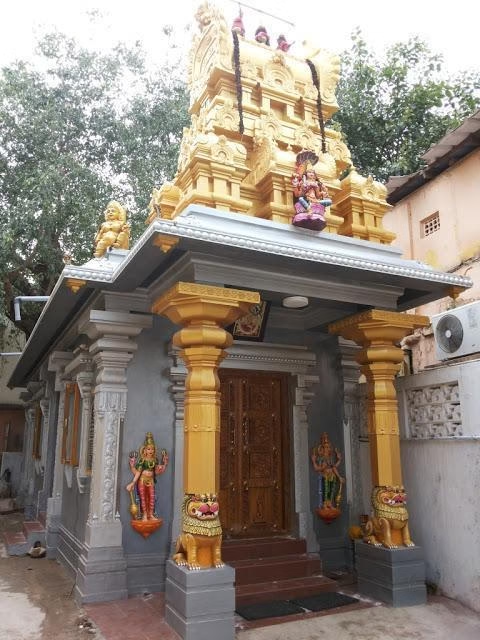
The Nagathamman Temple in Mylapore, Chennai, is a profound sanctuary dedicated to Nagathamman (the Serpent Goddess), revered as an incarnation of the divine feminine (Shakti). Unlike grand, expansive complexes, this temple is a Peera Kovil—a sacred shrine nestled in the heart of the bustling Mosque Street. The deity here is worshipped as a Swayambhu manifestation, believed to have emerged naturally from the earth.
Phalaśruti: Why Devotees Visit
Devotees flock to this ancient shrine seeking protection from planetary afflictions (especially Rahu-Ketu dosha) and snake bites. The Phalaśruti (scriptural promise of benefits) suggests that offering prayers here cleanses ancestral karma related to serpent curses and grants immediate relief from fear and chronic health issues. It is a powerful site for those seeking stability in family life and protection from unseen negative forces.
Historical Origins & Scriptural Legend
While precise dynastic records for this small shrine are sparse, tradition holds that the temple dates back to the early Chola period or perhaps even earlier, given the antiquity of Mylapore itself. It is said that the temple was constructed during a time when the region was dense forest, housing the natural abode of the Nagas (serpent deities).
The Sthala Purana
According to local legend, the land of Mylapore was once plagued by a virulent Naga Dosha (affliction caused by serpents). A devout sage performed intense penance here to pacify the serpent gods. Pleased by his devotion, the Goddess appeared as Nagathamman, calming the venomous snakes and establishing her presence under the Ficus (Fig) tree. The tree itself is considered sacred, with its roots forming a natural canopy over the Sannadhi (sanctum), where the serpentine faces are visible above the moolavar.
Architectural Marvels
The temple showcases traditional Dravidian architecture, adapted for a smaller shrine format. Key architectural elements include:
- The Natural Sanctum: The inner sanctum is unique because it is integrated with the roots of the massive Arasa Maram (Peepal tree). This Sthala Vriksham (sacred tree) is the defining feature, creating a living roof over the deity.
- Dravidian Style: Features a modest Vimana (tower) over the sanctum, adorned with Kudu (arch) motifs. The outer walls are simple, typical of neighborhood shrines in South Chennai.
- Sculptural Details: The focal point is the carving of five hooded snakes protecting the Moolavar (presiding deity). The Mandapa (pillared hall) is compact, facilitating intimate Pradakshina (circumambulation).
Darshan & Ritual Logistics
Visitors should note that this is a traditional neighborhood temple. The schedule may vary slightly based on local priest availability and temple committee announcements.
Daily Timings
| Session | Timing | Activity |
|---|---|---|
| Morning | 06:00 AM – 12:00 PM | Opening, Morning Abhishekam, Archana |
| Evening | 05:00 PM – 08:30 PM | Deeparadhana, Nivenaivedyam, Closing |
Key Sevas & Offerings
While online booking is not typically available for this specific heritage shrine, the temple committee manages offerings manually. Popular Sevas include:
- Naga Pratishta Pooja: Special consecration for snake deities (usually performed on Sundays).
- Milk Abhishekam: Pouring milk over the serpent idols.
- Vilva Archana: Offering Bilva leaves to the Goddess.
2026 Festival Dates
Mark your calendars for these significant celebrations in 2026:
- Nagula Chaviti: October 25, 2026 (Saturday) – A major event where special pots of milk are offered.
- Skanda Shashti: November 4–9, 2026 – Special Abishekam to the serpent lords.
- Aadi Perukku: August 3, 2026 – Rituals involving river water and new clay pots.
Practical Visitor Guidance
Dress Code & Etiquette
- Attire: Traditional wear is recommended. Men should remove shirts (dhoti is preferred) before entering the sanctum; women should wear sarees or salwar kameez.
- Photography: Strictly prohibited inside the sanctum. Photography in the Mandapa is allowed only with permission from the temple custodians.
- Mobiles: Switch devices to silent mode. There are no locker facilities; carry minimal belongings.
- Accessibility: The temple is located on Mosque Street, which can be crowded. The sanctum is at ground level, accessible to most, but the narrow entrance requires caution.
Crowd Management & Seasonal Advice
The best hours for a peaceful darshan are 7:00 AM – 9:00 AM on weekdays. Weekends see a surge of locals.
- May (Summer): Chennai is humid. Carry a water bottle and a handkerchief.
- Monsoon (November): Be cautious of slippery steps near the tree roots.
Pilgrimage Connectivity
How to Reach Nagathamman Temple, Mylapore
The temple is situated in Mosque Street, approximately 800 meters from the Mylapore Bus Stop and 1.2 km from Mylapore Railway Station (Mylapore is formerly known as Thirumayilai on the MRTS line).
By Road:
Mylapore is a central hub connected by MTC buses. Key routes include:
| Route No. | Start Point | End Point |
|---|---|---|
| 1 / 1A | Thiruvottriyur | Thiruvanmiyur |
| 5B | T. Nagar | Mylapore |
| 12B | Foreshore Estate | Vadapalani |
| M15 | Tambaram East | Mylapore |
| 21G | Broadway | Tambaram |
By Train:
The nearest MRTS station is Thirumayilai (Mylapore). From there, it is a short walk or an auto-rickshaw ride to Mosque Street.
By Air:
Chennai International Airport (MAA) is approximately 17 km away. A taxi or cab will take 45–60 minutes depending on traffic via NH48.
Nearby Sacred Sites
- Kapaleeshwarar Temple: Located just 1 km away, this is one of the largest Shiva temples in Tamil Nadu.
- Sri Parthasarathy Temple (Triplicane): About 2 km north, a major Vaishnavite shrine.
- Santhome Cathedral: A historic basilica built over the tomb of St. Thomas, located 3 km away.
Photo Gallery


Frequently Asked Questions (FAQ)
1. Is there a VIP Darshan entry available?
As this is a traditional neighborhood temple, there is no formal VIP entry system. Darshan is generally quick on weekdays, though queues may form during weekends and festivals. The temple committee may prioritize elderly devotees upon request.
2. Can I perform a housewarming (Griha Pravesh) ceremony here?
Yes, many locals perform Griha Pravesh rituals here before moving into a new home in Mylapore to invoke the protection of Nagathamman.
3. Is non-vegetarian food allowed inside the temple?
Strictly No. The temple follows orthodox Hindu traditions. Only Sattvic food (fruits, milk, cooked rice) is allowed as offering. Alcohol and meat are prohibited within the temple premises.
4. What is the history of the tree inside the temple?
The Ficus tree is estimated to be over a century old. It is considered the abode of the Nagadevathas. The roots have naturally shaped the sanctum, making it a unique example of living architecture.
5. Is there parking available?
Due to the narrow streets of Old Mylapore, vehicle parking is restricted. It is advisable to park near the main Mylapore market area or use the Teynampet side streets and walk to the temple.
Recent Posts

Shri Kaamkoteeshwar Mandir, Varanasi – History & Significance
In the heart of Kashi, the eternal city of Lord Shiva, where the Ganges flows with celestial grace, stands the Shri Kaamkoteeshwar Mandir. This sacred Sannidhi is not merely a temple but a profound spiritual bridge between the Northern…

ओ सांवरे तूने ही मुझको संभाला – Lyrics & Meaning
ओ सांवरे तूने ही मुझको संभाला – A Prayer to Shyam Origin & Spiritual Essence Why This Bhajan Resonates Devotees chant this when overwhelmed by life’s storms—the refrain ‘तूने ही मुझको संभाला’ is the soul’s sigh of relief: “You…

कथा ये है महाराज मेरे की – Lyrics & Meaning
कथा ये है महाराज मेरे की छत्रपति संभाजी महाराज – A Prayer to Chhatrapati Sambhaji Maharaj Origin & Spiritual Essence Why This Bhajan Resonates Devotees chant this when their spirit feels tested—its powerful refrain “महाराज मेरे” is a soul’s…

Rigveda Samhita Yathartha Anuvada (ऋग्वेद संहिता यथार्थ अनुवाद) – Complete Set with Anvayartha & Hindi/English Translation
The Rigveda is the oldest surviving scripture of humanity and the foundational text of Sanātana Dharma. For serious students, scholars, UPSC aspirants studying ancient Indian history, Sanskrit learners, and spiritual seekers, a precise and grammatically structured translation is indispensable.…

आना भी अकेला है जाना भी अकेला है – Lyrics & Meaning | BharatTemples
आना भी अकेला है जाना भी अकेला है – A Prayer to the Divine Witness Origin & Spiritual Essence Why This Bhajan Resonates Devotees turn to this bhajan in moments of deep reflection—when life’s attachments begin to ache. The…

माता शेरावाली के द्वार जो भी जाता है – Lyrics & Meaning
माता शेरावाली के द्वार जो भी जाता है – A Prayer to Maa Sherawali Origin & Spiritual Essence Why This Bhajan Resonates Devotees turn to this bhajan in times of fear or uncertainty—its promise that no one leaves Maa’s…

मार लेना सपणी उबार लेणा भवरा – Lyrics & Meaning
मार लेना सपणी उबार लेणा भवरा – A Prayer to the Divine Beloved Origin & Spiritual Essence Why This Bhajan Resonates Devotees chant this in moments of deep vulnerability—its cry of “मार लेना सपणी, उबार लेणा भवरा” is the…

हमें श्याम सुंदर भरोसा तुम्हारा – Lyrics & Meaning
हमें श्याम सुंदर भरोसा तुम्हारा – A Prayer to Shyam Sundar Origin & Spiritual Essence Why This Bhajan Resonates Devotees chant this when feeling alone—its refrain ‘de do sahara’ is the soul’s cry for divine support. Lyrics in Hindi…

Mere Satguru Ne Di Thi Davai Lyrics in Hindi & Meaning
Mere Satguru Ne Di Thi Davai: Invoking the Guru’s Liberating Wisdom This soul-stirring bhajan venerates the Satguru (True Spiritual Master) as the divine physician who dispenses the only remedy for life’s deepest sufferings. Composed by Sant Karmaveer Tufani, it…

Janm Diyo Thari Maa Dukh Dekhiyo Lyrics in Hindi & Meaning
जन्म दियो थारी माँ दुख देखियो (Maa’s Grief Upon Birthing You) This soul-stirring Chetavani Bhajan (admonitory hymn) is addressed to the Divine Mother (Maa) – a call for repentance when children forget their filial duties in the dark age…