
Contents
Sun Temple, Ranchi: A Definitive Pilgrimage Guide
Introduction & Spiritual Essence
Sun Temple Ranchi, locally known as Surya Mandir, stands as a monumental beacon of devotion to Surya Dev (the Solar Deity) in the heart of the Chhota Nagpur Plateau. Unlike ancient rock-cut shrines, this temple represents a modern architectural marvel, blending traditional Vastu principles with symbolic representation of the cosmos. The primary deity is worshipped here as Surya Narayan, flanked by his consorts Usha and Pratyusha.
Phalaśruti (Spiritual Benefits): Devotees believe that offering prayers here, particularly during the rising sun, helps cleanse ancestral karma and grants vitality (Ojas). The temple is intrinsically linked to Chhath Puja, a rigorous Vedic festival dedicated to the Sun God. The temple complex is built around a sacred pond (Chhath Ghat), making it the spiritual epicenter for the Chhathavratis (devotees) in the Chhota Nagpur region. Worshipping here is said to alleviate planetary afflictions (Graha Dosha), specifically those related to the Sun in one’s astrological chart.
Historical Origins & Scriptural Legend
Construction and Legacy: While the Sun God has been venerated in Vedic texts like the Rigveda for millennia, the Sun Temple Ranchi is a relatively modern structure completed in 1992. It was constructed by a charitable trust named Sanskrit Vihar, led by the visionary Shri Ram Maroo (Managing Director of Ranchi Express). Unlike archaeological sites, this temple was born from the collective faith of the local population rather than imperial patronage.
Scriptural Connection: The temple’s design is inspired by the Konark Sun Temple in Odisha, reflecting the ancient tradition of Sauramandira (Sun temples) described in the Puranas. Tradition holds that the location was chosen because of the natural presence of a water body, which is essential for Chhath rituals. According to temple records, the site was developed to provide a permanent, dignified venue for the Chhath festival, which was previously celebrated on riverbanks with less infrastructure.
Architectural Marvels
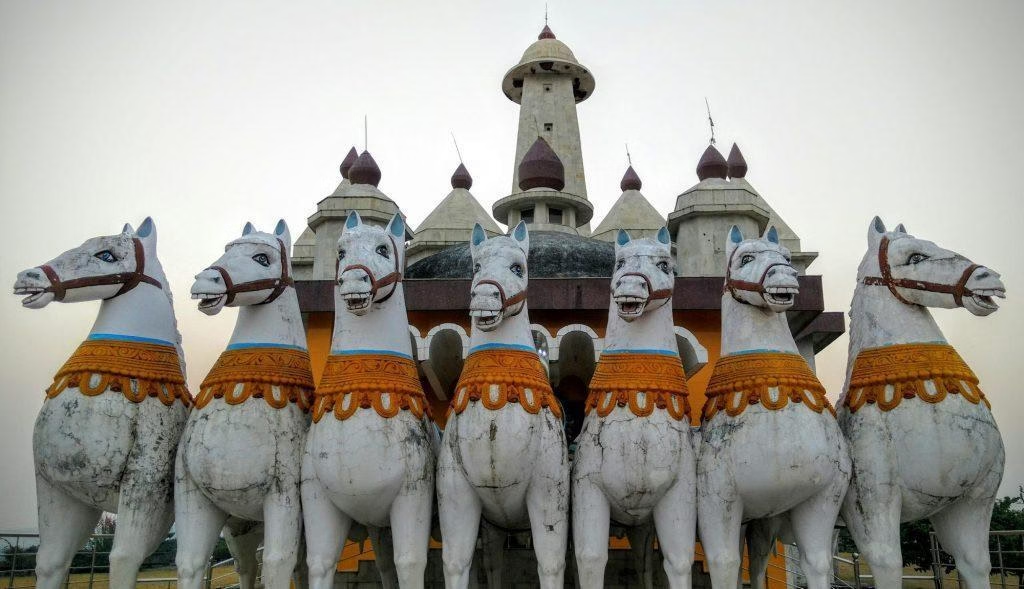
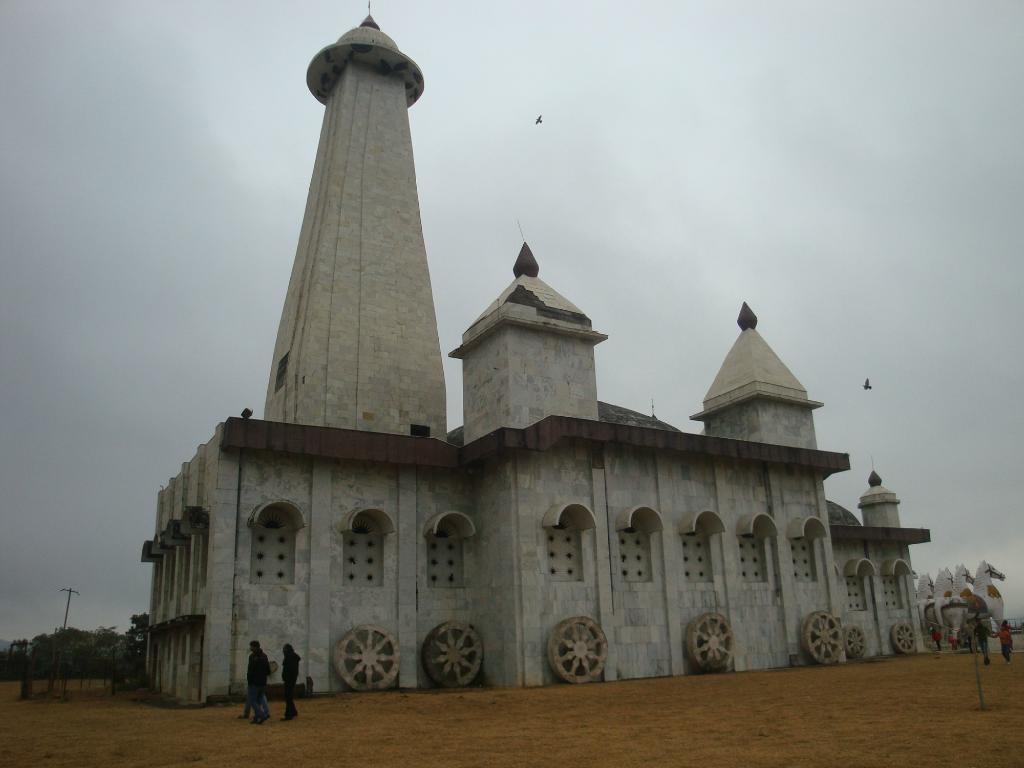
Style and Symbolism: The temple is a masterpiece of modern Nagara-style architecture, infused with deep symbolic geometry. It is designed to resemble a massive chariot (Ratha) drawn by seven lifelike horses. This depiction symbolizes the movement of the Sun God across the heavens.
Vastu Shastra Elements:
- The Chariot Shape: The structure features 18 wheels (9 on each side), representing the 18 hours of the Sun’s activity in a day (traditionally believed in certain Vedic schools of thought).
- The Seven Horses: These represent the seven days of the week and the seven chakras in the human body, aligning spiritual energy with cosmic rhythm.
- The Mandala: The layout follows a strict geometric grid, ensuring the sanctum (Garbhagriha) receives the first rays of the sun.
The Shikhara (spire) is ornate, adorned with intricate carvings and motifs depicting various deities. The Mandapa (hall) is spacious, featuring highly polished stone flooring that reflects the light streaming in through the openings. While the temple is not a UNESCO heritage site, it stands as a protected monument under the management of the trust and the state archaeology department.
Darshan & Ritual Logistics
Visiting the Sun Temple is a structured spiritual experience. The temple administration ensures a smooth flow of devotees while maintaining the sanctity of the rituals.
| Activity | Timings | Details |
|---|---|---|
| Morning Darshan | 5:00 AM – 12:00 PM | Opens at sunrise. Best time for ‘Arghya’ offering. |
| Evening Darshan | 4:00 PM – 8:00 PM | Aarti and closing rituals. |
| Special Sevas | Upon Request | Surya Namaskar Archana, Abhishekam. |
Key Sevas and Booking
The temple facilitates traditional offerings. While the primary rituals are performed by the head priest, devotees can participate in Archana (chanting of names) and Abhishekam (ritual bathing of the deity) with milk and water.
Online Seva Booking: To book specific sevas or accommodation, devotees are advised to visit the official portal of Sanskrit Vihar Trust. While specific 2026 dates are subject to the Hindu calendar, major festivals include:
- Chhath Puja (November 2026): The temple sees peak footfall during this 36-hour fast dedicated to the Sun God.
- Makar Sankranti (January 2026): Celebrated with the distribution of sesame sweets and rice flour delicacies.
- Ratha Saptami: A significant festival marking the chariot of the Sun moving northward.
Practical Visitor Guidance
Dress Code & Etiquette: Modest, traditional attire is recommended (Saree, Salwar Kameez, Kurta-Pajama). Leather items (belts, wallets, purses) are strictly prohibited inside the temple premises.
Photography & Lockers: Photography is generally allowed in the outer complex and gardens but is prohibited inside the Sanctum Sanctorum. Mobile phones and electronic gadgets must be deposited at the free cloakroom (locker) facility provided at the entrance.
Crowd Management & Seasons:
- Best Hours: 5:00 AM to 8:00 AM for a serene experience. Evenings (4:30 PM onwards) are ideal for viewing the architecture in the setting sun.
- Seasonal Advice: Summers (April–June) in Ranchi can be hot; carry a water bottle and wear a hat. Monsoons (July–September) offer a lush green backdrop, but occasional showers are expected.
Accessibility: The temple complex is wheelchair accessible with ramps leading to the main mandapa, though the pond area involves steps.
Pilgrimage Connectivity
How to Reach Sun Temple Ranchi:
- By Road: The temple is located on the Tata-Ranchi Highway (NH-43), approximately 39 km from Ranchi city center. It is situated near the Bundu Stand. Private buses, taxis, and jeeps are easily available from Doranda and Bundu market.
- By Rail: The nearest major railway station is Ranchi Junction (RNC) (approx. 40 km). From there, hiring a taxi is the most convenient option.
- By Air: Birsa Munda Airport, Ranchi (IXR) is the nearest airport (approx. 45 km).
Nearby Sacred Sites (Pilgrimage Circuit):
- Patratu Valley: Just a short drive away, known for its breathtaking scenic views and the Jayanti Shakti Peeth.
- Pahari Mandir (Ranchi): Dedicated to Lord Shiva, situated atop a hill in the city.
- Sita Falls & Dassam Falls: Natural waterfalls often visited for their spiritual and scenic significance in the Chota Nagpur region.
Frequently Asked Questions (FAQ)
1. What is the significance of the 18 wheels on the temple?
The 18 wheels (9 on each side) represent the 18 hours of the Sun’s journey across the sky according to ancient Vedic timekeeping. The chariot form pays homage to the mythological chariot of Surya Dev, driven by his charioteer Aruna.
2. Is there a VIP darshan entry available?
The Sun Temple does not typically have a high-cost VIP entry system. However, senior citizens and specially abled devotees are given priority access through a separate gate. For special group pujas, one can contact the Sanskrit Vihar trust office in advance.
3. Where can I stay near the Sun Temple?
The temple trust runs a Dharamshala that offers rooms at a highly subsidized rate. Additionally, there are small motels and eateries near Bundu stand. For more comfortable accommodations, it is advisable to stay in Ranchi city and travel for the day.
4. Is non-vegetarian food allowed near the temple?
No. The entire complex is a strictly vegetarian (Saatvik) zone. Alcohol and non-vegetarian food are prohibited. The temple offers ‘Prasad’ (blessed food) during specific hours, and nearby eateries serve pure vegetarian meals.
5. What is the best time to visit for Chhath Puja?
Chhath Puja usually falls in October or November. If you plan to visit during this time, arrive early morning on the main day (Sandhya Arghya) to secure a viewing spot near the pond, as the crowds are massive. Accommodation in Ranchi must be booked weeks in advance. In the heart of Kashi, the eternal city of Lord Shiva, where the Ganges flows with celestial grace, stands the Shri Kaamkoteeshwar Mandir. This sacred Sannidhi is not merely a temple but a profound spiritual bridge between the Northern… ओ सांवरे तूने ही मुझको संभाला – A Prayer to Shyam Origin & Spiritual Essence Why This Bhajan Resonates Devotees chant this when overwhelmed by life’s storms—the refrain ‘तूने ही मुझको संभाला’ is the soul’s sigh of relief: “You… कथा ये है महाराज मेरे की छत्रपति संभाजी महाराज – A Prayer to Chhatrapati Sambhaji Maharaj Origin & Spiritual Essence Why This Bhajan Resonates Devotees chant this when their spirit feels tested—its powerful refrain “महाराज मेरे” is a soul’s… The Rigveda is the oldest surviving scripture of humanity and the foundational text of Sanātana Dharma. For serious students, scholars, UPSC aspirants studying ancient Indian history, Sanskrit learners, and spiritual seekers, a precise and grammatically structured translation is indispensable.… आना भी अकेला है जाना भी अकेला है – A Prayer to the Divine Witness Origin & Spiritual Essence Why This Bhajan Resonates Devotees turn to this bhajan in moments of deep reflection—when life’s attachments begin to ache. The… माता शेरावाली के द्वार जो भी जाता है – A Prayer to Maa Sherawali Origin & Spiritual Essence Why This Bhajan Resonates Devotees turn to this bhajan in times of fear or uncertainty—its promise that no one leaves Maa’s… मार लेना सपणी उबार लेणा भवरा – A Prayer to the Divine Beloved Origin & Spiritual Essence Why This Bhajan Resonates Devotees chant this in moments of deep vulnerability—its cry of “मार लेना सपणी, उबार लेणा भवरा” is the… हमें श्याम सुंदर भरोसा तुम्हारा – A Prayer to Shyam Sundar Origin & Spiritual Essence Why This Bhajan Resonates Devotees chant this when feeling alone—its refrain ‘de do sahara’ is the soul’s cry for divine support. Lyrics in Hindi… Mere Satguru Ne Di Thi Davai: Invoking the Guru’s Liberating Wisdom This soul-stirring bhajan venerates the Satguru (True Spiritual Master) as the divine physician who dispenses the only remedy for life’s deepest sufferings. Composed by Sant Karmaveer Tufani, it… जन्म दियो थारी माँ दुख देखियो (Maa’s Grief Upon Birthing You) This soul-stirring Chetavani Bhajan (admonitory hymn) is addressed to the Divine Mother (Maa) – a call for repentance when children forget their filial duties in the dark age…
Recent Posts
Shri Kaamkoteeshwar Mandir, Varanasi – History & Significance
ओ सांवरे तूने ही मुझको संभाला – Lyrics & Meaning
कथा ये है महाराज मेरे की – Lyrics & Meaning
Rigveda Samhita Yathartha Anuvada (ऋग्वेद संहिता यथार्थ अनुवाद) – Complete Set with Anvayartha & Hindi/English Translation
आना भी अकेला है जाना भी अकेला है – Lyrics & Meaning | BharatTemples
माता शेरावाली के द्वार जो भी जाता है – Lyrics & Meaning
मार लेना सपणी उबार लेणा भवरा – Lyrics & Meaning
हमें श्याम सुंदर भरोसा तुम्हारा – Lyrics & Meaning
Mere Satguru Ne Di Thi Davai Lyrics in Hindi & Meaning
Janm Diyo Thari Maa Dukh Dekhiyo Lyrics in Hindi & Meaning









