
Contents
Introduction & Spiritual Essence
Hidden on the banks of the serene Perumal Lake (a water body fed by the Pennai River) lies the ancient Sivakkozhuntheswarar Temple in Theerthanagiri, Cuddalore. This sacred site, historically known as Thiru Thinai Nagar, stands as a beacon of Dravidian spiritual heritage. It is revered as the 37th in the series of Devaram Padal Petra Shiva Sthalams and the 5th in Nadu Naadu.
Phalaśruti (Spiritual Benefits): Devotees flock to this shrine to attain peace and prosperity. Worshiping the Lord here is believed to cleanse ancestral karma. Notably, offerings to Lord Natarajar here are considered highly auspicious for those seeking excellence in music and dance, while prayers to Lord Dakshinamurthy are believed to bless farmers with bountiful yields.
Primary Deity: Lord Sivakkozhuntheswarar (a form of Shiva as a Swayambhu Lingam).
Consort: Goddess Neelakshi (also worshipped as Neeladhambikai, Oppilanayagi).
Historical Origins & Scriptural Legend
Chronology & Construction: While specific architectural inscriptions regarding the king who commissioned the temple are sparse in public records, local archaeology and oral history place the structure in the 6th Century CE. The village was originally named Thiru Thinai Nagar but was later renamed Theerthanagiri (Theertha means holy water/water body) due to its proximity to the Perumal Lake.
Scriptural References:
According to temple records and the Padal Petra Sthalam list, this site is immortalized in the Thevaram hymns. Saint Sundarar (Sundaramurti Nayanar), one of the four great Nayanmars, praised the Lord of this temple and the Goddess Ambica in his devotional verses, solidifying its status in Shaivism.
Architectural Marvels
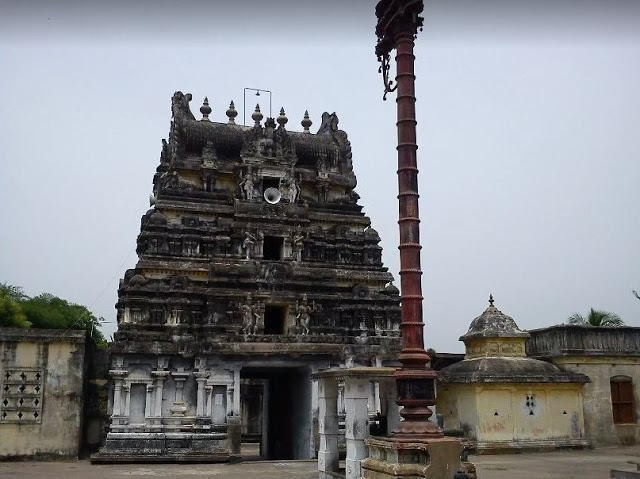
The Sivakkozhuntheswarar Temple is a classic example of the Dravidian style of architecture. The structure rises from the banks of the water body, integrating the natural landscape into the temple complex.
- The Sanctum (Garbhagriha): The presiding deity, a Swayambhu Lingam, faces east within a square sanctum.
- Mandapas: The temple features an Ardha Mandapa and a Maha Mandapa, adorned with pillars depicting various deities and mythical creatures.
- Shikhara: The tower over the sanctum (Vimana) displays the tiered style typical of early Dravidian temples.
- Notable Sculptures: Exquisite stonework dedicated to Nataraja and Dakshinamurthy can be found in the inner prakaram (corridor). While not a UNESCO site, it represents the architectural continuum of Tamil Nadu’s Chola-Pallava synthesis.
[Gallery Shortcode Placeholder: Insert high-resolution images of the temple gopuram, the Perumal Lake view, and the Sannadhi for Natarajar here]
Darshan & Ritual Logistics
The temple follows strict Agamic traditions. Four worship services are conducted daily. Below are the standard timings and major 2026 festival dates.
Daily Timings
| Session | Timing |
|---|---|
| Morning Darshan | 6:00 AM – 12:00 PM |
| Afternoon Recess | 12:00 PM – 5:00 PM |
| Evening Darshan | 5:00 PM – 8:00 PM |
Key Sevas & Offerings
- Abhishekam: Performed for both Lord Sivakkozhuntheswarar and Goddess Neelakshi. Milk, rosewater, and sandalwood are common abhishekam materials.
- Archana: Recitation of sacred names.
- Vastram (Clothing): Offering silk clothes to the deities is a popular ritual for devotees seeking blessings for marriage or family welfare.
2026 Festival Calendar (Tamil Months)
- Pradosham: Monthly (13th and 28th days of the lunar cycle). Highly recommended for liberation from sins.
- Maha Shivaratri: March (Masi Month) – The most auspicious night of Shiva.
- Vaikasi Brahmotsavam: May/June – A 13-day grand festival.
- Annabishekam: October/November (Aipasi Month) – Special Abhishekam with cooked rice.
- Arudra Dharisanam: December/January (Margazhi Month) – Celebrating the cosmic dance of Nataraja.
Online Seva Booking: As of 2026, the Tamil Nadu HR&CE department may offer online booking for specific sevas. Please check the official Tamil Nadu HR&CE Portal or contact the temple administration numbers provided in the contact section for the latest availability.
Practical Visitor Guidance
To ensure a peaceful darshan and respect for the sanctity of the temple, please adhere to the following guidelines:
Dress Code & Etiquette
- Attire: Traditional wear is preferred (Dhoti for men, Saree/Salwar Kameez for women). Avoid shorts, sleeveless tops, or tight-fitting clothing.
- Photography: Photography is strictly prohibited inside the inner sanctum (Garbhagriha). Permitted in the outer corridors, but avoid using flash.
- Mobile Phones: Switch devices to silent mode. While there may not be formal lockers, it is advisable to carry minimal belongings.
Crowd Management & Seasonal Advice
- Best Hours: For a tranquil experience, visit between 8:00 AM and 10:00 AM on weekdays. Friday evenings are usually busier.
- Summer (April–June): Temperatures in Cuddalore can be high. Carry a water bottle (only water is permitted; avoid plastic bottles inside the sanctum) and a head covering.
- Monsoon (October–December): The Perumal Lake swells during this time, offering a majestic view. Carry an umbrella as the temple corridors are open to the elements.
Pilgrimage Connectivity
How to Reach
The temple is located on the eastern bank of the Perumal Eri (lake) in Theerthanagiri village.
- By Road: The temple is situated on the Cuddalore – Chidambaram Road. From National Highway 32, take the deviation at Mettupalayam (approx. 20 km from Cuddalore) towards Theerthanagiri. Public buses run from Cuddalore (Bus Nos. 39, 34) and Karuveppampadi.
- By Train: The nearest railway station is Alapakkam (approx. 10 km), situated on the Cuddalore – Chidambaram section of the Southern Railway. The major rail hub is Cuddalore (Chidambaram is also a major junction nearby).
- By Air: The nearest airports are Puducherry Airport (approx. 46 km), followed by Tiruchirappalli International Airport (approx. 176 km) and Chennai International Airport (approx. 200 km).
Nearby Sacred Sites
Extend your pilgrimage to these nearby temples:
- Sri Vedapuriswarar Temple, Vadalur (26 km): A famous Shiva temple known for its Navagraha shrine.
- Natarajar Temple, Chidambaram (26 km): The cosmic dance hall, a UNESCO heritage site.
- Thiruvandipuram Temple (29 km): Known as the “Athikai Nadu,” dedicated to Lord Adikesava Perumal.
Frequently Asked Questions (FAQs)
1. Is there a VIP Darshan entry available?
The temple follows a general darshan system managed by the Tamil Nadu HR&CE. While there is no specific “VIP” ticket like in Tirupati, elderly devotees and those with special needs can request assistance from the temple staff for easier access.
2. Is the temple accessible for wheelchair users?
The outer complex has relatively flat access. However, the sanctum sanctorum has a narrow entry with steps. Caregivers may be required to assist devotees using wheelchairs into the inner shrine.
3. Are outside pooja materials allowed?
Generally, devotees can carry flowers and fruits for offering. However, items like lamps (Deepam) or camphor are usually restricted for safety reasons. It is best to purchase materials from the temple counter.
4. What is the significance of Perumal Lake here?
The temple is named Theerthanagiri due to this water body. It is considered a holy theertham (sacred water). Ritual ablutions in this lake before entering the temple are considered meritorious.
5. What is the contact number for the temple office?
For current updates, you can contact the temple administration or the local devotees committee at:
+91 90471 40464 / +91 91501 51195 / +91 97864 67593
(alternate numbers: +91 8870740464 / +91 99653 28278 / +91 94434 34024)
Recent Posts

Shri Kaamkoteeshwar Mandir, Varanasi – History & Significance
In the heart of Kashi, the eternal city of Lord Shiva, where the Ganges flows with celestial grace, stands the Shri Kaamkoteeshwar Mandir. This sacred Sannidhi is not merely a temple but a profound spiritual bridge between the Northern…

ओ सांवरे तूने ही मुझको संभाला – Lyrics & Meaning
ओ सांवरे तूने ही मुझको संभाला – A Prayer to Shyam Origin & Spiritual Essence Why This Bhajan Resonates Devotees chant this when overwhelmed by life’s storms—the refrain ‘तूने ही मुझको संभाला’ is the soul’s sigh of relief: “You…

कथा ये है महाराज मेरे की – Lyrics & Meaning
कथा ये है महाराज मेरे की छत्रपति संभाजी महाराज – A Prayer to Chhatrapati Sambhaji Maharaj Origin & Spiritual Essence Why This Bhajan Resonates Devotees chant this when their spirit feels tested—its powerful refrain “महाराज मेरे” is a soul’s…

Rigveda Samhita Yathartha Anuvada (ऋग्वेद संहिता यथार्थ अनुवाद) – Complete Set with Anvayartha & Hindi/English Translation
The Rigveda is the oldest surviving scripture of humanity and the foundational text of Sanātana Dharma. For serious students, scholars, UPSC aspirants studying ancient Indian history, Sanskrit learners, and spiritual seekers, a precise and grammatically structured translation is indispensable.…

आना भी अकेला है जाना भी अकेला है – Lyrics & Meaning | BharatTemples
आना भी अकेला है जाना भी अकेला है – A Prayer to the Divine Witness Origin & Spiritual Essence Why This Bhajan Resonates Devotees turn to this bhajan in moments of deep reflection—when life’s attachments begin to ache. The…

माता शेरावाली के द्वार जो भी जाता है – Lyrics & Meaning
माता शेरावाली के द्वार जो भी जाता है – A Prayer to Maa Sherawali Origin & Spiritual Essence Why This Bhajan Resonates Devotees turn to this bhajan in times of fear or uncertainty—its promise that no one leaves Maa’s…

मार लेना सपणी उबार लेणा भवरा – Lyrics & Meaning
मार लेना सपणी उबार लेणा भवरा – A Prayer to the Divine Beloved Origin & Spiritual Essence Why This Bhajan Resonates Devotees chant this in moments of deep vulnerability—its cry of “मार लेना सपणी, उबार लेणा भवरा” is the…

हमें श्याम सुंदर भरोसा तुम्हारा – Lyrics & Meaning
हमें श्याम सुंदर भरोसा तुम्हारा – A Prayer to Shyam Sundar Origin & Spiritual Essence Why This Bhajan Resonates Devotees chant this when feeling alone—its refrain ‘de do sahara’ is the soul’s cry for divine support. Lyrics in Hindi…

Mere Satguru Ne Di Thi Davai Lyrics in Hindi & Meaning
Mere Satguru Ne Di Thi Davai: Invoking the Guru’s Liberating Wisdom This soul-stirring bhajan venerates the Satguru (True Spiritual Master) as the divine physician who dispenses the only remedy for life’s deepest sufferings. Composed by Sant Karmaveer Tufani, it…

Janm Diyo Thari Maa Dukh Dekhiyo Lyrics in Hindi & Meaning
जन्म दियो थारी माँ दुख देखियो (Maa’s Grief Upon Birthing You) This soul-stirring Chetavani Bhajan (admonitory hymn) is addressed to the Divine Mother (Maa) – a call for repentance when children forget their filial duties in the dark age…