
Contents
- 1 Introduction & Spiritual Essence
- 2 Historical Origins & Scriptural Legend
- 3 Architectural Marvels
- 4 Darshan & Ritual Logistics
- 5 Practical Visitor Guidance
- 6 Pilgrimage Connectivity
- 7 Frequently Asked Questions (FAQs)
- 7.1 1. Is there a VIP Darshan entry available at Panangaateeswarar Temple?
- 7.2 2. What is the significance of the Palm Tree (Panai) in this temple?
- 7.3 3. Can we perform last rites or Homams here?
- 7.4 4. Are there accommodation facilities available?
- 7.5 5. What makes this temple unique among the 276 Paadal Petra Sthalams?
- 8 Photo Gallery
- 9 Contact Details
Introduction & Spiritual Essence
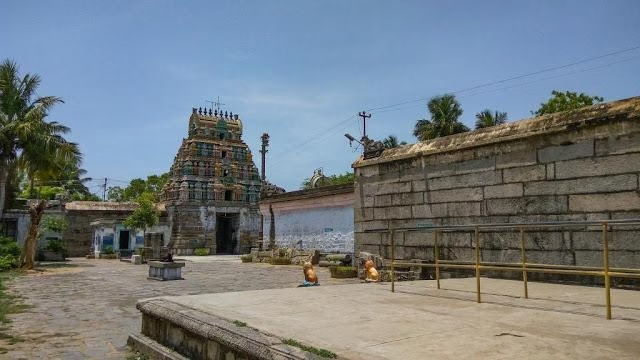
The Panangaateeswarar Temple in Panaiyapuram, Villupuram, is a sacred sanctuary dedicated to Lord Shiva, revered here as Panangaateeswarar. Also known by the names Nethrotharaneswarar and Kannamarntha Nayanar, the presiding deity is a Swayambhu (self-manifested) Lingam. The consort, Goddess Sathyambikai (also Meyyambikai or Puravambikai), graces the temple with divine grace.
This temple is one of the 276 Devara Paadal Petra Shiva Sthalams and the 20th Shiva Sthalam in the Nadu Naadu region of Tamil Nadu. The legendary Nayanar saint, Sambandhar, has composed hymns in praise of the deity. Uniquely, this is one of the five temples where the Palm Tree (Panai) serves as the Sthala Viruksham (sacred tree).
Phalaśruti: Why Devotees Visit
Panangaateeswarar Temple is renowned as a Parihara Sthalam (remedial shrine) specifically for ailments related to eyesight. Devotees believe that sincere prayers to Lord Kan parithu aruliya (The God who restored sight) can improve or restore vision. Beyond physical healing, devotees worship here to remove hurdles in marriage proposals, attain knowledge, and gain wisdom. It is a place where devotees perform Abhishekam and offer new clothes upon the fulfillment of their wishes.
Historical Origins & Scriptural Legend
Originally known as Puravar Panangkattur (Puravu meaning grove or forest), the temple is deeply rooted in mythology and royal history. It is a treasure trove of legends that connect the celestial with the terrestrial.
The Legend of Surya (Sun God)
Tradition holds that Daksha, father of Goddess Parvathi, performed a Yagna excluding Lord Shiva. Enraged, Shiva sent Aghora Veerabhadrar to punish the attendees. During this event, the Sun God (Suryan), who had attended the yagna, lost his eyesight and luster. To seek forgiveness and restoration, Suryan performed intense penance at this very spot. Lord Shiva, moved by the penance, restored Suryan’s sight and brightness. Hence, Lord Shiva here is known as the God who “took and later restored” eyesight. According to temple records, it is believed that every year during the Tamil New Year, Suryan himself illuminates the sanctums for seven days, directly bathing the deities from morning to evening.
King Sibi’s Sacrifice
Another profound legend involves King Sibi. Indra and Agni tested the King by appearing as a vulture and a dove. When the vulture demanded its meal, King Sibi offered flesh from his own thigh equivalent to the dove’s weight. Pleased by this supreme sacrifice and righteousness, Goddess Parvathi (Satyambigai) granted him Moksha (liberation) at this palm grove. The later Cholas, claiming descent from King Sibi (titling themselves Sembian), constructed the temple structure we see today.
Architectural Marvels
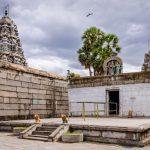
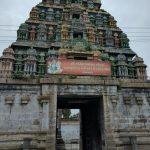
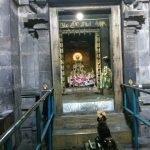
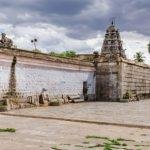
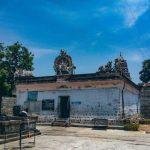
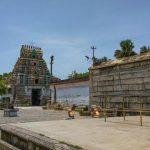
The temple showcases the grandeur of Dravidian architecture. All Sannidhis (shrines) face east, aligning with the solar legend. The structure features a classic Shikhara (tower) rising above the sanctum sanctorum and spacious Mandapas (halls) for rituals and gatherings.
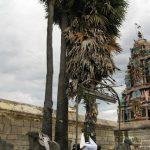
The temple complex is designed according to Vastu Shastra principles, ensuring the energy flow aligns with the elemental forces represented by the deities. While the temple has undergone renovations over the centuries to preserve its structural integrity, the sanctity of the original Sthala Viruksham (the Palm Tree) remains preserved within the complex.
Darshan & Ritual Logistics
Devotees can participate in various rituals, including Abhishekam (ritual bathing) and Archana (chanting of names). While online booking systems are often integrated into major temple portals, it is recommended to check current availability via the contact numbers provided.
Daily Timings (2026 Schedule)
Note: Timings are subject to change during festival seasons.
| Session | Timing |
|---|---|
| Morning | 6:00 AM – 11:00 AM |
| Evening | 5:00 PM – 7:30 PM |
Key Sevas & Festivals
- Abhishekam: Offered after prayer fulfillment; involves pouring sacred substances (milk, honey, etc.) over the Lingam.
- Archana: Recitation of the deity’s 108 names.
- Surya Pooja: Held in the Tamil month of Chithirai (April-May).
- Maha Shivarathri: Celebrated in Masi (February-March).
- Thiruvathirai: Celebrated in Margazhi (December-January).
- Annabishekam: Ritual offering of cooked rice to the deity, held in Aippasi (October-November).
Online Seva Booking: For specific 2026 festival dates and online seva bookings, devotees are encouraged to contact the temple management via the phone numbers listed below or visit local Tamil Nadu temple administration portals.
Practical Visitor Guidance
To ensure a serene darshan experience, please adhere to the following guidelines:
- Dress Code: Traditional attire is preferred (Dhoti/White Shirt for men, Saree/Salwar for women).
- Photography: Photography inside the sanctum sanctorum is strictly prohibited. Photography in the outer corridors may be permitted subject to local discretion.
- Footwear & Mobiles: Please utilize the designated Mobile Lockers and shoe racks at the entrance. Silence is encouraged inside the temple complex.
- Accessibility: The temple is an ancient structure with steps. Visitors with mobility issues should use the side entrances.
- Crowd Management: The best time to visit for a peaceful darshan is early morning (6:00 AM – 7:00 AM). Avoid weekends and festival days if possible. During May (Summer), carry water and an umbrella as the courtyards can be hot.
Pilgrimage Connectivity
The temple is located in Panaiyapuram Village, near Mundiyampakkam in Villupuram District.
How to Reach
- By Road: The temple is situated on the Pondicherry to Mundiyampakkam route, roughly 1 km from the Vikravandi tollgate. It is easily accessible from the Panruti/Kumbakonam road. Buses from Chennai to Villupuram stop at Mundiyampakkam, from where autos are available.
- By Train: The nearest railway station is Vikravandi (approx. 8 km). The nearest major railway hub is Villupuram (approx. 17 km).
- By Air: Nearest airports are Puducherry (40 km), Chennai (158 km), and Trichy (176 km).
Nearby Sacred Sites
- Thiruvamathur Temple: Located 14 km away, a Divyadesam dedicated to Lord Vishnu.
- Thiruvakkarai Temple: 17 km away, known for the fossil forest and Chandramouliswarar Temple.
- Mundiyampakkam: The nearby town hub featuring the famous Sakthi Nagar Temple and commercial resources.
Frequently Asked Questions (FAQs)
1. Is there a VIP Darshan entry available at Panangaateeswarar Temple?
Generally, as a Devara Paadal Petra Sthalam, the temple management offers special darshan arrangements for the elderly and physically disabled. However, a dedicated VIP entry like those found in Tirupati is not standard; darshan is typically on a first-come, first-served basis.
2. What is the significance of the Palm Tree (Panai) in this temple?
The Palm Tree is the Sthala Viruksham. It is one of the few temples where a palm tree is worshipped as the primary sacred tree representing the element of nature associated with the temple’s history.
3. Can we perform last rites or Homams here?
The temple is a Parihara Sthalam primarily for eye ailments and knowledge. While regular Homams may be conducted, specific arrangements for funeral rites should be confirmed with the temple administration via phone.
4. Are there accommodation facilities available?
Basic accommodation is available in the nearby town of Mundiyampakkam and Villupuram. The temple complex itself does not have a large guest house, but local mutts and choultries provide rooms for pilgrims.
5. What makes this temple unique among the 276 Paadal Petra Sthalams?
Its association with the legend of Surya (the Sun God) regaining his eyesight makes it unique for those seeking vision-related blessings. The direct connection to King Sibi’s legendary sacrifice also ties it deeply to the moral values of the Chola dynasty.
Photo Gallery
Contact Details
Panangaateeswarar Temple
Panaiyapuram Post,
Mundiyampakkam Via,
Villupuram District – 605 601
Mobile: +91 9942056781 / 94448 97861
Recent Posts

Shri Kaamkoteeshwar Mandir, Varanasi – History & Significance
In the heart of Kashi, the eternal city of Lord Shiva, where the Ganges flows with celestial grace, stands the Shri Kaamkoteeshwar Mandir. This sacred Sannidhi is not merely a temple but a profound spiritual bridge between the Northern…

ओ सांवरे तूने ही मुझको संभाला – Lyrics & Meaning
ओ सांवरे तूने ही मुझको संभाला – A Prayer to Shyam Origin & Spiritual Essence Why This Bhajan Resonates Devotees chant this when overwhelmed by life’s storms—the refrain ‘तूने ही मुझको संभाला’ is the soul’s sigh of relief: “You…

कथा ये है महाराज मेरे की – Lyrics & Meaning
कथा ये है महाराज मेरे की छत्रपति संभाजी महाराज – A Prayer to Chhatrapati Sambhaji Maharaj Origin & Spiritual Essence Why This Bhajan Resonates Devotees chant this when their spirit feels tested—its powerful refrain “महाराज मेरे” is a soul’s…

Rigveda Samhita Yathartha Anuvada (ऋग्वेद संहिता यथार्थ अनुवाद) – Complete Set with Anvayartha & Hindi/English Translation
The Rigveda is the oldest surviving scripture of humanity and the foundational text of Sanātana Dharma. For serious students, scholars, UPSC aspirants studying ancient Indian history, Sanskrit learners, and spiritual seekers, a precise and grammatically structured translation is indispensable.…

आना भी अकेला है जाना भी अकेला है – Lyrics & Meaning | BharatTemples
आना भी अकेला है जाना भी अकेला है – A Prayer to the Divine Witness Origin & Spiritual Essence Why This Bhajan Resonates Devotees turn to this bhajan in moments of deep reflection—when life’s attachments begin to ache. The…

माता शेरावाली के द्वार जो भी जाता है – Lyrics & Meaning
माता शेरावाली के द्वार जो भी जाता है – A Prayer to Maa Sherawali Origin & Spiritual Essence Why This Bhajan Resonates Devotees turn to this bhajan in times of fear or uncertainty—its promise that no one leaves Maa’s…

मार लेना सपणी उबार लेणा भवरा – Lyrics & Meaning
मार लेना सपणी उबार लेणा भवरा – A Prayer to the Divine Beloved Origin & Spiritual Essence Why This Bhajan Resonates Devotees chant this in moments of deep vulnerability—its cry of “मार लेना सपणी, उबार लेणा भवरा” is the…

हमें श्याम सुंदर भरोसा तुम्हारा – Lyrics & Meaning
हमें श्याम सुंदर भरोसा तुम्हारा – A Prayer to Shyam Sundar Origin & Spiritual Essence Why This Bhajan Resonates Devotees chant this when feeling alone—its refrain ‘de do sahara’ is the soul’s cry for divine support. Lyrics in Hindi…

Mere Satguru Ne Di Thi Davai Lyrics in Hindi & Meaning
Mere Satguru Ne Di Thi Davai: Invoking the Guru’s Liberating Wisdom This soul-stirring bhajan venerates the Satguru (True Spiritual Master) as the divine physician who dispenses the only remedy for life’s deepest sufferings. Composed by Sant Karmaveer Tufani, it…

Janm Diyo Thari Maa Dukh Dekhiyo Lyrics in Hindi & Meaning
जन्म दियो थारी माँ दुख देखियो (Maa’s Grief Upon Birthing You) This soul-stirring Chetavani Bhajan (admonitory hymn) is addressed to the Divine Mother (Maa) – a call for repentance when children forget their filial duties in the dark age…