
Contents
- 1 Panchanatheeswar Vadugurnathar Temple
- 1.1 Thiruvandarkoil, Puducherry
- 1.2 1. Introduction & Spiritual Essence
- 1.3 2. Historical Origins & Scriptural Legend
- 1.4 3. Architectural Marvels
- 1.5 4. Darshan & Ritual Logistics
- 1.6 5. Practical Visitor Guidance
- 1.7 6. Pilgrimage Connectivity
- 1.8 Photo Gallery
- 1.9 7. Frequently Asked Questions (FAQ)
- 1.9.1 Is there a VIP Darshan entry available at Panchanatheeswarar Temple?
- 1.9.2 What is the significance of the 8 pillars in the Artha Mandapa?
- 1.9.3 Can we perform special Abhishekam on behalf of someone?
- 1.9.4 Are there accommodation facilities nearby?
- 1.9.5 What is the significance of offering Honey and Sugarcane to Lord Bhairava?
- 1.9.6 Contact Details
Panchanatheeswar Vadugurnathar Temple
Thiruvandarkoil, Puducherry
A 16th century Devara Padal Petra Shiva Sthalam, protected by the ASI, renowned for the Samhara Bhairava manifestation and intricate Chola architecture.
1. Introduction & Spiritual Essence
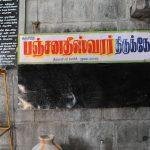
The Panchanatheeswarar Vadugurnathar Temple, located in the serene village of Thiruvandarkoil (Vandarkoil) near Villianur, Puducherry, stands as a spiritual beacon dedicated to Lord Shiva. The presiding deity is worshipped as Vadukeeswarar, Panchanadeeswarar, or Vadugurnathar. The divine consort, Thiripurasundari (also revered as Vaduvakirkanni), graces the sanctum with benevolent grace.
Phalaśruti: The Benefits of Devotion
According to temple lore and the beliefs of devotees, worship at this shrine holds profound benefits:
- Removal of Arrogance and Ego: The primary spiritual significance of this temple is the subjugation of pride (Ahankara). Devotees seek blessings to conquer arrogance, fostering humility and mental peace.
- Career Advancement: It is widely believed that sincere prayer to Lord Vadugurnathar aids in securing better job opportunities and promotions in professional life.
- Relief from Evil Effects: Specific rituals and Abhishekams performed on Ashtami (the 8th day of the lunar cycle) are believed to remove negative influences and evil effects clinging to an individual’s horoscope.
- Martial Success: Worshipping Mother Durga here grants success in endeavors and courage to face life’s battles.
2. Historical Origins & Scriptural Legend
This temple is a living museum of South Indian history, bearing inscriptions from the Parantaka Chola period through the Later Cholas (Rajaraja I, Rajendra I, and Kulothunga Chola I). It is classified as the 16th Shiva Sthalam in the Nadu Naadu region of the Pandya Kingdom.
Scriptural Significance
Thevaram (Devara Padal Petra Shiva Sthalam): The temple is glorified by the hymns of Saint Thirugnanasambandar, one of the Nayanmars. His verses, found in the Thevaram, sanctify this shrine as one of the 276 most revered Shiva temples.
Thirupugazh: The temple also finds mention in the Thirupugazh by Saint Arunagirinathar, who sang praises of Lord Murugan enshrined within these premises.
The Legend of Samhara Bhairava
Tradition holds that this temple is the abode of Samhara Bhairava Vadugurnathar. In the Sthala Purana, Bhairava is the fierce aspect of Shiva who guards the cosmic direction. Devotees believe that worshiping this specific manifestation destroys enemies and alleviates suffering from chronic illnesses.
3. Architectural Marvels
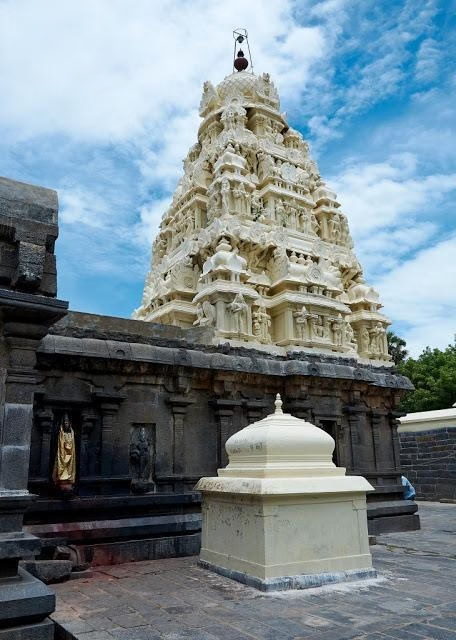
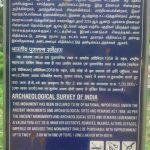
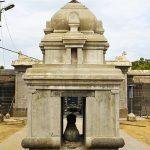
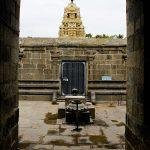
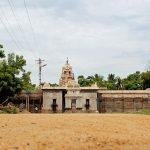
The temple exemplifies the grandeur of Dravidian Architecture and is protected by the Archaeological Survey of India (ASI), ensuring the preservation of its stone inscriptions and structural integrity.
Structural Highlights
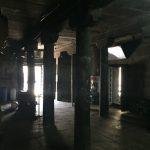
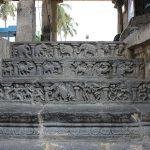
- The Mandapas: The temple features a spacious Artha Mandapa (vestibule) supported by eight massive stone pillars. These pillars showcase intricate carvings and serve as a stage for religious discourses and rituals.
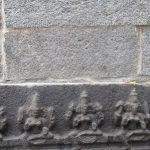
- Stone Inscriptions: The walls bear inscriptions dating back to the reigns of Rajaraja Chola and Kulothunga Chola, offering invaluable insights into the administrative and religious practices of the 10th and 11th centuries.
- Presiding Deity (Vimana): The sanctum sanctorum houses Vadugurnathar as a Swayambhu (self-manifested) Lingam, oriented according to Vastu principles facing east.
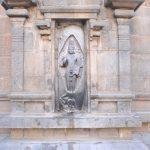
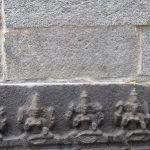
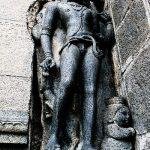
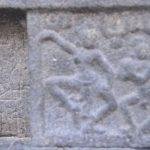
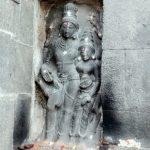
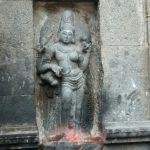
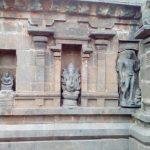
- Niches (Koshtas): The outer walls of the sanctum feature carved niches depicting various forms of Shiva and other deities, including a distinct Lord Murugan with six faces and twelve hands, riding his peacock, facing left.
- Ashta Bhairava: The shrine is renowned for its Bhairava manifestations, which are integral to the temple’s ritualistic identity.
4. Darshan & Ritual Logistics
Visitors are encouraged to verify timings before travel, especially during festival seasons. The temple is a Padal Petra Sthalam, and thus attracts significant footfall.
Daily Timings
| Session | Timing |
|---|---|
| Morning Darshan | 06:00 AM – 11:00 AM |
| Afternoon Closure | 11:00 AM – 05:00 PM |
| Evening Darshan | 05:00 PM – 08:00 PM |
Key Sevas & Offerings
- Abhishekam: Performed daily. Special Abhishekam with Honey and Sugarcane Juice is offered to Lord Bhairava on Ashtami days for relief from illnesses and obstacles.
- Archana: Recitation of hymns and names of the deity.
- Vastra Daanam: Offering clothes to the deity.
2026 Festival Calendar
While specific temple dates vary by the local Tamil Panchangam, the following are the major festivals observed in 2026:
- Maha Shivaratri (February 26, 2026): The most auspicious night for Shiva devotees. The temple remains open all night with special Abhishekams and chants.
- Ardra Darshanam (January 2026 – Approx.): Celebrates the cosmic dance of Shiva.
- Navaratri (September – October 2026): Dedicated to Mother Thiripurasundari. The temple is decorated with lights and dolls (Golu).
- Pradosham (Bi-weekly): 13th day of the waxing and waning moon. Highly auspicious for worshiping Lord Shiva.
Online Booking: Currently, the temple does not have a dedicated centralized online portal for Seva booking. Devotees are requested to contact the temple office directly at +91 99943 05874 / 9042154182 for special arrangements or check with the Department of Hindu Religious and Charitable Endowments (HR&CE) if the service is activated by 2026.
5. Practical Visitor Guidance
Dress Code & Etiquette
As this is an ASI-protected site and a traditional Hindu temple, modesty is strictly observed.
- Attire: Men should wear dhotis or pants with shirts; women should wear sarees, salwar kameez, or long skirts.
- Photography: Photography is generally permitted in the outer prakarams (corridors) but strictly prohibited inside the sanctum sanctorum and near the deities. Please respect the sanctity of the shrine.
- Mobile Phones: Usage is discouraged inside the inner shrine. While there may not be formal locker facilities, it is advisable to keep phones silent and out of sight.
- Accessibility: The temple has ramps for entry, but the inner sanctum has steps. Wheelchair access may be limited to the outer halls.
Crowd Management & Seasonal Advice
- Best Hours: For a peaceful Darshan, visit between 6:00 AM and 8:00 AM or 6:00 PM and 7:00 PM on weekdays.
- Weekends: Saturday and Sunday afternoons can be crowded due to local devotees from Puducherry.
- Summer (April – June): Puducherry is hot and humid. Carry a bottle of water and a headcover. The temple grounds offer shade, but hydration is essential.
- Monsoon (October – December): Carry an umbrella; sudden showers are common in the coastal region of Puducherry.
6. Pilgrimage Connectivity
How to Reach Panchanatheeswarar Temple
The temple is strategically located on the Puducherry to Villupuram National Highway (NH 45A), making it easily accessible.
- By Road: The temple is located approximately 19 km from Puducherry Central Bus Stand and 20 km from Villupuram. Regular buses ply from Villupuram to Puducherry and halt at Thiruvandarkoil. The temple is situated on the roadside, opposite the Food Corporation Godown.
- By Rail:
- Chinnababu Samudram: 4.5 km (Local station on the Villupuram–Puducherry line).
- Villupuram Junction: 20 km (Major railway hub with connectivity to Chennai, Trichy, and Bangalore).
- Puducherry Railway Station: 19 km.
- By Air:
- Puducherry International Airport: 24 km (Connectivity to major South Indian cities).
- Chennai International Airport (MAA): 179 km.
Nearby Sacred Sites (Pilgrimage Circuit)
Extend your spiritual journey by visiting these nearby shrines:
- Thiruvanteeswarar Temple (Thiruvennainallur): Located about 12 km from Thiruvandarkoil. This is a massive temple complex dedicated to Lord Shiva, famous for its towering Gopuram and association with the saint Thirugnanasambandar.
- Villianur Temple (Sri Mariamman Temple): Located approximately 7-8 km away. Famous for the annual chariot festival (Ther) and worship of the goddess Mariamman.
- Kammara Temple (Villianur): A unique temple dedicated to Lord Vishwakarma (the divine architect) located in Villianur.
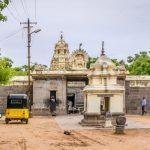
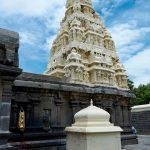
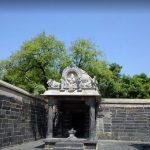
Photo Gallery
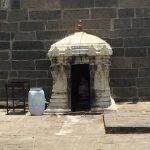
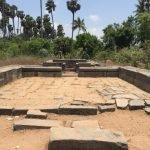
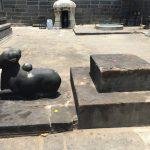
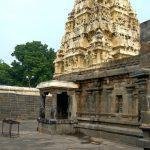
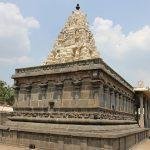
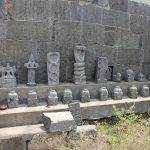
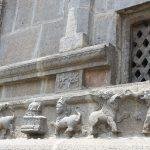

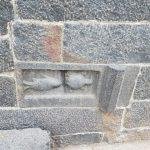

7. Frequently Asked Questions (FAQ)
Is there a VIP Darshan entry available at Panchanatheeswarar Temple?
As a temple managed by the Archeological Survey of India (ASI), the focus is on heritage preservation rather than commercial VIP queues. However, the temple is less congested than major city temples. Prior permission from the ASI office in Puducherry may be sought for research or photography purposes, but standard darshan is open to all.
What is the significance of the 8 pillars in the Artha Mandapa?
Devotees believe that worshiping the Lord while standing near or circumambulating these 8 pillars brings royal honors and benefits. It is a distinct architectural feature mentioned in the temple’s lore.
Can we perform special Abhishekam on behalf of someone?
Yes, devotees can perform Abhishekam and Archana in the name of family members. It is recommended to bring fresh fruits and flowers for the ritual. For specific days like Ashtami, coordination with the temple priests is advised.
Are there accommodation facilities nearby?
The temple itself does not have a guest house. However, plenty of lodging options are available in Villianur and Puducherry (19 km), ranging from budget lodges to luxury resorts.
What is the significance of offering Honey and Sugarcane to Lord Bhairava?
Lord Bhairava at this temple is known as Samhara Bhairava. Offering sweet substances like honey and sugarcane juice is a ritualistic practice to appease his fierce form, seeking relief from diseases, prolonged illnesses, and the removal of black magic or negative energies.
Contact Details
Panchanatheeswarar Temple (Vadugurnathar Temple)Thiruvandar Koil Post,
Kandamangalam Via,
Puducherry – 605 102
Mobile: +91 99943 05874 / 9042154182 / 99941 90417
Recent Posts

Shri Kaamkoteeshwar Mandir, Varanasi – History & Significance
In the heart of Kashi, the eternal city of Lord Shiva, where the Ganges flows with celestial grace, stands the Shri Kaamkoteeshwar Mandir. This sacred Sannidhi is not merely a temple but a profound spiritual bridge between the Northern…

ओ सांवरे तूने ही मुझको संभाला – Lyrics & Meaning
ओ सांवरे तूने ही मुझको संभाला – A Prayer to Shyam Origin & Spiritual Essence Why This Bhajan Resonates Devotees chant this when overwhelmed by life’s storms—the refrain ‘तूने ही मुझको संभाला’ is the soul’s sigh of relief: “You…

कथा ये है महाराज मेरे की – Lyrics & Meaning
कथा ये है महाराज मेरे की छत्रपति संभाजी महाराज – A Prayer to Chhatrapati Sambhaji Maharaj Origin & Spiritual Essence Why This Bhajan Resonates Devotees chant this when their spirit feels tested—its powerful refrain “महाराज मेरे” is a soul’s…

Rigveda Samhita Yathartha Anuvada (ऋग्वेद संहिता यथार्थ अनुवाद) – Complete Set with Anvayartha & Hindi/English Translation
The Rigveda is the oldest surviving scripture of humanity and the foundational text of Sanātana Dharma. For serious students, scholars, UPSC aspirants studying ancient Indian history, Sanskrit learners, and spiritual seekers, a precise and grammatically structured translation is indispensable.…

आना भी अकेला है जाना भी अकेला है – Lyrics & Meaning | BharatTemples
आना भी अकेला है जाना भी अकेला है – A Prayer to the Divine Witness Origin & Spiritual Essence Why This Bhajan Resonates Devotees turn to this bhajan in moments of deep reflection—when life’s attachments begin to ache. The…

माता शेरावाली के द्वार जो भी जाता है – Lyrics & Meaning
माता शेरावाली के द्वार जो भी जाता है – A Prayer to Maa Sherawali Origin & Spiritual Essence Why This Bhajan Resonates Devotees turn to this bhajan in times of fear or uncertainty—its promise that no one leaves Maa’s…

मार लेना सपणी उबार लेणा भवरा – Lyrics & Meaning
मार लेना सपणी उबार लेणा भवरा – A Prayer to the Divine Beloved Origin & Spiritual Essence Why This Bhajan Resonates Devotees chant this in moments of deep vulnerability—its cry of “मार लेना सपणी, उबार लेणा भवरा” is the…

हमें श्याम सुंदर भरोसा तुम्हारा – Lyrics & Meaning
हमें श्याम सुंदर भरोसा तुम्हारा – A Prayer to Shyam Sundar Origin & Spiritual Essence Why This Bhajan Resonates Devotees chant this when feeling alone—its refrain ‘de do sahara’ is the soul’s cry for divine support. Lyrics in Hindi…

Mere Satguru Ne Di Thi Davai Lyrics in Hindi & Meaning
Mere Satguru Ne Di Thi Davai: Invoking the Guru’s Liberating Wisdom This soul-stirring bhajan venerates the Satguru (True Spiritual Master) as the divine physician who dispenses the only remedy for life’s deepest sufferings. Composed by Sant Karmaveer Tufani, it…

Janm Diyo Thari Maa Dukh Dekhiyo Lyrics in Hindi & Meaning
जन्म दियो थारी माँ दुख देखियो (Maa’s Grief Upon Birthing You) This soul-stirring Chetavani Bhajan (admonitory hymn) is addressed to the Divine Mother (Maa) – a call for repentance when children forget their filial duties in the dark age…