
Contents
Introduction & Spiritual Essence
Nestled amidst the serene hillocks of Thiruengoimalai in the Trichy district, the Maragadachaleswarar Temple stands as a beacon of spiritual power and architectural grandeur. Dedicated to Lord Shiva in his form as Maragadachaleswarar (also revered as Trinajyotheeswarar and Eengoinathar), this temple is a significant landmark in the spiritual geography of Tamil Nadu. The presiding deity is a Swayambhu (self-manifested) Lingam, radiating a distinct emerald-green hue, which gives the temple its name.
The mother deity here is Maragadambikai, standing majestically beside Shiva. This shrine is the 117th of the 275 Paadal Petra Sthalams, glorified in the Thevaram hymns by Saint Tirugnanasambandar.
Phalaśruti (Spiritual Benefits): Devotees believe that worshipping at this temple aids in cleansing ancestral karma and resolving planetary afflictions, particularly those caused by Rahu and Ketu. The temple is part of a unique trinity of Shiva shrines in the region; legend states that visiting these three temples (Kadambar Koil, Thiruvatpokki, and Thiruengoimalai) in a single day grants salvation (Moksha).
Historical Origins & Scriptural Legend
Sthalapuranam and Oral Traditions
According to the Sthalapuranam, the hillock “Thiru-ongai-malai” derives its name from the Tamil word “Ongu” (to bend or bow). Tradition holds that Saint Agasthya, unable to see Lord Shiva due to the closing of the temple gates in the evening, took the form of a bee (Then) to enter the sanctum and offer worship. Consequently, the place is also known as Thenkailayam (Southern Kailash).
Historical Significance
While exact construction dates are not recorded, the temple structure exhibits classic Chola and Pandya architectural influences, suggesting a history spanning over a millennium. The hill is also called Sivasakthimalai as Goddess Parvathi is believed to have worshipped Shiva here to regain his grace. Historically, the Chola Emperor Musukuntha Chakravarthy is said to have worshipped here.
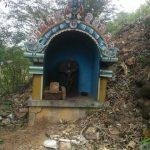
Saint poet Nakkeerar composed the “Eengoi-Ezhupathu” (70 verses) dedicated to this shrine. Additionally, the legendary Siddha Bogar is said to have meditated here and attained siddhi in the preparation of the “Nava Pashanam” (elixir). To this day, a shrine for Bogar exists at the foot of the hillock.
Architectural Marvels
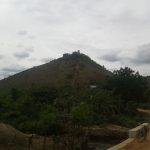
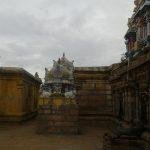
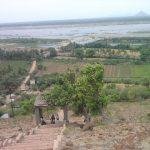
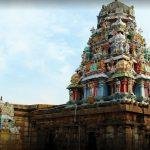
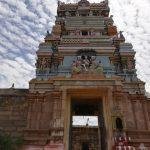
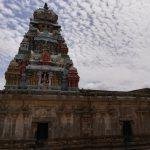
The temple is a masterpiece of Dravidian architecture, set against the dramatic backdrop of the rocky hillock and the flowing waters of the Cauvery and Surpanathi rivers.
The Maragatha Lingam
The central attraction is the Maragatha Lingam (Emerald Lingam). Uniquely, this Lingam is translucent and casts a green shadow when camphor is lit. It is believed to be created by the Siddha Bogar himself using rare minerals and herbs.
Structural Elements
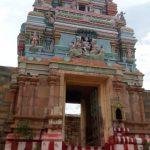
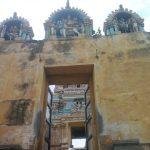
- Shikhara: The main tower (gopuram) is modest yet ancient, blending seamlessly with the natural rock formation of the hill.
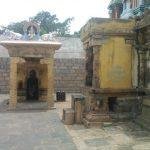
- Mandapas: The temple features several mandapas (pillared halls) used for rituals and processions.
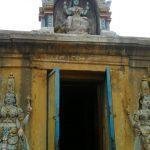
- Carvings: The walls and rock faces surrounding the sanctum host ancient inscriptions and sculptures depicting Shaivite legends.
While not officially designated as an ASI protected monument, the temple retains its pristine heritage status, managed by the Hindu Religious and Charitable Endowments (HR&CE) Department of Tamil Nadu.
Darshan & Ritual Logistics
Daily Timings
| Session | Timing | Status |
|---|---|---|
| Morning Darshan | 9:00 AM – 12:00 PM | Open |
| Afternoon Break | 12:00 PM – 4:00 PM | Closed |
| Evening Darshan | 4:00 PM – 8:00 PM | Open |
*Note: Inform the temple priest in advance if planning a visit during off-hours.
Key Sevas & Offerings
- Abhishekam: Performed with milk, honey, and sandalwood paste.
- Archana: Specific mantras for planetary relief (Graha Dosha).
- Pradosham: Highly revered on Mondays and Saturdays.
Online Seva Booking: While specific online portals for this rural temple are limited, devotees can coordinate directly via the temple contact numbers listed below. HR&CETamil Nadu portal updates occasionally list specific offerings.
2026 Festival Dates (Tentative)
- Masi Magam: February/March 2026
- Thai Poosam: January/February 2026
- Panguni Brahmmotsavam: March/April 2026
- Karthigai Deepam: November/December 2026 (Highly auspicious)
Practical Visitor Guidance
Dress Code & Etiquette
Traditional attire is mandatory. Men should wear Dhoti or trousers with a shirt (remove shirts while entering the sanctum). Women should wear Saree or Salwar Kameez. Shorts and skirts are strictly prohibited.
Facilities
- Mobile Lockers: Available at the entrance (minimal fee).
- Photography: Prohibited inside the inner sanctum. Permitted in outer corridors.
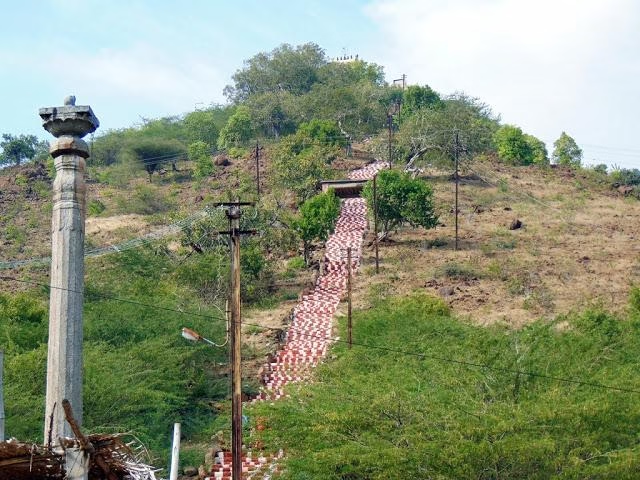
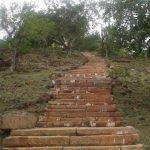
- Accessibility: The temple is located on a hill. Visitors must climb approximately 500 steps. This may be difficult for the elderly; assistance is available from temple volunteers.
Crowd Management
As this is a secluded temple, crowds are generally manageable. However, during Karthigai Month and Pradosham, the temple sees higher footfall. Best time to visit: Early morning (9 AM) or late evening (6 PM) to avoid the harsh sun.
Seasonal Tip: If visiting in May or June, carry plenty of water and a hat, as the hilltop offers little shade.
Pilgrimage Connectivity
How to Reach
Location: Maragadachaleswarar Temple, Thiruengoimalai, Via Manamedu, Thottiyam Taluk, Tiruchirappalli District – 621209
- By Road: The hill is located 3 km from Manamedu and 6 km from Musiri. From Trichy, take the NH81 (Trichy-Karur route). Frequent buses ply from Kulithalai and Musiri.
- By Train: The nearest railway station is Kulithalai (7 km). The major junction is Trichy (Tiruchirappalli) (45 km).
- By Air: The nearest airport is Trichy International Airport (52 km).
Nearby Sacred Sites (Circuit)
To complete the spiritual circuit recommended by ancient hymns, visit these nearby shrines:
- Kadamba Nathar Temple (Kadambar Koil): Located in Kulithalai, revered as the morning darshan spot.
- Rathnagreeswarar Temple (Ayyarmalai): Located near Pudukkottai (approx. 30 km), revered as the noon darshan spot.
- Srirangam Ranganathaswamy Temple: A massive complex 40 km away, essential for a full pilgrimage tour of Trichy.
Photo Gallery

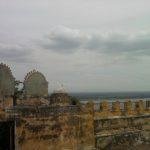
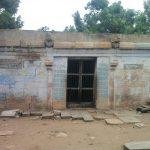
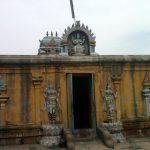
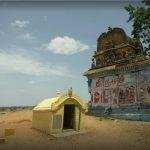
Frequently Asked Questions
Is there a VIP darshan entry available?
While there is no formal VIP ticketing system like larger temples, contacting the temple priest or the office in advance allows for an uninterrupted darshan, especially during non-peak hours.
Can we perform homams (fire rituals) here?
Yes, homams such as Mrityunjaya Homam and Chandi Homam can be performed. It is necessary to bring your own materials or book through local priests associated with the temple.
What is the significance of the Maragatha Lingam?
The emerald lingam is believed to possess unique healing energies. It is historically linked to the Siddha Bogar, who inscribed this lingam to aid in the spiritual evolution of seekers.
Are there accommodation facilities nearby?
There are no hotels on the hill. Basic lodging is available in Kulithalai (7 km) and Musiri (6 km). For better amenities, staying in Trichy (45 km) is recommended.
What are the temple contact details?
Phone: +91 4326 262744
Mobile: +91 9443950031 / 9095102695 / 9095102696 / 9944120135
Recent Posts

Shri Kaamkoteeshwar Mandir, Varanasi – History & Significance
In the heart of Kashi, the eternal city of Lord Shiva, where the Ganges flows with celestial grace, stands the Shri Kaamkoteeshwar Mandir. This sacred Sannidhi is not merely a temple but a profound spiritual bridge between the Northern…

ओ सांवरे तूने ही मुझको संभाला – Lyrics & Meaning
ओ सांवरे तूने ही मुझको संभाला – A Prayer to Shyam Origin & Spiritual Essence Why This Bhajan Resonates Devotees chant this when overwhelmed by life’s storms—the refrain ‘तूने ही मुझको संभाला’ is the soul’s sigh of relief: “You…

कथा ये है महाराज मेरे की – Lyrics & Meaning
कथा ये है महाराज मेरे की छत्रपति संभाजी महाराज – A Prayer to Chhatrapati Sambhaji Maharaj Origin & Spiritual Essence Why This Bhajan Resonates Devotees chant this when their spirit feels tested—its powerful refrain “महाराज मेरे” is a soul’s…

Rigveda Samhita Yathartha Anuvada (ऋग्वेद संहिता यथार्थ अनुवाद) – Complete Set with Anvayartha & Hindi/English Translation
The Rigveda is the oldest surviving scripture of humanity and the foundational text of Sanātana Dharma. For serious students, scholars, UPSC aspirants studying ancient Indian history, Sanskrit learners, and spiritual seekers, a precise and grammatically structured translation is indispensable.…

आना भी अकेला है जाना भी अकेला है – Lyrics & Meaning | BharatTemples
आना भी अकेला है जाना भी अकेला है – A Prayer to the Divine Witness Origin & Spiritual Essence Why This Bhajan Resonates Devotees turn to this bhajan in moments of deep reflection—when life’s attachments begin to ache. The…

माता शेरावाली के द्वार जो भी जाता है – Lyrics & Meaning
माता शेरावाली के द्वार जो भी जाता है – A Prayer to Maa Sherawali Origin & Spiritual Essence Why This Bhajan Resonates Devotees turn to this bhajan in times of fear or uncertainty—its promise that no one leaves Maa’s…

मार लेना सपणी उबार लेणा भवरा – Lyrics & Meaning
मार लेना सपणी उबार लेणा भवरा – A Prayer to the Divine Beloved Origin & Spiritual Essence Why This Bhajan Resonates Devotees chant this in moments of deep vulnerability—its cry of “मार लेना सपणी, उबार लेणा भवरा” is the…

हमें श्याम सुंदर भरोसा तुम्हारा – Lyrics & Meaning
हमें श्याम सुंदर भरोसा तुम्हारा – A Prayer to Shyam Sundar Origin & Spiritual Essence Why This Bhajan Resonates Devotees chant this when feeling alone—its refrain ‘de do sahara’ is the soul’s cry for divine support. Lyrics in Hindi…

Mere Satguru Ne Di Thi Davai Lyrics in Hindi & Meaning
Mere Satguru Ne Di Thi Davai: Invoking the Guru’s Liberating Wisdom This soul-stirring bhajan venerates the Satguru (True Spiritual Master) as the divine physician who dispenses the only remedy for life’s deepest sufferings. Composed by Sant Karmaveer Tufani, it…

Janm Diyo Thari Maa Dukh Dekhiyo Lyrics in Hindi & Meaning
जन्म दियो थारी माँ दुख देखियो (Maa’s Grief Upon Birthing You) This soul-stirring Chetavani Bhajan (admonitory hymn) is addressed to the Divine Mother (Maa) – a call for repentance when children forget their filial duties in the dark age…