
Contents
- 1 Introduction & Spiritual Essence: The Temple of Trust
- 2 Historical Origins & Scriptural Legend
- 3 Architectural Marvels
- 4 Darshan & Ritual Logistics
- 5 Practical Visitor Guidance
- 6 Pilgrimage Connectivity
- 6.1 How to Reach
- 6.2 Nearby Sacred Sites (Pilgrimage Circuit)
- 6.3 Frequently Asked Questions (FAQ)
- 6.4 1. Is there a VIP darshan entry at Oondreeswarar Temple?
- 6.5 2. What is the significance of the broken horn on Nandi?
- 6.6 3. Can we perform Abhishekam with water from the Poondi Reservoir?
- 6.7 4. Are there accommodation facilities near the temple?
- 6.8 5. Why is the temple called “Nambikkai Koil” (Trust Temple)?
Introduction & Spiritual Essence: The Temple of Trust
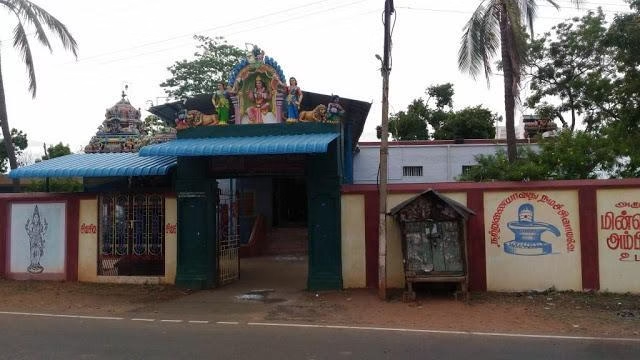
Nestled on the serene northern banks of the Poondi Reservoir, the Oondreeswarar Temple (also revered as the Trust Temple or Nambikkai Koil) stands as a beacon of hope and spiritual rejuvenation. Located in Poondi, Thiruvallur district, this ancient shrine is dedicated to Lord Shiva, worshipped here as Oondreeswarar (the Lord who grants the “Walking Stick”).
Phalaśruti: Why Devotees Visit
Devotees flock to this Paadal Petra Sthalam (one of the 275 temples revered by the Nayanmars) seeking relief from despair and professional stagnation. The temple is uniquely powerful in granting self-confidence and clarity of vision—both literal and metaphorical.
- Cleansing Ancestral Karma: Performing rituals here is believed to alleviate the burdens of past deeds.
- Remedies for Vision & Clarity: Those suffering from eye afflictions or lack of life direction pray to Lord Oondreeswarar and Mother Minnoli Ambal for a paradigm shift.
- Marriage & Success: It is the primary destination for those facing delays in marriage proposals or stagnant career growth.
Historical Origins & Scriptural Legend
According to temple records and Thevaram hymns, this shrine dates back centuries, though the current structure was relocated and reconstructed following the creation of the Poondi Reservoir (submerging the original village of Tiruvalampudur).
The Legend of Oondreeswarar
Tradition holds that the great saint Sundarar (8th Century) visited this site while traveling from Thiruvottriyur to Kanchipuram. Having lost his vision as a divine punishment for breaking a promise, Sundarar pleaded with Lord Shiva for mercy. The Lord, testing his devotion, offered only a walking stick (Oondru in Tamil). Hence, the deity is named Oondreeswarar.
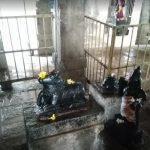
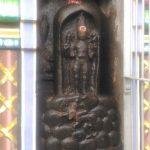
Legend says that in a moment of frustration, Sundarar threw the stick, inadvertently striking and breaking the horn of Nandi, the divine bull. Today, the temple preserves this unique iconography of Nandi with a broken horn, adjacent to a sculpture of Sundarar holding a staff.
The Mother’s Grace: Minnoli Ambal
The consort, Minnoli Ambal (also known as Kanivai Mozhi Nayaki), derives her name from an event where she appeared as a flash of lightning (Minnoli) to guide the blind saint. Her posture in the sanctum—left leg forward—is said to represent her eagerness to accompany Sundarar on his journey.
Architectural Marvels
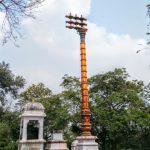
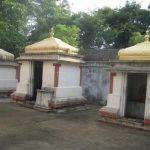
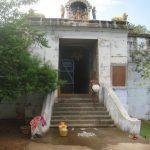
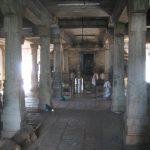
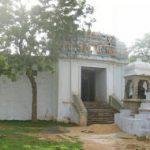
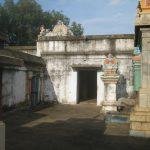
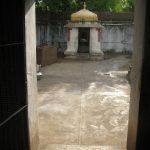
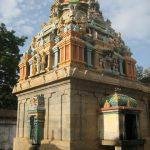
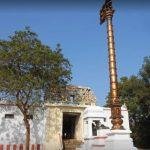
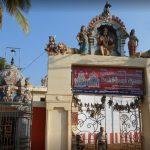
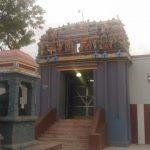
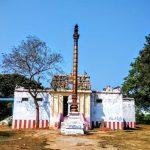
The temple exemplifies the classic Dravidian architectural style. The complex covers an area of one acre, enclosed by concentric rectangular walls (Prakarams). The sanctum sanctorum faces east, and the complex houses distinct shrines for Oondreeswarar and Minnoli Ambal.
Notable Features
- The Sthala Vriksham: The Ilandai (Jujube) tree in the temple courtyard is considered sacred.
- Theerthams: The Kuchasthalai River and the Kayilaya Theertham (the temple tank) are the holy waters associated with the temple.
- Sculptures: The masonry depicting Sundarar with the staff and the damaged Nandi sculpture are rare artistic evidences of the local legend.
| Deity: | Oondreeswarar (Shiva) |
|---|---|
| Consort: | Minnoli Ambal (Parvati) |
| Architectural Style: | Dravidian |
| Classification: | Paadal Petra Sthalam (17th in Thondai Region) |
| Locale: | Poondi, Thiruvallur |
| Address: | Oondreeswarar Temple, Poondi Reservoir Post, Via Tiruvallur, Thiruvallur – 602023 |
| Contact: | +91 44 -2763 9725 / 2763 9895 / +91 99432 09387 |
Darshan & Ritual Logistics
The temple follows a strict schedule of rituals, performing Puja three times a day. Unlike many other Shiva temples, the ritual of anointing the deity with oil is not performed here.
Daily Darshan Timings
| Session | Timing | Ritual |
|---|---|---|
| Morning | 6:00 AM – 11:00 AM | Ganesh Puja, Morning Abhishekam |
| Mid-Day | 12:00 PM (Noon) | Uchikalam Puja |
| Evening | 4:00 PM – 8:00 PM | Sayarakshai, Deepa Aradanai |
Note: As security resides within the campus, devotees can worship at any time, though specific rituals occur at the above slots.
Key Sevas & Online Booking
Devotees can perform Abhishekam (sacred bath) and Alangaram (decoration) for both Lord and Mother. Offerings of honey and Vastras (clothes) are popular. To book Online Seva or for specific ritual inquiries, devotees should contact the temple administration directly via the provided phone numbers, as dedicated online portals are often managed by local trusts for this specific shrine.
2026 Festival Calendar
- Brahmotsavam: May 18 – May 28, 2026 (Tamil Month Vaikasi). This is the most prominent annual festival.
- Masi Mahashivaratri: February 27, 2026.
- Aipasi Annabishekam: October 31, 2026 (Sacred bath with boiled rice).
- Thirukarthikai: December 5, 2026.
- Weekly Rituals: Mondays (Somavaram) and Fridays (Sukravaram).
- Fortnightly: Pradosham.
- Monthly: Ammavasai (New Moon), Pournami (Full Moon).
Practical Visitor Guidance
Code of Conduct
- Dress Code: Traditional attire is mandatory (Dhoti/Saree).
- Photography: Generally prohibited inside the inner sanctum. Allowed in the outer precincts with permission.
- Mobile Lockers: It is advisable to deposit electronic devices in the car or designated locker facilities if available, as mobile usage is discouraged during darshan.
Crowd Management & Seasonal Advice
- Best Time to Visit: Early morning (6:00 AM – 8:00 AM) or late evening (6:00 PM – 8:00 PM) to avoid peak crowds.
- Summer (April–June): Temperatures can be high; carry a water bottle and an umbrella.
- Monsoon: The area near the reservoir can be humid; light cotton clothing is recommended.
Pilgrimage Connectivity
The temple is a significant stop on the Thiruvallur – Thiruthani spiritual circuit.
How to Reach
- By Road: Located 24 km from Thiruvallur and 55 km from Chennai. Bus services T-41 and T-52 operate from Thiruvallur bus stand. Private transport is recommended for ease of travel.
- By Train: Thiruvallur Railway Station is the nearest stop (approx. 24 km). Major connectivity is via Chennai Central (59 km) and Egmore (57 km).
- By Air: Chennai International Airport (MAA) is the nearest airport, approximately 57 km away.
Nearby Sacred Sites (Pilgrimage Circuit)
- Shri Kalyana Venkateswara Temple, Thiruvalangadu: Located approx. 24 km away. Famous for its massive Nandi statue and the unique form of Lord Venkateswara.
- Prasanna Venkateswara Temple, Tiruthani: One of the Pancha Venkateswara temples, located 37 km from Poondi. Highly revered for devotees seeking relief from mental agony.
- Vedapuriswarar Temple, Thiruvalangadu: Another ancient Shiva temple in the vicinity known for its extensive temple complex.





Frequently Asked Questions (FAQ)
1. Is there a VIP darshan entry at Oondreeswarar Temple?
Currently, the temple does not have a formal VIP darshan ticketing system like large metropolitan temples. Darshan is generally accessible to all devotees. However, contacting the temple office in advance for special permission during peak festivals may facilitate easier access.
2. What is the significance of the broken horn on Nandi?
The broken horn is a direct representation of the Stala Purana. It commemorates the incident where the poet-saint Sundarar, in a moment of anger and blindness, threw his walking stick which struck Nandi’s horn.
3. Can we perform Abhishekam with water from the Poondi Reservoir?
While the reservoir (Kuchasthalai River) is considered a holy theertham, only water provided by the temple authorities is allowed for internal Abhishekam to maintain hygiene and sanctity of the deity.
4. Are there accommodation facilities near the temple?
Basic lodging is available in Thiruvallur (24 km away), which has several hotels and choultries. Staying in Chennai or Thiruvallur is recommended, as Poondi is a quiet village with limited accommodation options.
5. Why is the temple called “Nambikkai Koil” (Trust Temple)?
The temple is named so because it is believed that Lord Oondreeswarar and Mother Minnoli Ambal instill unwavering self-confidence and hope in devotees who feel their life is filled with darkness, effectively dragging them from despair.
Recent Posts

Shri Kaamkoteeshwar Mandir, Varanasi – History & Significance
In the heart of Kashi, the eternal city of Lord Shiva, where the Ganges flows with celestial grace, stands the Shri Kaamkoteeshwar Mandir. This sacred Sannidhi is not merely a temple but a profound spiritual bridge between the Northern…

ओ सांवरे तूने ही मुझको संभाला – Lyrics & Meaning
ओ सांवरे तूने ही मुझको संभाला – A Prayer to Shyam Origin & Spiritual Essence Why This Bhajan Resonates Devotees chant this when overwhelmed by life’s storms—the refrain ‘तूने ही मुझको संभाला’ is the soul’s sigh of relief: “You…

कथा ये है महाराज मेरे की – Lyrics & Meaning
कथा ये है महाराज मेरे की छत्रपति संभाजी महाराज – A Prayer to Chhatrapati Sambhaji Maharaj Origin & Spiritual Essence Why This Bhajan Resonates Devotees chant this when their spirit feels tested—its powerful refrain “महाराज मेरे” is a soul’s…

Rigveda Samhita Yathartha Anuvada (ऋग्वेद संहिता यथार्थ अनुवाद) – Complete Set with Anvayartha & Hindi/English Translation
The Rigveda is the oldest surviving scripture of humanity and the foundational text of Sanātana Dharma. For serious students, scholars, UPSC aspirants studying ancient Indian history, Sanskrit learners, and spiritual seekers, a precise and grammatically structured translation is indispensable.…

आना भी अकेला है जाना भी अकेला है – Lyrics & Meaning | BharatTemples
आना भी अकेला है जाना भी अकेला है – A Prayer to the Divine Witness Origin & Spiritual Essence Why This Bhajan Resonates Devotees turn to this bhajan in moments of deep reflection—when life’s attachments begin to ache. The…

माता शेरावाली के द्वार जो भी जाता है – Lyrics & Meaning
माता शेरावाली के द्वार जो भी जाता है – A Prayer to Maa Sherawali Origin & Spiritual Essence Why This Bhajan Resonates Devotees turn to this bhajan in times of fear or uncertainty—its promise that no one leaves Maa’s…

मार लेना सपणी उबार लेणा भवरा – Lyrics & Meaning
मार लेना सपणी उबार लेणा भवरा – A Prayer to the Divine Beloved Origin & Spiritual Essence Why This Bhajan Resonates Devotees chant this in moments of deep vulnerability—its cry of “मार लेना सपणी, उबार लेणा भवरा” is the…

हमें श्याम सुंदर भरोसा तुम्हारा – Lyrics & Meaning
हमें श्याम सुंदर भरोसा तुम्हारा – A Prayer to Shyam Sundar Origin & Spiritual Essence Why This Bhajan Resonates Devotees chant this when feeling alone—its refrain ‘de do sahara’ is the soul’s cry for divine support. Lyrics in Hindi…

Mere Satguru Ne Di Thi Davai Lyrics in Hindi & Meaning
Mere Satguru Ne Di Thi Davai: Invoking the Guru’s Liberating Wisdom This soul-stirring bhajan venerates the Satguru (True Spiritual Master) as the divine physician who dispenses the only remedy for life’s deepest sufferings. Composed by Sant Karmaveer Tufani, it…

Janm Diyo Thari Maa Dukh Dekhiyo Lyrics in Hindi & Meaning
जन्म दियो थारी माँ दुख देखियो (Maa’s Grief Upon Birthing You) This soul-stirring Chetavani Bhajan (admonitory hymn) is addressed to the Divine Mother (Maa) – a call for repentance when children forget their filial duties in the dark age…