
Contents
Introduction & Spiritual Essence
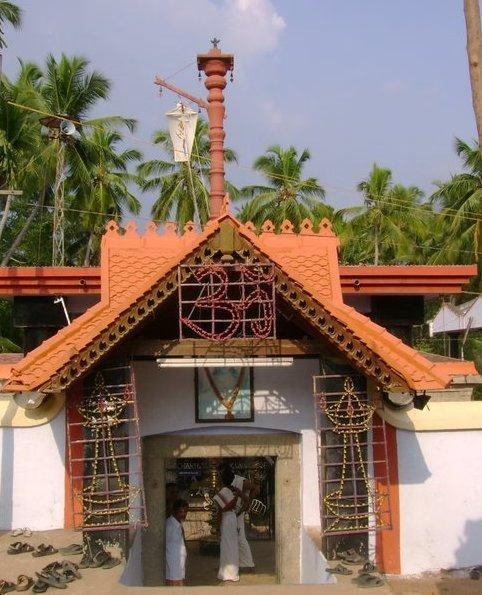
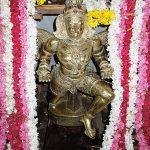
Nestled in the tranquil village of Manalikarai (also known as Vazhikkalampadu), the Manalikarai Azhvar Krishna Swamy Temple stands as a beacon of devotion in the Kalkulam taluk of Kanyakumari district. Dedicated to Lord Vishnu (specifically as Sree Krishna Swamy), this ancient shrine is deeply revered as a Khshetram of high spiritual potency.
Phalaśruti: Spiritual Significance
Devotees flock to this temple not merely for architectural splendor, but for the profound Phalaśruti (spiritual benefits) associated with a visit. The temple is widely believed to aid in:
- Ancestral Deliverance: Performing rituals here is said to liberate ancestors from past karmic cycles, offering them peace (Pithru Shanthi). As per tradition, the very soil here aids in washing away sins.
- Removal of Obstacles: Lord Krishna, in his form as the Gopalakrishna of Manalikarai, is worshipped by the local Travancore lineage to remove obstacles (Vighna Harta) in career and education.
- Health and Prosperity: Regular Archana with Tulasi water is believed to bestow longevity and cure chronic ailments.
Historical Origins & Scriptural Legend
The history of the Manalikarai temple is a fascinating tapestry of Kerala’s Travancore legacy and Tamil culture. It is one of the few temples where the Malayalam and Tamil traditions harmoniously converge.
The Inscriptions of Ravi Kerala Varma
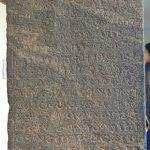
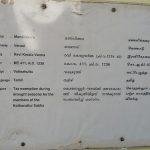
According to temple records and stone inscriptions found on the pillars in the temple courtyard, the site dates back to 1235 AD (410 ME). An inscription written during the rule of the Venadu ruler King Veera Ravi Kerala Varma details taxation regulations for the region. It reveals the king’s keen interest in agricultural welfare, specifically mentioning tax exemptions during crop failures.
The Travancore Connection
Tradition holds that this temple was originally known as “Manalikkara Thiruvannur Azhvar Temple.” The area was under the influence of the Travancore royal family branch in Kalkulam by 1610 AD. The legendary Kulasekhara Azhvar (the 9th Azhvar and a saint-king who ruled Kerala circa 800-825 AD) is spiritually linked to this shrine, with devotees believing he still resides in the temple’s sanctum in spirit.
While the temple’s roots are ancient (predating 411 ME), the current masonry structure—constructed of massive long-granite stones—is estimated to be over 700 years old. The architectural style shows a unique blend, mirroring the construction of the Thiruvattaru Adhikesava Temple and Vellimalai Murugan Temple.
Architectural Marvels
The temple is a textbook example of Dravidian Architecture with distinct influences from the Kerala style, a result of the region’s historical association with the Travancore kingdom.
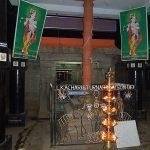
- Sanctum & Structure: The inner sanctum (Garbhagriha) houses the main deity, Lord Krishna. The temple is built entirely of hewn granite blocks without the use of modern mortar, showcasing ancient engineering prowess.
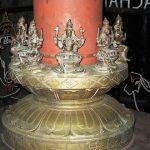
- The Flagstaff (Kodimaram): Standing majestically in front of the temple is the Kodimaram, a traditional flag pole made of wood and metal. Historical records indicate the current pole was installed in 1141 ME (approximately 1965 AD), serving as a focal point for festival rituals.
- Mandapas: The temple features intricately carved Mandapas (halls) used for conducting the Nadakam (dramatic performances) and Kathakali during festivals.
- Vastu Shastra: The temple complex adheres to Vastu principles, with the gateway (Gopuram) facing the east, allowing the first rays of the sun to illuminate the sanctum.
Darshan & Ritual Logistics
The temple follows the traditional Marathu Kalam timings and rituals prescribed by the Tamil Nadu Devasom Board. The rituals are a unique blend of Kerala and Tamil styles.
Daily Darshan Timings (2026)
| Daily Pooja Schedule | |
|---|---|
| Morning | 06:00 AM – 11:30 AM |
| Afternoon Break | 11:30 AM – 05:00 PM |
| Evening | 05:00 PM – 08:00 PM |
Key Sevas & Online Booking
Most sevas can be booked online via the Tamil Nadu Devasom Board portal or in person at the temple counter. Note: As of 2026, the temple has digitized its offerings for global devotees.
- Udaya Astottara Archana: (Morning) 108 names of Lord Krishna offered with Tulasi leaves.
- Sahasranama Archana: (Evening) 1000 names of Vishnu recited in the evening.
- Neyveli Kanikai: Offering of ghee rice (sweet Pongal) and ghee lamps for prosperity.
- Vishnu Sahasranama Parayanam: Conducted on full moon days (Pournami).
2026 Festival Calendar
Planning a visit during festivals requires early accommodation booking in Nagercoil or Marthandam.
- Prathishta Dinam: Mid-April to Mid-May 2026.
The grand 10-day Utsavam is the highlight. It begins on the Rohini Nakshatram (star) in the Malayalam month of Medam.
Note: For 2026, Rohini is expected around late April. - Vishu: April 14, 2026.
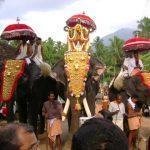
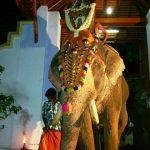
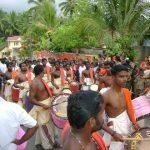
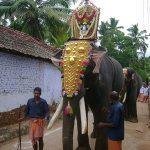
Special Seeveli (elephant procession) and Vishu Sadya (feast). - Deepavali: October 2026.
Special early morning abhishekam. - Thiruvathirai (Margazhi): December 2026.
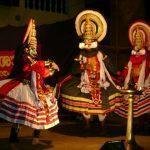
Special cultural programs involving Ottanthullal and Kathakali.
Practical Visitor Guidance
Dress Code & Etiquette
Strict traditional dress code is enforced. Men must wear veshti (dhoti) or formal trousers with a shirt. Women must wear saree, half-saree, or traditional salwar kameez. Western casual wear (jeans, shorts) is strictly prohibited inside the sanctum.
Crowd Management & Best Time to Visit
- Best Time: 6:00 AM sharp for Usha Kalam (morning prayers) to avoid crowds.
- Seasonal Advice: Kanyakumari can get humid. In May, carry a water bottle and a hand fan. The temple grounds are open, but shade is limited.
- Photography: Photography is strictly prohibited inside the main sanctum. You may photograph the outer Gopuram and courtyard.
- Mobile/Lockers: A shoe rack is available at the entrance (usually free). Mobile phones are allowed but must be kept silent. There is no high-tech locker facility, so travel light.
Accessibility
The temple has gravel pathways. While wheelchair accessibility is limited, elderly devotees can be carried via the side path up to the Mandapa. Toilets are available near the temple tank.
Pilgrimage Connectivity
How to Reach
The temple is located roughly 4 km from the Manalikarai Bus Stand.
- By Road: Located off the NH 66 (formerly NH 47). It is easily accessible from Marthandam (13 km) and Nagercoil (20 km). Private taxis and auto-rickshaws are available from Eraniel Railway Station.
- By Rail: The nearest major railway junction is Nagercoil Junction (20 km). The closest local station is Eraniel (approx. 12 km).
- By Air: The nearest airport is Trivandrum International Airport (TRV) in Kerala, located about 58 km away. Taxis are easily available from the airport.
Nearby Sacred Sites
Make the most of your trip by visiting these nearby temples (Pilgrimage Circuit):
- Thiruvattaru Adhikesava Perumal Temple: Located 10 km away, famous for its unique rock-cut architecture and the Bhadrakali theertham.
- Padmanabhapuram Palace Temple: Located 10 km away. This is part of the historic palace complex (former capital of Travancore) housing an ancient granite temple.
- Suchindram Thanumalayan Temple: Located 20 km away. Famous for its 18-foot monolithic Hanuman statue and musical pillars.
Frequently Asked Questions (FAQ)
1. Is there a VIP Darshan entry available?
Yes, the temple board offers a “Special Darshan” ticket for a nominal fee (typically ₹20-50) which allows devotees to bypass the general queue during peak hours. Senior citizens and specially-abled devotees are given priority access free of cost.
2. Can I perform “Satyanarayana Pooja” here?
Absolutely. The Satyanarayana Pooja is conducted in the main Mandapa. It is advisable to book this in advance through the temple office or the Tamil Nadu Devasom Board website, especially for weekends.
3. What is the language used for chants (Mantras)?
As this temple was historically under the Travancore kingdom, the Archaka (priest) traditionally recites mantras in Malayalam and Sanskrit. However, Tamil translations of the rituals are provided upon request.
4. Is non-vegetarian food allowed near the temple?
No. The temple is located in a strictly vegetarian zone (Ahimsa zone). Alcohol and meat are strictly prohibited within a 1 km radius of the temple complex.
5. When was the last renovation done?
While the core structure is centuries old, the Kodimaram (flag staff) was last renewed in 1141 ME (approx 1965 AD), and periodic repainting and maintenance are carried out annually by the Tamil Nadu Devasom Board.
Photo Gallery
Contact Details
The Executive Officer
Manalikarai Azhvar Krishna Swamy Temple
Manalikarai – 629157
Kalkulam Taluk, Kanyakumari District
Phone: [To be updated by Devasom Board]
Email: [Depends on Board Registration]
Official Address
Manalikarai Azhvar Krishna Swamy Temple
Vazhikkalampadu, Kothanallur Panchayat
Kalkulam Taluk, Kanyakumari District, Tamil Nadu.
Recent Posts

Shri Kaamkoteeshwar Mandir, Varanasi – History & Significance
In the heart of Kashi, the eternal city of Lord Shiva, where the Ganges flows with celestial grace, stands the Shri Kaamkoteeshwar Mandir. This sacred Sannidhi is not merely a temple but a profound spiritual bridge between the Northern…

ओ सांवरे तूने ही मुझको संभाला – Lyrics & Meaning
ओ सांवरे तूने ही मुझको संभाला – A Prayer to Shyam Origin & Spiritual Essence Why This Bhajan Resonates Devotees chant this when overwhelmed by life’s storms—the refrain ‘तूने ही मुझको संभाला’ is the soul’s sigh of relief: “You…

कथा ये है महाराज मेरे की – Lyrics & Meaning
कथा ये है महाराज मेरे की छत्रपति संभाजी महाराज – A Prayer to Chhatrapati Sambhaji Maharaj Origin & Spiritual Essence Why This Bhajan Resonates Devotees chant this when their spirit feels tested—its powerful refrain “महाराज मेरे” is a soul’s…

Rigveda Samhita Yathartha Anuvada (ऋग्वेद संहिता यथार्थ अनुवाद) – Complete Set with Anvayartha & Hindi/English Translation
The Rigveda is the oldest surviving scripture of humanity and the foundational text of Sanātana Dharma. For serious students, scholars, UPSC aspirants studying ancient Indian history, Sanskrit learners, and spiritual seekers, a precise and grammatically structured translation is indispensable.…

आना भी अकेला है जाना भी अकेला है – Lyrics & Meaning | BharatTemples
आना भी अकेला है जाना भी अकेला है – A Prayer to the Divine Witness Origin & Spiritual Essence Why This Bhajan Resonates Devotees turn to this bhajan in moments of deep reflection—when life’s attachments begin to ache. The…

माता शेरावाली के द्वार जो भी जाता है – Lyrics & Meaning
माता शेरावाली के द्वार जो भी जाता है – A Prayer to Maa Sherawali Origin & Spiritual Essence Why This Bhajan Resonates Devotees turn to this bhajan in times of fear or uncertainty—its promise that no one leaves Maa’s…

मार लेना सपणी उबार लेणा भवरा – Lyrics & Meaning
मार लेना सपणी उबार लेणा भवरा – A Prayer to the Divine Beloved Origin & Spiritual Essence Why This Bhajan Resonates Devotees chant this in moments of deep vulnerability—its cry of “मार लेना सपणी, उबार लेणा भवरा” is the…

हमें श्याम सुंदर भरोसा तुम्हारा – Lyrics & Meaning
हमें श्याम सुंदर भरोसा तुम्हारा – A Prayer to Shyam Sundar Origin & Spiritual Essence Why This Bhajan Resonates Devotees chant this when feeling alone—its refrain ‘de do sahara’ is the soul’s cry for divine support. Lyrics in Hindi…

Mere Satguru Ne Di Thi Davai Lyrics in Hindi & Meaning
Mere Satguru Ne Di Thi Davai: Invoking the Guru’s Liberating Wisdom This soul-stirring bhajan venerates the Satguru (True Spiritual Master) as the divine physician who dispenses the only remedy for life’s deepest sufferings. Composed by Sant Karmaveer Tufani, it…

Janm Diyo Thari Maa Dukh Dekhiyo Lyrics in Hindi & Meaning
जन्म दियो थारी माँ दुख देखियो (Maa’s Grief Upon Birthing You) This soul-stirring Chetavani Bhajan (admonitory hymn) is addressed to the Divine Mother (Maa) – a call for repentance when children forget their filial duties in the dark age…