
Contents
Introduction & Spiritual Essence
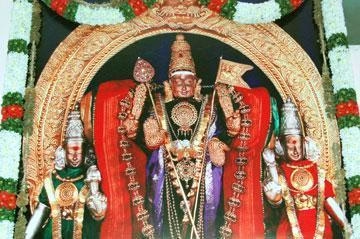
Standing tall amidst the panoramic ranges of the Arcot district, the Arupadai Veedu Temple at Thiruthani is one of the six holiest abodes (Arupadai Veedu) of Lord Murugan. Perched atop a single rock rising 700 feet above sea level, this ancient shrine serves as a beacon of spiritual tranquility. The presiding deity here is worshipped as Thanikai Velayudha Swami (Murugan), while the consort deities Valli and Deivayanai are enshrined in separate shrines.
The primary form of the murti (idol) is Swayambhu (self-manifested) and is unique for its posture. Known as Shantipuri (Abode of Peace), Thiruthani is where Lord Murugan’s righteous anger was quelled after the defeat of the asura Surapadma.
Phalaśruti: Why Visit Thiruthani?
Devotees flock to this hill temple to seek relief from mental agitation and physical ailments. The sanctity of the Saravana Poikai (the holy tank) at the foothills is believed to contain curative properties rich in sulfur and iron. According to spiritual texts, offering prayers here for five consecutive days fulfills all desires and grants spiritual liberation (Moksha).
Historical Origins & Scriptural Legend
According to the Periya Puranam and local oral traditions (Sthala Purana), Thiruthani holds immense significance across the Yugas:
- Ramayana Era: Lord Rama, after vanquishing Ravana, worshipped Lord Murugan here to find perfect peace of mind.
- Mahabharata Era: Arjuna received divine blessings here during his Teertha Yatra (pilgrimage).
- Mythological Return: Lord Vishnu prayed here to retrieve his Sudarshana Chakra and Panchajanya, which were seized by the demon Tarakasura. It is said that Lord Vishnu now faces away from the main deity in this temple due to a vow he took.
- Sage Agastya: It was at Thiruthani that Lord Murugan blessed Sage Agastya with the knowledge of the Tamil language.
While the exact construction date is shrouded in antiquity, the temple architecture points to contributions from the Pallava and later Vijayanagara dynasties. The towering Gopuram and the presiding murti have been preserved and renovated by the Tiruttani Devasthanam board over centuries.
Architectural Marvels
The temple is a classic example of Dravidian Architecture. It features a five-tiered Gopuram (gateway tower) that serves as the grand entrance to the sanctum.
- The Sanctum: The main shrine houses the Shaktidharar form of Murugan. The murti is unique; it bears a visible hollow on the chest, believed to be the spot where Murugan absorbed the discus thrown by Tarakasura.
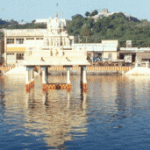
- The Tank: Located at the foot of the hill, the Saravana Poikai is a rectangular tank where the Sapta Rishis (Seven Sages) are said to have worshipped the Lord.
- Vastu Shastra: The temple layout follows Vastu principles, with the axis from the Gopuram aligning with the hill’s natural magnetic energy lines.
- ASI Status: While the temple is managed by the HR&CE (Hindu Religious and Charitable Endowments) Department of Tamil Nadu, its ancient elements are recognized by the Archaeological Survey of India for their historical value.
Darshan & Ritual Logistics
Thiruthani Temple is known for its disciplined rituals. The hill ascent involves climbing 365 steps, representing the days of the year.
Daily Timings
Please note that timings may vary slightly during festival seasons.
| Period | Activity | Timing |
|---|---|---|
| Morning | Temple Opening | 6:00 AM |
| Abhishekam | 7:00 AM – 9:00 AM | |
| Closing | 12:00 PM | |
| Evening | Temple Re-opens | 4:00 PM |
| Deeparadhana | 6:00 PM | |
| Temple Closing | 8:30 PM |
Key Sevas and Online Booking
- Abhishekam: Performed with milk, honey, and sandalwood paste.
- Kalyana Utsavam: Marriage ceremony for the deity, performed for devotees at the Kalyana Mandapam.
- Thanga Ther (Golden Chariot): A procession pulled by devotees around the temple (18 feet high, gilded with 9kg of gold).
- Palliyarai Puja: Special night worship for the Lord’s divine slumber.
Online Booking: Devotees can book sevas and accommodation via the official Tamil Nadu Arulmigu Murugan Temple Official Website (tiruttanidevanam.com) or the Tamil Nadu Temples portal.
Major Festivals 2026
- Aadi Krittikai (July – August): The most significant festival. Lakhs of devotees carry Kavadis, chanting “Haro Hara!” The atmosphere is electrified with devotion.
- December 31st Step Festival (New Year): Unique to Thiruthani. Devotees climb the 365 steps at midnight, burning camphor on each step to bid farewell to the old year and welcome the new.
- Thaipusam: A massive influx of devotees performing Vel Kavadi and piercing rituals.
Practical Visitor Guidance
Rules & Etiquette
- Dress Code: Traditional attire is mandatory. Men should wear dhotis or formal trousers with shirts; women should wear sarees or salwar kameez. Avoid shorts or torn jeans.
- Photography: Strictly prohibited inside the inner sanctum. Photography may be restricted in certain gallery areas.
- Mobile Lockers: Bags and mobile phones are not allowed into the sanctum. Free and paid locker facilities are available at the foothills.
- Accessibility: The hill is steep. However, the Devasthanam runs a bus/van service from the foothill (Saravana Poikai) to the hilltop (Ghat Road) for elderly and differently-abled devotees. The inner sanctum requires walking.
Crowd Management
- Best Hours: Weekdays (Tuesday is particularly auspicious) between 10:00 AM and 3:00 PM are less crowded. Avoid weekends and festival days unless you wish to participate in the festivities.
- Seasonal Advice:
- May-June: Extremely hot. Carry water and use the shaded waiting areas.
- July-August (Aadi): Very crowded. Book accommodation well in advance.
- Winter: Ideal for visiting, especially for the December 31st event.
Pilgrimage Connectivity
How to Reach
The temple is located on the Madras-Bombay (Chennai-Mumbai) route.
- By Air: The nearest airport is Chennai International Airport (MAA), approximately 84 km away. Tirupati Airport is an alternative (approx. 100 km).
- By Train: The nearest major railway junction is Arkonam (13 km), which is well-connected to Chennai Central. Tiruttani also has a local railway station on the Chennai-Bangalore line.
- By Road: Located on National Highway 75 (formerly NH 4). Buses run frequently from Chennai, Tirupati, and Kanchipuram.
Nearby Sacred Sites (Pilgrimage Circuit)
Thiruthani is part of a spiritual circuit often called the “Tirupati-Sholingar Corridor”:
- Sholingar (15 km): Home to the Anjaneya (Hanuman) and Narashima Swamy temples.
- Vallimalai (20 km): A scenic hill temple dedicated to Lord Murugan, associated with his marriage to Valli.
- Tirupati/Tirumala (60 km): The abode of Lord Venkateswara, a must-visit alongside Thiruthani.
- Kanchipuram (35 km): Known as the “City of Temples,” famous for Kamakshi Amman and Ekambareswarar.
Frequently Asked Questions (FAQs)
1. Is there a VIP Darshan entry at Thiruthani?
Yes, the temple administration offers special entry darshan tickets for a nominal fee (usually ₹50 – ₹100). This allows devotees to bypass the general queue. VIP tickets are available through the Devasthanam office.
2. What is the significance of the 365 steps?
The steps represent the 365 days of the year. It is believed that climbing one step with a prayer for each day washes away sins accumulated over the past year. This is especially practiced during the New Year Step Festival on December 31st.
3. Is non-vegetarian food allowed?
No. As per temple rules, non-vegetarian food, alcohol, and smoking are strictly prohibited within the temple complex and the hill premises. The Devasthanam runs an Annapoorna (free food) hall for devotees.
4. What are the accommodation options provided by the Devasthanam?
The Tiruttani Devasthanam provides numerous cottages, dormitories, and rooms at the foothills. There are also Kalyana Mandapams for weddings. Booking can be done online or at the Devasthanam office. For a traditional experience, pilgrims can stay at the Nattukotta Chetty Chattiram.
5. Why does the Elephant statue face away from Lord Murugan?
According to legend, when Indra gave his elephant Airavatam to Lord Murugan as a dowry, he later requested it back. Lord Murugan obliged but bound by protocol, Indra could not accept the gift back directly. Hence, the elephant statue in the temple faces East (away from the sanctum) as a symbol of Indra’s veneration without possession.
Contact Details
- Address: Arupadai Veedu Temple, Thiruthani Hill, Thiruthani, Tamil Nadu 631209
- Phone: 044 2788 5243 (Tiruttani Devasthanam Office)
Recent Posts

Shri Kaamkoteeshwar Mandir, Varanasi – History & Significance
In the heart of Kashi, the eternal city of Lord Shiva, where the Ganges flows with celestial grace, stands the Shri Kaamkoteeshwar Mandir. This sacred Sannidhi is not merely a temple but a profound spiritual bridge between the Northern…

ओ सांवरे तूने ही मुझको संभाला – Lyrics & Meaning
ओ सांवरे तूने ही मुझको संभाला – A Prayer to Shyam Origin & Spiritual Essence Why This Bhajan Resonates Devotees chant this when overwhelmed by life’s storms—the refrain ‘तूने ही मुझको संभाला’ is the soul’s sigh of relief: “You…

कथा ये है महाराज मेरे की – Lyrics & Meaning
कथा ये है महाराज मेरे की छत्रपति संभाजी महाराज – A Prayer to Chhatrapati Sambhaji Maharaj Origin & Spiritual Essence Why This Bhajan Resonates Devotees chant this when their spirit feels tested—its powerful refrain “महाराज मेरे” is a soul’s…

Rigveda Samhita Yathartha Anuvada (ऋग्वेद संहिता यथार्थ अनुवाद) – Complete Set with Anvayartha & Hindi/English Translation
The Rigveda is the oldest surviving scripture of humanity and the foundational text of Sanātana Dharma. For serious students, scholars, UPSC aspirants studying ancient Indian history, Sanskrit learners, and spiritual seekers, a precise and grammatically structured translation is indispensable.…

आना भी अकेला है जाना भी अकेला है – Lyrics & Meaning | BharatTemples
आना भी अकेला है जाना भी अकेला है – A Prayer to the Divine Witness Origin & Spiritual Essence Why This Bhajan Resonates Devotees turn to this bhajan in moments of deep reflection—when life’s attachments begin to ache. The…

माता शेरावाली के द्वार जो भी जाता है – Lyrics & Meaning
माता शेरावाली के द्वार जो भी जाता है – A Prayer to Maa Sherawali Origin & Spiritual Essence Why This Bhajan Resonates Devotees turn to this bhajan in times of fear or uncertainty—its promise that no one leaves Maa’s…

मार लेना सपणी उबार लेणा भवरा – Lyrics & Meaning
मार लेना सपणी उबार लेणा भवरा – A Prayer to the Divine Beloved Origin & Spiritual Essence Why This Bhajan Resonates Devotees chant this in moments of deep vulnerability—its cry of “मार लेना सपणी, उबार लेणा भवरा” is the…

हमें श्याम सुंदर भरोसा तुम्हारा – Lyrics & Meaning
हमें श्याम सुंदर भरोसा तुम्हारा – A Prayer to Shyam Sundar Origin & Spiritual Essence Why This Bhajan Resonates Devotees chant this when feeling alone—its refrain ‘de do sahara’ is the soul’s cry for divine support. Lyrics in Hindi…

Mere Satguru Ne Di Thi Davai Lyrics in Hindi & Meaning
Mere Satguru Ne Di Thi Davai: Invoking the Guru’s Liberating Wisdom This soul-stirring bhajan venerates the Satguru (True Spiritual Master) as the divine physician who dispenses the only remedy for life’s deepest sufferings. Composed by Sant Karmaveer Tufani, it…

Janm Diyo Thari Maa Dukh Dekhiyo Lyrics in Hindi & Meaning
जन्म दियो थारी माँ दुख देखियो (Maa’s Grief Upon Birthing You) This soul-stirring Chetavani Bhajan (admonitory hymn) is addressed to the Divine Mother (Maa) – a call for repentance when children forget their filial duties in the dark age…