
Contents
Updated for 2026 Pilgrimage Season
Introduction & Spiritual Essence
Nestled on the serene banks of the Palar River, the Thiru Mukkoodal Appan Venkatesa Perumal Temple stands as a beacon of devotion in Kanchipuram, Tamil Nadu. Unlike the reclining form typically associated with Lord Venkatesa, this ancient shrine houses the deity in a rare standing posture, known as Indra Asana.
The Presiding Deity
The primary deity, Appan Venkatesa Perumal (also known as Srinivasa), is self-manifested (Swayambhu) and uniquely positioned directly atop a Shiva Linga (Avudayar). This confluence of Vaishnava and Shaiva symbolism makes it a powerful site for spiritual harmony. The temple is locally referred to as the ‘Appar’ Koil due to the hymns composed by the saint Thirunavukkarasar.
Phalaśruti: The Benefits of Visiting
Devotees flock to Thiru Mukkoodal to:
- Cleanse Ancestral Karma: The temple is located at a Triveni Sangamam (confluence of three rivers: Palar, Vegavathi, and Cheyyar). Performing Pitru Tharpanam here is believed to yield merits equivalent to a holy dip at Prayag or Kasi.
- Seek Fatherly Blessings: The name ‘Appan’ translates to Father, signifying the Lord’s role as a compassionate protector who grants Moksha (liberation).
- Overcome Obstacles: The presence of the original Conch and Chakra gifted by Lord Venkatesa of Tirumala invokes blessings for success in endeavors.
| Date built: | c. 9th Century CE (1200 years old) |
|---|---|
| Deity: | Thiru Mukkoodal Appan Venkatesa Perumal |
| Architectural style: | Dravidian architecture (ASI Protected) |
| Major festivals | Kaum Pongal (Varadaraja Perumal Visit), Vaikunta Ekadasi |
| Locale: | Thiru Mukkoodal, Kanchipuram District |
| Address: | Appan Venkatesa Perumal Temple, Thiru Mukkoodal, Kanchipuram District, Tamil Nadu – 631502 |
| Phone | +91 – 94437 78352 |
Historical Origins & Scriptural Legend
The Tale of King Thondaiman
According to temple records, this shrine was constructed by Raja Thondaiman Chakravarthy, the ancient ruler of the Thondai Mandalam region, whose capital was Kanchipuram. Inscriptions dating back to the 9th Century CE confirm the temple’s antiquity.
Tradition holds a fascinating legend regarding the deity’s posture:
King Thondaiman was en route to Tirumala but received a divine message that a neighboring king was about to wage war. The Lord instructed him to stay and protect his kingdom, promising victory. Lord Venkatesa gifted the King his original Conch (Sankhu) and Discus (Chakra). After vanquishing the enemy, the King returned to Tirumala to surrender for Moksha. The Lord directed him to Thiru Mukkoodal instead. Upon arrival, the King found the Lord in a reclining (Sayana) posture. Overcome with emotion, the King embraced the deity, crying out, “Appaney Venkatesa!” (Oh Father Venkatesa). Pleased, the Lord shifted to a standing posture to grant permanent darshan, and the Conch and Chakra remained here as permanent fixtures.
Scriptural Significance
While this is not classified as a Divya Desam (one of the 108 abodes praised by the Alvars), it holds a unique connection. It is believed Lord Venkatesa provided darshan to Markandeya Rishi here in his Ranganatha form. The site is also linked to Brighu Maha Rishi, who undertook penance here, resulting in the Lord facing North to bestow blessings.
Architectural Marvels
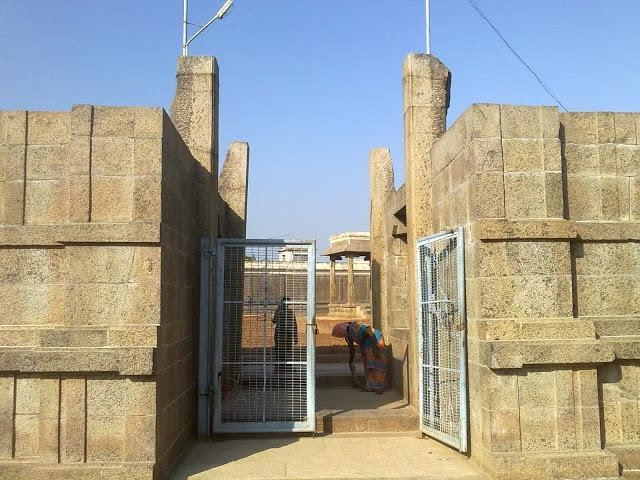
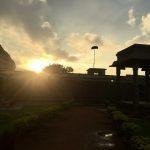
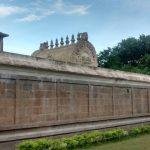
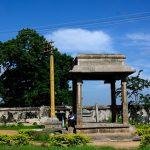
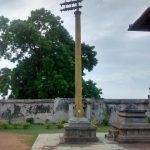
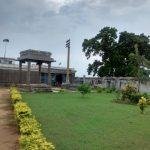
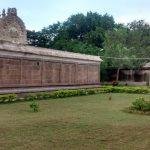
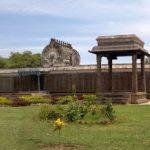
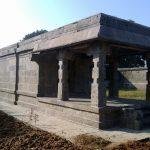
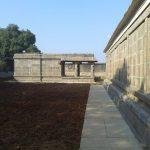
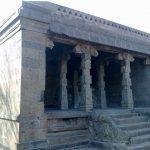
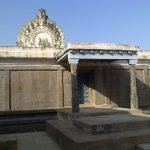
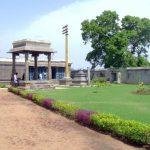
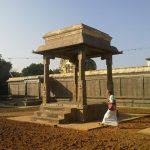
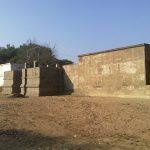
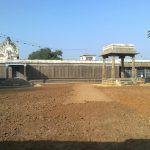
The temple exemplifies the Dravidian style of architecture and is maintained by the Archaeological Survey of India (ASI), preserving its structural integrity.
Vastu and Layout
Located strategically on the banks of the Palar River, the temple follows traditional Vastu principles with the sanctum sanctorum (Garbhagriha) housing the central deity. A rare architectural feature is the Shikhara (tower) above the sanctum, which houses the standing deity—contrasting with the typical reclining figures found in Vishnu temples.
Notable Sculptures
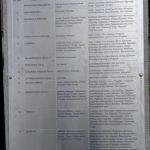
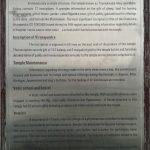
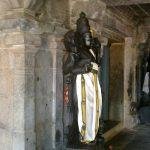
The compound features several inscriptions from the Chola and Pallava eras. The Mandapa (hall) offers a scenic view of the river confluence. The most striking element is the depiction of Lord Venkatesa holding the original Conch and Chakra gifted by Tirumala, a visual testament to the legend.
Temple Opening Time & Darshan Timings
The temple follows a traditional schedule. On the auspicious star day of Thiruvonam every month, extended hours are observed.
| Session | Standard Timing | Thiruvonam Day / Weekends (Sat/Sun) |
|---|---|---|
| Morning | 8:30 AM – 11:00 AM | 8:00 AM – 1:00 PM |
| Afternoon | Closed | — |
| Evening | 4:00 PM – 6:00 PM | 3:00 PM – 7:00 PM |
Sevas & Online Booking
Key rituals performed at the temple include:
- Abhishekam: Sacred bathing of the deity with milk, honey, and sandalwood paste.
- Archana: Offering of flowers and recitation of holy names.
- Thirukalyana Utsavam: Celestial wedding ceremony for the Lord.
Note: While physical ticket counters are available at the temple counter, devotees are encouraged to inquire about online seva booking via the official Tamil Nadu Tourism or ASI portals, or contact the temple office directly at +91 – 94437 78352 for the latest 2026 protocols.
2026 Festival Calendar
Plan your visit around these major events:
- Maatu Pongal / Kaum Pongal (January): The most significant festival. Sri Varadaraja Perumal of Kanchipuram visits Thiru Mukkoodal to meet Appan Venkatesa Perumal. Five deities from neighboring temples gather for a grand street procession.
- Vaikunta Ekadasi (January 2026): Special Viswaroopa Darshan and processions.
- Krishna Jayanthi (August/September 2026): Celebration of Lord Krishna’s birth.
- Garuda Sevai: Procession of the Lord on his divine vehicle.
- Thiruvonam (Monthly): The temple remains open for extended hours on the asterism day of the Lord.
Practical Visitor Guidance
Dress Code and Etiquette
Visitors must adhere to a modest dress code. Traditional Indian attire (dhoti for men, saree/salwar kameez for women) is recommended. Western attire like shorts or sleeveless tops may be restricted. As an ASI-protected site, silence and respect for the ancient structures are paramount.
Crowd Management
- Best Time to Visit: Weekday mornings between 9:00 AM and 10:00 AM are ideal to avoid crowds.
- Seasonal Advice: During the summer months (April–June), temperatures in Kanchipuram can soar. Carry a water bottle, an umbrella, and wear sandals that are easy to remove.
- Photography: Photography inside the sanctum sanctorum is strictly prohibited. However, you may photograph the outer corridors and the river view.
- Lockers: Mobile phones and large bags are generally allowed, but maintaining silence is required. No specific electronic lockers are available on-site, so travel light.
Pilgrimage Connectivity
How to Reach Thiru Mukkoodal
The temple is located approximately 20 km from Kanchipuram and 65 km from Chennai.
- By Air: The nearest airport is Chennai International Airport (Meenambakkam), roughly 65 km away.
- By Train: The nearest railway stations are Palur and Pazhaya Seevaram on the Chennai-Chengalpattu-Kanchipuram line.
- By Road: The temple is accessible via the Chengalpattu-Kanchipuram SH 58.
Route Options
- Route 1 (via NH48/SH58): Chennai -> Chengalpet -> Kanchipuram -> Turn left at Pazhaya Seevaram -> Cross Palar Bridge -> Thiru Mukkoodal (72 km).
- Route 2 (via Singapperumal Koil): Chennai -> Singapperumal Koil -> Palur (SH57) -> Join SH58 -> Pazhaya Seevaram -> Thiru Mukkoodal (65 km).
Nearby Sacred Sites (Pilgrimage Circuit)
Extend your spiritual journey by visiting these nearby temples:
- Pazhaya Seevaram Lakshmi Narasimhar Temple: Located just across the bridge on the opposite bank of the Palar River. A historic Narasimha temple.
- Kanchipuram Varadaraja Perumal Temple: The seat of the deity who visits Thiru Mukkoodal annually. A must-visit Divya Desam.
- Ekambareswarar Temple: One of the Pancha Bhoota Stalas dedicated to Lord Shiva, located in Kanchipuram.


Frequently Asked Questions (FAQs)
1. Is this temple part of the 108 Divya Desams?
No, the Thiru Mukkoodal Appan Venkatesa Perumal Temple is not officially listed among the 108 Divya Desams. However, it holds immense spiritual significance due to its connection with Saint Tirunavukkarasar and the presence of Tirumala’s original weapons.
2. Is there a VIP darshan entry available?
As a traditional temple, VIP darshan options are limited. However, during the annual Kaum Pongal festival, special viewing arrangements are made for devotees. It is advisable to contact the temple office a day prior to arrange for a smooth darshan experience.
3. Can we perform Pitru Tharpanam at the temple?
Yes, the river bank of the Palar, adjacent to the temple, is highly auspicious for performing Pitru Tharpanam. Many devotees visit specifically for this ritual, believing it grants merit equivalent to performing the rites at Kasi (Varanasi).
4. What is the significance of the Lord holding the Sankhu and Chakra?
The Conch and Discus are the traditional weapons of Lord Vishnu. At this temple, they are believed to be the original weapons gifted by the Lord of Tirumala to King Thondaiman, symbolizing divine protection and the granting of boons.
5. Are there accommodation facilities nearby?
Basic accommodation is available in Kanchipuram (20 km away), which offers numerous choultries and hotels. For a rustic experience, small lodges are available at Pazhaya Seevaram. However, for better amenities, staying in Kanchipuram or Chengalpattu is recommended.
Recent Posts

Shri Kaamkoteeshwar Mandir, Varanasi – History & Significance
In the heart of Kashi, the eternal city of Lord Shiva, where the Ganges flows with celestial grace, stands the Shri Kaamkoteeshwar Mandir. This sacred Sannidhi is not merely a temple but a profound spiritual bridge between the Northern…

ओ सांवरे तूने ही मुझको संभाला – Lyrics & Meaning
ओ सांवरे तूने ही मुझको संभाला – A Prayer to Shyam Origin & Spiritual Essence Why This Bhajan Resonates Devotees chant this when overwhelmed by life’s storms—the refrain ‘तूने ही मुझको संभाला’ is the soul’s sigh of relief: “You…

कथा ये है महाराज मेरे की – Lyrics & Meaning
कथा ये है महाराज मेरे की छत्रपति संभाजी महाराज – A Prayer to Chhatrapati Sambhaji Maharaj Origin & Spiritual Essence Why This Bhajan Resonates Devotees chant this when their spirit feels tested—its powerful refrain “महाराज मेरे” is a soul’s…

Rigveda Samhita Yathartha Anuvada (ऋग्वेद संहिता यथार्थ अनुवाद) – Complete Set with Anvayartha & Hindi/English Translation
The Rigveda is the oldest surviving scripture of humanity and the foundational text of Sanātana Dharma. For serious students, scholars, UPSC aspirants studying ancient Indian history, Sanskrit learners, and spiritual seekers, a precise and grammatically structured translation is indispensable.…

आना भी अकेला है जाना भी अकेला है – Lyrics & Meaning | BharatTemples
आना भी अकेला है जाना भी अकेला है – A Prayer to the Divine Witness Origin & Spiritual Essence Why This Bhajan Resonates Devotees turn to this bhajan in moments of deep reflection—when life’s attachments begin to ache. The…

माता शेरावाली के द्वार जो भी जाता है – Lyrics & Meaning
माता शेरावाली के द्वार जो भी जाता है – A Prayer to Maa Sherawali Origin & Spiritual Essence Why This Bhajan Resonates Devotees turn to this bhajan in times of fear or uncertainty—its promise that no one leaves Maa’s…

मार लेना सपणी उबार लेणा भवरा – Lyrics & Meaning
मार लेना सपणी उबार लेणा भवरा – A Prayer to the Divine Beloved Origin & Spiritual Essence Why This Bhajan Resonates Devotees chant this in moments of deep vulnerability—its cry of “मार लेना सपणी, उबार लेणा भवरा” is the…

हमें श्याम सुंदर भरोसा तुम्हारा – Lyrics & Meaning
हमें श्याम सुंदर भरोसा तुम्हारा – A Prayer to Shyam Sundar Origin & Spiritual Essence Why This Bhajan Resonates Devotees chant this when feeling alone—its refrain ‘de do sahara’ is the soul’s cry for divine support. Lyrics in Hindi…

Mere Satguru Ne Di Thi Davai Lyrics in Hindi & Meaning
Mere Satguru Ne Di Thi Davai: Invoking the Guru’s Liberating Wisdom This soul-stirring bhajan venerates the Satguru (True Spiritual Master) as the divine physician who dispenses the only remedy for life’s deepest sufferings. Composed by Sant Karmaveer Tufani, it…

Janm Diyo Thari Maa Dukh Dekhiyo Lyrics in Hindi & Meaning
जन्म दियो थारी माँ दुख देखियो (Maa’s Grief Upon Birthing You) This soul-stirring Chetavani Bhajan (admonitory hymn) is addressed to the Divine Mother (Maa) – a call for repentance when children forget their filial duties in the dark age…