
Contents
Introduction & Spiritual Essence
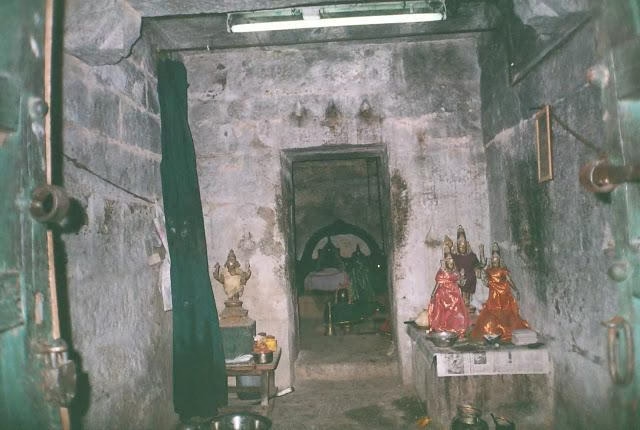
Nestled within the ancient lanes of Kanchipuram, a city revered as the ‘Capital of Temples,’ lies the Thanthondreeswarar Temple. This sacred site is a testament to unwavering faith and miraculous transformation. While part of the massive Ekambaranathar Temple complex, it retains a distinct spiritual identity.
Deity and Form
The presiding deity is Thanthondreeswarar (Lord Shiva), worshipped here in the form of a Swayambhu Lingam (self-manifested). The consort, Mother Goddess, is known as Yanaimukari or Ekanampikal (based on legend). The temple is located on the streets surrounding the main Ekambaranathar sanctum.
Phalaśruti: The Fruits of Devotion
Devotees flock to Thanthondreeswarar Temple with specific spiritual desires. According to established temple traditions and oral folklore, visiting this shrine is believed to:
- Remove Arishtam (Misfortune): It is said that circumambulating this temple removes obstacles in one’s life path.
- Grant Gnana (Wisdom) and Youth: As per the legend of the sage Ubamanyu, sincere worship here grants spiritual knowledge and rejuvenation of the spirit.
- Cleansing Ancestral Karma: Performing pujas here is believed to absolve sins accumulated by ancestors, ensuring peace for the lineage.
Historical Origins & Scriptural Legend
The Legend of Sage Ubamanyu
The soul of this temple is the Sthala Purana (local legend). Tradition holds that the great sage Ubamanyu (also known as Upamanyu) performed severe penance here. The sage was known for his devotion to Lord Shiva. It is believed that Lord Shiva, pleased by the sage’s austerity, manifested here as the Swayambhu Lingam.
The Lord granted the sage two boons: eternal Gnana (wisdom) and Ajaramatvam (everlasting youth/vitality). This is why the deity is revered as ‘Thanthondreeswarar’—the Lord who manifests to aid his devotee.
Architectural Heritage
While specific construction dates for the original shrine are lost to antiquity, the architectural features suggest origins in the early Chola Period (circa 9th-11th century CE), with significant renovations during the Vijayanagara Empire (15th-16th century CE). The temple falls under the jurisdiction of the Hindu Religious and Charitable Endowments (HR&CE) Department of Tamil Nadu.
Architectural Marvels
The Thanthondreeswarar Temple is a classic example of the Dravidian style of architecture. It adheres to the strict tenets of Vastu Shastra, oriented towards the east.
Sanctum and Structures
- Garbhagriha (Sanctum): The inner sanctum houses the Swayambhu Lingam, which is smaller in size but highly revered.
- Mandapas (Halls): The temple features pillared Mandapas with exquisite sculptures depicting mythological scenes from the Puranas.
- Gopurams and Walls: Although this is a smaller shrine within the Ekambaranathar complex, the towering Gopurams (gateway towers) of the main temple dominate the skyline. The walls of this specific shrine are adorned with niches housing images of various deities.
- Artwork: Look for the intricate stonework on the pillars, which feature motifs of Yalis (mythical creatures) and dancers.
ASI and UNESCO Status
While the Thanthondreeswarar shrine itself is not a separate UNESCO World Heritage site, it is integral to the Ekambaranathar Temple Complex, which is protected by the Archaeological Survey of India (ASI) and the Tamil Nadu State Archaeology Department.
Darshan & Ritual Logistics (2026 Season)
To enhance the spiritual experience, devotees are advised to plan their visit around the daily rituals. Note: Timings are standard for Kanchipuram temples but are subject to special festival schedules.
Daily Temple Timings
| Session | Timing | Activity |
|---|---|---|
| Morning | 6:00 AM – 12:00 PM | First Opening, Abhishekam, and General Darshan |
| Afternoon | 12:00 PM – 4:00 PM | Closure for Deity Rest |
| Evening | 4:00 PM – 8:30 PM | Second Opening, Deeparadhana |
Key Sevas (Rituals)
- Ushatkala Abhishekam: Early morning ritual (approx. 6:30 AM) – Highly recommended for a tranquil experience.
- Sahasranama Archana: Recitation of 1,000 names of Shiva.
- Kaala Sandhi Pooja: Performed at dusk.
Online Seva Booking
Devotees can book pujas online through the Official Tamil Nadu HR&CE Portal (often branded as “Arulmigu Ekambaranathar Temple” portal). Select “Thanthondreeswarar Sannidhi” or specific deities under the main temple complex during the booking process.
2026 Festival Calendar
Major festivals in Kanchipuram are celebrated with great fervor. The temple remains exceptionally crowded during these periods.
- Arudra Darshanam: January 6, 2026 (Celebration of Nataraja).
- Maha Shivaratri: February 26, 2026.
- Kartikai Deepam: November 5, 2026.
- Pradosham: Occurring twice monthly (specific dates vary by lunar calendar).
Practical Visitor Guidance
Code of Conduct and Dress Code
To maintain the sanctity of the shrine:
- Attire: Traditional Indian clothing is preferred (Dhoti/Saree). Western attire should be modest (cover shoulders and knees).
- Photography: Strictly prohibited inside the inner sanctum (Garbhagriha). Photography in the outer corridors is permitted but avoid disturbing rituals.
- Electronics: Mobile phones should be switched to silent mode. Lockers are available near the entrance for bags and electronics.
Crowd Management
- Best Time to Visit: Weekday mornings (6:00 AM – 8:00 AM) offer the most peaceful Darshan.
- Seasonal Advice: Kanchipuram can be very hot in May and humid during the monsoon (October-November). Carry a water bottle and wear light cotton fabrics. Expect larger crowds during weekends and festival days.
Accessibility
The temple floors are stone-paved. There are steps leading to the main sanctum, which may pose a challenge for those with mobility issues. Wheelchair access is limited to the outer corridors.
Pilgrimage Connectivity
How to Reach Thanthondreeswarar Temple
- By Air: The nearest airport is Chennai International Airport (MAA), located approximately 70 km away. From there, you can hire a taxi or take a bus to Kanchipuram.
- By Rail: Kanchipuram Railway Station is the primary railhead. It is well-connected to Chennai and Chengalpattu.
- By Road: Kanchipuram is situated on the Chennai – Bangalore Highway (NH 48). State-run buses frequently operate from Chennai, Vellore, and Tirupati.
Nearby Sacred Sites
A visit to Thanthondreeswarar Temple is best combined with a tour of the holy sites of Kanchipuram:
- Ekambaranathar Temple: The massive complex housing the Thanthondreeswarar shrine. Famous for its 1000-pillared hall and towering Gopuram.
- Kailasanathar Temple: Located a short distance away, this is one of the oldest structural temples in Tamil Nadu, built by the Pallavas.
- Varadaraja Perumal Temple: Dedicated to Lord Vishnu, this temple is a counterpart to the Shiva temples of Kanchipuram and is essential for the “Kanchi Ekathreeswarar” circuit.
Frequently Asked Questions (FAQ)
1. Is there a VIP darshan entry?
Yes, the temple management offers special entry darshan tickets (paid entry) to bypass the general queue, especially during festivals. These can be purchased at the counter near the entrance or online via the HR&CE portal.
2. Can non-Hindus visit the temple?
While the temple is primarily a place of worship for Hindus, the architectural beauty of the complex is often open to all visitors. However, entry into the inner sanctum for Darshan is generally restricted to Hindus.
3. Is there a dress code for men?
Yes. Men are required to remove shirts and upper garments before entering the sanctum. Dhoti or formal trousers are acceptable. Wearing a vest or t-shirt is usually allowed in the outer areas but removed near the sanctum.
4. What is the significance of the name ‘Thanthondreeswarar’?
The name translates roughly to “The Lord who manifested (Thondri) in response to a devotee’s penance.” It specifically refers to the legend of Sage Ubamanyu.
5. Are there accommodation facilities nearby?
Kanchipuram has numerous lodges, guest houses run by the Devaswom board, and private hotels. It is advisable to book accommodation in advance during the festival seasons (January and February).
Photo Gallery
Official Address & Contact
Thanthondreeswarar Temple
Ekambaranathar Sannidhi Street
Kanchipuram – 602 001
Tamil Nadu, India
Phone: +91 44 2722 2088 (Temple Office – Main Complex)
Recent Posts

Shri Kaamkoteeshwar Mandir, Varanasi – History & Significance
In the heart of Kashi, the eternal city of Lord Shiva, where the Ganges flows with celestial grace, stands the Shri Kaamkoteeshwar Mandir. This sacred Sannidhi is not merely a temple but a profound spiritual bridge between the Northern…

ओ सांवरे तूने ही मुझको संभाला – Lyrics & Meaning
ओ सांवरे तूने ही मुझको संभाला – A Prayer to Shyam Origin & Spiritual Essence Why This Bhajan Resonates Devotees chant this when overwhelmed by life’s storms—the refrain ‘तूने ही मुझको संभाला’ is the soul’s sigh of relief: “You…

कथा ये है महाराज मेरे की – Lyrics & Meaning
कथा ये है महाराज मेरे की छत्रपति संभाजी महाराज – A Prayer to Chhatrapati Sambhaji Maharaj Origin & Spiritual Essence Why This Bhajan Resonates Devotees chant this when their spirit feels tested—its powerful refrain “महाराज मेरे” is a soul’s…

Rigveda Samhita Yathartha Anuvada (ऋग्वेद संहिता यथार्थ अनुवाद) – Complete Set with Anvayartha & Hindi/English Translation
The Rigveda is the oldest surviving scripture of humanity and the foundational text of Sanātana Dharma. For serious students, scholars, UPSC aspirants studying ancient Indian history, Sanskrit learners, and spiritual seekers, a precise and grammatically structured translation is indispensable.…

आना भी अकेला है जाना भी अकेला है – Lyrics & Meaning | BharatTemples
आना भी अकेला है जाना भी अकेला है – A Prayer to the Divine Witness Origin & Spiritual Essence Why This Bhajan Resonates Devotees turn to this bhajan in moments of deep reflection—when life’s attachments begin to ache. The…

माता शेरावाली के द्वार जो भी जाता है – Lyrics & Meaning
माता शेरावाली के द्वार जो भी जाता है – A Prayer to Maa Sherawali Origin & Spiritual Essence Why This Bhajan Resonates Devotees turn to this bhajan in times of fear or uncertainty—its promise that no one leaves Maa’s…

मार लेना सपणी उबार लेणा भवरा – Lyrics & Meaning
मार लेना सपणी उबार लेणा भवरा – A Prayer to the Divine Beloved Origin & Spiritual Essence Why This Bhajan Resonates Devotees chant this in moments of deep vulnerability—its cry of “मार लेना सपणी, उबार लेणा भवरा” is the…

हमें श्याम सुंदर भरोसा तुम्हारा – Lyrics & Meaning
हमें श्याम सुंदर भरोसा तुम्हारा – A Prayer to Shyam Sundar Origin & Spiritual Essence Why This Bhajan Resonates Devotees chant this when feeling alone—its refrain ‘de do sahara’ is the soul’s cry for divine support. Lyrics in Hindi…

Mere Satguru Ne Di Thi Davai Lyrics in Hindi & Meaning
Mere Satguru Ne Di Thi Davai: Invoking the Guru’s Liberating Wisdom This soul-stirring bhajan venerates the Satguru (True Spiritual Master) as the divine physician who dispenses the only remedy for life’s deepest sufferings. Composed by Sant Karmaveer Tufani, it…

Janm Diyo Thari Maa Dukh Dekhiyo Lyrics in Hindi & Meaning
जन्म दियो थारी माँ दुख देखियो (Maa’s Grief Upon Birthing You) This soul-stirring Chetavani Bhajan (admonitory hymn) is addressed to the Divine Mother (Maa) – a call for repentance when children forget their filial duties in the dark age…