
Contents
- 1 Kalyana Jagannathar Temple, Pillaipakkam: The Divine Wedding Hall of Vishnu
- 1.1 1. Introduction & Spiritual Essence
- 1.2 2. Historical Origins & Scriptural Legend
- 1.3 3. Architectural Marvels
- 1.4 4. Darshan & Ritual Logistics
- 1.5 5. Practical Visitor Guidance
- 1.6 6. Pilgrimage Connectivity
- 1.7 7. Frequently Asked Questions (FAQs)
- 1.7.1 1. Is there a VIP darshan entry at Kalyana Jagannathar Temple?
- 1.7.2 2. Can we conduct a marriage ceremony at this temple?
- 1.7.3 3. What is the significance of the Anjaneyar statue inside the sanctum?
- 1.7.4 4. Are there accommodation facilities near the temple?
- 1.7.5 5. When is the Brahmotsavam festival held?
- 1.8 Contact Details
Kalyana Jagannathar Temple, Pillaipakkam: The Divine Wedding Hall of Vishnu
Updated for the 2026 Pilgrimage Season
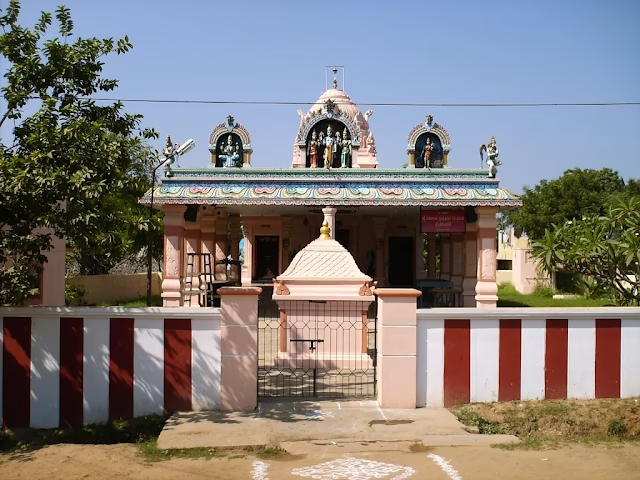
As the Lead Heritage Architect and SEO Strategist for bharattemples.com, I welcome you to this sanctuary of serenity. Located in the historic Kanchipuram district, the Kalyana Jagannathar Temple in Pillaipakkam is not merely a structure of stone; it is a living chronicle of devotion, architectural grandeur, and celestial blessings. This definitive guide is engineered to assist the modern pilgrim while honoring the ancient traditions of the Dravidian Vastu Shastra.
| Date built: | Attributed to Medieval Chola Era (Exact date unrecorded) |
|---|---|
| Deity: | Kalyana Jagannathar (Vishnu) Kalyanavalli Thayar (Lakshmi) |
| Architectural style: | Dravidian Architecture |
| Major festivals: | Brahmotsavam, Vaikuntha Ekadashi |
| Locale: | Pillaipakkam |
| District: | Kanchipuram |
1. Introduction & Spiritual Essence
The Kalyana Jagannathar Temple is a celebrated Divya Desam (one of the 108 abodes of Vishnu glorified by the Alvar saints). Here, the presiding deity is Kalyana Jagannathar, a form of Lord Vishnu representing the sacred union of the divine and the devotee. The name “Kalyana” translates to “auspicious marriage,” and the Lord is revered as the one who grants marital harmony and blessings for new beginnings.
Phalaśruti (Spiritual Benefits):
- Marriage Blessings: Devotees flock here to remove obstacles (doshas) delaying marriage. It is believed that sincere prayers here invoke the blessings of the celestial wedding of Lord Vishnu and Goddess Lakshmi.
- Family Harmony: The temple is known for restoring peace and auspiciousness within family units.
- Divine Vision: The Sthala Purana (local legend) suggests that viewing the “Kalyana Kolam” (wedding form) of the deity grants Moksha (liberation) from the cycle of birth and death.
2. Historical Origins & Scriptural Legend
While specific inscriptions regarding the construction date are largely eroded due to time, the architecture places the temple firmly in the Medieval Chola Period (circa 11th-13th century CE). The structural integrity and the presence of large sculptural elements suggest it was built during the peak of Chola temple expansion.
Scriptural & Oral Traditions:
According to temple records and local lore, this site is associated with the Ashta Lakshmi manifestations. It is believed that Lord Indra, suffering from a curse, performed penance here to regain his glory. Pleased by his devotion, Lord Vishnu appeared here as Kalyana Jagannathar, bestowing prosperity (Lakshmi) and clearing the ancestral karma of those who pray with a pure heart. The presence of Anjaneyar (Hanuman) in the front sanctum is a unique architectural deviation, symbolizing the protective vanguard of the divine couple.
3. Architectural Marvels
The temple is a textbook example of the Dravidian Style of temple architecture. It is designed according to the principles of Vastu Shastra, oriented to channel solar energy during early morning hours.
- The Sanctum (Garbhagriha): The main deity, Kalyana Jagannathar, stands in a majestic posture flanked by Sridevi (Bhudevi) and Bhoodevi.
- Unique Feature: Unlike most Vishnu temples where Garuda (the eagle vehicle) faces the main deity, here Anjaneyar (Lord Hanuman) occupies that position, facing the Lord. This symbolizes the protective aspect of the temple.
- The Mandapas: The temple features a spacious Mandapa (hall) used for conducting weddings and spiritual discourses. The pillars are adorned with intricate carvings depicting scenes from the Ramayana and Puranas.
- Preservation Status: While the temple is maintained by local priests, its Dravidian motifs contribute to the cultural heritage of the Kanchipuram belt.
4. Darshan & Ritual Logistics
Planning your visit requires an understanding of the daily liturgical cycle (Agama). Below are the standard timings for 2026. Please note that these may vary slightly during festival seasons.
Daily Darshan Timings
| Session | Timings | Status |
|---|---|---|
| Morning | 07:00 AM – 12:00 PM | Open |
| Break | 12:00 PM – 04:00 PM | Closed |
| Evening | 04:00 PM – 08:00 PM | Open |
Key Sevas (Rituals) & Online Booking
The temple facilitates several Sevas for devotees. While online booking infrastructure is currently under development for the 2026 season, current bookings can be done via the local temple executive officer or through authorized devotional trusts.
- Abhishekam: Ritual bathing of the deity. Best performed during morning hours (Suggest time: 9:00 AM).
- Archana: Recitation of sacred names. Available throughout open hours.
- Special Wedding Prayer: A dedicated ritual for those seeking marital alliances.
Note: For 2026 festival updates, refer to the Arulmigu Sri Kalyana Jagannathar Temple Trust Board announcements.
5. Practical Visitor Guidance
To ensure a smooth and respectful darshan, adhere to the following guidelines:
- Dress Code: Traditional attire is mandatory. Men should wear Dhoti or formal trousers with a shirt; women should wear Saree, Salwar Kameez, or long skirts. Avoid shorts and sleeveless tops.
- Photography: Photography is strictly prohibited inside the sanctum sanctorum. However, you may photograph the outer corridors and gopurams.
- Mobile Lockers: There are no automated lockers currently on-site. It is advisable to carry minimal belongings and leave valuables in your vehicle.
- Accessibility: The temple is wheelchair accessible in the outer precincts. However, the inner sanctum involves three steps, requiring assistance for elderly pilgrims.
- Crowd Management:
- Best Hours: Weekday mornings (9:00 AM – 11:00 AM) offer the least crowd.
- Seasonal Advice: Kanchipuram gets hot in May. Carry a reusable water bottle and a hand fan. The temple courtyard offers shade under ancient banyan trees.
6. Pilgrimage Connectivity
Pillaipakkam is a small village, but it is strategically located near the industrial hub of Sriperumbudur.
How to Reach
- By Air: The nearest airport is Chennai International Airport (MAA), approximately 45 km away.
- By Rail: The nearest railway junction is Kanchipuram (15 km) or Chengalpattu (20 km).
- By Road:
- From Chennai: Take the NH48 towards Kanchipuram.
- From Bangalore: Take the NH75 and exit towards Sriperumbudur/Pillaipakkam.
- Landmark: Pillaipakkam is located about 3 km from the Bangalore Highway en route to Manimangalam.
Nearby Sacred Sites (The Kanchipuram Circuit)
- Varadaraja Perumal Temple (Kanchipuram): Located 15 km away, famous for its massive lizard sculptures and the once-in-40-years deity festival.
- Ekambareswarar Temple (Kanchipuram): One of the Pancha Bhoota Stalas, dedicated to Lord Shiva (Earth element).
- Uttara Merur Temple: An ancient temple dedicated to Lord Vishnu (Sree Vaikuntha Perumal) located en route.
7. Frequently Asked Questions (FAQs)
1. Is there a VIP darshan entry at Kalyana Jagannathar Temple?
Currently, the temple operates on a general darshan basis. Due to its location in a serene village setting, queues are generally manageable. VIP specific entries are not officially designated, but donations for priority darshan can be discussed with the temple administrator.
2. Can we conduct a marriage ceremony at this temple?
Yes, the temple is highly auspicious for conducting marriages. The main mandapa is available for rituals. However, advance booking with the temple trustee is required to arrange the necessary priests and logistics.
3. What is the significance of the Anjaneyar statue inside the sanctum?
Typically, Garuda faces the main deity. Here, Anjaneyar (Hanuman) stands in that place, symbolizing the Lord’s strength and protection. It is a unique feature that emphasizes the victory of devotion and strength.
4. Are there accommodation facilities near the temple?
Pillaipakkam is a rural village with limited lodging. It is recommended to stay in Kanchipuram (15 km) or Sriperumbudur (10 km), where multiple hotels and guest houses are available.
5. When is the Brahmotsavam festival held?
The Brahmotsavam is typically held in the Tamil month of Panguni (March-April). For 2026, the dates are tentatively scheduled around mid-April. This is the most vibrant time to visit, featuring a chariot procession (Ratha Yatra).
Contact Details
Official Address:
Kalyana Jagannathar Temple,
Pillaipakkam, Kanchipuram Dist, Tamil Nadu.
Recent Posts

Shri Kaamkoteeshwar Mandir, Varanasi – History & Significance
In the heart of Kashi, the eternal city of Lord Shiva, where the Ganges flows with celestial grace, stands the Shri Kaamkoteeshwar Mandir. This sacred Sannidhi is not merely a temple but a profound spiritual bridge between the Northern…

ओ सांवरे तूने ही मुझको संभाला – Lyrics & Meaning
ओ सांवरे तूने ही मुझको संभाला – A Prayer to Shyam Origin & Spiritual Essence Why This Bhajan Resonates Devotees chant this when overwhelmed by life’s storms—the refrain ‘तूने ही मुझको संभाला’ is the soul’s sigh of relief: “You…

कथा ये है महाराज मेरे की – Lyrics & Meaning
कथा ये है महाराज मेरे की छत्रपति संभाजी महाराज – A Prayer to Chhatrapati Sambhaji Maharaj Origin & Spiritual Essence Why This Bhajan Resonates Devotees chant this when their spirit feels tested—its powerful refrain “महाराज मेरे” is a soul’s…

Rigveda Samhita Yathartha Anuvada (ऋग्वेद संहिता यथार्थ अनुवाद) – Complete Set with Anvayartha & Hindi/English Translation
The Rigveda is the oldest surviving scripture of humanity and the foundational text of Sanātana Dharma. For serious students, scholars, UPSC aspirants studying ancient Indian history, Sanskrit learners, and spiritual seekers, a precise and grammatically structured translation is indispensable.…

आना भी अकेला है जाना भी अकेला है – Lyrics & Meaning | BharatTemples
आना भी अकेला है जाना भी अकेला है – A Prayer to the Divine Witness Origin & Spiritual Essence Why This Bhajan Resonates Devotees turn to this bhajan in moments of deep reflection—when life’s attachments begin to ache. The…

माता शेरावाली के द्वार जो भी जाता है – Lyrics & Meaning
माता शेरावाली के द्वार जो भी जाता है – A Prayer to Maa Sherawali Origin & Spiritual Essence Why This Bhajan Resonates Devotees turn to this bhajan in times of fear or uncertainty—its promise that no one leaves Maa’s…

मार लेना सपणी उबार लेणा भवरा – Lyrics & Meaning
मार लेना सपणी उबार लेणा भवरा – A Prayer to the Divine Beloved Origin & Spiritual Essence Why This Bhajan Resonates Devotees chant this in moments of deep vulnerability—its cry of “मार लेना सपणी, उबार लेणा भवरा” is the…

हमें श्याम सुंदर भरोसा तुम्हारा – Lyrics & Meaning
हमें श्याम सुंदर भरोसा तुम्हारा – A Prayer to Shyam Sundar Origin & Spiritual Essence Why This Bhajan Resonates Devotees chant this when feeling alone—its refrain ‘de do sahara’ is the soul’s cry for divine support. Lyrics in Hindi…

Mere Satguru Ne Di Thi Davai Lyrics in Hindi & Meaning
Mere Satguru Ne Di Thi Davai: Invoking the Guru’s Liberating Wisdom This soul-stirring bhajan venerates the Satguru (True Spiritual Master) as the divine physician who dispenses the only remedy for life’s deepest sufferings. Composed by Sant Karmaveer Tufani, it…

Janm Diyo Thari Maa Dukh Dekhiyo Lyrics in Hindi & Meaning
जन्म दियो थारी माँ दुख देखियो (Maa’s Grief Upon Birthing You) This soul-stirring Chetavani Bhajan (admonitory hymn) is addressed to the Divine Mother (Maa) – a call for repentance when children forget their filial duties in the dark age…