
Contents
Introduction & Spiritual Essence
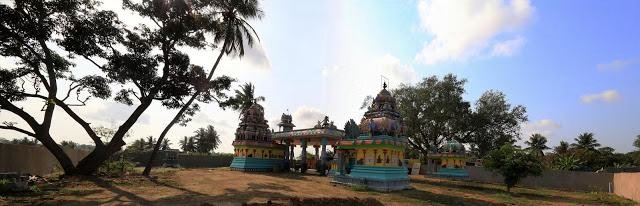
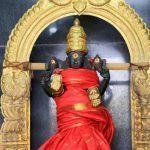
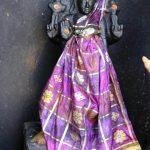
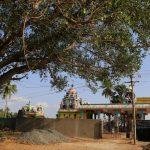
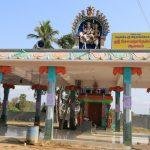
Nestled in the serene village of Kolathur, approximately 15 km from the temple town of Kanchipuram, stands the ancient Somanatheswarar Temple. This Dravidian architectural marvel is a sanctified space dedicated to Lord Shiva, worshipped here as Somanatheswarar (the Lord of the Moon) and his consort, Amudhambigai.
The temple is a profound center for spiritual cleansing, particularly regarding ancestral karma. In Hindu tradition, the Moon (Chandran) is the celestial governor of the mind and emotions. It is believed that worshipping Lord Somanatheswarar here alleviates the negative influences of the Moon in one’s horoscope, bringing peace and mental clarity.
Phalaśruti: Why Devotees Visit
According to scriptural promises (Phalaśruti), devotees visiting this temple are blessed with:
- Removal of Doshas: Specific relief from Chandrama Dosha (afflictions caused by the Moon).
- Ancestral Liberation: Performing rituals here is believed to help ancestors (Pitrus) attain liberation (Moksha).
- Amudhambigai’s Grace: The Mother Goddess here embodies the essence of nectar (Amudhu), offering healing and longevity to her devotees.
Historical Origins & Scriptural Legend
The Legend of Lord Chandran
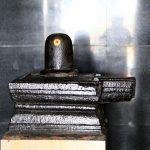
The Sthala Purana (local oral legend) recounts a celestial event where Lord Chandran (the Moon God) suffered from a curse that caused his phases to wane drastically. Seeking redemption, he descended to Kolathur and performed intense penance by creating a Padma Lingam from the waters of the nearby Gavi River. Pleased by his devotion, Lord Shiva appeared and granted him a new phase of waxing prosperity.
Inscriptions found within the temple complex corroborate this ancient legend, dating back to the post-Chola period. The temple was later revived in 1917 after a period of desolation, rediscovering its idols and sanctity.
The Legend of Amudhambigai
The name of the Goddess, Amudhambigai, derives from a mythological incident involving the churning of the ocean (Samudra Manthan). When the deadly poison (Halahala) emerged, Lord Shiva drank it to save the universe. However, to prevent it from consuming him, Goddess Parvati gripped his throat, effectively capturing the poison there. This is why Shiva is also known as Neelakantha (Blue-throated). The goddess here is worshipped as the one who converted the poison into life-saving nectar (Amudhu), symbolizing protection and healing.
Architectural Marvels
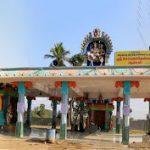
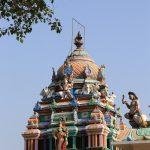
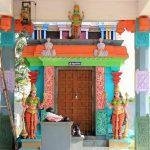
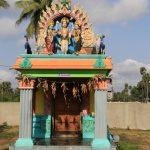
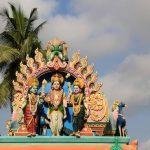
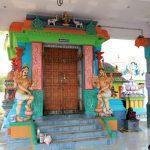
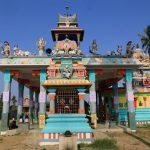
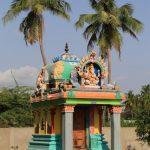
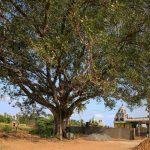
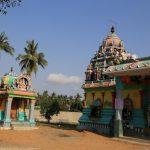
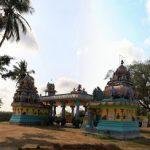
The Somanatheswarar Temple is a classic example of the Dravidian style of architecture. The temple complex is defined by its expansive outer walls (Prakaram), the foundations of which were excavated during the 20th-century restoration.
Key Features
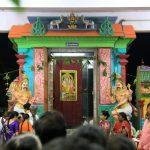
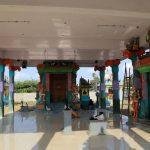
- Mandapas: The temple features pillared Mandapas (halls) that display intricate stone carvings typical of South Indian temple art.
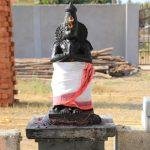
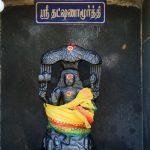
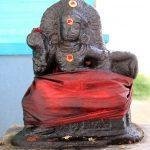
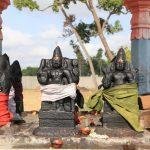
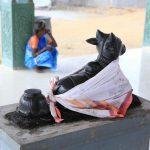
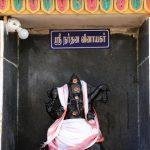
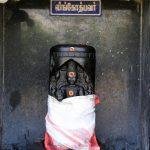
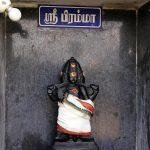
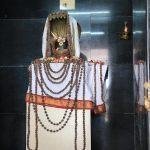
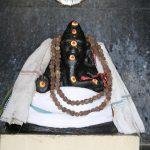
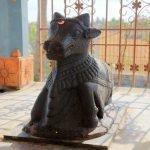
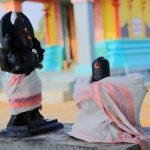
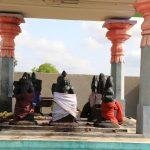
- Sculptures: A dedicated niche houses Nandikeswarar (Nandi), the divine vehicle of Shiva, distinguished by a broad, smiling face. The temple well is a significant feature; it was here that several buried idols were rediscovered during desilting.
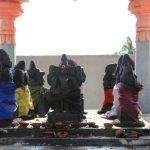
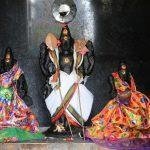
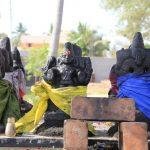
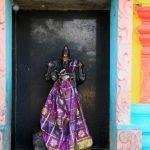
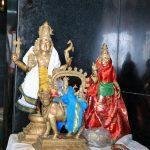
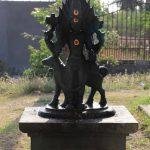
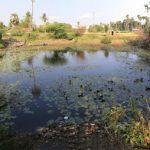
- The Well: The temple well is not merely functional but a site of archaeological importance. Along with the main idols, the excavation revealed idols of Maha Shashta, Chandikeswarar, Lord Murugan with his consorts Valli and Deivanai, Lord Ganesha, and Lord Durga.
Stone Inscriptions
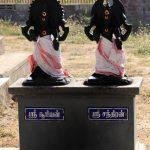
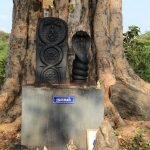
A stand-alone stone inscription located near the well provides epigraphical evidence of the temple’s ancient origins, offering historians insights into the region’s past.


Darshan & Ritual Logistics
As this is a village temple managed by the local community and the Department of Hindu Religious and Charitable Endowments (HR&CE), timings are generally fixed but subject to special festival schedules.
Daily Timings (2026 Schedule)
| Session | Timing |
|---|---|
| Morning Darshan | 06:00 AM – 11:00 AM |
| Mid-day Closing | 11:00 AM – 04:30 PM |
| Evening Darshan | 04:30 PM – 08:30 PM |
| Key Seva | Pradosha Puja (Sunset) |
Seva & Online Booking
While on-the-spot bookings are common, the temple administration encourages digital coordination for major Sevas. The following are performed regularly:
- Abhishekam: Ritual bathing of the Shiva Lingam with milk, honey, and sandalwood paste.
- Archana: Chanting of names. Amudhambigai Ashtottaram is highly recommended.
- Annadhanam: Free meal distribution (often on weekends and festivals).
Booking Procedure: Contact the temple office via phone or visit the official HR&CE portal for the latest 2026 booking slots.
2026 Festival Dates
Plan your visit around these auspicious days:
- Pradosham: Occurring twice monthly (13th and 28th of every month).
- Maha Shivaratri: February 26, 2026.
- Arudra Darshan: January 2026 (Date varies based on Tamil Calendar).
- Aadi Perukku: August 2026 (Special rituals for the river/abundance).
- Kartikai Deepam: November 2026.
Practical Visitor Guidance
Dress Code & Etiquette
Visitors are expected to wear traditional Indian attire (Dhoti/Saree) or modest clothing. Shirts and trousers are acceptable but must be respectful. Footwear should be removed before entering the temple premises.
Photography & Mobiles
Photography inside the sanctum sanctorum is strictly prohibited. While mobile phones are allowed, maintain silence during prayers. There are usually lockers available at the temple entrance for carrying phones and valuables.
Accessibility
The temple is a small-to-medium sized structure. The inner sanctum requires climbing steps, which might be challenging for elderly visitors. Wheelchair access is currently limited to the outer courtyards.
Crowd Management
- Best Hours: The morning session (6:30 AM – 8:00 AM) on weekdays offers a peaceful Darshan.
- Seasonal Advice: Kanchipuram can get very hot in May and June. Carry a water bottle and a head covering.
- Peak Times: Weekends and Pradosham evenings see higher footfall.
Pilgrimage Connectivity
How to Reach
The temple is strategically located near major transit points in the Kanchipuram district.
- By Road: Located in Kolathur village, 1.5 km from Mambakkam Junction on the Vandalur-Kelambakkam Highway route (SH-58). It is approximately 40 km from Chennai city limits.
- Nearest Railway Station: Chengalpattu Junction (approx. 15 km).
- Nearest Airport: Chennai International Airport (MAA) (approx. 28 km).
Nearby Sacred Sites
Expand your pilgrimage by visiting these nearby temples:
- Ashtabujakaram Temple (Vedal): Located 5 km away, featuring Lord Vishnu with eight hands.
- Kachapeshwarar Temple (Kanchipuram): A historic Shiva temple dedicated to the sages who worshipped here.
- Melakottaiyur Narasimha Swamy Temple: A prominent Vishnu temple located very close to Kolathur.
Frequently Asked Questions (FAQ)
1. Is there a VIP darshan entry at Somanatheswarar Temple?
As a village temple, there is no formal VIP entry like large hill temples. However, the temple is generally less crowded, allowing for a swift Darshan. Special entry can be arranged for the elderly or differently-abled by contacting the priest.
2. Can I perform an Abhishekam with my own materials?
Yes, devotees are allowed to bring items for Abhishekam (milk, fruits, flowers). However, it is advisable to check with the temple priest or office to ensure the items are acceptable and to schedule the specific timing.
3. Where can I stay nearby?
While Kolathur is a small village without hotels, nearby Kanchipuram offers excellent temple guest houses (Mutt houses) and hotels. Chengalpattu also provides several accommodation options.
4. What is the best time to visit for a calm experience?
Weekday mornings (Tuesday to Thursday) between 7:00 AM and 9:00 AM offer the most serene spiritual atmosphere.
5. Is the temple open during eclipses?
Following standard Hindu temple traditions, the temple may remain closed during solar and lunar eclipses. Special ceremonies are conducted post-eclipse before reopening. Please verify with the office before visiting on such days.
Contact Details
Somanatheswarar Temple,
Kolathur, Melakottaiyur,
Kanchipuram District, Tamil Nadu.
Phone: +91 – 44 – 24936910
Mobile: +91 – 98410 81482 / 98401 57028
Recent Posts

Shri Kaamkoteeshwar Mandir, Varanasi – History & Significance
In the heart of Kashi, the eternal city of Lord Shiva, where the Ganges flows with celestial grace, stands the Shri Kaamkoteeshwar Mandir. This sacred Sannidhi is not merely a temple but a profound spiritual bridge between the Northern…

ओ सांवरे तूने ही मुझको संभाला – Lyrics & Meaning
ओ सांवरे तूने ही मुझको संभाला – A Prayer to Shyam Origin & Spiritual Essence Why This Bhajan Resonates Devotees chant this when overwhelmed by life’s storms—the refrain ‘तूने ही मुझको संभाला’ is the soul’s sigh of relief: “You…

कथा ये है महाराज मेरे की – Lyrics & Meaning
कथा ये है महाराज मेरे की छत्रपति संभाजी महाराज – A Prayer to Chhatrapati Sambhaji Maharaj Origin & Spiritual Essence Why This Bhajan Resonates Devotees chant this when their spirit feels tested—its powerful refrain “महाराज मेरे” is a soul’s…

Rigveda Samhita Yathartha Anuvada (ऋग्वेद संहिता यथार्थ अनुवाद) – Complete Set with Anvayartha & Hindi/English Translation
The Rigveda is the oldest surviving scripture of humanity and the foundational text of Sanātana Dharma. For serious students, scholars, UPSC aspirants studying ancient Indian history, Sanskrit learners, and spiritual seekers, a precise and grammatically structured translation is indispensable.…

आना भी अकेला है जाना भी अकेला है – Lyrics & Meaning | BharatTemples
आना भी अकेला है जाना भी अकेला है – A Prayer to the Divine Witness Origin & Spiritual Essence Why This Bhajan Resonates Devotees turn to this bhajan in moments of deep reflection—when life’s attachments begin to ache. The…

माता शेरावाली के द्वार जो भी जाता है – Lyrics & Meaning
माता शेरावाली के द्वार जो भी जाता है – A Prayer to Maa Sherawali Origin & Spiritual Essence Why This Bhajan Resonates Devotees turn to this bhajan in times of fear or uncertainty—its promise that no one leaves Maa’s…

मार लेना सपणी उबार लेणा भवरा – Lyrics & Meaning
मार लेना सपणी उबार लेणा भवरा – A Prayer to the Divine Beloved Origin & Spiritual Essence Why This Bhajan Resonates Devotees chant this in moments of deep vulnerability—its cry of “मार लेना सपणी, उबार लेणा भवरा” is the…

हमें श्याम सुंदर भरोसा तुम्हारा – Lyrics & Meaning
हमें श्याम सुंदर भरोसा तुम्हारा – A Prayer to Shyam Sundar Origin & Spiritual Essence Why This Bhajan Resonates Devotees chant this when feeling alone—its refrain ‘de do sahara’ is the soul’s cry for divine support. Lyrics in Hindi…

Mere Satguru Ne Di Thi Davai Lyrics in Hindi & Meaning
Mere Satguru Ne Di Thi Davai: Invoking the Guru’s Liberating Wisdom This soul-stirring bhajan venerates the Satguru (True Spiritual Master) as the divine physician who dispenses the only remedy for life’s deepest sufferings. Composed by Sant Karmaveer Tufani, it…

Janm Diyo Thari Maa Dukh Dekhiyo Lyrics in Hindi & Meaning
जन्म दियो थारी माँ दुख देखियो (Maa’s Grief Upon Birthing You) This soul-stirring Chetavani Bhajan (admonitory hymn) is addressed to the Divine Mother (Maa) – a call for repentance when children forget their filial duties in the dark age…