
Contents
1. Introduction & Spiritual Essence
Nestled within the sacred geography of Kanchipuram, the Kesaveswarar Temple in Pillaiyarpalayam stands as a profound testament to the syncretic spiritual heritage of Tamil Nadu. The primary deity, Kesaveswarar, is a form of Lord Shiva. The nomenclature “Kesava” is traditionally associated with Lord Vishnu, but in this unique Kshetram (temple town), it represents Lord Shiva. This signifies the Aikya (oneness) of the divine, where the distinction between Shiva and Vishnu dissolves in devotion.
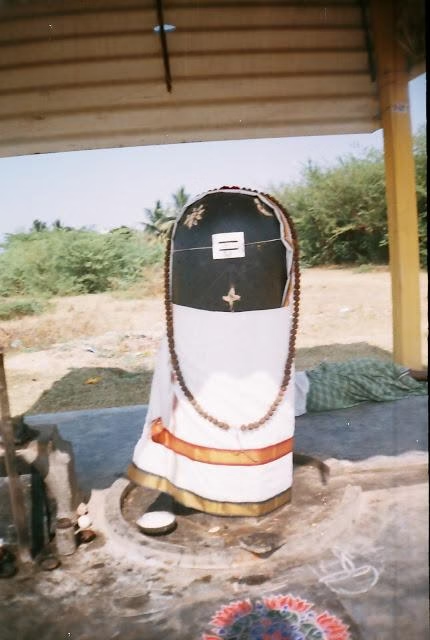
Deity & Form: The Presiding Deity is Kesaveswarar (Shiva), and the Consort is Gnyana Prasunambika (Parvati). The deity is a Swayambhu (self-manifested) Lingam, revered by Lord Mahavishnu himself.
Phalaśruti (Spiritual Benefits):
According to the Sthala Purana, devotees who perform Abhishekam to Kesaveswarar are blessed with the removal of Karma Doshas (ancestral debts) and afflictions related to Ketu (shadow planet). It is believed that circumambulating the inner prakaram brings relief from prolonged ailments and mental instability.
2. Historical Origins & Scriptural Legend
Builders & Era:
While specific epigraphic data regarding the exact construction date remains sparse in public records, the architectural style and the presence of the Deepa Stambham (lamp pillar) in the Maha Mandapam suggest origins during the Pallava dynasty (6th–9th century CE), followed by significant enhancements by Chola and Vijayanagara rulers. The temple is a classical example of early Dravidian temple construction prevalent in Kanchipuram.
Scriptural Legend (Sthala Purana):
Tradition holds that Lord Brahma performed a Yajna (fire ritual) at this site to obtain divine weapons to fight demons. Pleased with the worship, Lord Shiva manifested as Kesaveswarar. Furthermore, Lord Vishnu, known as Kesava, worshipped this Shiva Lingam to gain the power to vanquish the demon Kali. Hence, the deity is named after Vishnu but is the embodiment of Shiva.
According to temple records, the Somaskandar idol (Shiva, Parvati, and Skanda) in the niche is a masterpiece of stone carving from the Chola era, indicating the temple’s prominence in the medieval Bhakti movement.
3. Architectural Marvels
The Kesaveswarar Temple is a textbook example of Dravidian Architecture, characterized by its stepped pyramid towers and expansive courtyards.
Key Features:
- Gopurams: The temple features a modest three-tiered Rajagopuram (entrance tower) typical of Pallava aesthetics, leading into the first Prakaram (enclosure).
- Mandapas: The Maha Mandapam (main hall) is constructed with stone pillars featuring intricate carvings of Dwarapalakas (guardian deities) and Kalasam (pot motifs). The ceiling is adorned with Kumbha Panjaram motifs.
- Sanctum Sanctorum: The Garbhagriha is aligned with Vastu Shastra principles, facing East. The inner walls house niches containing idols of Parvati, Ganesha, and Murugan.
- Preservation: While not a designated UNESCO site, the temple maintains the structural integrity typical of Panchaloha metallurgy used in the metallic frames of the doors.
4. Darshan & Ritual Logistics
Visitors are encouraged to check the specific timings on the official website or local temple board announcements, as timings may vary during festival seasons. Below are the standard timings for 2026.
| Session | Timings | Activity |
|---|---|---|
| Morning | 6:00 AM – 12:00 PM | Abhishekam, Archana, General Darshan |
| Afternoon | 12:00 PM – 4:00 PM | Temple Closure (Raja Alankaram) |
| Evening | 4:00 PM – 8:30 PM | Deeparadhana, General Darshan |
Key Sevas & Booking:
Devotees can book the following services via the official Tamil Nadu Tourism/HRCE portal or at the temple counter:
- Kesaveswarar Abhishekam: Performed on Mondays and Pradosham.
- Archana (Jnanaprasunambika): For educational and mental clarity.
- Kala Bairava Pooja: Tuesdays.
2026 Major Festivals:
- Shivaratri: February 26, 2026 (Special night-long vigil).
- Arudra Darshanam: January 10, 2026 (Celebration of Nataraja form).
- Aadi Perukku: July 26, 2026 (River bank rituals nearby).
5. Practical Visitor Guidance
Dress Code: Traditional attire is mandatory. Men should wear Veshti (dhoti) or trousers with a shirt; women should wear Saree or Salwar Kameez. Shorts and sleeveless tops are not permitted.
Photography & Mobiles:
Photography is strictly prohibited inside the sanctum sanctorum. Mobile phones should be silenced; lockers are available near the entrance for electronic devices.
Crowd Management:
The temple is located in the bustling Pillaiyarpalayam area of Kanchipuram.
- Best Time to Visit: Early morning (6:00 AM – 8:00 AM) or late evening.
- Seasonal Advice: Kanchipuram can be extremely hot in May. Carry a water bottle and an umbrella. During Aadi and Panguni months, expect heavy crowds due to local festivals.
Accessibility:
The temple has a level entry in the first prakaram, but the sanctum requires climbing steps. There is no wheelchair ramp currently available for the inner sanctum.
6. Pilgrimage Connectivity
How to Reach:
The Kesaveswarar Temple is centrally located in Pillaiyarpalayam, making it easily accessible.
- Nearest Airport: Chennai International Airport (KMA) – Approx. 70 km.
- Nearest Railway Station: Kanchipuram Railway Station – Approx. 2 km. Auto-rickshaws are readily available.
- By Road: Located off the Kanchipuram Bypass Road (SH-58). Buses frequent the Pillaiyarpalayam stop.
Nearby Sacred Sites (Circuit):
1. Kailasanathar Temple: (1.5 km) The oldest structural stone temple in Kanchipuram, dedicated to Shiva.
2. Ekambareswarar Temple: (3 km) One of the Pancha Bhoota Stalas (Earth element).
3. Varadaraja Perumal Temple: (2.5 km) A major Vishnu temple showcasing the Dravidian style.
7. Frequently Asked Questions (FAQ)
Is there a VIP darshan entry?
Yes, the temple committee offers a special entry for elderly citizens and differently-abled devotees. However, there is no commercial VIP ticket system; entry is based on donation receipts for specific Sevas.
What is the significance of the name ‘Kesaveswarar’?
The name combines “Kesava” (an epithet of Vishnu) and “Ishwara” (Shiva). It symbolizes that Lord Vishnu worshipped this Shiva Lingam, making this temple a unique symbol of harmony between the two major sects of Hinduism.
Are non-Hindus allowed inside?
Generally, entry is restricted to those practicing the Hindu faith. It is advisable to check with the temple administration upon arrival.
Where can I park my vehicle?
There is limited street parking around Pillaiyarpalayam. Public parking lots are available near the Kanchipuram bus stand, which is a short walk away.
Is food provided at the temple?
While small Annadanam (free meals) may occur during festivals, daily meals are not served. However, vegetarian food is widely available in the surrounding streets of Kanchipuram.
Recent Posts

Shri Kaamkoteeshwar Mandir, Varanasi – History & Significance
In the heart of Kashi, the eternal city of Lord Shiva, where the Ganges flows with celestial grace, stands the Shri Kaamkoteeshwar Mandir. This sacred Sannidhi is not merely a temple but a profound spiritual bridge between the Northern…

ओ सांवरे तूने ही मुझको संभाला – Lyrics & Meaning
ओ सांवरे तूने ही मुझको संभाला – A Prayer to Shyam Origin & Spiritual Essence Why This Bhajan Resonates Devotees chant this when overwhelmed by life’s storms—the refrain ‘तूने ही मुझको संभाला’ is the soul’s sigh of relief: “You…

कथा ये है महाराज मेरे की – Lyrics & Meaning
कथा ये है महाराज मेरे की छत्रपति संभाजी महाराज – A Prayer to Chhatrapati Sambhaji Maharaj Origin & Spiritual Essence Why This Bhajan Resonates Devotees chant this when their spirit feels tested—its powerful refrain “महाराज मेरे” is a soul’s…

Rigveda Samhita Yathartha Anuvada (ऋग्वेद संहिता यथार्थ अनुवाद) – Complete Set with Anvayartha & Hindi/English Translation
The Rigveda is the oldest surviving scripture of humanity and the foundational text of Sanātana Dharma. For serious students, scholars, UPSC aspirants studying ancient Indian history, Sanskrit learners, and spiritual seekers, a precise and grammatically structured translation is indispensable.…

आना भी अकेला है जाना भी अकेला है – Lyrics & Meaning | BharatTemples
आना भी अकेला है जाना भी अकेला है – A Prayer to the Divine Witness Origin & Spiritual Essence Why This Bhajan Resonates Devotees turn to this bhajan in moments of deep reflection—when life’s attachments begin to ache. The…

माता शेरावाली के द्वार जो भी जाता है – Lyrics & Meaning
माता शेरावाली के द्वार जो भी जाता है – A Prayer to Maa Sherawali Origin & Spiritual Essence Why This Bhajan Resonates Devotees turn to this bhajan in times of fear or uncertainty—its promise that no one leaves Maa’s…

मार लेना सपणी उबार लेणा भवरा – Lyrics & Meaning
मार लेना सपणी उबार लेणा भवरा – A Prayer to the Divine Beloved Origin & Spiritual Essence Why This Bhajan Resonates Devotees chant this in moments of deep vulnerability—its cry of “मार लेना सपणी, उबार लेणा भवरा” is the…

हमें श्याम सुंदर भरोसा तुम्हारा – Lyrics & Meaning
हमें श्याम सुंदर भरोसा तुम्हारा – A Prayer to Shyam Sundar Origin & Spiritual Essence Why This Bhajan Resonates Devotees chant this when feeling alone—its refrain ‘de do sahara’ is the soul’s cry for divine support. Lyrics in Hindi…

Mere Satguru Ne Di Thi Davai Lyrics in Hindi & Meaning
Mere Satguru Ne Di Thi Davai: Invoking the Guru’s Liberating Wisdom This soul-stirring bhajan venerates the Satguru (True Spiritual Master) as the divine physician who dispenses the only remedy for life’s deepest sufferings. Composed by Sant Karmaveer Tufani, it…

Janm Diyo Thari Maa Dukh Dekhiyo Lyrics in Hindi & Meaning
जन्म दियो थारी माँ दुख देखियो (Maa’s Grief Upon Birthing You) This soul-stirring Chetavani Bhajan (admonitory hymn) is addressed to the Divine Mother (Maa) – a call for repentance when children forget their filial duties in the dark age…