
Contents
Introduction & Spiritual Essence
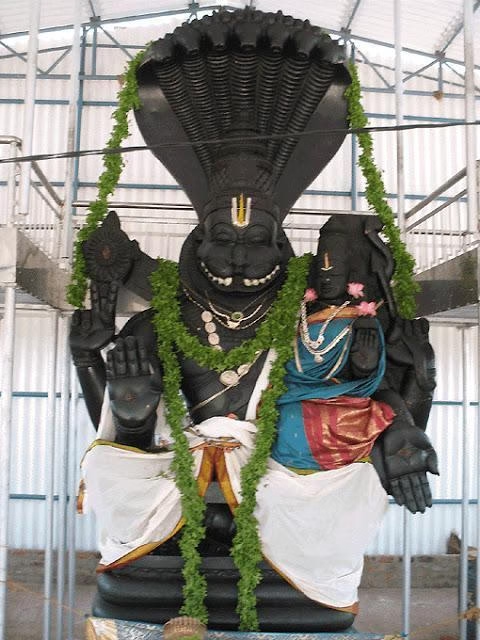
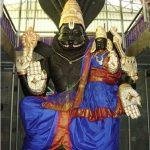
The Vishwaroopa Lakshmi Narasimhar Temple in Kattavakkam, Kanchipuram, stands as a monumental testament to the ferocious yet benevolent avatar of Lord Vishnu. Dedicated to Sri Vishwaroopa Lakshmi Narasimha, this shrine offers a unique darshan of the Lord seated in Veetrirundha Thirukkolam (a seated posture of sovereignty) with his consort, Goddess Lakshmi.
Phalaśruti (Spiritual Benefits): Devotees flock to this temple seeking protection from malefic planetary influences and the resolution of ancestral karma. The Lord here is revered as the savior who grants Abhaya (protection) and Varada (boons) to those who surrender at his feet. The presence of Goddess Lakshmi on his lap signifies that fearlessness and prosperity are intertwined.
Historical Origins & Scriptural Legend
According to temple records and local tradition, this temple was constructed by the Rayalasar dynasty. While specific archival data regarding the exact century is currently under review by heritage bodies, the architectural motifs suggest a significant period of devotion to Lord Vishnu during the late medieval era of Tamil Nadu.
Scriptural Legend: The Stala Purana (local oral legend) highlights the unique iconography of this Narasimha avatar. Unlike the typically wrathful form, the deity of Kattavakkam displays a gentle, smiling face. Tradition holds that the Lord manifested here to bless devotees with Arogya (health) and Santhi (peace). The mythology revolves around the Lord embracing his consort Lakshmi, symbolizing the union of the divine masculine and feminine energies, granting total protection to the surrendering soul.
Architectural Marvels
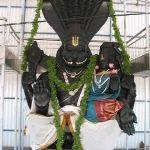
The temple follows the classic Dravidian architectural style. The sanctum sanctorum (Garbhagriha) is designed to house the colossal murti. The primary deity, Vishwaroopa Lakshmi Narasimhar, is incredibly large—standing almost 25 feet from the base up to the seven-hooded Adisesha umbrella.
- The Murti: The Lord holds the Sudarshana Chakra and bow-and-arrow in his back hands, indicating his readiness to incarnate as Lord Rama in the future. His forearms display the Abhaya Hastham (gesture of fearlessness) and Varada Hastham (gesture of granting boons).
- Adisesha Hoods: A towering seven-hooded serpent protects the Lord’s head. Each hood is adorned with a crowning sparkling Nagarathnam (serpent gem).
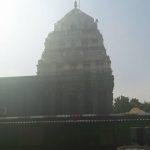
- Dravida Style: The temple features tiered vimana structures typical of Tamil Nadu architecture, although the primary focus is the verticality of the main murti within the sanctum.
Darshan & Ritual Logistics
Devotees are encouraged to check the official contact numbers provided below for real-time updates on rituals, as schedules may vary during festival seasons.
Daily Temple Timings
Based on standard operational hours, the temple is generally open from morning until evening.
| Session | Timings |
|---|---|
| Morning Darshan | 08:00 AM – 12:00 PM |
| Mid-day Closure | 12:00 PM – 04:00 PM |
| Evening Darshan | 04:00 PM – 07:00 PM |
Key Sevas (Rituals) & Booking
Popular Sevas include Abhishekam (ritual bathing of the deity) and Archana (recitation of hymns). For specific booking requirements, it is advisable to contact the temple administration directly.
2026 Festival Calendar
Mark your calendars for the following significant observances in 2026:
- Narasimha Jayanti: May 9, 2026 (Saturday) – Special Alankaram and Maha Deeparadhana.
- Vaikuntha Ekadashi: January 3, 2026 (Saturday) – Continuous chanting of Vishnu Sahasranamam.
- Brahmotsavam: February 28 – March 8, 2026 (Dates subject to Tamil Panchangam) – Ratha Utsavam (Temple Car procession).
Practical Visitor Guidance
To ensure a peaceful darshan experience, please adhere to the following guidelines:
- Dress Code: Traditional attire is mandatory. Men should wear dhotis or formal trousers with shirts; women should wear sarees, chudidars, or long skirts.
- Photography: Photography is strictly prohibited inside the sanctum sanctorum. It may be allowed in the outer prakaram (corridor) upon seeking permission from temple staff.
- Mobile Phones & Lockers: Electronic devices should be kept in silent mode. While the temple may not have a formal cloakroom, small bags are inspected at the entrance.
- Crowd Management: Weekend evenings and festival days see heavy footfall. The best time for a relaxed darshan is weekday mornings between 9:00 AM and 11:00 AM.
- Seasonal Advice: Kanchipuram summers (April–June) can be hot; carry a water bottle and a head cover to protect against the sun.
Pilgrimage Connectivity
The temple is strategically located near Kanchipuram, making it a vital stop on the religious circuit of Tamil Nadu.
How to Reach
- By Road: The temple is located in Kattavakkam village, Walajabad. It is approximately 60 km from Chennai via Padappai. Travelers on the Bangalore-Chennai Highway (NH 48) should take the cut-off towards Walajabad opposite the Ganesha Temple at Sunguvar Chatram junction. The temple is 13.5 km from this junction.
- By Bus:
- 79 (Ashargana/Alandur Bus Stop)
- 579 and 579A (Tambaram)
- 579, 160, 79, and 76 (Kanchipuram)
- By Rail: The nearest major railway junction is Kanchipuram or Chengalpattu. From there, local taxis or buses are available to Walajabad/Kattavakkam.
Nearby Sacred Sites
- Ekambareswarar Temple (Kanchipuram): One of the Pancha Bhoota Stalas, dedicated to Lord Shiva.
- Varadaraja Perumal Temple: A UNESCO-recognized temple complex known for its exquisite mandapas.
- Ulagalantha Perumal Temple: Located in Kanchipuram, dedicated to the Vamana avatar of Vishnu.
Frequently Asked Questions (FAQ)
1. Is there a VIP or Special Entry Darshan available?
While the temple administration manages the queue systems, specific VIP arrangements depend on the current trustees. It is recommended to contact the temple phone number (+91 – 44 – 27290805) in advance if you have authorization letters.
2. How can I perform Abhishekam for the deity?
Abhishekam is usually performed during the morning hours. Devotees can book this service by contacting the temple office. It is advisable to confirm the availability of materials (milk, honey, sandalwood paste) beforehand.
3. What is the significance of the 25-foot height?
The massive scale of the murti represents the Vishwaroopa (Cosmic Form) of Lord Vishnu. It signifies the all-encompassing nature of the divine, reminding devotees that the Lord is omnipresent and larger than worldly troubles.
4. Is the temple wheelchair accessible?
The temple is an ancient structure. While the main pathways are generally level, the inner sanctum might have narrow entrances. Please contact the temple administration prior to your visit to arrange assistance if required.
5. Where can I stay near the temple?
Accommodation is available in the nearby town of Kanchipuram, which offers various mutt-run guest houses and hotels. Kattavakkam itself has limited lodging options, so staying in Kanchipuram or Chengalpattu is recommended.
Contact Details
Vishwaroopa Lakshmi Narasimhar Temple
Kattavakkam, Kanchipuram District
Phone: +91 – 44 – 27290805
Mobile: +91 – 99529 55500 / 9444225091
Recent Posts

Shri Kaamkoteeshwar Mandir, Varanasi – History & Significance
In the heart of Kashi, the eternal city of Lord Shiva, where the Ganges flows with celestial grace, stands the Shri Kaamkoteeshwar Mandir. This sacred Sannidhi is not merely a temple but a profound spiritual bridge between the Northern…

ओ सांवरे तूने ही मुझको संभाला – Lyrics & Meaning
ओ सांवरे तूने ही मुझको संभाला – A Prayer to Shyam Origin & Spiritual Essence Why This Bhajan Resonates Devotees chant this when overwhelmed by life’s storms—the refrain ‘तूने ही मुझको संभाला’ is the soul’s sigh of relief: “You…

कथा ये है महाराज मेरे की – Lyrics & Meaning
कथा ये है महाराज मेरे की छत्रपति संभाजी महाराज – A Prayer to Chhatrapati Sambhaji Maharaj Origin & Spiritual Essence Why This Bhajan Resonates Devotees chant this when their spirit feels tested—its powerful refrain “महाराज मेरे” is a soul’s…

Rigveda Samhita Yathartha Anuvada (ऋग्वेद संहिता यथार्थ अनुवाद) – Complete Set with Anvayartha & Hindi/English Translation
The Rigveda is the oldest surviving scripture of humanity and the foundational text of Sanātana Dharma. For serious students, scholars, UPSC aspirants studying ancient Indian history, Sanskrit learners, and spiritual seekers, a precise and grammatically structured translation is indispensable.…

आना भी अकेला है जाना भी अकेला है – Lyrics & Meaning | BharatTemples
आना भी अकेला है जाना भी अकेला है – A Prayer to the Divine Witness Origin & Spiritual Essence Why This Bhajan Resonates Devotees turn to this bhajan in moments of deep reflection—when life’s attachments begin to ache. The…

माता शेरावाली के द्वार जो भी जाता है – Lyrics & Meaning
माता शेरावाली के द्वार जो भी जाता है – A Prayer to Maa Sherawali Origin & Spiritual Essence Why This Bhajan Resonates Devotees turn to this bhajan in times of fear or uncertainty—its promise that no one leaves Maa’s…

मार लेना सपणी उबार लेणा भवरा – Lyrics & Meaning
मार लेना सपणी उबार लेणा भवरा – A Prayer to the Divine Beloved Origin & Spiritual Essence Why This Bhajan Resonates Devotees chant this in moments of deep vulnerability—its cry of “मार लेना सपणी, उबार लेणा भवरा” is the…

हमें श्याम सुंदर भरोसा तुम्हारा – Lyrics & Meaning
हमें श्याम सुंदर भरोसा तुम्हारा – A Prayer to Shyam Sundar Origin & Spiritual Essence Why This Bhajan Resonates Devotees chant this when feeling alone—its refrain ‘de do sahara’ is the soul’s cry for divine support. Lyrics in Hindi…

Mere Satguru Ne Di Thi Davai Lyrics in Hindi & Meaning
Mere Satguru Ne Di Thi Davai: Invoking the Guru’s Liberating Wisdom This soul-stirring bhajan venerates the Satguru (True Spiritual Master) as the divine physician who dispenses the only remedy for life’s deepest sufferings. Composed by Sant Karmaveer Tufani, it…

Janm Diyo Thari Maa Dukh Dekhiyo Lyrics in Hindi & Meaning
जन्म दियो थारी माँ दुख देखियो (Maa’s Grief Upon Birthing You) This soul-stirring Chetavani Bhajan (admonitory hymn) is addressed to the Divine Mother (Maa) – a call for repentance when children forget their filial duties in the dark age…