
Contents
- 1 Introduction & Spiritual Essence
- 2 Historical Origins & Scriptural Legend
- 3 Architectural Marvels
- 4 Darshan & Ritual Logistics
- 5 Practical Visitor Guidance
- 6 Pilgrimage Connectivity
- 7 Nearby Sacred Sites (Pilgrimage Circuit)
- 8 Frequently Asked Questions (FAQ)
- 9 Photo Gallery
- 10 Contact Details
- 11 Related Video
Introduction & Spiritual Essence
Located in the serene village of Vazhuvur in the Nagapattinam district of Tamil Nadu, the Veeratteswarar Temple stands as a monumental abode of Lord Shiva. Here, the presiding deity is worshipped as Veeratteswarar (representing courage) and Gajasamhara Murthy (the slayer of the demon elephant Gajasura). This temple is one of the eight Atta Veeratta Sthalam (Eight Heroic Abodes) where Shiva vanquished evil forces, and it is also a Vaipu Sthalam—a place mentioned in ancient scriptures.
For the devotee, a visit here is a profound spiritual cleansing. Phalaśruti (the benefits of worship) stated in the scriptures include the removal of ancestral karma and the granting of mental peace. Devotees specifically visit to seek blessings for marriage, childbirth, and employment. It is believed that bathing in the holy spring (Teertham) within the temple premises on Amavasya (New Moon day) removes evil effects on one’s children and nullifies negative planetary influences.
Historical Origins & Scriptural Legend
Scriptural References: The temple has been glorified in the Thevaram hymns by Thirunavukkarasar (Appar) and in the Thirumanthiram by Tirumoolar, confirming its antiquity.
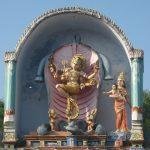
The Legend of Gajasura: According to tradition, this Valanadu (region) is the Veerattanam where Shiva killed the rogue elephant Gajasura, sent by the rishis to test his power. The epic event ended with Shiva wearing the elephant’s skin as a garment, earning him the title Kirthivasa. This act of heroism established the site as a center of divine power.
Etymology of Vazhuvur: Local legends explain that the name derives from the Tamil word Vazhuvudhal (to slip or elude). It is believed that this holy town miraculously slipped away from destruction during Pralaya (the Cosmic Deluge), preserving the sanctity of the land.
Architectural Marvels
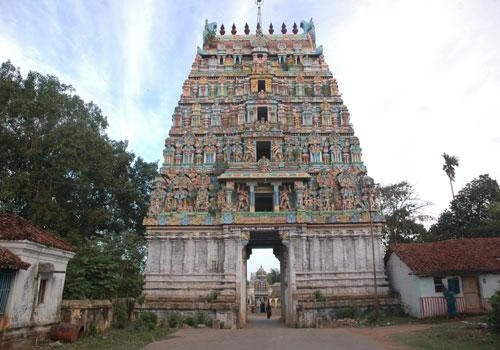
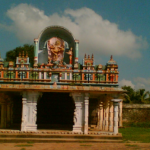
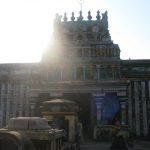
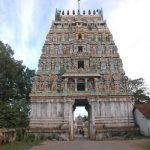
The temple exemplifies the grandeur of Dravidian architecture. The towering Rajagopuram (entrance tower) features five distinct storeys, welcoming pilgrims into a complex fortified by three Prakarams (enclosed courtyards).
Inside, the temple houses several shrines of historical significance. Notably, the shrine of Shani Bhagavan (Saturn) is unique; here, he is depicted holding a bow, a feature linked to the legend of King Vikrama Chola. Furthermore, the temple is believed to be the birthplace of Lord Ayyappa, adding to its immense religious value. The walls are adorned with intricate carvings depicting the stories of the Saptha Mathas (Seven Mothers) and Jyeshta Devi, who are said to have worshipped Shiva here.
Darshan & Ritual Logistics
Regular Abhishekam (ritual bathing of the deity) is performed using various materials such as rice flour, turmeric, milk, honey, and sandalwood paste. Devotees seeking specific boons often sponsor these rituals. For instance, those desiring marriage offer Kalyana Malai (marriage garland) along with Conch and Kalasa Abhishekam.
Daily Temple Timings
Based on traditional practices and the provided records, the temple follows these opening hours. Please verify with the temple office before traveling.
| Session | Timings |
|---|---|
| Morning Darshan | 06:00 AM – 12:00 PM |
| Afternoon Break | 12:00 PM – 04:00 PM |
| Evening Darshan | 04:00 PM – 08:00 PM |
Seva Booking & 2026 Festivals
While the original source lists a phone number (04364 – 253029) for inquiries, we recommend checking the official HR & CE (Hindu Religious and Charitable Endowments) portal of Tamil Nadu for online seva booking in 2026.
- Major Festival: The 10-day Masi Magam festival (February–March) is the most significant event. The 9th day features a grand procession of Gajasamhara Murthy, and the 10th day involves Theerthavari (holy dip).
- Other Key Dates (2026):
- Maha Shivrathri: February 17, 2026
- Navarathri (Purattasi): September 22 – October 1, 2026
- Skanda Sashti: November 3 – November 8, 2026
- Arudra Darshanam: January 5, 2026 (Margazhi month)
Practical Visitor Guidance
Dress Code: Traditional attire is mandatory. Men should wear dhotis or formal trousers with shirts; women should wear sarees or salwar kameez. Avoid shorts and sleeveless tops.
Photography & Electronics: Mobile phones are generally allowed, but photography inside the inner sanctum is prohibited. There are no specific locker facilities mentioned, so it is advisable to travel light and keep electronic devices on silent mode.
Crowd Management: The temple sees heavy crowds during Pradosham (every fortnight) and Mondays in the month of Karthikai. For a peaceful Darshan, visit during weekday mornings (8:00 AM – 10:00 AM). If visiting in summer (April–May), carry a water bottle and an umbrella, as the queues can be exposed to the sun.
Pilgrimage Connectivity
How to Reach:
- Nearest Railway Station: Mayiladuthurai (approx. 7 km). This is the major rail hub for this region.
- Nearest Airport: Tiruchirappalli (Trichy) International Airport (approx. 90 km).
- By Road: Vazhuvur is situated on the Mayiladuthurai – Manganallur bus route. Travelers can take a bus to the Neikuppai Vazhuvur Kaikatty stop near Elanthangudi, which is a short walk from the temple. Alternatively, it is accessible via Kumbakonam via Aduthurai and Komal.
Nearby Sacred Sites (Pilgrimage Circuit)
Enhance your journey by visiting these nearby temples of significance:
- Mayuranathaswamy Temple (Mayiladuthurai): Dedicated to Lord Shiva in a peaceful setting by the Kaveri river.
- Thirukadaiyur Abirami Temple: Famous for longevity prayers and the legends of Markandeya (approx. 25 km).
- Kumbeswarar Temple (Kumbakonam): One of the largest temples in South India, housing the idol of Gajasamhara found in Vazhuvur (approx. 40 km).
Frequently Asked Questions (FAQ)
1. Is there a VIP Darshan entry available at Veeratteswarar Temple?
While specific VIP protocols can vary, the temple management generally facilitates special entry for elderly devotees and those with medical requirements. It is advisable to contact the temple office at 04364 – 253029 prior to your visit to inquire about current donation-based VIP darshan schemes.
2. What is the significance of the holy spring (Teertham) here?
The Teertham inside the temple is associated with the legend of King Vikrama Chola. Bathing in this water on new moon days is believed to wash away sins, cure the evil effects of planets (especially Saturn/Shani), and grant peace to ancestors.
3. Is the temple accessible for elderly pilgrims?
Yes, the temple has three Prakarams. The path around the sanctum is paved, but the inner courtyards may require walking. There is no battery car service inside the complex, so please plan for assistance if required.
4. Are there accommodation facilities in Vazhuvur?
Vazhuvur is a small village. For comfortable accommodation, it is recommended to stay in nearby Mayiladuthurai or Kumbakonam, which offer a wide range of hotels and choultries. The temple office may provide basic shelter for short stays upon request.
5. Why is Lord Shiva called Kirthivasa here?
Kirthivasa means “one who wears the skin of an elephant.” After defeating Gajasura, Shiva draped the elephant’s hide over his shoulders. This form is specifically revered at this Atta Veeratta Sthalam.
Photo Gallery



Contact Details
Sri Veeratteswarar Temple
Vazhuvur – 609 401
Nagapattinam District, Tamil Nadu
Phone: 04364 – 253029
Recent Posts

Shri Kaamkoteeshwar Mandir, Varanasi – History & Significance
In the heart of Kashi, the eternal city of Lord Shiva, where the Ganges flows with celestial grace, stands the Shri Kaamkoteeshwar Mandir. This sacred Sannidhi is not merely a temple but a profound spiritual bridge between the Northern…

ओ सांवरे तूने ही मुझको संभाला – Lyrics & Meaning
ओ सांवरे तूने ही मुझको संभाला – A Prayer to Shyam Origin & Spiritual Essence Why This Bhajan Resonates Devotees chant this when overwhelmed by life’s storms—the refrain ‘तूने ही मुझको संभाला’ is the soul’s sigh of relief: “You…

कथा ये है महाराज मेरे की – Lyrics & Meaning
कथा ये है महाराज मेरे की छत्रपति संभाजी महाराज – A Prayer to Chhatrapati Sambhaji Maharaj Origin & Spiritual Essence Why This Bhajan Resonates Devotees chant this when their spirit feels tested—its powerful refrain “महाराज मेरे” is a soul’s…

Rigveda Samhita Yathartha Anuvada (ऋग्वेद संहिता यथार्थ अनुवाद) – Complete Set with Anvayartha & Hindi/English Translation
The Rigveda is the oldest surviving scripture of humanity and the foundational text of Sanātana Dharma. For serious students, scholars, UPSC aspirants studying ancient Indian history, Sanskrit learners, and spiritual seekers, a precise and grammatically structured translation is indispensable.…

आना भी अकेला है जाना भी अकेला है – Lyrics & Meaning | BharatTemples
आना भी अकेला है जाना भी अकेला है – A Prayer to the Divine Witness Origin & Spiritual Essence Why This Bhajan Resonates Devotees turn to this bhajan in moments of deep reflection—when life’s attachments begin to ache. The…

माता शेरावाली के द्वार जो भी जाता है – Lyrics & Meaning
माता शेरावाली के द्वार जो भी जाता है – A Prayer to Maa Sherawali Origin & Spiritual Essence Why This Bhajan Resonates Devotees turn to this bhajan in times of fear or uncertainty—its promise that no one leaves Maa’s…

मार लेना सपणी उबार लेणा भवरा – Lyrics & Meaning
मार लेना सपणी उबार लेणा भवरा – A Prayer to the Divine Beloved Origin & Spiritual Essence Why This Bhajan Resonates Devotees chant this in moments of deep vulnerability—its cry of “मार लेना सपणी, उबार लेणा भवरा” is the…

हमें श्याम सुंदर भरोसा तुम्हारा – Lyrics & Meaning
हमें श्याम सुंदर भरोसा तुम्हारा – A Prayer to Shyam Sundar Origin & Spiritual Essence Why This Bhajan Resonates Devotees chant this when feeling alone—its refrain ‘de do sahara’ is the soul’s cry for divine support. Lyrics in Hindi…

Mere Satguru Ne Di Thi Davai Lyrics in Hindi & Meaning
Mere Satguru Ne Di Thi Davai: Invoking the Guru’s Liberating Wisdom This soul-stirring bhajan venerates the Satguru (True Spiritual Master) as the divine physician who dispenses the only remedy for life’s deepest sufferings. Composed by Sant Karmaveer Tufani, it…

Janm Diyo Thari Maa Dukh Dekhiyo Lyrics in Hindi & Meaning
जन्म दियो थारी माँ दुख देखियो (Maa’s Grief Upon Birthing You) This soul-stirring Chetavani Bhajan (admonitory hymn) is addressed to the Divine Mother (Maa) – a call for repentance when children forget their filial duties in the dark age…