
Contents
Introduction & Spiritual Essence: The Site of Divine Justice
Located in the Thanjavur delta region, the Keelaparasalur Veeratteswarar Temple stands as a monumental witness to Lord Shiva’s cosmic justice. The temple is revered as one of the eight Attaveerattana Sthalams, locations where Shiva performed his heroic Veerabhadra avatar to destroy the arrogance of Daksha. Here, Shiva is the Swayambhu Murthy (self-manifested Lingam) known as Veeratteswarar, and his consort is Ilam Kobanayal (Balambikai).
Phalaśruti: Why Devotees Visit
For the devotee, this temple offers profound spiritual remediation. It is specifically worshipped to neutralize the adverse effects of planetary alignments, particularly those related to Sun (Surya) and Saturn (Shani). By witnessing the Daksha Samhara form, devotees believe they can cleanse ancestral karma and overcome ego-driven conflicts. As one of the 275 Paadal Petra Sthalams glorified by Thirugnana Sambandar, the spiritual potency here is undeniable.
Historical Origins & Scriptural Legend
The Legend of Daksha Puri
According to the Sthala Purana, this location was formerly known as Tiruppariyalur. It is the site of the Daksha Yagna where the Prajapati Daksha, father of Goddess Sati, insulted Lord Shiva by excluding him from a grand fire ritual. When Sati self-immolated in protest, Shiva unleashed his terrible Veerabhadra form. He destroyed the yagna, beheaded Daksha (later restored with a goat’s head), and punished the participating Devas. Tradition holds that the Sun God (Surya) lost a tooth here for accepting the flawed invitation, leading to a dedicated shrine for him within the temple.
Historical Timeline
While the divine legend dates back to the eons of Satya Yuga, the physical structures bear witness to the Pandya and Vijayanagara dynasties. Inscriptions found on the Karuvarai (sanctum) walls date back to the period of Jatavarman Sundara Pandyan and Emperor Krishnadevaraya. The temple has undergone significant Thirupani (renovations) over the centuries, preserving its ancient Dravidian roots.
Architectural Marvels: Dravidian Grandeur
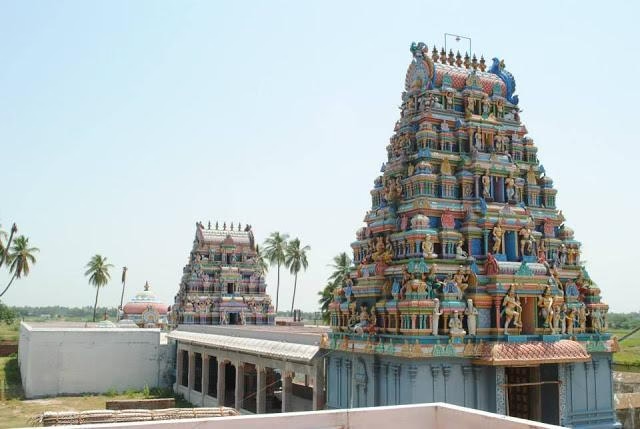
The temple architecture is a classic example of the Dravidian style, characterized by its fortified walls and tiered vimana. Despite being a smaller shrine with a single prakaram (circumambulatory path), the layout follows strict Vastu Shastra principles.
Notable Features:
- The Sanctum (Moolavar): The temple faces West, a rarity in Tamil Nadu where east-facing is common. The Swayambhu Lingam sits on a square Aavudaiyar base.
- Monolithic Sculptures: The Veerabhadra idol is a masterpiece with six hands, depicted crushing Daksha under his feet. The craftsmanship of the Yanthra behind this idol is considered esoterically powerful.
- The Sun Shrine: A unique feature is the absence of a standard Navagraha shrine. Instead, a specialized shrine for Surya (Sun God) exists, acknowledging the legend of his lost tooth.
- Rajagopuram: The towering gateway tower (Gopuram) was built recently, adding a vibrant aesthetic to the ancient core.
- Missing Kodimaram: In a distinct architectural variation, the temple does not feature a flagstaff (Kodimaram). Instead, a Siddhi Vinayaka (Ganesha) idol occupies that central space, symbolizing that the removal of obstacles is the primary flag of this temple.
Original Source: https://tamilnadu-favtourism.blogspot.com/2016/10/keelaparasalur-veeratteswarar-temple.html
Darshan & Ritual Logistics (2026 Guide)
Assuming the current year is 2026, the following timings and schedules apply. Note that Arudra Darshanam and Shivratri are peak times requiring advance planning.
Daily Darshan Timings
| Session | Timing | Details |
|---|---|---|
| Morning | 6:00 AM – 12:00 PM | Includes Kalasanthi (8:00 AM) and Uchikalam (12:00 PM) rituals. |
| Evening | 5:00 PM – 7:00 PM | Includes Sayarakshai (6:00 PM) ritual. |
Key Sevas & Online Booking
While online infrastructure varies for smaller Paadal Petra Sthalams, temple administration increasingly supports digital bookings. Key Sevas include:
- Abhishekam: Performed with water, milk, honey, and sandalwood paste. Best performed on Mondays.
- Archana: Recitation of hymns. Specific Thevaram recitations are recommended for planetary relief.
- Rudra Abhishekam: A elaborate Vedic ritual for wish fulfillment.
Booking Tip: Visit the official Tamil Nadu HR&CE (Hindu Religious and Charitable Endowments) website or call the provided contact numbers (+91 – 4364-205555) at least 24 hours in advance for special rituals.
2026 Major Festival Dates
- Maha Shivaratri: February 26, 2026 (High significance; all-night vigil).
- Panguni Uthiram: March 2026 (Brahmotsavam period).
- Aadi Pooram: July 2026 (Celebration of Goddess Balambikai).
- Arudra Darshanam: December 2026 (Birthday of Lord Nataraja).
Practical Visitor Guidance
Dress Code & Etiquette: Traditional attire is mandatory. Men should wear Dhotis or trousers without shirts; women should wear sarees or salwar kameez. The temple maintains a strict code of conduct to preserve the sanctity of the Attaveerattana Sthalam.
Photography & Mobiles: Photography is generally prohibited inside the sanctum sanctorum. Mobile phones should be switched to silent mode. While there may not be high-tech lockers, traditional storage facilities are available at the entrance.
Crowd Management & Seasons:
- Best Time to Visit: Early morning (6:00 AM – 8:00 AM) on weekdays to avoid local crowds.
- Weather Advice: The Nagapattinam district is humid. From April to June, carry water and wear light cotton fabrics. Monsoon (Oct-Nov) brings lush greenery but requires umbrella preparation.
Pilgrimage Connectivity
How to Reach Keelaparasalur:
- By Air: The nearest airport is Trichy (Tiruchirappalli) International Airport (approx. 130 km).
- By Rail: The nearest major railway junction is Mayiladuthurai (approx. 10 km). From there, taxis and local buses are readily available.
- By Road: Located on the road to Thirukkadaiyur. From Mayavaram (Mayiladuthurai), take the turn at Sembanar Koil (7 km) and proceed 3 km to reach the temple.
Nearby Sacred Sites (Pilgrimage Circuit):
- Tiruchemponpalli (3 km): Another Shivasthalam located on the Mayiladuthurai – Tarangambadi route.
- Thirukkadaiyur (15 km): Famous for the Temple of Arunagirinathar and the legend of Markandeya.
- Mayiladuthurai Mayuranathaswamy Temple: A major Shiva temple just 10 km away.
Frequently Asked Questions (FAQs)
1. Is there a VIP or Special Darshan entry?
Yes, the temple administration provides provisions for VIP Darshan tickets, typically available at the counter near the entrance. However, given the temple’s intimate size, general darshan rarely takes more than 15-20 minutes.
2. What is the significance of the West-facing sanctum?
West-facing temples (facing the setting sun) are considered rare and highly auspicious, often associated with Vaishnava connections or specific Tantric energies. Here, it signifies the Lord facing the direction of ultimate dissolution.
3. Are there accommodation facilities nearby?
The temple is in a rural setting. Lodging is best availed in Mayiladuthurai (10 km) which offers various hotels and choultries. Basic rest houses may be available in the village.
4. Why is there no Navagraha shrine?
As per the legend, the Sun God (Surya) was punished here for attending Daksha’s Yagna. Therefore, a dedicated shrine for Surya exists to worship him for his repentance, rendering a standard nine-planet shrine unnecessary.
5. Can I perform rituals for planetary afflictions?
Yes. This temple is specifically renowned for Theevattiam (remedial rituals) to appease planets. Consulting the temple Archakar for specific Pariharam (remedies) is recommended.
Recent Posts

Shri Kaamkoteeshwar Mandir, Varanasi – History & Significance
In the heart of Kashi, the eternal city of Lord Shiva, where the Ganges flows with celestial grace, stands the Shri Kaamkoteeshwar Mandir. This sacred Sannidhi is not merely a temple but a profound spiritual bridge between the Northern…

ओ सांवरे तूने ही मुझको संभाला – Lyrics & Meaning
ओ सांवरे तूने ही मुझको संभाला – A Prayer to Shyam Origin & Spiritual Essence Why This Bhajan Resonates Devotees chant this when overwhelmed by life’s storms—the refrain ‘तूने ही मुझको संभाला’ is the soul’s sigh of relief: “You…

कथा ये है महाराज मेरे की – Lyrics & Meaning
कथा ये है महाराज मेरे की छत्रपति संभाजी महाराज – A Prayer to Chhatrapati Sambhaji Maharaj Origin & Spiritual Essence Why This Bhajan Resonates Devotees chant this when their spirit feels tested—its powerful refrain “महाराज मेरे” is a soul’s…

Rigveda Samhita Yathartha Anuvada (ऋग्वेद संहिता यथार्थ अनुवाद) – Complete Set with Anvayartha & Hindi/English Translation
The Rigveda is the oldest surviving scripture of humanity and the foundational text of Sanātana Dharma. For serious students, scholars, UPSC aspirants studying ancient Indian history, Sanskrit learners, and spiritual seekers, a precise and grammatically structured translation is indispensable.…

आना भी अकेला है जाना भी अकेला है – Lyrics & Meaning | BharatTemples
आना भी अकेला है जाना भी अकेला है – A Prayer to the Divine Witness Origin & Spiritual Essence Why This Bhajan Resonates Devotees turn to this bhajan in moments of deep reflection—when life’s attachments begin to ache. The…

माता शेरावाली के द्वार जो भी जाता है – Lyrics & Meaning
माता शेरावाली के द्वार जो भी जाता है – A Prayer to Maa Sherawali Origin & Spiritual Essence Why This Bhajan Resonates Devotees turn to this bhajan in times of fear or uncertainty—its promise that no one leaves Maa’s…

मार लेना सपणी उबार लेणा भवरा – Lyrics & Meaning
मार लेना सपणी उबार लेणा भवरा – A Prayer to the Divine Beloved Origin & Spiritual Essence Why This Bhajan Resonates Devotees chant this in moments of deep vulnerability—its cry of “मार लेना सपणी, उबार लेणा भवरा” is the…

हमें श्याम सुंदर भरोसा तुम्हारा – Lyrics & Meaning
हमें श्याम सुंदर भरोसा तुम्हारा – A Prayer to Shyam Sundar Origin & Spiritual Essence Why This Bhajan Resonates Devotees chant this when feeling alone—its refrain ‘de do sahara’ is the soul’s cry for divine support. Lyrics in Hindi…

Mere Satguru Ne Di Thi Davai Lyrics in Hindi & Meaning
Mere Satguru Ne Di Thi Davai: Invoking the Guru’s Liberating Wisdom This soul-stirring bhajan venerates the Satguru (True Spiritual Master) as the divine physician who dispenses the only remedy for life’s deepest sufferings. Composed by Sant Karmaveer Tufani, it…

Janm Diyo Thari Maa Dukh Dekhiyo Lyrics in Hindi & Meaning
जन्म दियो थारी माँ दुख देखियो (Maa’s Grief Upon Birthing You) This soul-stirring Chetavani Bhajan (admonitory hymn) is addressed to the Divine Mother (Maa) – a call for repentance when children forget their filial duties in the dark age…