
Contents
Introduction & Spiritual Essence
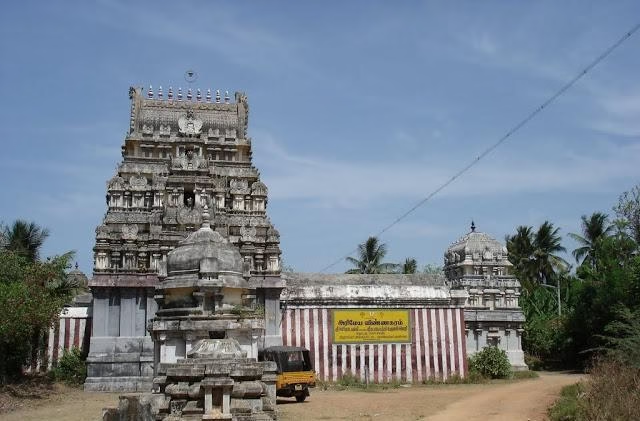
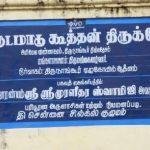
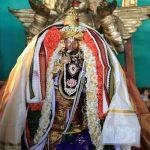
Welcome to Thiruarimeya Vinnagaram, a serene haven of divinity located in the sacred village of Thirunangur, Nagapattinam district. This temple is one of the holy 108 Divyadesams (abodes of Vishnu) glorified by the Azhwar saints. The presiding deity here is Kudamudakoothan Perumal (a manifestation of Lord Vishnu), worshipped in a seated posture. His consort, Amirtagadavalli Thayar, radiates grace from the sanctum.
Locally known as Arimeya Vinnagaram, the name translates to the “Abode of Hari” (Vishnu). The name Arimeya signifies the Lord who makes sins vanish, offering devotees a path to spiritual cleansing. The primary form of worship is unique: here, the Lord is seen performing the Kuda Koothu (pot dance).
Phalaśruti: Why Visit This Temple?
Devotees flock to Thiruarimeya Vinnagaram seeking specific spiritual benefits:
- Removal of Sins (Paapam): As Arimeya, the Lord destroys accumulated karmic debt.
- Relief from Debt & Enemies: Prayers here are known to alleviate burdens and remove obstacles caused by adversaries.
- Prosperity & Well-being: Performing Thailakappu Abishekam is believed to invite material and spiritual prosperity.
- Navagraha Balances: Being part of the Thirunangur Tirupathis, it is closely linked to planetary alignments, offering relief from negative horoscopic influences.
Historical Origins & Scriptural Legend
The temple is deeply rooted in Dravidian architecture and finds mention in the Divya Prabandha, the canonical work of the Azhwars (6th–9th centuries CE). It is closely associated with the great Azhwar saint, Thirumangai Alvar.
The Legend of Vishnu’s 11 Forms
According to the Sthala Purana, this region is unique for housing 11 Vishnu temples interconnected by a singular mythological event. Tradition holds that Lord Shiva began a furious dance (Rudra Tandavam) after the death of Goddess Sati. To prevent the universe from decaying, Lord Vishnu intervened.
On Lord Shiva’s request, Vishnu manifested in eleven different forms across Thirunangur to balance Shiva’s eleven forms. Thiruarimeya Vinnagaram is one of these sacred sites where Vishnu appeared as Kudamudakoothan (The Lord of the Pot Dance).
The Sage Uthanga Connection
Scriptural records, including the Vayu Purana, recount the visit of Sage Uthanga. After losing his wife to a crocodile, the sage wandered in despair until he reached this land. Here, Lord Vishnu appeared before him as Krishna carrying a pot, explaining the Aadhi Moola Naraya Thathuvam (the cosmic origin of existence).
The Lord taught Uthanga that divinity exists in all forms—even in a hunter or a cowherd—emphasizing that spiritual vision transcends physical appearances. The pot used in this divine play gives the deity his name.
Architectural Marvels
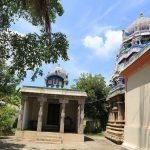
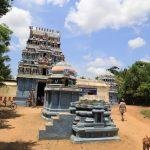
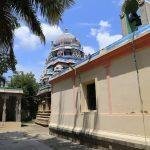
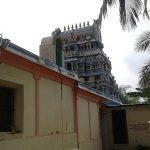
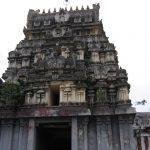
The temple is a classic example of Dravidian style architecture. While specific ASI/UNESCO designations are absent for this individual structure, its value lies in its integration into the Thirunangur Tirupathis complex.
Key Features
- The Vimanam (Shikhara): The roof over the sanctum follows the Dravidian tiered style, adorned with traditional kalasams (pot finials).
- Garbha Griha & Ardha Mandapa: The inner sanctum houses Lord Kudamudakoothan in a seated posture, flanked by his consort. The architectural alignment follows Vastu Shastra principles to channel energy toward the deity.
- Sculptures: The temple premises feature intricate carvings depicting scenes from the Puranas, specifically the dance of Krishna and the sage Uthanga episode.
Darshan & Ritual Logistics
The temple operates with four primary daily rituals (Poojas), conducted by Vaishnavaite priests. The rituals involve Alangaram (decoration), Neivethanam (food offering), and Deepa Aradanai (waving of lamps).
Daily Pooja Timings (2026 Schedule)
| Ritual | Timing | Description |
|---|---|---|
| Ushathkalam | 8:00 AM | Early morning rite with Alangaram. |
| Kalasanthi | 10:00 AM | Mid-morning worship and Archana. |
| Sayarakshai | 5:00 PM | Evening ritual and Deepa Aradanai. |
| Ardha Jamam | 7:00 PM | Night closing rite. |
Note on Temple Hours: The temple is typically open from 9:00 AM to 12:00 PM and 4:00 PM to 6:00 PM. (Visitors are advised to verify specific seasonal changes or special closures locally).
Key Sevas & Online Booking
- Abhishekam: Holy bath for the deity; popularly performed as Thailakappu Abishek (Application of Oil/Thailam).
- Archana: Recitation of hymns dedicated to Kudamudakoothan.
- Tonsuring (Mundan): Often performed by devotees seeking blessings.
- Online Booking: While many Divyadesams are now digitized, specific online portals for this smaller temple may be managed by the HR&CE Department, Tamil Nadu. Devotees should check the official Tamil Nadu Tourism or HR&CE websites for 2026 availability.
Major Festivals (2026 Highlights)
Thirumangai Azhwar Mangalasasana Utsavam
Date: January 2026 (Tamil Month Thai)
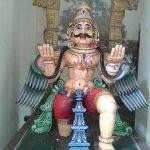
This is the premier festival. The highlight is the Garuda Sevai, where festival deities from all 11 Thirunangur temples are brought to this location on mounts designed like Garuda (Garuda Vahana). Verses from the Divya Prabandha are recited.
Vaikasi Visakam
Date: May/June 2026
Celebrates the manifestation of the deity during the star of Visakam.
Practical Visitor Guidance
To ensure a respectful and smooth darshan experience, please adhere to the following guidelines:
- Dress Code: Traditional attire is mandatory. Men should wear Dhoti or trousers with a shirt (no vests/t-shirts). Women should wear Saree, Salwar Kameez, or traditional skirts and blouses. Western attire is strictly discouraged.
- Photography: Photography is generally prohibited inside the sanctum sanctorum. Please seek permission from temple authorities for exterior shots.
- Mobile & Lockers: Mobile phones must be switched to silent mode. While there may not be a formal locker system at this smaller temple, it is advisable to carry minimal belongings.
- Accessibility: The temple features stone steps and traditional flooring. It may be challenging for those with mobility issues; assistance from volunteers or family is recommended.
- Crowd Management:
- Best Time: Weekday mornings (9:00 AM – 10:00 AM) are least crowded.
- Seasonal Advice: Thirunangur can be humid. Carry water during the summer months (May–July). During festivals, expect heavy crowds; plan arrival at least 1 hour prior to rituals.
Pilgrimage Connectivity
The temple is part of the Thirunangur Tirupathis, a circuit of 11 temples. Pilgrims often visit all 11 in a single day.
How to Reach
- Nearest Railway Station: Sirkazhi (8 km). From Sirkazhi, local buses or taxis are available to Thirunangur.
- Nearest Airport: Tiruchirappalli International Airport (TRZ) (approx. 145 km). Taxis and buses are available from the airport to Mayiladuthurai/Sirkazhi.
- By Road:
- From Chennai: Approx 330 km via NH 32.
- From Mayiladuthurai: 20 km. Well-connected via State Highways.
- Bus Services: Buses ply from Sirkazhi and Mayiladuthurai. However, frequency to Thirunangur is limited; hiring an auto-rickshaw from Sirkazhi is a convenient option.
Nearby Sacred Sites (Pilgrimage Circuit)
- Thiruvali Thirunagari (Arulmigu Narasimha Swamy Temple): Located nearby, this is another of the 11 Tirupathis and the birthplace of Thirumangai Alvar.
- Thiru Sempon Sei Kovil: One of the 11 Tirupathis, known for its golden (Pon) specifications.
- Sirkazhi Nataraja Temple: Located just 8 km away, dedicated to Lord Shiva, adding to the spiritual circuit of the region.
Frequently Asked Questions (FAQs)
1. Is there a VIP darshan entry at Kudamudakoothan Perumal Temple?
As this is a smaller Divyadesam compared to major temples like Srirangam, there is no formal “VIP darshan” system like in Tirupati. Darshan is generally straightforward for all devotees, though donations for special Archana are accepted.
2. What is the significance of the “Pot” in this temple?
The Lord is worshipped as Kudamudakoothan because he appeared as a cowherd holding a pot (Kudam), performing a dance (Koothu). It symbolizes the divine play of Lord Krishna and his teachings to Sage Uthanga regarding the essence of life.
3. Can we visit all 11 Thirunangur temples in one day?
Yes, it is highly recommended. The temples are clustered within a radius of 5–10 km in Thirunangur village. Hiring a vehicle (car/auto) for a full day is the best way to cover the circuit.
4. What is the history of the temple renovations?
While the exact date of the original construction is ancient (prior to 10th century CE), the structure has undergone renovations under the patronage of local Chola and Nayak rulers. Current maintenance is handled by the HR&CE department of Tamil Nadu.
5. Are there accommodation facilities near the temple?
Basic guest houses are available in Thirunangur managed by temple trusts for the 11 Tirupathi circuit. Alternatively, better lodging options are available in Sirkazhi (8 km) and Mayiladuthurai (20 km).
Recent Posts

Shri Kaamkoteeshwar Mandir, Varanasi – History & Significance
In the heart of Kashi, the eternal city of Lord Shiva, where the Ganges flows with celestial grace, stands the Shri Kaamkoteeshwar Mandir. This sacred Sannidhi is not merely a temple but a profound spiritual bridge between the Northern…

ओ सांवरे तूने ही मुझको संभाला – Lyrics & Meaning
ओ सांवरे तूने ही मुझको संभाला – A Prayer to Shyam Origin & Spiritual Essence Why This Bhajan Resonates Devotees chant this when overwhelmed by life’s storms—the refrain ‘तूने ही मुझको संभाला’ is the soul’s sigh of relief: “You…

कथा ये है महाराज मेरे की – Lyrics & Meaning
कथा ये है महाराज मेरे की छत्रपति संभाजी महाराज – A Prayer to Chhatrapati Sambhaji Maharaj Origin & Spiritual Essence Why This Bhajan Resonates Devotees chant this when their spirit feels tested—its powerful refrain “महाराज मेरे” is a soul’s…

Rigveda Samhita Yathartha Anuvada (ऋग्वेद संहिता यथार्थ अनुवाद) – Complete Set with Anvayartha & Hindi/English Translation
The Rigveda is the oldest surviving scripture of humanity and the foundational text of Sanātana Dharma. For serious students, scholars, UPSC aspirants studying ancient Indian history, Sanskrit learners, and spiritual seekers, a precise and grammatically structured translation is indispensable.…

आना भी अकेला है जाना भी अकेला है – Lyrics & Meaning | BharatTemples
आना भी अकेला है जाना भी अकेला है – A Prayer to the Divine Witness Origin & Spiritual Essence Why This Bhajan Resonates Devotees turn to this bhajan in moments of deep reflection—when life’s attachments begin to ache. The…

माता शेरावाली के द्वार जो भी जाता है – Lyrics & Meaning
माता शेरावाली के द्वार जो भी जाता है – A Prayer to Maa Sherawali Origin & Spiritual Essence Why This Bhajan Resonates Devotees turn to this bhajan in times of fear or uncertainty—its promise that no one leaves Maa’s…

मार लेना सपणी उबार लेणा भवरा – Lyrics & Meaning
मार लेना सपणी उबार लेणा भवरा – A Prayer to the Divine Beloved Origin & Spiritual Essence Why This Bhajan Resonates Devotees chant this in moments of deep vulnerability—its cry of “मार लेना सपणी, उबार लेणा भवरा” is the…

हमें श्याम सुंदर भरोसा तुम्हारा – Lyrics & Meaning
हमें श्याम सुंदर भरोसा तुम्हारा – A Prayer to Shyam Sundar Origin & Spiritual Essence Why This Bhajan Resonates Devotees chant this when feeling alone—its refrain ‘de do sahara’ is the soul’s cry for divine support. Lyrics in Hindi…

Mere Satguru Ne Di Thi Davai Lyrics in Hindi & Meaning
Mere Satguru Ne Di Thi Davai: Invoking the Guru’s Liberating Wisdom This soul-stirring bhajan venerates the Satguru (True Spiritual Master) as the divine physician who dispenses the only remedy for life’s deepest sufferings. Composed by Sant Karmaveer Tufani, it…

Janm Diyo Thari Maa Dukh Dekhiyo Lyrics in Hindi & Meaning
जन्म दियो थारी माँ दुख देखियो (Maa’s Grief Upon Birthing You) This soul-stirring Chetavani Bhajan (admonitory hymn) is addressed to the Divine Mother (Maa) – a call for repentance when children forget their filial duties in the dark age…