
Contents
- 1 Introduction & Spiritual Essence
- 2 Historical Origins & Scriptural Legend
- 3 Architectural Marvels
- 4 Darshan & Ritual Logistics
- 5 Practical Visitor Guidance
- 6 Pilgrimage Connectivity
- 6.1 Frequently Asked Questions (FAQ)
- 6.1.1 1. Is there a VIP darshan entry at Kayarohanaswami Temple?
- 6.1.2 2. What is the significance of the Navagrahas facing West?
- 6.1.3 3. Are non-Hindus allowed inside the temple?
- 6.1.4 4. Is the original Lingam still present?
- 6.1.5 5. Can I perform the last rites or rituals for the deceased here?
- 6.1.6 Contact Details
- 6.1 Frequently Asked Questions (FAQ)
Introduction & Spiritual Essence
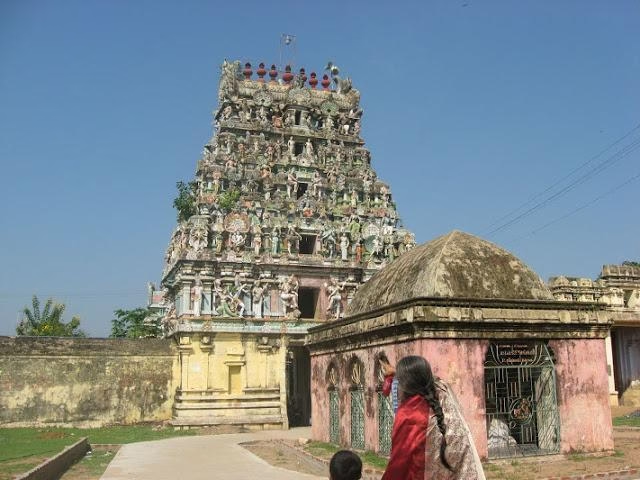
Located on the scenic shores of Nagapattinam in Tamil Nadu, the Kayarohanaswami Temple stands as a majestic monument to Lord Shiva. Locally revered as Neelayadakshi Kovil, this ancient shrine is dedicated to Lord Kayarohaneswarar (an aspect of Shiva) and his consort, Goddess Neelayadakshi. The name “Kayam” (body) and “Arohanam” (embrace) signify the unique legend where Lord Shiva embraced Sage Pundarika to grant him salvation. Because of this divine embrace, Shiva is worshipped here as the Lord who saves the devotee’s body and soul.
The temple is classified as a Shakti Peetham and is one of the 275 Paadal Petra Sthalams—holy shrines glorified by the verses of the Nayanars (Saivite saints). The presiding deity, Neelayadakshi, is depicted with blue eyes and represents the stage of a pubescent girl among the five stages of the Goddess (complementing Visalakshi, Kamakshi, Kamalambigai, and Meenakshi).
Phalaśruti (Spiritual Benefits): Devotees visit this temple primarily to seek relief from ancestral sins (Pitra Dosha) and to attain salvation. A unique spiritual benefit is the acquisition of vision and wisdom; the temple houses the “Irattai Parvai Nandhi” (Twin-View Nandhi), where devotees with vision problems pray for healing. It is also believed that worshipping here cleanses the karma of one’s lineage.
Historical Origins & Scriptural Legend
Origin: The temple dates back to the 6th Century AD and is believed to have been constructed by the Lakolisa cult, a sect originating from Gujarat. Uniquely, this is one of the only two temples in Tamil Nadu built by this cult (the other being in Kanchipuram). The temple is the setting for numerous legends recorded in the Thevaram hymns sung by Saints Appar, Sambandar, and Sundarar.
Scriptural Legends:
- The Body Embrace (Sthala Purana): Sage Pundarika performed penance to attain salvation. Lord Shiva appeared and embraced the sage, merging his physical form with the divine. Thus, the deity is named Kayarohaneswarar (Lord of the Body’s Embrace).
- Origin of Nagapattinam: The King of Serpents (Naga) worshipped Shiva here and was blessed with a daughter born with three breasts. She remained that way until King Salisuhan (from the Surya dynasty) visited. Upon his arrival, the third breast vanished, signifying her destiny. The Naga king gave his daughter in marriage to the King. Hence, the place was named Nagai Karonam, which evolved into Nagapattinam.
- Saptha Vidanga Sthalam: Emperor Muchukunda installed seven tiny Lingas (Vidangar) across different locations. The Linga here is known as Sundara Vidangar due to its exquisite beauty.
Architectural Marvels
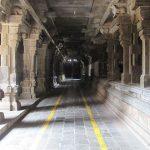
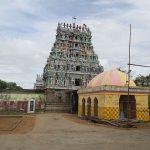
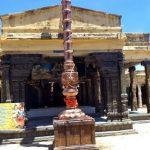
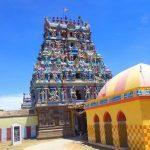
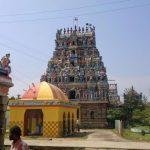
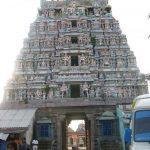
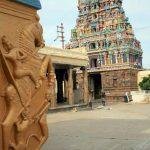
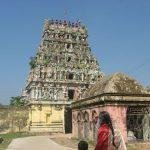
The Kayarohanaswami Temple is a classic example of Dravidian Architecture, reflecting the grandeur of the Nayak period. The complex is oriented such that the Navagrahas (nine planets) face West, a rare alignment dedicated to Lord Shiva.
Key Features:
- Neelayadakshi Shrine: The Amman (Goddess) shrine is as significant as the main Shiva shrine. Her eyes are painted blue, and she is revered as a Shakti Peetham.
- Irattai Parvai Nandhi: The statue of Nandi (the bull vehicle) is unique because it has its neck turned toward the Lord while having one eye on Ambica and the other on Shiva. Devotees believe that viewing this Nandi improves eyesight.
- Thyagaraja Shrine: This temple is famous for the idol of Thyagaraja (a form of Shiva) made of Lapis Lazuli (a deep blue metamorphic rock), which is rare in temple iconography.
- Navagrahas: All nine planetary deities are installed facing the West (towards Shiva), differing from the standard East-facing orientation in most temples.
Darshan & Ritual Logistics
Special pujas are performed on Poornima (Full Moon) days, offering Payasam (milk pudding) as Naivedhyam. The Abhishekam (ritual bathing) is performed to the Lingam daily at 9:00 AM and 8:00 PM.
| Session | Timing |
|---|---|
| Morning Darshan | 06:00 AM – 12:30 PM |
| Evening Darshan | 05:00 PM – 09:30 PM |
Key Sevas & Online Booking:
While specific online portals are managed by the HR&CE Department of Tamil Nadu, devotees can book standard Sevas like Abhishekam, Archana, and Vastram Offering upon arrival. For major festivals, advance booking is recommended via the official Tamil Nadu temple portal or by contacting the temple administration directly.
2026 Festival Calendar:
- Maha Shivaratri: February 26, 2026
- Vaikasi Wedding Festival: May 25 – June 5, 2026
- Aadi Pooram: July 26, 2026
- Aipasi Annabishekam: October 18, 2026
- Tirukarthikai: November 15, 2026
Practical Visitor Guidance
Dress Code: Visitors are required to wear traditional Indian attire. Men should wear dhotis or pants with shirts, and women should wear sarees, salwar kameez, or long skirts. Western clothing (shorts, t-shirts) is generally discouraged.
Photography & Electronics: Photography is restricted inside the inner sanctum (Garbhagriha). Mobile phones and cameras are allowed in the temple precincts but must be silenced. Check with the management regarding locker facilities for large bags.
Crowd Management: The temple sees moderate footfall, spiking during weekends and festival days. The best time for a peaceful darshan is the morning slot (6:00 AM – 8:00 AM) on weekdays.
Accessibility: The temple complex has standard stone flooring. While there are no steep inclines, the sanctum area may be narrow during peak hours. Visitors with mobility issues can request assistance from temple staff.
Pilgrimage Connectivity
How to Reach:
The Kayarohanaswami Temple is located in the heart of Nagapattinam town.
- By Road: Nagapattinam is well-connected via National Highway 32 (NH-32). The temple is approximately 2 km from the central bus stand.
- By Rail: Nagapattinam Railway Station is the nearest railhead, located just a few kilometers away.
- By Air: The nearest major airport is Tiruchirappalli International Airport (TRZ), located approximately 150 km (approx. 3.5 hours by road).
Nearby Sacred Sites (Pilgrimage Circuit):
- Sri Sowmya Narayana Perumal Temple: A Divya Desam located in Nagapattinam (2 km away), dedicated to Lord Vishnu.
- Sikkal Singaravelan Temple: Famous for the Murugan temple where the deity is worshipped as a wedded god (5 km from Nagapattinam).
- Velankanni Basilica: The renowned “Lourdes of the East” (10 km from Nagapattinam), visited by devotees of all faiths.
Frequently Asked Questions (FAQ)
1. Is there a VIP darshan entry at Kayarohanaswami Temple?
Currently, there is no separate VIP ticket system like in Tirupati. However, devotees can avail of special darshan by performing Archana or Abhishekam, which allows entry closer to the sanctum. Senior citizens and differently-abled visitors are given priority entry.
Unlike standard temples where Navagrahas face East, here they face West towards Lord Shiva. This symbolizes the planets surrendering to the Supreme Lord, mitigating their malefic effects on devotees who worship here.
3. Are non-Hindus allowed inside the temple?
As per the traditions of Shakti Peethams and Paadal Petra Sthalams, entry is generally restricted to followers of Hinduism (Sanatana Dharma) and those who respect the sanctity of the shrine.
4. Is the original Lingam still present?
The original Lingam was stolen centuries ago. The current Lingam in the sanctum is a Gomedakam Lingam (made of Hessonite garnet), installed to preserve the spiritual energy of the site.
5. Can I perform the last rites or rituals for the deceased here?
While standard cremations are not performed within the temple, a unique tradition exists here: the garlands and vastras (clothes) used on the deity are placed on the corpse of devout followers as a final blessing, a practice stemming from the legend of the fisherman saint Athipathar.

Contact Details
Sri Kayaroganeswarar Temple
Address: Nagapattinam – 611 001, Tamil Nadu
Phone: +91-4365-242 844
Mobile: +91-98945 01319, +91-93666 72737
Recent Posts

Shri Kaamkoteeshwar Mandir, Varanasi – History & Significance
In the heart of Kashi, the eternal city of Lord Shiva, where the Ganges flows with celestial grace, stands the Shri Kaamkoteeshwar Mandir. This sacred Sannidhi is not merely a temple but a profound spiritual bridge between the Northern…

ओ सांवरे तूने ही मुझको संभाला – Lyrics & Meaning
ओ सांवरे तूने ही मुझको संभाला – A Prayer to Shyam Origin & Spiritual Essence Why This Bhajan Resonates Devotees chant this when overwhelmed by life’s storms—the refrain ‘तूने ही मुझको संभाला’ is the soul’s sigh of relief: “You…

कथा ये है महाराज मेरे की – Lyrics & Meaning
कथा ये है महाराज मेरे की छत्रपति संभाजी महाराज – A Prayer to Chhatrapati Sambhaji Maharaj Origin & Spiritual Essence Why This Bhajan Resonates Devotees chant this when their spirit feels tested—its powerful refrain “महाराज मेरे” is a soul’s…

Rigveda Samhita Yathartha Anuvada (ऋग्वेद संहिता यथार्थ अनुवाद) – Complete Set with Anvayartha & Hindi/English Translation
The Rigveda is the oldest surviving scripture of humanity and the foundational text of Sanātana Dharma. For serious students, scholars, UPSC aspirants studying ancient Indian history, Sanskrit learners, and spiritual seekers, a precise and grammatically structured translation is indispensable.…

आना भी अकेला है जाना भी अकेला है – Lyrics & Meaning | BharatTemples
आना भी अकेला है जाना भी अकेला है – A Prayer to the Divine Witness Origin & Spiritual Essence Why This Bhajan Resonates Devotees turn to this bhajan in moments of deep reflection—when life’s attachments begin to ache. The…

माता शेरावाली के द्वार जो भी जाता है – Lyrics & Meaning
माता शेरावाली के द्वार जो भी जाता है – A Prayer to Maa Sherawali Origin & Spiritual Essence Why This Bhajan Resonates Devotees turn to this bhajan in times of fear or uncertainty—its promise that no one leaves Maa’s…

मार लेना सपणी उबार लेणा भवरा – Lyrics & Meaning
मार लेना सपणी उबार लेणा भवरा – A Prayer to the Divine Beloved Origin & Spiritual Essence Why This Bhajan Resonates Devotees chant this in moments of deep vulnerability—its cry of “मार लेना सपणी, उबार लेणा भवरा” is the…

हमें श्याम सुंदर भरोसा तुम्हारा – Lyrics & Meaning
हमें श्याम सुंदर भरोसा तुम्हारा – A Prayer to Shyam Sundar Origin & Spiritual Essence Why This Bhajan Resonates Devotees chant this when feeling alone—its refrain ‘de do sahara’ is the soul’s cry for divine support. Lyrics in Hindi…

Mere Satguru Ne Di Thi Davai Lyrics in Hindi & Meaning
Mere Satguru Ne Di Thi Davai: Invoking the Guru’s Liberating Wisdom This soul-stirring bhajan venerates the Satguru (True Spiritual Master) as the divine physician who dispenses the only remedy for life’s deepest sufferings. Composed by Sant Karmaveer Tufani, it…

Janm Diyo Thari Maa Dukh Dekhiyo Lyrics in Hindi & Meaning
जन्म दियो थारी माँ दुख देखियो (Maa’s Grief Upon Birthing You) This soul-stirring Chetavani Bhajan (admonitory hymn) is addressed to the Divine Mother (Maa) – a call for repentance when children forget their filial duties in the dark age…