
Contents
- 1 Vedapuriswarar Temple, Cheyyar: The Definitive Pilgrimage Guide (2026)
Vedapuriswarar Temple, Cheyyar: The Definitive Pilgrimage Guide (2026)
Vedapuriswarar Temple, Cheyyar, Thiruvannamalai
| Date built: | – |
|---|---|
| Deity: | Vedapuriswarar |
| Architectural style: | Dravidian architecture |
| Major festivals | – |
| Locale: | Cheyyar |
| District:: | Thiruvannamalai |
| Address: | Vedapuriswarar Temple,Cheyyar, Thiruvannamalai |
| Phone |
Introduction & Spiritual Essence
The Vedapuriswarar Temple in Cheyyar (Thiruvothur) is a revered Paadal Petra Sthalam, standing as the 8th of the 32 holy shrines in the Thondaimandalam region. The primary deity is Vedapuriswarar (Lord Shiva), worshipped in the form of a Swayambhu Lingam (self-manifested). The presiding goddess is known as Balakusalambigai or Ilamulainayagi.
Phalaśruti: The Spiritual Benefits
Devotees visit this temple primarily to seek blessings for marriage, progeny, and mental peace. According to temple records and oral traditions, the following specific benefits are granted:
- Progeny Blessings: Consuming the fruits from the temple’s unique palm tree is believed to bless childless couples with conception.
- Marriage & Harmony: Performing the Nagalinga Abhishekam resolves delays in marriage and ensures marital harmony.
- Karma Cleansing: Worshipping Lord Shiva here cleanses ancestral karma (Pitru Dosha) and alleviates depression.
- Naga Dosha Nivritti: Specific Saturday rituals help negate the ill effects of Sarpa Dosha (serpent planetary afflictions).
Historical Origins & Scriptural Legend
Etymology and Ancient Roots
Tradition holds that this is the site where Shiva preached the Vedas to the Devas, bestowing the name Vedapuriswarar (Lord of the Vedas). The town was historically known as Thiru Vedapuram or Thiru Odhu Puram, which eventually evolved into Thiruvettipuram and modern-day Cheyyar.
Legends of the Sthala
- The Miracle of Tirugnana Sambandar: A defining legend involves the Saivite saint Tirugnana Sambandar. Historically, the temple faced flooding from the Cheyyar river. A devotee planted palm trees to reinforce the banks, but they were all male (bearing no fruit). Jains mocked this, challenging the power of Shiva. Upon the devotee’s plea, Sambandar sang a hymn. By the grace of Lord Vedapuriswarar, the male palm trees miraculously transformed into female trees and bore fruit, leading many Jains to convert to Saivism. A stone representation of this tree remains near the Ambal shrine today.
- The Origin of Cheyyar River: Legend states that Goddess Parvathi (in the form of Ilamulainayagi) carved the Cheyyar river with her Trishula (trident) solely so her son, Lord Muruga, could play in the waters.
Architectural Marvels
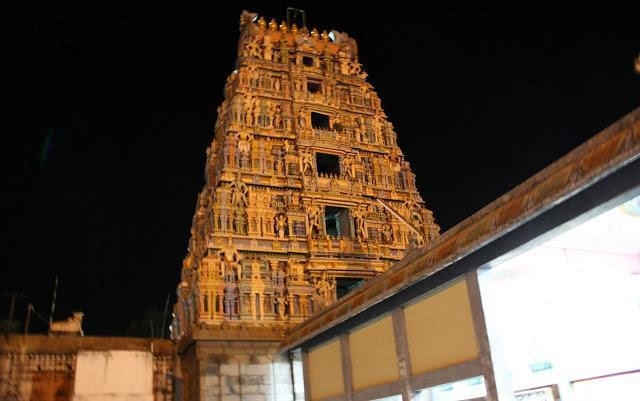
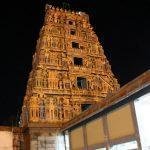
The temple exhibits classic Dravidian architecture. A striking feature is the Raja Gopuram (gateway tower), which rises majestically to welcome pilgrims.
Unique Vastu and Sculptural Features
- The Reversed Nandi: Unlike most Shiva temples where Nandi (the sacred bull) faces the Lingam directly, the Nandi here faces outward, towards the exit. According to the Sthala Purana, Lord Shiva instructed Nandi to guard the entrance and prevent anyone except Devas and Rishis from interrupting his teaching of the Vedas. Alternatively, it symbolizes Nandi preparing to leave to aid King Thondaman in battle.
- Pancha Bhoota Stala Darshan: A unique aspect of this temple is the presence of shrines dedicated to the five elemental forms of Shiva (Pancha Bhoota Stalams). Devotees can gain the merit of visiting Chidambaram, Thiruvanaikkal (Water), Kanchipuram (Earth), Kalahasthi (Air), and Thiruvannamalai (Fire) within this single complex.
Darshan & Ritual Logistics (2026 Guide)
To facilitate a seamless darshan in 2026, please refer to the daily schedule below. Note that timings may vary slightly during festival seasons.
| Session | Timing | Key Rituals |
|---|---|---|
| Morning | 05:30 AM – 12:00 PM | Ushatkalam, Kalasanthi, Abhishekam |
| Evening | 04:00 PM – 08:30 PM | Arthajama Pooja, Palliyarai Pooja |
Key Sevas & Online Booking
Devotees can perform various Sevas to seek specific blessings. While traditional on-spot booking is available, the Tamil Nadu HR&CE department facilitates online bookings for major rituals.
- Abhishekam: Performed with milk, curd, tender coconut, and sacred ash.
- Nagalinga Abhishekam: Essential for those seeking progeny or marriage alliances.
- Kalyana Utsavam: Ritual marriage of the deity, often performed by devotees for personal blessings.
- Sarpa Dosha Pooja: Conducted on Saturdays between 9:00 AM and 10:30 AM (Rahu Kalam).
2026 Festival Calendar
Mark your calendars for these major celebrations in 2026:
- Pradosham: Monthly (13th of every Tamil month).
- Arudra Darshanam: January 2026 (Date as per Tamil Calendar Margazhi).
- Maha Shivaratri: February 26, 2026.
- Brahmotsavam: The 10-day street procession festival, typically in the month of Panguni (March-April). The 6th, 7th, and 10th days are celebrated with grandeur.
- Aadi Perukku: July-August 2026 (Special Abhishekam for the Goddess).
- Laksha Deepam: Lighting of one lakh lamps, usually during Karthigai Deepam (November 2026).
Practical Visitor Guidance
Dress Code & Etiquette
Visitors are required to wear traditional attire. Men should wear dhotis or formal pants with shirts, and women should wear sarees, half-sarees, or churidars. Avoid shorts and t-shirts to maintain the sanctity of the shrine.
Photography & Mobiles
Photography is generally restricted inside the inner sanctum (Garbhagriha). Mobile phones should be kept silent or deposited at the designated lockers available at the temple entrance.
Crowd Management & Seasonal Advice
- Best Time to Visit: Weekday mornings (5:30 AM – 8:00 AM) offer the most peaceful darshan.
- Summer (March-May): Temperatures in Thiruvannamalai district can exceed 35°C. Carry a water bottle and wear head coverings.
- Monsoon (Oct-Dec): The Cheyyar river flows nearby; carry an umbrella during these months.
Pilgrimage Connectivity
How to Reach
Cheyyar is well-connected by road and is located approximately 33 km from Kanchipuram.
- By Air: The nearest airport is Chennai International Airport (MAA), approximately 85 km away.
- By Train: The nearest major railway junction is Kanchipuram (33 km) or Arni Road (14 km). From there, taxi or bus services are available to Cheyyar.
- By Road: Cheyyar is located on the Kanchipuram-Arani road. It is accessible via State Highway 116 and is well-served by TNSTC buses from Kanchipuram and Thiruvannamalai.
Nearby Sacred Sites
Extend your pilgrimage by visiting these nearby temples:
- Pattchieeswarar Temple: Located within Cheyyar, dedicated to Lord Shiva.
- Pathala Vinayagar Temple: An ancient shrine in Cheyyar dedicated to Lord Ganesha.
- Ashteeswarar Temple (Cheyyar): Another significant Shiva temple in the vicinity.
Photo Gallery







Frequently Asked Questions (FAQ)
1. Is there a VIP Darshan entry available?
Yes, the temple administration provides a special entry or quick darshan facility for senior citizens and differently-abled pilgrims. VIP tickets can sometimes be purchased at the temple counter, subject to availability.
2. Can I perform the Nagalinga Abhishekam for marriage?
Absolutely. It is one of the most sought-after rituals here. Devotees facing delays in marriage often perform this Abhishekam on Tuesdays or Fridays to remove obstacles.
3. Are there accommodation facilities available?
While the temple does not have a massive guest house complex, there are numerous private lodges and guest houses in Cheyyar town, ranging from budget to mid-range options.
4. What is the significance of the palm tree inside the temple?
The palm tree inside the temple premises is directly linked to the legend of Saint Tirugnana Sambandar. It is considered a divine witness to the miracle and is worshipped as a divine entity that blesses devotees with fertility.
5. How far is Vedapuriswarar Temple from Thiruvannamalai?
The temple is approximately 70 km from Thiruvannamalai. The drive takes about 1 hour and 30 minutes via the Chengam route.
Contact Details
Vedapuriswarar Temple,
Cheyyar, Thiruvannamalai District, Tamil Nadu.
Phone: 04182-224387 (Temple Office)
How to Reach:
It is located at a distance of about 33 Kms from Kancheepuram, 33 kms from Arani, 33 kms from Arcot, 34 kms from Vandavasi.
Recent Posts

Shri Kaamkoteeshwar Mandir, Varanasi – History & Significance
In the heart of Kashi, the eternal city of Lord Shiva, where the Ganges flows with celestial grace, stands the Shri Kaamkoteeshwar Mandir. This sacred Sannidhi is not merely a temple but a profound spiritual bridge between the Northern…

ओ सांवरे तूने ही मुझको संभाला – Lyrics & Meaning
ओ सांवरे तूने ही मुझको संभाला – A Prayer to Shyam Origin & Spiritual Essence Why This Bhajan Resonates Devotees chant this when overwhelmed by life’s storms—the refrain ‘तूने ही मुझको संभाला’ is the soul’s sigh of relief: “You…

कथा ये है महाराज मेरे की – Lyrics & Meaning
कथा ये है महाराज मेरे की छत्रपति संभाजी महाराज – A Prayer to Chhatrapati Sambhaji Maharaj Origin & Spiritual Essence Why This Bhajan Resonates Devotees chant this when their spirit feels tested—its powerful refrain “महाराज मेरे” is a soul’s…

Rigveda Samhita Yathartha Anuvada (ऋग्वेद संहिता यथार्थ अनुवाद) – Complete Set with Anvayartha & Hindi/English Translation
The Rigveda is the oldest surviving scripture of humanity and the foundational text of Sanātana Dharma. For serious students, scholars, UPSC aspirants studying ancient Indian history, Sanskrit learners, and spiritual seekers, a precise and grammatically structured translation is indispensable.…

आना भी अकेला है जाना भी अकेला है – Lyrics & Meaning | BharatTemples
आना भी अकेला है जाना भी अकेला है – A Prayer to the Divine Witness Origin & Spiritual Essence Why This Bhajan Resonates Devotees turn to this bhajan in moments of deep reflection—when life’s attachments begin to ache. The…

माता शेरावाली के द्वार जो भी जाता है – Lyrics & Meaning
माता शेरावाली के द्वार जो भी जाता है – A Prayer to Maa Sherawali Origin & Spiritual Essence Why This Bhajan Resonates Devotees turn to this bhajan in times of fear or uncertainty—its promise that no one leaves Maa’s…

मार लेना सपणी उबार लेणा भवरा – Lyrics & Meaning
मार लेना सपणी उबार लेणा भवरा – A Prayer to the Divine Beloved Origin & Spiritual Essence Why This Bhajan Resonates Devotees chant this in moments of deep vulnerability—its cry of “मार लेना सपणी, उबार लेणा भवरा” is the…

हमें श्याम सुंदर भरोसा तुम्हारा – Lyrics & Meaning
हमें श्याम सुंदर भरोसा तुम्हारा – A Prayer to Shyam Sundar Origin & Spiritual Essence Why This Bhajan Resonates Devotees chant this when feeling alone—its refrain ‘de do sahara’ is the soul’s cry for divine support. Lyrics in Hindi…

Mere Satguru Ne Di Thi Davai Lyrics in Hindi & Meaning
Mere Satguru Ne Di Thi Davai: Invoking the Guru’s Liberating Wisdom This soul-stirring bhajan venerates the Satguru (True Spiritual Master) as the divine physician who dispenses the only remedy for life’s deepest sufferings. Composed by Sant Karmaveer Tufani, it…

Janm Diyo Thari Maa Dukh Dekhiyo Lyrics in Hindi & Meaning
जन्म दियो थारी माँ दुख देखियो (Maa’s Grief Upon Birthing You) This soul-stirring Chetavani Bhajan (admonitory hymn) is addressed to the Divine Mother (Maa) – a call for repentance when children forget their filial duties in the dark age…