
Contents
- 1 Ravikula Maanikkaeswarar Temple: A Definitive Pilgrimage Guide to Dhadapuram
Ravikula Maanikkaeswarar Temple: A Definitive Pilgrimage Guide to Dhadapuram
Introduction & Spiritual Essence
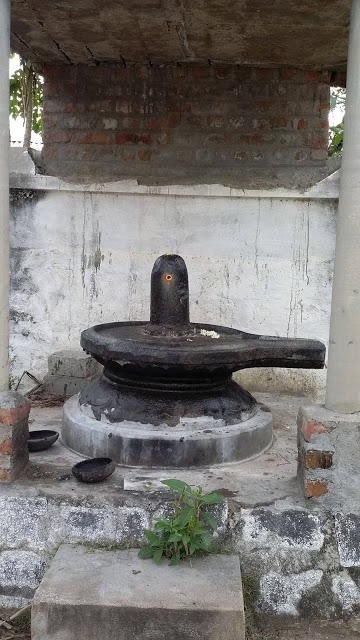
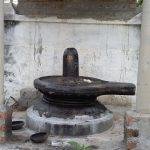
Nestled in the historic village of Dhadapuram, approximately 14 km from Thindivanam in Villupuram district, stands the ancient Ravikula Maanikkaeswarar Temple. This sacred shrine is dedicated to Lord Shiva, worshipped here as Maanikkaeswarar (also referred to as Ravikula Maanikkaeswarar). The presiding deity is a Swayambhu (self-manifested) Lingam, facing east, while the consort, Goddess Manikkavalli (also known as Akilandeswari), graces the shrine with four hands.
Phalaśruti: Why Visit?
Devotees undertake this pilgrimage seeking spiritual clarity and ancestral blessings. The temple is renowned for its potent energy to cleanse pitru dosha (ancestral karma) and remove obstacles in one’s path. Lighting a ghee lamp here is believed to invite prosperity and knowledge. Lord Shiva, in his form as Dakshinamurthy (seated on a bull), is the supreme guru, bestowing wisdom upon devotees.
Historical Origins & Scriptural Legend
The history of this temple is deeply woven into the tapestry of the Chola dynasty. Tradition holds that the temple was constructed around 1004 AD by the Chola Princess, Kundavai Pirattiyaar, sister of the great Rajaraja Chola.
Originally, the village was named Rajarajapuram (referenced in records as ‘Venkundra Kottathu Nalloor Naattin Rajarajapuram’). Alongside this Shiva temple, Kundavai Devi also constructed the Kari Varadharaja Perumal temple (formerly known as Kundavai Vinnagar Azhvar temple) and a Jain temple, highlighting the region’s spiritual diversity.
Inscriptions and Legacy
According to temple records and epigraphy, there are 14 inscriptions within the complex. Notable among them are those from Rajaraja Chola II, Rajendra Chola I, and Rajendra Chola II. These inscriptions confirm that Parantaka Chola Kundavai Pirattiyaar funded the temple’s construction and provided endowments for lighting lamps, a tradition that continues to this day. The period of this temple’s construction coincides with the era of the famous Brihadeeswarar Temple in Thanjavur.
Architectural Marvels
The temple is a masterpiece of Dravidian architecture, constructed with selective quality stones. The complex follows strict Vastu Shastra principles, oriented to face east.
Key Structural Elements
- Balipeedam: The sacrificial altar is uniquely designed in the shape of a Lotus bud.
- Mandapas: The temple features several halls including the Nandhi Mandapam, Mugamandapam (Hall of Faces), Maha Mandapam, and Ardhamandapam (Half Hall). The pillars of the Ardhamandapam feature exquisite, intricate carvings.
- Mugamandapam: Notable for a Yali (mythical creature) face sculpted with a square shape, differing from common representations.
The Sanctum Sanctorum
The Moolavar (main deity), Maanikkaeswarar, is a Swayambhu Lingam. The Aavudaiyar (the base of the Lingam) is round, and microscopic lines known as Brahmasutra lines can be observed on the forehead of the Lingam.
Special Sannidhis
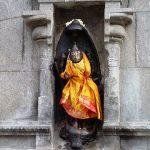
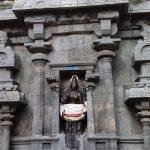
Additional deities include a unique Lord Ganesha holding a stone umbrella and Dakshinamurthy accompanied by a bull. The Goddess Manikkavalli is a four-armed figure of artistic excellence. While the temple is not currently listed under ASI (Archaeological Survey of India) or UNESCO World Heritage status, its Dravidian style and Chola inscriptions classify it as a protected monument of immense historical value.
Darshan & Ritual Logistics
Visitors are encouraged to check the calendar for 2026 festival dates, particularly Maha Shivaratri and the Pradosham rituals, which are celebrated with great grandeur.
Daily Timings
| Session | Timing | Activity |
|---|---|---|
| Morning | 06:00 AM – 12:00 PM | Opening, Abhishekam, Archana |
| Afternoon | 12:00 PM – 04:30 PM | Temple Closed |
| Evening | 04:30 PM – 08:00 PM | Darshan, Pooja, Closing |
Key Sevas and Booking
While physical booking is available at the temple counter, the Tamil Nadu Hindu Religious & Charitable Endowments (HR&CE) department facilitates online bookings for most major temples. For Ravikula Maanikkaeswarar Temple, devotees can typically book:
- Abhishekam: Ritual bathing of the deity (usually performed in the morning).
- Archana: Recitation of names with offerings.
- Lamp Lighting: Special ghee lamps funded by the temple’s endowments.
Note: As of 2026, specific online portals like temple.tamilnadutourism.tn.gov.in or the official HR&CE app should be checked for real-time availability for this specific village temple.
Practical Visitor Guidance
To ensure a respectful and comfortable visit, please adhere to the following guidelines.
Dress Code & Etiquette
Traditional attire is preferred. Men should wear veshti (dhoti) or formal trousers with a shirt; women should wear sarees, salwar kameez, or traditional skirts. Western casual wear (shorts/tank tops) is discouraged within the sanctum.
Photography & Security
- Photography: Strictly prohibited inside the Garbhagriha (main sanctum). Permitted in the outer corridors.
- Mobile Lockers: As this is a village temple, large locker facilities may not be available. It is advisable to travel light and carry minimal valuables.
- Accessibility: The temple complex is compact. The flooring is stone, which may be slippery during monsoon seasons. Wheelchair access is limited to the outer perimeter.
Crowd Management & Seasonal Tips
- Best Hours: Visit between 7:00 AM and 9:00 AM for the least crowd and a serene atmosphere.
- Seasonal Advice: Summers (April–June) in Villupuram are hot; carry a water bottle and an umbrella. The monsoon season (November–December) brings lush greenery but requires careful walking on the stone steps.
Pilgrimage Connectivity
How to Reach
By Road: Dhadapuram is located about 14 km northwest of Thindivanam. From Thindivanam, take the route towards Vandavasi via NH 77 (formerly NH 45). The village is well-connected by local bus services from Thindivanam and Villupuram.
By Rail: The nearest railway junction is Thindivanam (TNY), which is approximately 30–40 minutes by vehicle.
By Air: The nearest major airport is Chennai International Airport (MAA), roughly 120 km away. Puducherry Airport (PNY) is an alternative, approximately 50 km away.
Nearby Sacred Sites
Enhance your pilgrimage by visiting these nearby spiritual centers:
- Varadharaja Perumal Temple (Dhadapuram): Located within the same village, built by Kundavai Devi.
- Melmalayanur Temple: Located roughly 15 km away, famous for Angaraka (Mars) worship.
- Thindivanam Mangala Vinayagar Temple: A prominent Ganesha temple in the main town.
Frequently Asked Questions (FAQ)
1. What is the primary deity of Ravikula Maanikkaeswarar Temple?
The primary deity is Lord Shiva, known as Ravikula Maanikkaeswarar, who is a Swayambhu Lingam facing east. The Goddess is Manikkavalli.
2. Is there VIP darshan entry available?
Given the temple’s location in a smaller village, VIP darshan facilities are generally not available. Darshan is based on queuing. However, early morning visits usually allow for quick, intimate darshan.
3. Are there accommodation facilities in Dhadapuram?
There are no hotels directly in Dhadapuram. It is recommended to stay in Thindivanam (14 km) or Villupuram (30 km), where numerous lodges and guest houses are available.
4. When are the annual festivals celebrated?
While specific dates for local festivals (Brahmotsavam) vary by the Tamil calendar, Maha Shivaratri (February/March) is the most significant event here. Pradosham days (every 13th/14th day of the lunar month) are also celebrated with special Abhishekams.
5. Is there any entry fee?
General darshan is free for all devotees. Specific Sevas (rituals) require a nominal fee, which can be paid at the temple counter.

Contact Details
Official Address:
Ravikula Maanikkaeswarar Temple,
Dhadapuram, Villupuram District,
Tamil Nadu – 604101
Note: As this is a village temple, a dedicated phone number may not be publicly listed. For inquiries, contacting the local village administration or the HR&CE district office in Villupuram is advisable.
Recent Posts

Shri Kaamkoteeshwar Mandir, Varanasi – History & Significance
In the heart of Kashi, the eternal city of Lord Shiva, where the Ganges flows with celestial grace, stands the Shri Kaamkoteeshwar Mandir. This sacred Sannidhi is not merely a temple but a profound spiritual bridge between the Northern…

ओ सांवरे तूने ही मुझको संभाला – Lyrics & Meaning
ओ सांवरे तूने ही मुझको संभाला – A Prayer to Shyam Origin & Spiritual Essence Why This Bhajan Resonates Devotees chant this when overwhelmed by life’s storms—the refrain ‘तूने ही मुझको संभाला’ is the soul’s sigh of relief: “You…

कथा ये है महाराज मेरे की – Lyrics & Meaning
कथा ये है महाराज मेरे की छत्रपति संभाजी महाराज – A Prayer to Chhatrapati Sambhaji Maharaj Origin & Spiritual Essence Why This Bhajan Resonates Devotees chant this when their spirit feels tested—its powerful refrain “महाराज मेरे” is a soul’s…

Rigveda Samhita Yathartha Anuvada (ऋग्वेद संहिता यथार्थ अनुवाद) – Complete Set with Anvayartha & Hindi/English Translation
The Rigveda is the oldest surviving scripture of humanity and the foundational text of Sanātana Dharma. For serious students, scholars, UPSC aspirants studying ancient Indian history, Sanskrit learners, and spiritual seekers, a precise and grammatically structured translation is indispensable.…

आना भी अकेला है जाना भी अकेला है – Lyrics & Meaning | BharatTemples
आना भी अकेला है जाना भी अकेला है – A Prayer to the Divine Witness Origin & Spiritual Essence Why This Bhajan Resonates Devotees turn to this bhajan in moments of deep reflection—when life’s attachments begin to ache. The…

माता शेरावाली के द्वार जो भी जाता है – Lyrics & Meaning
माता शेरावाली के द्वार जो भी जाता है – A Prayer to Maa Sherawali Origin & Spiritual Essence Why This Bhajan Resonates Devotees turn to this bhajan in times of fear or uncertainty—its promise that no one leaves Maa’s…

मार लेना सपणी उबार लेणा भवरा – Lyrics & Meaning
मार लेना सपणी उबार लेणा भवरा – A Prayer to the Divine Beloved Origin & Spiritual Essence Why This Bhajan Resonates Devotees chant this in moments of deep vulnerability—its cry of “मार लेना सपणी, उबार लेणा भवरा” is the…

हमें श्याम सुंदर भरोसा तुम्हारा – Lyrics & Meaning
हमें श्याम सुंदर भरोसा तुम्हारा – A Prayer to Shyam Sundar Origin & Spiritual Essence Why This Bhajan Resonates Devotees chant this when feeling alone—its refrain ‘de do sahara’ is the soul’s cry for divine support. Lyrics in Hindi…

Mere Satguru Ne Di Thi Davai Lyrics in Hindi & Meaning
Mere Satguru Ne Di Thi Davai: Invoking the Guru’s Liberating Wisdom This soul-stirring bhajan venerates the Satguru (True Spiritual Master) as the divine physician who dispenses the only remedy for life’s deepest sufferings. Composed by Sant Karmaveer Tufani, it…

Janm Diyo Thari Maa Dukh Dekhiyo Lyrics in Hindi & Meaning
जन्म दियो थारी माँ दुख देखियो (Maa’s Grief Upon Birthing You) This soul-stirring Chetavani Bhajan (admonitory hymn) is addressed to the Divine Mother (Maa) – a call for repentance when children forget their filial duties in the dark age…