
Contents
- 1 Introduction & Spiritual Essence
- 2 Historical Origins & Scriptural Legend
- 3 Architectural Marvels
- 4 Darshan & Ritual Logistics
- 5 Practical Visitor Guidance
- 6 Pilgrimage Connectivity
- 7 Frequently Asked Questions
- 8 The Deity
- 9 Geological Formation
- 10 The Temple Architecture
- 11 Local Legends
- 12 Photo Gallery
- 13 How to Reach
- 14 Contact Details
- 15 Temples in Thiruvananthapuram
Introduction & Spiritual Essence
Sri Janardhana Swami Temple, revered as Dakshin Kashi (Southern Varanasi), enshrines Lord Vishnu in the rare Achamanam form – a sacred purification ritual pose. The 2000-year-old deity stands facing east, His right hand raised toward His mouth in a unique iconography that carries apocalyptic significance: temple legends state that when His hand touches His mouth, Kali Yuga will end.
Devotees flock here for:
- Cleansing ancestral karma (Pitru Dosha Nivarana)
- Achieving moksha through devotion (Bhakti Marga)
- Healing through the temple’s sacred springs (believed to cure chronic ailments)
Historical Origins & Scriptural Legend
According to temple records, this site gained sanctity when Sage Narada’s bark garment (Valkalam) fell here, giving Varkala its name. Inscriptions reveal Queen Umayamma (1677-84 CE) renovated the temple during her reign.
Key scriptural connections:
- Mahabharata references Balarama’s pilgrimage here
- Brahma Purana describes it as a sacred Pitru Tirtha
- Local Sthala Purana narrates how cursed Devas attained liberation through penance here
Architectural Marvels
This masterpiece of Kerala architecture features:
| Element | Description |
|---|---|
| Sanctum | Circular Vatta Sreekovil with copper-plated conical roof |
| Mandapa | Square Nataraja Mandapa with Navagraha ceiling carvings |
| Notable Features | 16th-century Dutch ship bell, Garuda & Hanuman vigrahas |
Darshan & Ritual Logistics
2026 Daily Darshan Timings
| Session | Timings |
|---|---|
| Morning | 4:30 AM – 12:00 PM |
| Evening | 5:00 PM – 8:00 PM |
Key Sevas (Book at temple office or online):
- Abhishekam: ₹500 (5:30 AM daily)
- Archana with Sahasranama: ₹300
2026 Festival Dates
- Alpashi Utsavam: Oct 15-24
- Mandalakaalam: Nov 15-Jan 15
Practical Visitor Guidance
- Dress Code: Traditional attire mandatory (dhotis/sarees)
- Photography: Prohibited in sanctum; ₹50 fee for premises
- Crowd Tips: Visit weekdays 6-8 AM for shorter queues
Pilgrimage Connectivity
Nearest Transport:
- Airport: Trivandrum (52 km via NH66)
- Rail: Varkala Station (1.5 km)
Nearby Sacred Circuit:
- Sivagiri Mutt (3 km)
- Kadakkal Devi Temple (28 km via SH64)
Frequently Asked Questions
Is there VIP darshan?
Yes, ₹1000 VIP tickets allow faster access during peak hours.
Can non-Hindus enter?
Entry restricted to Hindus only.
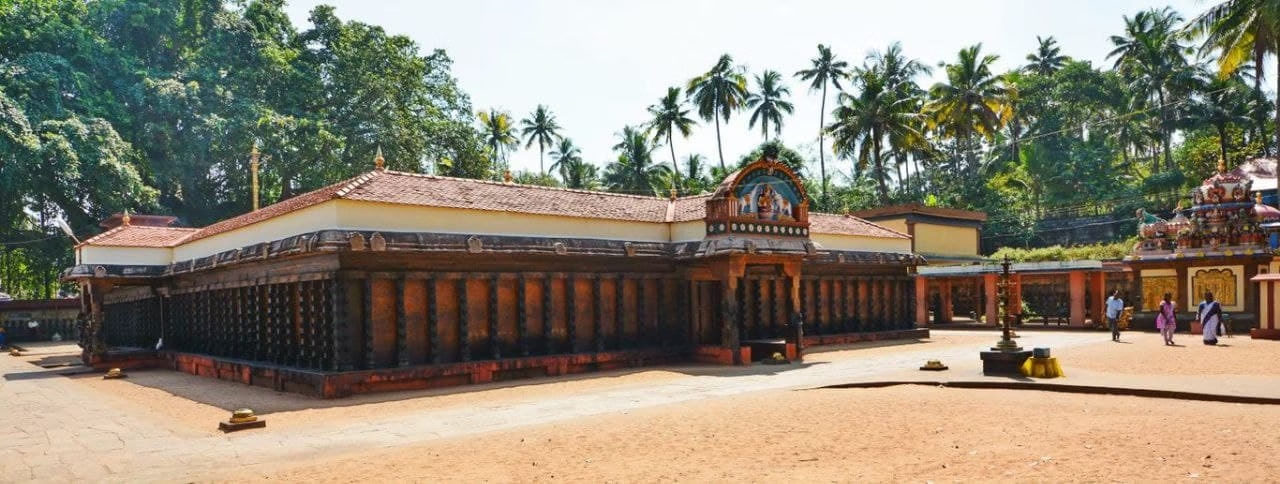
Janardana Swami Temple is a 2000-year-old temple situated in the municipality of Varkala city. It is also known as Varkala Temple. Janardana Swami is a form of Lord Vishnu. It is referred to as Dakshin Kashi (Benares of the south).
This is the only temple of Lord Vishnu in the Achamanam form. This beautiful temple is located at the shores of the Arabian sea. According to the scriptures, when the Deity’s hand touches its mouth, that would mark the end of Kaliyuga.
The temple has an ancient bell removed from a shipwreck, donated by the captain of the Dutch vessel which sank near Varkala without causing any casualties.
Sri Balarama visited this place during His Dravida Desha Yatra.
The Deity
The presiding deity of this temple is Sri Janarthana Swami. The deity is found in a standing position facing towards the east. His right hand is in position as if he is performing “Aachamanam”. His right hand is raised towards his mouth and legends say that if his hand goes nearer to his mouth, the world will come to an end. It is believed to happen at the end of the Kali Yuga.
Geological Formation
To the scientist, Varkala is well known for its geological formation and has been inspected and examined carefully by hordes or geologists, and volumes of interesting literature are carefully preserved in the archives of the Government of India. Besides the enchanting sea-view, there is the backwater journey by canal hewn out of the tremendous heights of hills on either side of it. The vegetation on either side of the canal, rising in height is a magnificent sight, has given rise to a series of springs form which gushes out sparkling water throughout the year. The water is supported to have medicinal properties which cure certain ailments. Even a single bath is a tonic that no traveler or visitor should miss
The Temple Architecture
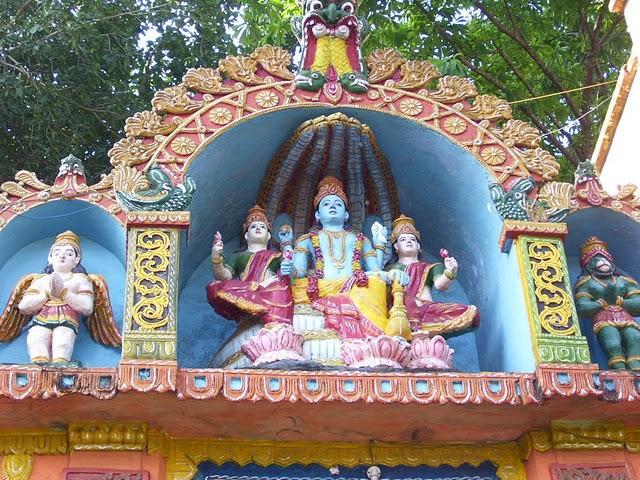
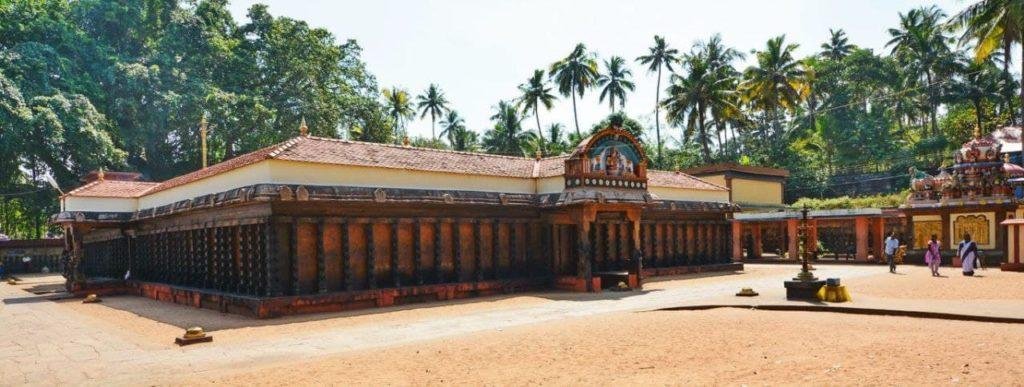
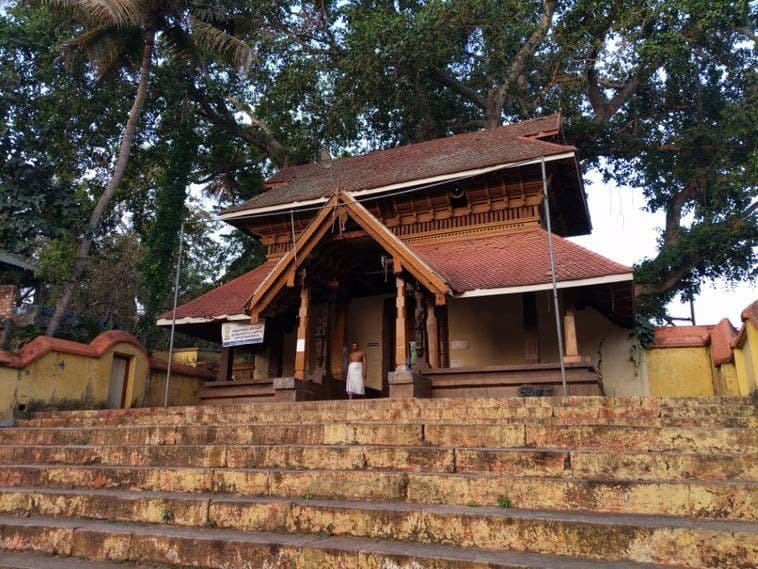
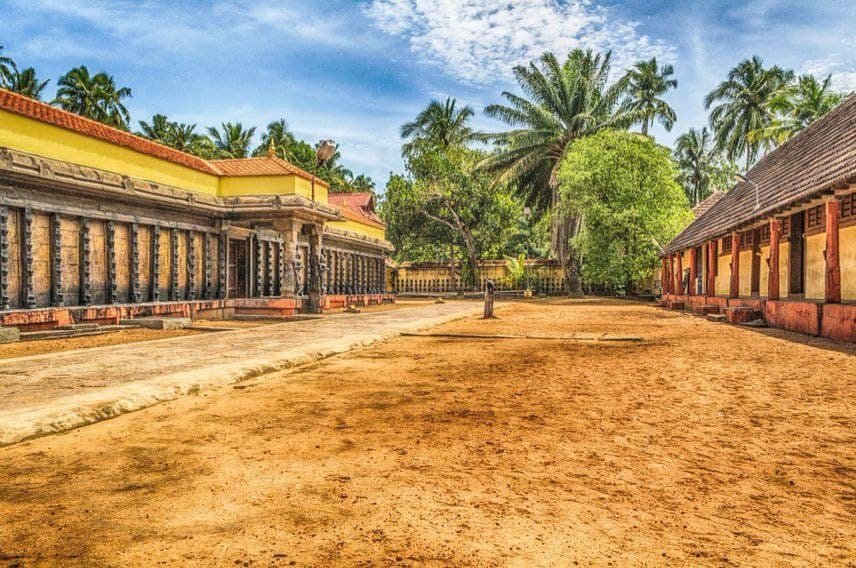
The temple of Sri Janardana is situated on the summit of a tableland adjoining the sea. It is located on one of the hill-tops, which is reached by a long and wearisome flight of steps and one feels tired on arriving at the feet of the Lord. At the entrance to the inner shrine are the idols of Hanuman and Garuda on either side and in the main shrine is the idol of Sri. Janardana with Sri Devi and Bhoo Devi. The temple of Janardana is a fine example of Kerala art and architecture. The circular ‘Sanctum sanctorum” surmounted by a conical dome of copper sheets, the square ‘mandapa’ with beautiful wooden carvings of Navagrahas on the ceiling and copper-plated roof over it, the quadrangular enclosures (prakara) around them, a hall containing a ‘bali peetha’ in front of the inner temple are the characteristic features of Kerala style of architecture. The construction period of this temple saw the rise of a highly embellished temple. one of the inscriptions indicates that the temple was improved during the reign of Umayamma Rani, who ruled this region during 1677-84 A.D. The main idol has a striking appearance with four arms having all the attributes of Vishnu. In the southwestern corner and on the north-eastern side of the outer enclosure are the shrines of Sasta and Shiva with Nandi.
Local Legends
Sage Narada, after paying his respects to Lord Narayana, left Vaikuntam to see Brahma. Enraptured by the sweet music of Narada, Narayana followed him unobserved. When Narada reached Brahmaloka, Brahma saw Narayana following his son Narada and offered salutations to him, at which Vishnu, realizing the awkward situation, suddenly disappeared. Brahma found that the person whom he had revered was his own son, Narada. The ‘Prajapathis’ who were laughing at this incident were cursed by Brahma that they would be born on earth and suffer the miseries of human beings. Narada advised them to perform penance at the place he himself would select for them. Narada threw his ‘Valkalam’ (bark upper garment) into the air and at the place where it fell down, they consecrated a temple for Janardanaswamy (a name of Vishnu). Hence the name Varkala is a corruption of ‘Valkala’, but the name came into prominent usage.
According to the legend, attracted by the music from Narada’s Veena, Lord Vishnu started following him and reached Satyaloka. Seeing Lord Vishnu, Brahma prostrated before him. Lord Vishnu soon realized that he has reached Satyaloka but did not realize that Lord Brahma is prostrating before him and left back to Vaikunta. It seemed as if Lord Brahma is falling towards the feet of Narada and all the present ‘Devas’ laughed. This made Brahma angry and he cursed Devas to be born as humans in the earth. Devas repented their folly and begged to be forgiven. Brahma replied that the curse would be withdrawn when they do a penance to please Lord Janardana. Devas asked where that place is where they should do the penance. Brahma told them that the place where Sage Narada’s ‘Vastra’ falls will be the sacred place. It is Varkala where his ‘Vastra’ fell and Devas did the penance accordingly to get relieved of the curse.
According to Mahabharata, Balabhadran has visited the place for pilgrimage.
Photo Gallery
How to Reach
Varkala Town is located 40 kilometers north of Trivandrum, which is the capital and metropolitan city of Kerala and 28 km south of the port city of Kollam.
Trivandrum International Airport (52 km) is the nearest airport and there is a helipad at Varkala Cliff.
Varkala Railway Station, the second busiest and third-highest revenue-generating station in Trivandrum district is connected by regular trains from Trivandrum Central and major cities in India like Mumbai, Delhi, Bangalore, Chennai, Hyderabad, Goa, Kolkata, etc.
Varkala is situated along the Trivandrum – Kollam coastal highway and 9 km east of National Highway 66. Private buses and KSRTC buses run along NH 66 and through Varkala. State Highway 64 (Kerala) starts in Varkala and ends in Madathara connects major places in the east. The highway is 45 km long.
Varkala is connected to National Waterway 3 through Varkala Tunnel, which passes through the heart of the city.
Contact Details
Temples in Thiruvananthapuram
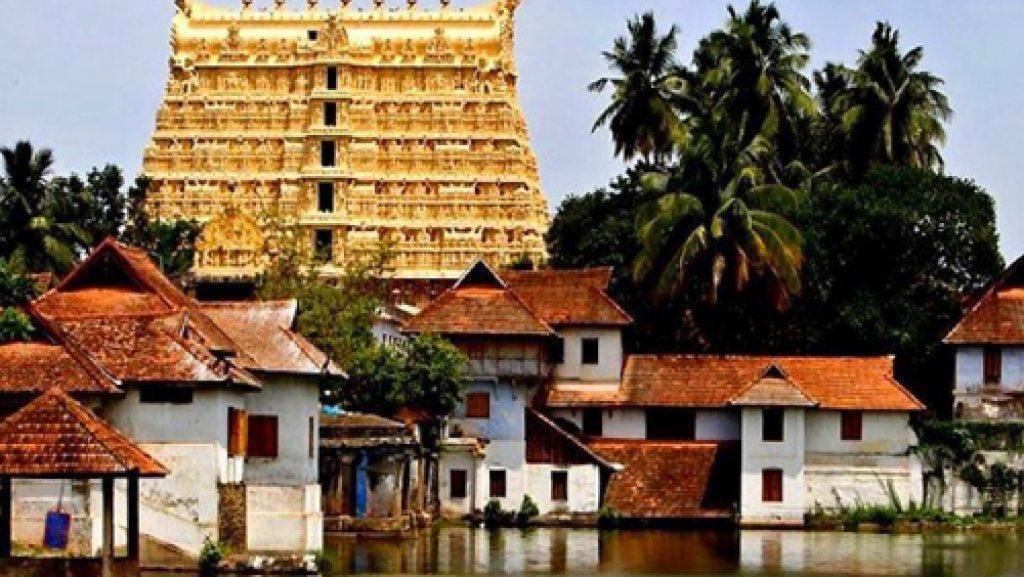
Sree Padmanabha Swamy Temple, Thiruananthapuram
The origin of the Temple of Sree Padmanabhaswamy is lost in antiquity. It is not possible to determine with any exactitude, from any reliable historical documents or other sources as to when and by whom the original idol of Sree Padmanabhaswamy was consecrated. The Temple has references in Epics and Puranas. Srimad Bhagavatha says that…
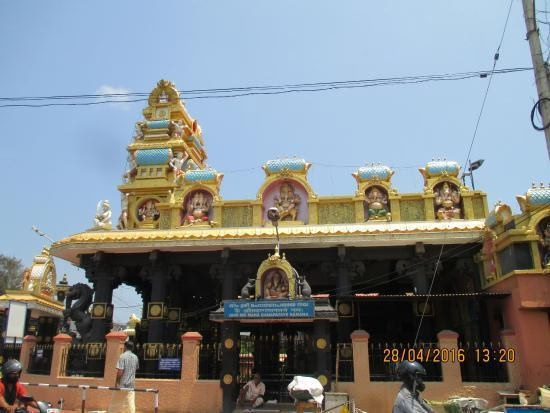
Pazhavangadi Ganapathy Temple, Thiruvananthapuram, Kerala
Pazhavangadi Ganapathy Temple, Thiruvananthapuram, Kerala Date built: – Deity: – Architectural style: – Major festivals Thiruvonam, Vijayadashami, Vishu, Vinayaka Chathurthi Locale: Thiruvananthapuram District:: Thiruvananthapuram Address: Padmavilasam Rd, Pazhavangadi, Padma Nagar, Pazhavangadi, Thiruvananthapuram, Kerala 695023 Phone 04712461929 The Pazhavangadi Maha Ganapathy temple(Malayalam: ശ്രീ പഴവങ്ങാടി മഹാ ഗണപതി ക്ഷേത്രം) is situated at East Fort in the heart of Thiruvananthapuram City. The main Deity of the temple is Sri…

Padmanabhaswamy Temple History & Darshan Timings: Definitive Guide 2026
1. Introduction & Spiritual Essence: The Abode of the Cosmic Serpent The Padmanabhaswamy Temple, located in the heart of Thiruvananthapuram (Trivandrum), Kerala, stands as one of the most significant and wealthiest spiritual centers in the world. Dedicated to Lord Vishnu, the temple derives its name from the Sanskrit words Padma (lotus) and Abhaswamy (Lord), signifying…
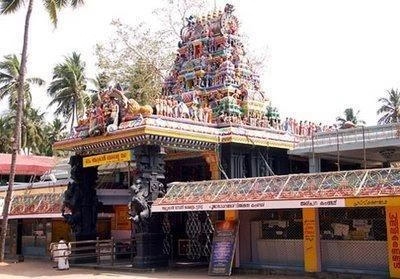
Attukal Temple History and Darshan Timings: Complete Pilgrimage Guide
Introduction & Spiritual Essence Nestled just 2 kilometers from the famed Sree Padmanabhaswamy Temple, the Attukal Bhagavathy Temple stands as a beacon of feminine divinity in the heart of Thiruvananthapuram, Kerala. Often referred to as the “Sabarimala of Women,” this sacred shrine is dedicated to Goddess Bhadrakali, worshipped here in her benign Soumya (peaceful) form.…
Recent Posts

Shri Kaamkoteeshwar Mandir, Varanasi – History & Significance
In the heart of Kashi, the eternal city of Lord Shiva, where the Ganges flows with celestial grace, stands the Shri Kaamkoteeshwar Mandir. This sacred Sannidhi is not merely a temple but a profound spiritual bridge between the Northern…

ओ सांवरे तूने ही मुझको संभाला – Lyrics & Meaning
ओ सांवरे तूने ही मुझको संभाला – A Prayer to Shyam Origin & Spiritual Essence Why This Bhajan Resonates Devotees chant this when overwhelmed by life’s storms—the refrain ‘तूने ही मुझको संभाला’ is the soul’s sigh of relief: “You…

कथा ये है महाराज मेरे की – Lyrics & Meaning
कथा ये है महाराज मेरे की छत्रपति संभाजी महाराज – A Prayer to Chhatrapati Sambhaji Maharaj Origin & Spiritual Essence Why This Bhajan Resonates Devotees chant this when their spirit feels tested—its powerful refrain “महाराज मेरे” is a soul’s…

Rigveda Samhita Yathartha Anuvada (ऋग्वेद संहिता यथार्थ अनुवाद) – Complete Set with Anvayartha & Hindi/English Translation
The Rigveda is the oldest surviving scripture of humanity and the foundational text of Sanātana Dharma. For serious students, scholars, UPSC aspirants studying ancient Indian history, Sanskrit learners, and spiritual seekers, a precise and grammatically structured translation is indispensable.…

आना भी अकेला है जाना भी अकेला है – Lyrics & Meaning | BharatTemples
आना भी अकेला है जाना भी अकेला है – A Prayer to the Divine Witness Origin & Spiritual Essence Why This Bhajan Resonates Devotees turn to this bhajan in moments of deep reflection—when life’s attachments begin to ache. The…

माता शेरावाली के द्वार जो भी जाता है – Lyrics & Meaning
माता शेरावाली के द्वार जो भी जाता है – A Prayer to Maa Sherawali Origin & Spiritual Essence Why This Bhajan Resonates Devotees turn to this bhajan in times of fear or uncertainty—its promise that no one leaves Maa’s…

मार लेना सपणी उबार लेणा भवरा – Lyrics & Meaning
मार लेना सपणी उबार लेणा भवरा – A Prayer to the Divine Beloved Origin & Spiritual Essence Why This Bhajan Resonates Devotees chant this in moments of deep vulnerability—its cry of “मार लेना सपणी, उबार लेणा भवरा” is the…

हमें श्याम सुंदर भरोसा तुम्हारा – Lyrics & Meaning
हमें श्याम सुंदर भरोसा तुम्हारा – A Prayer to Shyam Sundar Origin & Spiritual Essence Why This Bhajan Resonates Devotees chant this when feeling alone—its refrain ‘de do sahara’ is the soul’s cry for divine support. Lyrics in Hindi…

Mere Satguru Ne Di Thi Davai Lyrics in Hindi & Meaning
Mere Satguru Ne Di Thi Davai: Invoking the Guru’s Liberating Wisdom This soul-stirring bhajan venerates the Satguru (True Spiritual Master) as the divine physician who dispenses the only remedy for life’s deepest sufferings. Composed by Sant Karmaveer Tufani, it…

Janm Diyo Thari Maa Dukh Dekhiyo Lyrics in Hindi & Meaning
जन्म दियो थारी माँ दुख देखियो (Maa’s Grief Upon Birthing You) This soul-stirring Chetavani Bhajan (admonitory hymn) is addressed to the Divine Mother (Maa) – a call for repentance when children forget their filial duties in the dark age…