

Contents
Table of contents
Introduction & Spiritual Essence
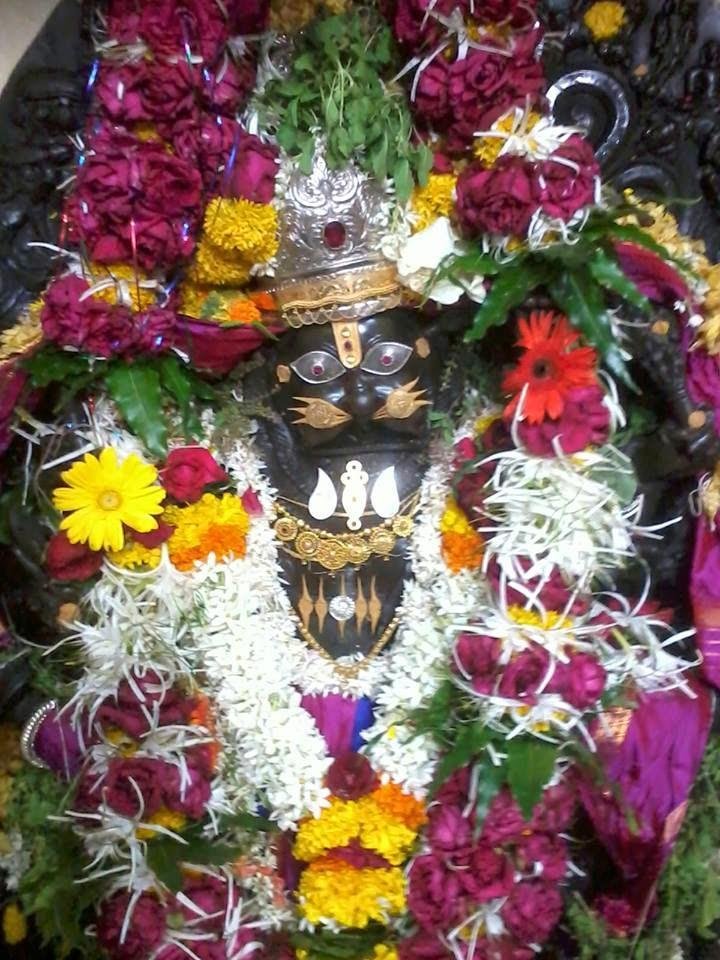
Located in the serene landscape of Kole Narsinhapur, Maharashtra, the Shri Kshetra Jwala Narsinha Teerth houses one of the world’s most powerful and ancient self-manifested idols. This temple is dedicated to Narasimha, the ferocious yet compassionate half-man, half-lion avatar of Lord Vishnu, incarnated to save his devotee, Prahlada.
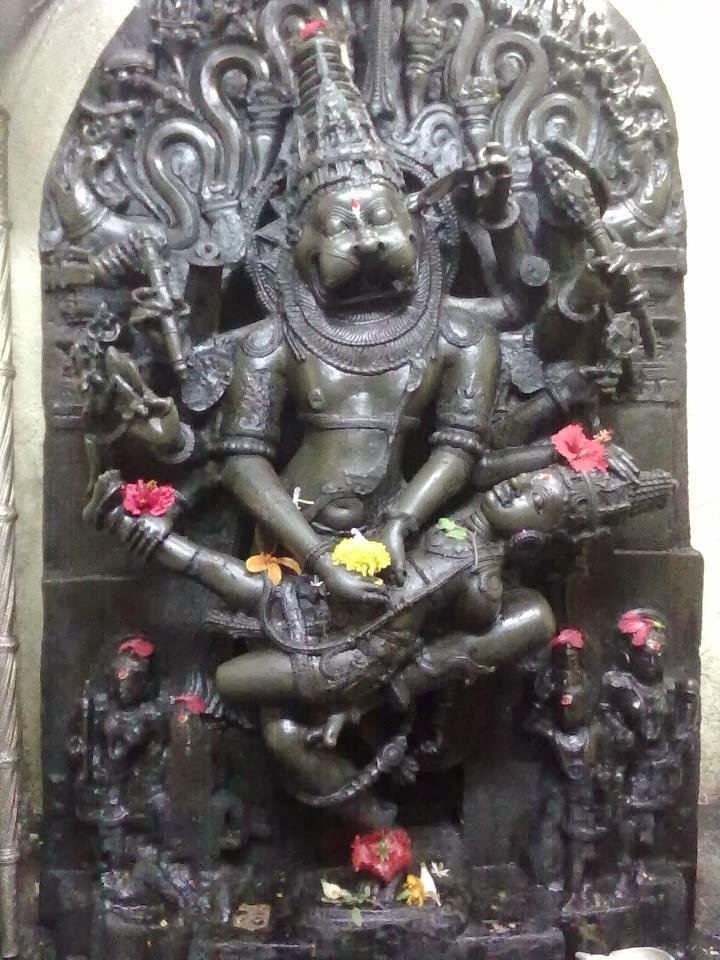
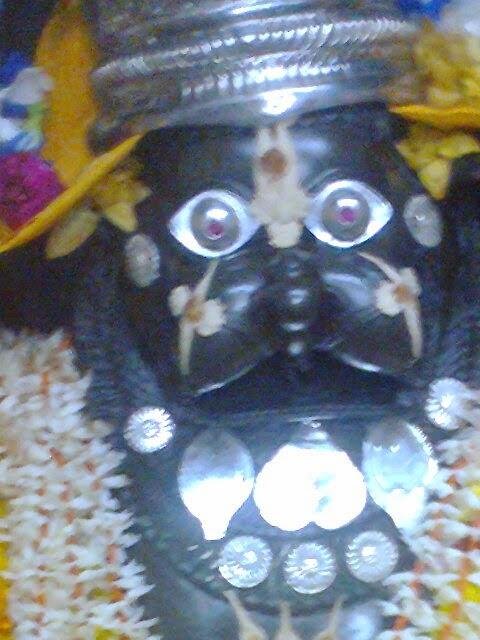
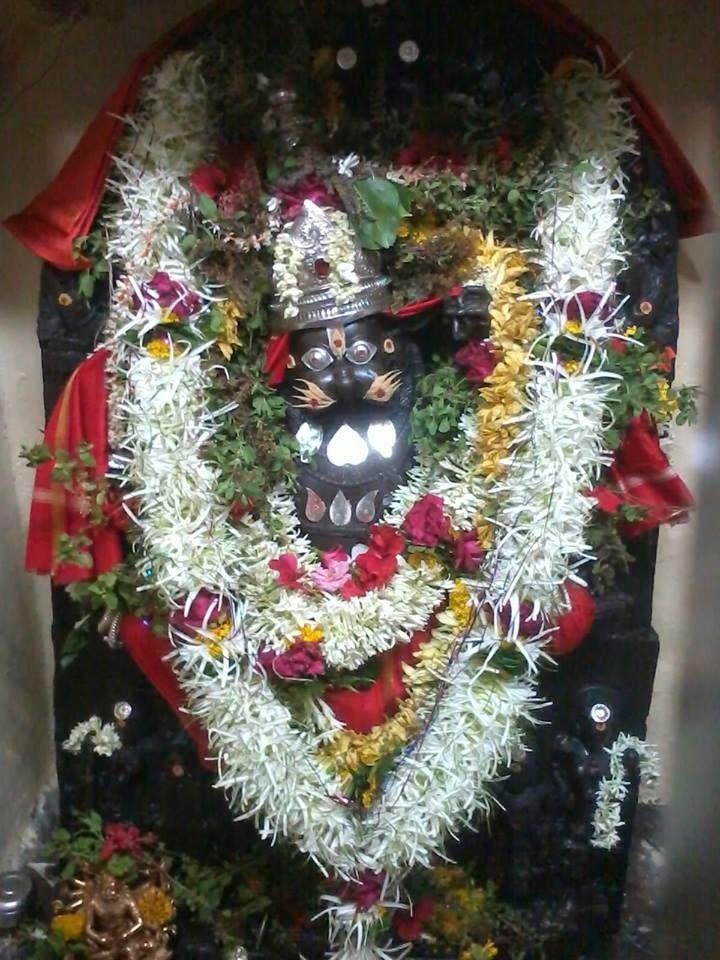
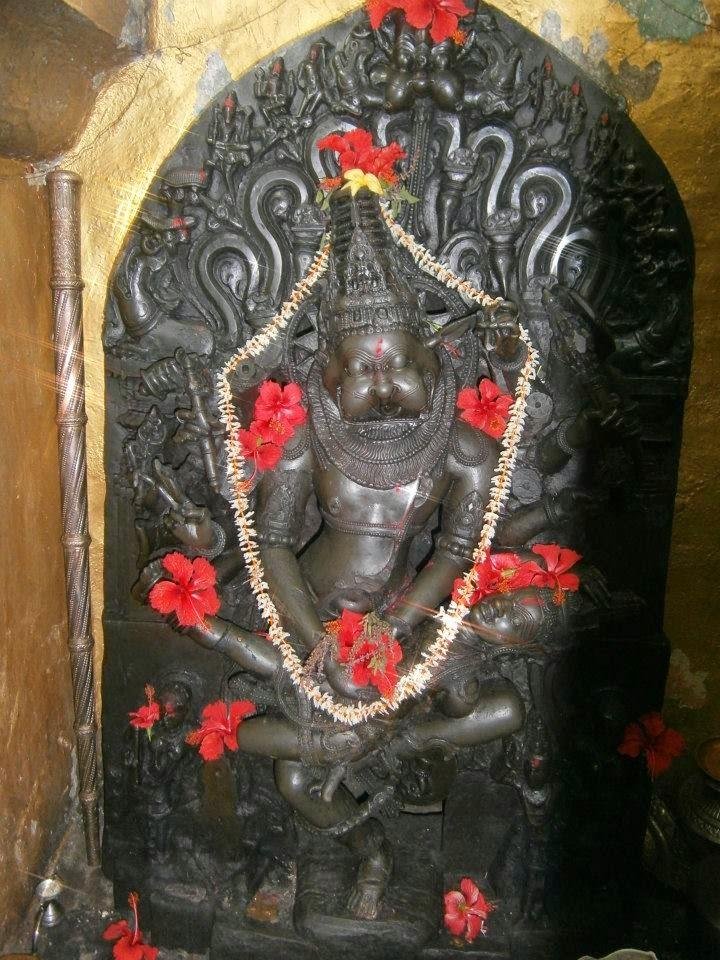
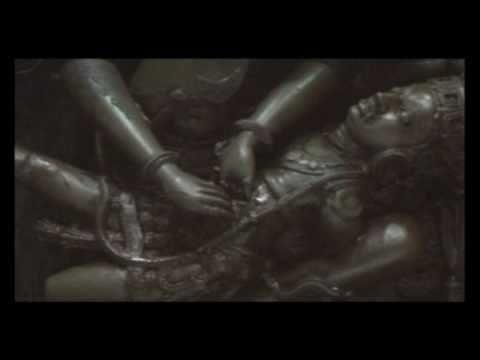
The primary deity here is a Swayambhu Shaligram Shila (a naturally formed stone from the Himalayas) depicting Lord Narasimha in his Jwala (flaming) form. According to temple records, this is the largest Shaligram idol in the world. The Murti is unique as it stands on one foot, with the other raised, crushing the demon Hiranyakashipu while holding him in a ferocious grip.
Phalaśruti: Why Devotees Visit
Pilgrims visit this sacred Teerth to witness the awe-inspiring form of the Lord. The spiritual benefits (Phalaśruti) of visiting include:
- Ancestral Cleansing: Offering prayers here is believed to cleanse past karmas and liberate ancestors (Pitrus) from the cycle of birth and death.
- Protection from Negativity: The Jwala Narasimha form is potent in removing obstacles, fear, and negative energies surrounding the devotee.
- Fulfillment of Desires: Tradition holds that sincere Mantra Japa and Darshan at this shrine bring stability and prosperity to family life.
Historical Origins & Scriptural Legend
The history of the temple is a blend of Vedic mythology and local folklore, chronicled in texts such as the Krishna-mahatmya.
The Legend of Parashar Muni and King Bhimadev
According to scriptural tradition, the great sage Parashar (grandfather of Ved Vyas) performed severe austerities on the banks of the river Krishna to please Lord Narasimha. Pleased by his devotion, the Lord appeared in his sixteen-armed, fiery form. However, the intensity of the form was so immense that it could not be established on earth. The Lord instructed the sage to immerse the deity in the river Krishna.
Centuries passed. Around 178 A.D., a blind and dumb Brahmin couple from the village of Anjana was cursed. They were advised to undertake a 12-year penance to please Lord Narasimha to be absolved. The Lord appeared in their dreams, revealing his location in the river and instructing them to seek help from the local king, Bhimadev.
The Lord gave a divine sign: to find the exact spot in the river, dry Kusha grass should be placed in the water; the spot where the grass spontaneously caught fire would reveal the deity. Following this sign, the idol was recovered from the depths of the river. It is noted that the Brahmin couple regained their sight and speech immediately upon seeing the Lord.
Scriptural Reference
यदा पुनस्तदा भक्त्या तपः कर्तुं पराशरः |
नारसिंहं तदा ध्यायन् कृष्णा तीरे मुनीश्वरः ||“The foremost amongst the sages, Parashar, performed austerities on the bank of the river Krishna with a heart full of devotion, meditating on Lord Narasimhadev.”
Photo Gallery

Shri Kshetra Jwala Narsinha Teerth, Kole Narsinhapur 
Shri Kshetra Jwala Narsinha Teerth, Kole Narsinhapur 
Shri Kshetra Jwala Narsinha Teerth, Kole Narsinhapur Shri Kshetra Jwala Narsinha Teerth, Kole Narsinhapur Shri Kshetra Jwala Narsinha Teerth, Kole Narsinhapur Shri Kshetra Jwala Narsinha Teerth, Kole Narsinhapur 

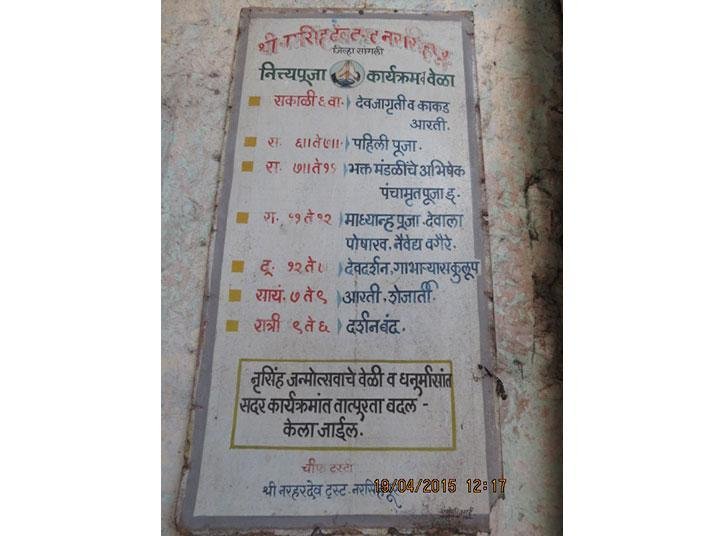
Shri Kshetra Jwala Narsinha Teerth, Kole Narsinhapur Board @ Shri Kshetra Jwala Narsinha Teerth, Kole Narsinhapur
Architectural Marvels
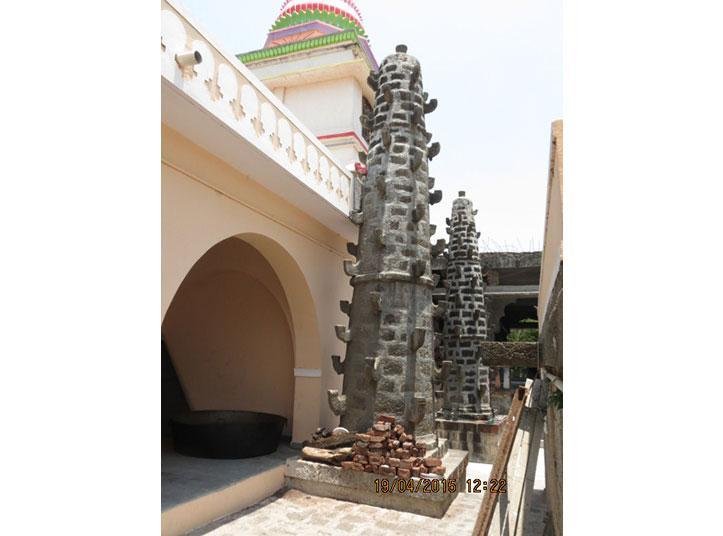
The temple architecture is a unique blend of subterranean design and traditional Hindu styles, specifically adapted to house a Swayambhu (self-manifested) deity.
Subterranean Sanctum
Unlike most temples where the Garbhagriha is at ground level, the deity here is located 14 feet under the ground. To reach the sanctum, devotees must descend steep staircases and navigate narrow tunnels.
The architectural layout includes two primary entrances: the Northern door and the Eastern door, with devotees traditionally entering from the East. The tunnels often pass under flowing water diverted from the nearby Krishna River, symbolizing a journey into the depths of the earth to witness the primal energy of Narasimha.
Sculptural Details
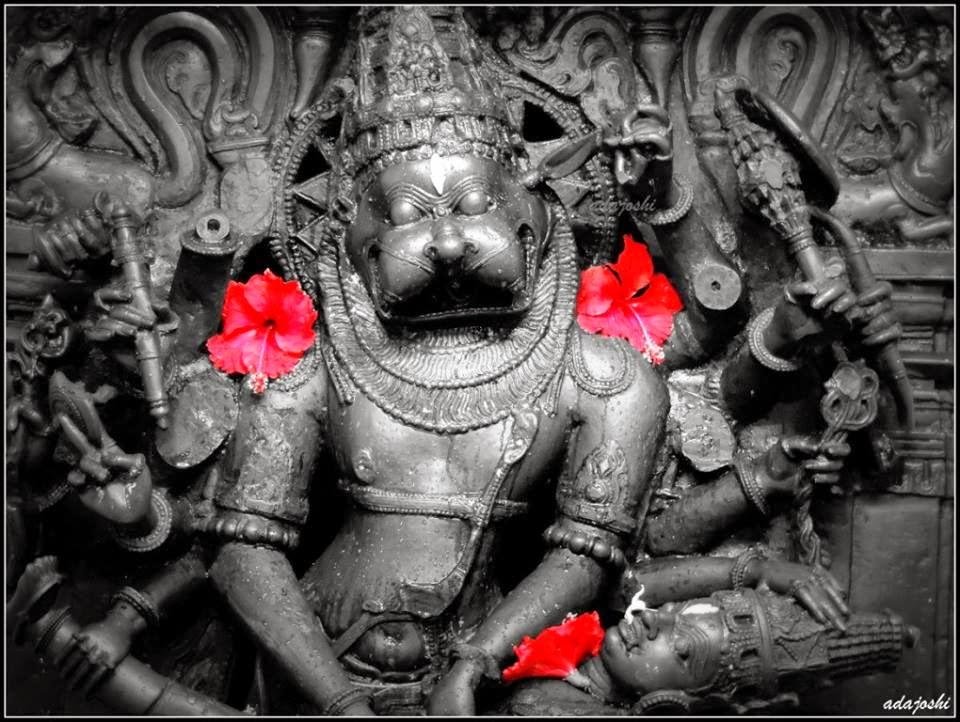
The Murti is a masterpiece of ancient craftsmanship carved into a single Shaligram stone. Key features include:
- The Form: 16 arms, holding the demon Hiranyakashipu tight, standing on one foot while the other crushes the demon.
- Surrounding Carvings: The idol features detailed carvings of the Dashavatara (10 incarnations of Vishnu), Bhakt Prahlada, Goddess Mahalakshmi, Bhudevi, and Garuda.
- Ornamentation: Exquisite carvings of ornaments, including Bajubandh (armlets) and rings, are visible on the stone, showcasing the divine aesthetics.
The temple complex also houses the Samadhi of Sri Siddheshwar Maharaja, a noted Siddha Mahatma, adding to the spiritual gravity of the site.
Darshan & Ritual Logistics
Based on standard timings for this temple trust, the following schedule applies for 2026. Devotees are advised to check for specific festival changes.
Daily Timings
| Period | Timing | Activity |
|---|---|---|
| Morning | 06:00 AM – 12:00 PM | General Darshan & Morning Puja |
| Afternoon | 12:00 PM – 04:00 PM | Temple Closed (Ritual Break) |
| Evening | 04:00 PM – 08:00 PM | Evening Darshan & Aarti |
Key Sevas & Online Booking
Devotees can book specific Sevas through the temple trust.
- Abhishekam: Performed with water, milk, and special herbs. Best time: 07:00 AM.
- Archana (Namavali): Recitation of 108 names of Lord Narasimha.
- Sanjeevani Seva: A special ritual for health and longevity.
Note: As of 2026, devotees are requested to contact the Trustee (contact details provided below) or visit the official trust desk for online seva confirmation.
2026 Major Festival Dates
- Narasimha Jayanti: May 1, 2026 (Special Abhishekam and Grand Procession).
- Naraka Chaturdashi / Diwali: October 20, 2026.
- Vaikuntha Ekadashi: December 30, 2026.
Practical Visitor Guidance
Dress Code and Etiquette
To maintain the sanctity of the shrine, visitors are required to wear traditional Indian attire (Dhoti/Kurta for men, Saree/Salwar Kameez for women). Western clothing is discouraged inside the sanctum. Photography is strictly prohibited inside the tunnels and near the main deity.
Access and Safety
Because the deity is underground:
- Footwear: There are shoe storage facilities (lockers) near the entrance.
- Accessibility: Due to steep staircases and narrow tunnels, the temple is not wheelchair accessible. It requires physical fitness to descend.
- Water: The tunnels have ankle-deep flowing water. Wear sandals with grip or avoid wearing expensive leather shoes.
Crowd Management
- Best Time to Visit: Weekdays are less crowded. Waking up early for the 06:00 AM darshan is the most peaceful time.
- Seasonal Advice:
- May-June (Summer): Temperatures in Sangli district can soar; carry water and stay hydrated.
- July-Sept (Monsoon): The Krishna River is full; the temple tunnels may be wetter than usual. Exercise caution on stairs.
- Oct-Feb (Winter): Ideal season for pilgrimage.
Pilgrimage Connectivity
Kole Narsinhapur is accessible via major hubs in the Marathwada and Konkan regions.
How to Reach
- By Air: The nearest airports are Satara (38 km) and Pune (175 km). Kolhapur Airport is also an option (approx. 60 km).
- By Rail: Karad Railway Station is the nearest railhead, located approximately 23 km away. Auto-rickshaws and taxis are available from Karad.
- By Road:
- The temple is located just 7 km off NH-4 (NH-48).
- It is 58 km from Kolhapur and 23 km from Karad.
- Route: From Karad, take the road towards Karad-Miraj.
Nearby Sacred Sites (Pilgrimage Circuit)
- Khidrapur (Kopineshwar Temple): Located about 35 km from Kole. Famous for the Kopineshwar Shiva temple with unique architecture.
- Karad: Known for the Tryambakeshwar Temple at the confluence of the Krishna and Koyna rivers (Krishna-Varuna Sangam).
- Shri Ganapati Temple, Sangli: A major religious center approximately 50 km away.
Frequently Asked Questions (FAQ)
1. Is there a VIP Darshan entry available?
The temple trust operates on a first-come, first-served basis for general darshan. However, priority is given to elderly devotees and those with medical conditions upon request at the entrance gate. There is no paid VIP ticket system.
2. What is the significance of the Shaligram stone?
A Shaligram stone is a fossilized stone found only in the Himalayan region (Nepal/Tibet) and is considered a direct representation of Lord Vishnu. It is worshipped without any rituals of Prana Pratishtha as the energy is already present. This makes the temple extremely powerful.
3. Can we perform the last rites (Antyeshti) here?
While this is a place of immense spiritual merit for ancestors, specific funeral rites are generally performed at the nearby banks of the Krishna River or at designated ghats in Karad. However, offerings for ancestors (Tarpan) can be done at the temple.
4. Is accommodation available near the temple?
The temple trust does not have a guesthouse, but there are several Dharamshalas and budget hotels in Karad (23 km) and Sangli (40 km) for overnight stay.
5. Is the temple open during the monsoon?
Yes, the temple remains open year-round. However, during heavy rains, the level of groundwater in the tunnels rises, making it slippery. Monsoon visits require extra care.
Kole Narsinhapur Video
Temple Contact & Address
Shri Narasinha Devsthan- Sarvjanik Nyas
A816 Kshetra Kole – Narsinhapur.
Tal, Walwa, Dist. Sangli 415 409
Contact Trustee: Nadhuram Kulkarni, Mob: 09423038801
Contact Priest: Dananjaya Kulkarni, Mob: 09850069887
Recent Posts

Shri Kaamkoteeshwar Mandir, Varanasi – History & Significance
In the heart of Kashi, the eternal city of Lord Shiva, where the Ganges flows with celestial grace, stands the Shri Kaamkoteeshwar Mandir. This sacred Sannidhi is not merely a temple but a profound spiritual bridge between the Northern…

ओ सांवरे तूने ही मुझको संभाला – Lyrics & Meaning
ओ सांवरे तूने ही मुझको संभाला – A Prayer to Shyam Origin & Spiritual Essence Why This Bhajan Resonates Devotees chant this when overwhelmed by life’s storms—the refrain ‘तूने ही मुझको संभाला’ is the soul’s sigh of relief: “You…

कथा ये है महाराज मेरे की – Lyrics & Meaning
कथा ये है महाराज मेरे की छत्रपति संभाजी महाराज – A Prayer to Chhatrapati Sambhaji Maharaj Origin & Spiritual Essence Why This Bhajan Resonates Devotees chant this when their spirit feels tested—its powerful refrain “महाराज मेरे” is a soul’s…

Rigveda Samhita Yathartha Anuvada (ऋग्वेद संहिता यथार्थ अनुवाद) – Complete Set with Anvayartha & Hindi/English Translation
The Rigveda is the oldest surviving scripture of humanity and the foundational text of Sanātana Dharma. For serious students, scholars, UPSC aspirants studying ancient Indian history, Sanskrit learners, and spiritual seekers, a precise and grammatically structured translation is indispensable.…

आना भी अकेला है जाना भी अकेला है – Lyrics & Meaning | BharatTemples
आना भी अकेला है जाना भी अकेला है – A Prayer to the Divine Witness Origin & Spiritual Essence Why This Bhajan Resonates Devotees turn to this bhajan in moments of deep reflection—when life’s attachments begin to ache. The…

माता शेरावाली के द्वार जो भी जाता है – Lyrics & Meaning
माता शेरावाली के द्वार जो भी जाता है – A Prayer to Maa Sherawali Origin & Spiritual Essence Why This Bhajan Resonates Devotees turn to this bhajan in times of fear or uncertainty—its promise that no one leaves Maa’s…

मार लेना सपणी उबार लेणा भवरा – Lyrics & Meaning
मार लेना सपणी उबार लेणा भवरा – A Prayer to the Divine Beloved Origin & Spiritual Essence Why This Bhajan Resonates Devotees chant this in moments of deep vulnerability—its cry of “मार लेना सपणी, उबार लेणा भवरा” is the…

हमें श्याम सुंदर भरोसा तुम्हारा – Lyrics & Meaning
हमें श्याम सुंदर भरोसा तुम्हारा – A Prayer to Shyam Sundar Origin & Spiritual Essence Why This Bhajan Resonates Devotees chant this when feeling alone—its refrain ‘de do sahara’ is the soul’s cry for divine support. Lyrics in Hindi…

Mere Satguru Ne Di Thi Davai Lyrics in Hindi & Meaning
Mere Satguru Ne Di Thi Davai: Invoking the Guru’s Liberating Wisdom This soul-stirring bhajan venerates the Satguru (True Spiritual Master) as the divine physician who dispenses the only remedy for life’s deepest sufferings. Composed by Sant Karmaveer Tufani, it…

Janm Diyo Thari Maa Dukh Dekhiyo Lyrics in Hindi & Meaning
जन्म दियो थारी माँ दुख देखियो (Maa’s Grief Upon Birthing You) This soul-stirring Chetavani Bhajan (admonitory hymn) is addressed to the Divine Mother (Maa) – a call for repentance when children forget their filial duties in the dark age…