
Contents
- 1 The Definitive Pilgrimage Guide: Chamunda Devi Temple, Varanasi
The Definitive Pilgrimage Guide: Chamunda Devi Temple, Varanasi
As the Lead Heritage Architect and SEO Strategist for bharattemples.com, I present this comprehensive guide to one of Varanasi’s most formidable spiritual sites. The Chamunda Devi Temple is not merely a structure of stone; it is a living embodiment of the fierce protective energy that guards the ancient city of Kashi.
| Date built: | – |
|---|---|
| Deity: | Chamunda Devi |
| Architectural style: | Dravidian architecture |
| Major festivals | Navaratri |
| Locale: | Varanasi |
| District:: | Varanasi |
| Address: | – |
| Phone | – |
1. Introduction & Spiritual Essence
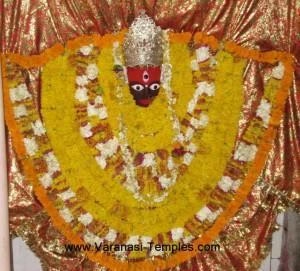
The Chamunda Devi Temple in Varanasi is dedicated to Chamunda, a fierce aspect of Goddess Durga. She is often depicted as a fearsome goddess with a terrifying gaze, adorned with a garland of skulls. In the context of Kashi (Varanasi), she serves as a Kshetra Rakshika (Guardian of the Region), protecting the sacred city from negative energies and malevolent forces.
Why Devotees Visit: The Phalaśruti
According to the Kashi Khand, Chapter 70 of the Skanda Purana, Chamunda Devi resides in the Hayagreeva Teerth, north of the famous Lolark Kund. She is often worshipped alongside Charma Munda Devi and Maha Munda Devi.
Specific Benefits (Phalaśruti) of Worship:
Devotees who offer sincere prayers to Chamunda Devi are believed to be blessed with:
- Wealth and Prosperity: Removal of financial obstacles.
- Health & Agricultural Success: Increased produce and freedom from diseases.
- Lineage Blessings: Fertility and the blessing of children and grandchildren.
- Cleansing Ancestral Karma: Performing rituals here is believed to pacify negative planetary influences.
2. Historical Origins & Scriptural Legend
Scriptural References
The existence of the temple is deeply rooted in the Skanda Purana and specifically the Kashi Khand. The text describes the manifestation of the Goddess to slay demons, protecting the sanctity of Kashi.
Local Legend (Sthala Purana)
Tradition holds that Chamunda Devi is located near Lolark Kund, a sun-worshipping site of immense antiquity. Locals refer to her by the name Mahishasura Mardini (Slayer of the Buffalo Demon) in this region. While specific dynastic construction records are unavailable in public archives (common for many ancient Kashi shrines), the energy of the site predates modern architectural documentation. The temple has undergone several renovations by local devotees over centuries to preserve its sanctity.
3. Architectural Marvels
As noted in heritage records, the temple features a distinct Dravidian architectural style. This is a unique inclusion in the predominantly North Indian (Nagara style) landscape of Varanasi, suggesting influence from the Vijayanagara era or later southern devotional migrations.
- Sanctum Sanctorum (Garbhagriha): The inner chamber houses the swayambhu (self-manifested) stone idol of Chamunda. The idol is typically carved with intricate details depicting the goddess with multiple arms holding weapons.
- Mandapa (Pillared Hall): The temple features a pillared hall for devotees to sit and chant mantras, decorated with motifs of sacred animals and deities.
- Shikhara (Spire): The spire follows the Dravidian tiered style, culminating in a sacred pot (Kalasha).
While the temple is not a UNESCO site, it stands as a significant piece of Varanasi’s living heritage.
4. Darshan & Ritual Logistics (2026)
Daily Darshan Timings
Based on standard Kashi temple schedules (subject to seasonal changes).
| Session | Timings |
|---|---|
| Morning Darshan | 05:00 AM – 12:00 PM |
| Afternoon Break | 12:00 PM – 03:00 PM |
| Evening Darshan | 03:00 PM – 10:00 PM |
| Aarti (Sandhya) | Approx 06:30 PM (Check locally) |
Key Sevas and Online Booking
Devotees can book specific rituals. While the temple may not have a dedicated portal, most Sevas in Varanasi are now managed through the centralized Kashi Vishwanath Corridor administration or local trusts.
- Abhishekam: Ritual bathing of the deity with milk, honey, and ghee. Best performed during morning hours.
- Chamunda Chalisa Path: Recitation of 40 verses dedicated to the Goddess.
- Deepam (Lamp Offering): Lighting of the Akhand Jyoti (Eternal Flame).
How to Book: Search for “Kashi Vishwanath Seva Portal” or contact the temple trust desk upon arrival. For 2026, mobile-based QR code bookings are expected to be standard.
Major Festivals in 2026
- Chaitra Navaratri: April 6 – April 14, 2026. This is the most significant time for the temple, marked by special Aartis and crowded processions.
- Shardiya Navaratri: September 22 – October 1, 2026. The temple is decorated with flowers and lights.
- Diwali: October 21, 2026. Special night-long darshans.
5. Practical Visitor Guidance
Rules & Etiquette
- Dress Code: Modest attire is mandatory. Men should wear dhotis or trousers (no shorts); women should wear sarees or full-length dresses.
- Photography: Strictly prohibited inside the sanctum sanctorum. Discretion is advised near the deity.
- Mobile Lockers: Since mobile phones are often restricted near the inner sanctum, devotees are advised to use lockers provided by the temple or keep items in their vehicles.
Crowd Management & Best Hours
- Best Time to Visit: Early morning (5:00 AM – 7:00 AM) or late evening (8:00 PM onwards).
- Avoid: 10:00 AM – 12:00 PM and 4:00 PM – 6:00 PM, especially on Tuesdays and Saturdays.
- Seasonal Advice: Varanasi summers (May–June) are intense. Carry a water bottle and cover your head while queuing. Winters (Dec–Jan) are pleasant but foggy.
Accessibility
The temple is located near Lolark Kund. While the entrance is accessible, the narrow lanes of Varanasi can be challenging for wheelchair users. It is advisable to hire a rickshaw to drop you as close as possible to the temple entrance.
6. Pilgrimage Connectivity
How to Reach
- By Air: Lal Bahadur Shastri International Airport (LBS) is located approximately 25 km away. Taxis and E-rickshaws are available.
- By Rail: Varanasi Junction (BSB) is the main railway station, about 6-7 km from the temple. Mughalsarai Junction (MBS) is also nearby.
- By Road: The temple is accessible via the Varanasi-Allahabad Highway (NH 19). Auto-rickshaws and e-rickshaws are the most convenient mode for the final mile.
Nearby Sacred Sites (Pilgrimage Circuit)
- Lolark Kund: Located very close to Chamunda Devi Temple. It is one of the oldest sun worship ponds in India.
- Kashi Vishwanath Temple: The main Jyotirlinga is approximately 3-4 km away. Pilgrims often visit the Guardian Deity (Chamunda) before proceeding to the main shrine.
- Manikarnika Ghat: The holy cremation ground dedicated to Goddess Kali, enhancing the Tantric significance of the area.
7. Frequently Asked Questions (FAQ)
Is there a VIP darshan entry?
While there is no formal VIP entry like at Tirupati, local priests can sometimes facilitate a quicker darshan for a small donation. However, during Navaratri, all devotees are treated equally in the queue system.
What are the contact details for the temple?
Specific phone numbers for this small shrine are often unavailable. For general inquiries in Varanasi, you may contact the Kashi Vishwanath Temple Trust office.
Is photography allowed inside the temple?
Photography is strictly prohibited inside the inner sanctum. Please respect the sanctity of the space.
How far is the temple from Kashi Vishwanath?
It is approximately 3 km from Kashi Vishwanath. An auto-rickshaw ride takes about 15–20 minutes depending on traffic.
Can I perform Shradh rituals here?
Yes, Chamunda Devi is associated with removing ancestral curses. Devotees often perform Shradh and Tarpan near the adjacent Lolark Kund after worshipping here.
Photo Gallery
How to Reach:
This Devi is known by the name of Mahishasura Mardini near Lolark Kund, which is quite famous. People can travel upto this place in rickshaw as this temple is well known.
Recent Posts

Shri Kaamkoteeshwar Mandir, Varanasi – History & Significance
In the heart of Kashi, the eternal city of Lord Shiva, where the Ganges flows with celestial grace, stands the Shri Kaamkoteeshwar Mandir. This sacred Sannidhi is not merely a temple but a profound spiritual bridge between the Northern…

ओ सांवरे तूने ही मुझको संभाला – Lyrics & Meaning
ओ सांवरे तूने ही मुझको संभाला – A Prayer to Shyam Origin & Spiritual Essence Why This Bhajan Resonates Devotees chant this when overwhelmed by life’s storms—the refrain ‘तूने ही मुझको संभाला’ is the soul’s sigh of relief: “You…

कथा ये है महाराज मेरे की – Lyrics & Meaning
कथा ये है महाराज मेरे की छत्रपति संभाजी महाराज – A Prayer to Chhatrapati Sambhaji Maharaj Origin & Spiritual Essence Why This Bhajan Resonates Devotees chant this when their spirit feels tested—its powerful refrain “महाराज मेरे” is a soul’s…

Rigveda Samhita Yathartha Anuvada (ऋग्वेद संहिता यथार्थ अनुवाद) – Complete Set with Anvayartha & Hindi/English Translation
The Rigveda is the oldest surviving scripture of humanity and the foundational text of Sanātana Dharma. For serious students, scholars, UPSC aspirants studying ancient Indian history, Sanskrit learners, and spiritual seekers, a precise and grammatically structured translation is indispensable.…

आना भी अकेला है जाना भी अकेला है – Lyrics & Meaning | BharatTemples
आना भी अकेला है जाना भी अकेला है – A Prayer to the Divine Witness Origin & Spiritual Essence Why This Bhajan Resonates Devotees turn to this bhajan in moments of deep reflection—when life’s attachments begin to ache. The…

माता शेरावाली के द्वार जो भी जाता है – Lyrics & Meaning
माता शेरावाली के द्वार जो भी जाता है – A Prayer to Maa Sherawali Origin & Spiritual Essence Why This Bhajan Resonates Devotees turn to this bhajan in times of fear or uncertainty—its promise that no one leaves Maa’s…

मार लेना सपणी उबार लेणा भवरा – Lyrics & Meaning
मार लेना सपणी उबार लेणा भवरा – A Prayer to the Divine Beloved Origin & Spiritual Essence Why This Bhajan Resonates Devotees chant this in moments of deep vulnerability—its cry of “मार लेना सपणी, उबार लेणा भवरा” is the…

हमें श्याम सुंदर भरोसा तुम्हारा – Lyrics & Meaning
हमें श्याम सुंदर भरोसा तुम्हारा – A Prayer to Shyam Sundar Origin & Spiritual Essence Why This Bhajan Resonates Devotees chant this when feeling alone—its refrain ‘de do sahara’ is the soul’s cry for divine support. Lyrics in Hindi…

Mere Satguru Ne Di Thi Davai Lyrics in Hindi & Meaning
Mere Satguru Ne Di Thi Davai: Invoking the Guru’s Liberating Wisdom This soul-stirring bhajan venerates the Satguru (True Spiritual Master) as the divine physician who dispenses the only remedy for life’s deepest sufferings. Composed by Sant Karmaveer Tufani, it…

Janm Diyo Thari Maa Dukh Dekhiyo Lyrics in Hindi & Meaning
जन्म दियो थारी माँ दुख देखियो (Maa’s Grief Upon Birthing You) This soul-stirring Chetavani Bhajan (admonitory hymn) is addressed to the Divine Mother (Maa) – a call for repentance when children forget their filial duties in the dark age…