
Contents
- 1 Omkareshwar Temple, Varanasi: A Definitive Pilgrimage Guide
- 2 Photo Gallery
- 3 How to Reach
- 4 Contact Details
Omkareshwar Temple, Varanasi: A Definitive Pilgrimage Guide
Omkareshwar Temple in Varanasi stands as a monumental pillar within the spiritual landscape of Kashi. Believed to be the abode of the Shiva Panchayatan, this sacred shrine is deeply embedded in the scriptures of the Kashi Khand. For the devoted pilgrim, a visit here is not merely a ritual but a step toward understanding the cosmic resonance of the primordial sound “Om.”
| Date built: | – |
|---|---|
| Deity: | Omkareshwar |
| Architectural style: | Dravidian architecture |
| Major festivals | Mahashivratri |
| Locale: | Varanasi |
| District:: | Varanasi |
| Address: | – |
| Phone | – |
1. Introduction & Spiritual Essence
The primary deity of this temple is Lord Omkareshwar, a manifestation of Lord Shiva. The name translates to “The Lord of Om.” In the local dialect, this form is also sometimes reverently referred to as Kapileshwar or Nadeshwar by the locals. The Shiva Lingam here is considered Swayambhu (self-manifested) or divinely ordained, representing the cosmic sound “Om.”
Phalaśruti: The Benefits of Darshan
According to the sacred texts, the spiritual benefits of worshipping at this specific shrine are immeasurable:
- Freedom from Samsara: It is believed that a devotee who takes a holy dip in the nearby Matsyodari Teerth and worships Omkareshwar is freed from the fear of rebirth.
- Equivalence to Ashwamedha Yagna: Scriptures suggest that worshipping here yields the same spiritual merit as performing the grand Ashwamedha Yagna.
- Ancestral Liberation: It is said that the ancestors of a devotee praying here attain eternal peace (Moksha).
- Rudra Japam: One visit is equated to the recitation of one lakh Rudra Japams.
2. Historical Origins & Scriptural Legend
The history of Omkareshwar Temple is not merely recorded in stone but inscribed in the divine narrative of the Kashi Khand (Chapter 73) of the Skanda Purana.
The Legend of Lord Brahma
According to Kashi Khand, once Lord Brahma undertook severe penance for several years. His tapasya was so intense that a mighty force erupted from beneath the earth, piercing the ground and radiating divine light. This energy assumed the form of a divine Lingam. Lord Brahma witnessed a manifestation of energy comprising the three Vedas (Rig, Yajur, Sama) and the sounds of Akaar, Ukaar, and Makaar.
Legend holds that Lord Brahma visualized a creature with four horns and seven hands, encompassing the five Brahmas. Pleased with Brahma’s devotion, Lord Shiva appeared and granted a boon. At Brahma’s request, Lord Shiva agreed to reside eternally within the Lingam, which was named Omkareshwar. This Lingam is part of the Shiva Panchayatan, originally consisting of five Lings: Akaareshwar, Omkareshwar, Makaareshwar, Naadeshwar, and Bindu Ling. Today, three remain prominent, with Omkareshwar holding the central place of worship.
3. Architectural Marvels
The temple architecture reflects the Dravidian style, characterized by its towering pyramidal roofs and intricate carvings common in South Indian temple design. Within the ancient city of Varanasi, this style stands out as a testament to the architectural diversity of the region.
Vastu Shastra and Layout
The temple complex is designed according to Vastu principles, ensuring the flow of positive energy toward the sanctum sanctorum (Garbhagriha). The Shikhara (spire) is not overtly towering in the Nagara style but follows the Dravidian tiered structure.
Inside, the sanctum is dimly lit, focusing the devotee’s attention on the self-manifested Lingam. The walls bear carvings that narrate the story of the Kashi Khand, though the structure has seen many renovations over the centuries. The flooring is of traditional stone, worn smooth by centuries of prostrating devotees.
4. Darshan & Ritual Logistics
To ensure a seamless spiritual experience, we recommend checking the timings and booking rituals in advance. As we move through 2026, the temple continues to adhere to traditional timings, with seasonal variations.
Daily Timings
| Session | Timings |
|---|---|
| Morning Darshan | 05:00 AM – 12:00 PM |
| Afternoon Break | 12:00 PM – 4:00 PM |
| Evening Darshan | 4:00 PM – 10:00 PM |
| Aarti Times | Morning (6:00 AM) | Sandhya (7:00 PM) |
Key Sevas and Booking
- Abhishekam: Performed daily between 7:00 AM and 9:00 AM. Materials include milk, honey, ghee, and sacred ashes (Vibhuti).
- Rudrabhishek: Highly recommended for specific blessings. Can be booked via the Varanasi temple committee portals.
- Archana: Individual offering of flowers and Bilva leaves.
Note for 2026: Online booking is integrated with the Varanasi Devotee Pass system. Early booking is essential for festival days.
Upcoming 2026 Festival Dates
- Maha Shivaratri: March 7, 2026 (Major celebrations, night-long vigil).
- Shravan Mondays: July 14, 21, 28 & August 4, 2026 (Peak pilgrimage season).
- Pradosh Vrat: 14th & 29th of every month.
5. Practical Visitor Guidance
Visiting the Omkareshwar Temple requires preparation to respect both the sanctity of the site and the logistical realities of a crowded holy city.
Rules & Regulations
- Dress Code: Traditional attire is mandatory. Men should wear Dhoti or Kurta-Pajama; women should wear Saree or Salwar Kameez. Western clothing is strictly prohibited inside the sanctum.
- Photography: Photography is prohibited inside the inner sanctum and during Aarti. You may photograph the outer architecture and courtyard.
- Mobile Lockers: Electronic devices (cameras, phones) must be deposited at the free locker facility located near the main entrance. Do not carry them past the security checks.
- Accessibility: The inner temple has steep steps. Elders and those with mobility issues can request a wheelchair for the outer premises, though the sanctum may require assistance.
Crowd Management Strategy
To avoid the heavy rush typical of Varanasi temples:
- Best Time to Visit: 5:00 AM (opening) or after 8:00 PM (closing).
- Seasonal Advice: During May and June, temperatures in Varanasi can exceed 40°C. Carry a water bottle (plastic is banned, use steel/eco-friendly bottles) and wear a head covering.
6. Pilgrimage Connectivity
Omkareshwar Temple is located in the heart of the old city (Godaulia area), making access tricky for large vehicles.
How to Reach
- Nearest Airport: Lal Bahadur Shastri International Airport (LBS) (Approx. 25 km). Taxis and e-rickshaws are available to Godaulia.
- Nearest Railway Station: Varanasi Junction (BSB) (Approx. 5 km). Note: Auto-rickshaws should drop you at Godaulia or Machhodari; the final leg is on foot.
- Walking Route: From Machhodari, pass Trilochan Police Chowki and take the left turn into Pathani Tola. The temple is located at A-33/23.
Nearby Sacred Sites
Complete your circuit by visiting these nearby shrines:
- Kashi Vishwanath Temple (New): Just a 10-minute walk from Omkareshwar.
- Maa Durga Temple (Durga Kund): Located approx. 2 km south; famous for its red hue and Monkey population.
- Sankat Mochan Hanuman Temple: Located 3 km away on the Assi Ghat road.
Photo Gallery
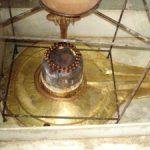
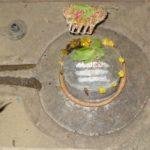
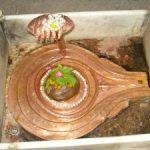
7. Frequently Asked Questions (FAQs)
1. Is there a VIP darshan entry at Omkareshwar Temple?
Yes, a limited VIP entry system is available for elderly citizens and differently-abled pilgrims. However, during peak festivals like Mahashivratri, entry is general to maintain crowd order.
The most famous Omkareshwar Temple is located on an island (Mandhata) in the Narmada River. The Varanasi temple shares the deity name and the scriptural connection to the Kashi Khand, serving as the Kashi abode for this form of Shiva.
3. What are the Online Seva Booking options?
Devotees can book Sevas such as Abhishek and Rudrabhishek via the official Varanasi Municipal Corporation or Shri Kashi Vishwanath Temple Trust websites. Select “Omkareshwar Temple” from the list of sub-shrines.
4. Is the temple open on non-festival days?
Yes, the temple remains open 365 days a year, adhering to the daily timings mentioned above.
5. Where is Matsyodari Teerth?
According to Kashi Khand, the temple is situated on the banks of Matsyodari Teerth. Over centuries, the water body has dried up or been covered by the local settlement of Machhodari, but the spiritual significance of the site remains intact.
How to Reach
Omkareshwar temple is located at A-33/23, Pathani Tola, North of Machhodari. Matsyodari Teerth as mentioned in Kashi Khand has dried up now and the locality is known as Macchodari. The temple is approachable from a famous locality called Machhodari and if a devotee travels through the left of Machhodari, he will come across Trilochan Police Chowki after which he will take a left turn to reach Omkareshwar.
Contact Details
Official Address
Recent Posts

Shri Kaamkoteeshwar Mandir, Varanasi – History & Significance
In the heart of Kashi, the eternal city of Lord Shiva, where the Ganges flows with celestial grace, stands the Shri Kaamkoteeshwar Mandir. This sacred Sannidhi is not merely a temple but a profound spiritual bridge between the Northern…

ओ सांवरे तूने ही मुझको संभाला – Lyrics & Meaning
ओ सांवरे तूने ही मुझको संभाला – A Prayer to Shyam Origin & Spiritual Essence Why This Bhajan Resonates Devotees chant this when overwhelmed by life’s storms—the refrain ‘तूने ही मुझको संभाला’ is the soul’s sigh of relief: “You…

कथा ये है महाराज मेरे की – Lyrics & Meaning
कथा ये है महाराज मेरे की छत्रपति संभाजी महाराज – A Prayer to Chhatrapati Sambhaji Maharaj Origin & Spiritual Essence Why This Bhajan Resonates Devotees chant this when their spirit feels tested—its powerful refrain “महाराज मेरे” is a soul’s…

Rigveda Samhita Yathartha Anuvada (ऋग्वेद संहिता यथार्थ अनुवाद) – Complete Set with Anvayartha & Hindi/English Translation
The Rigveda is the oldest surviving scripture of humanity and the foundational text of Sanātana Dharma. For serious students, scholars, UPSC aspirants studying ancient Indian history, Sanskrit learners, and spiritual seekers, a precise and grammatically structured translation is indispensable.…

आना भी अकेला है जाना भी अकेला है – Lyrics & Meaning | BharatTemples
आना भी अकेला है जाना भी अकेला है – A Prayer to the Divine Witness Origin & Spiritual Essence Why This Bhajan Resonates Devotees turn to this bhajan in moments of deep reflection—when life’s attachments begin to ache. The…

माता शेरावाली के द्वार जो भी जाता है – Lyrics & Meaning
माता शेरावाली के द्वार जो भी जाता है – A Prayer to Maa Sherawali Origin & Spiritual Essence Why This Bhajan Resonates Devotees turn to this bhajan in times of fear or uncertainty—its promise that no one leaves Maa’s…

मार लेना सपणी उबार लेणा भवरा – Lyrics & Meaning
मार लेना सपणी उबार लेणा भवरा – A Prayer to the Divine Beloved Origin & Spiritual Essence Why This Bhajan Resonates Devotees chant this in moments of deep vulnerability—its cry of “मार लेना सपणी, उबार लेणा भवरा” is the…

हमें श्याम सुंदर भरोसा तुम्हारा – Lyrics & Meaning
हमें श्याम सुंदर भरोसा तुम्हारा – A Prayer to Shyam Sundar Origin & Spiritual Essence Why This Bhajan Resonates Devotees chant this when feeling alone—its refrain ‘de do sahara’ is the soul’s cry for divine support. Lyrics in Hindi…

Mere Satguru Ne Di Thi Davai Lyrics in Hindi & Meaning
Mere Satguru Ne Di Thi Davai: Invoking the Guru’s Liberating Wisdom This soul-stirring bhajan venerates the Satguru (True Spiritual Master) as the divine physician who dispenses the only remedy for life’s deepest sufferings. Composed by Sant Karmaveer Tufani, it…

Janm Diyo Thari Maa Dukh Dekhiyo Lyrics in Hindi & Meaning
जन्म दियो थारी माँ दुख देखियो (Maa’s Grief Upon Birthing You) This soul-stirring Chetavani Bhajan (admonitory hymn) is addressed to the Divine Mother (Maa) – a call for repentance when children forget their filial duties in the dark age…