
Contents
- 1 Aadhi Kesava Perumal Temple, Vada Madurai: A Definitive Pilgrimage Guide
Aadhi Kesava Perumal Temple, Vada Madurai: A Definitive Pilgrimage Guide
As we approach 2026, the quest for spiritual rejuvenation brings pilgrims to the sacred lands of Thiruvallur district. Among the hidden architectural jewels of Tamil Nadu stands the Aadhi Kesava Perumal Temple in Vada Madurai. This guide is meticulously crafted for the modern devotee, blending ancient Agama traditions with practical logistics, ensuring your visit is both spiritually fulfilling and seamlessly planned.
1. Introduction & Spiritual Essence
Primary Deity and Form
The temple is dedicated to Aadhi Kesava Perumal (Lord Vishnu), who enshrines the sanctum in a Swayambhu (self-manifested) form. Unlike typical icons carved by human hands, the deity here is believed to have emerged naturally from the earth, enhancing its mystical potency. The Lord is flanked by His consorts, Sri Devi and Bhoo Devi, in the sanctum.
Phalaśruti: Why Devotees Visit
According to scriptural acclaim (Phalaśruti), worshipping Aadhi Kesava Perumal offers profound benefits:
- Ancestral Liberation: It is believed that performing Shraddha rituals or offering prayers here helps cleanse Pitru Dosha (ancestral karma), liberating forefathers.
- Mental Clarity: As the presiding deity is linked to Lord Rama, devotees seeking clarity in decision-making and relief from Rahu-Ketu afflictions find solace here.
- Marital Harmony: The presence of Vedavalli Thayar (the Goddess) is known to bless devotees with harmonious marital lives.
2. Historical Origins & Scriptural Legend
Chola Dynasty Patronage
According to temple records and epigraphy, the temple was constructed by the Great Chozha King Rajendra Chola I (also known as Gangai Konda Chozhan) in the 11th century CE. Historical inscriptions found on the temple walls detail his victory over the Kosala kingdom (modern-day North India). To commemorate this triumph, he installed the idol of Vadivazhagiya Rama (an aspect of Lord Rama), which initially dominated the temple’s identity before the focus shifted to Aadhi Kesava.
Local Legend (Sthala Purana)
Tradition holds that King Rajendra Chola, returning from his northern campaigns, camped in Vada Madurai. He dreamt of a Swayambhu idol buried in the sand. Upon excavation, the idol of Aadhi Kesava Perumal was revealed. The temple stands as a testament to the Chola-Pallava synthesis, evidenced by the five distinct Rajasimha sculptures at the entrance—a hallmark of Pallava artistry.
3. Architectural Marvels
Dravidian Style & Vastu
The temple showcases classic Dravidian architecture. Unlike later temple complexes, this structure adheres to early Chola Vastu principles, focusing on horizontal expansiveness rather than extreme verticality. The Garbhagriha (sanctum) is aligned eastwards, allowing the first rays of the sun to illuminate the deity.
Notable Features
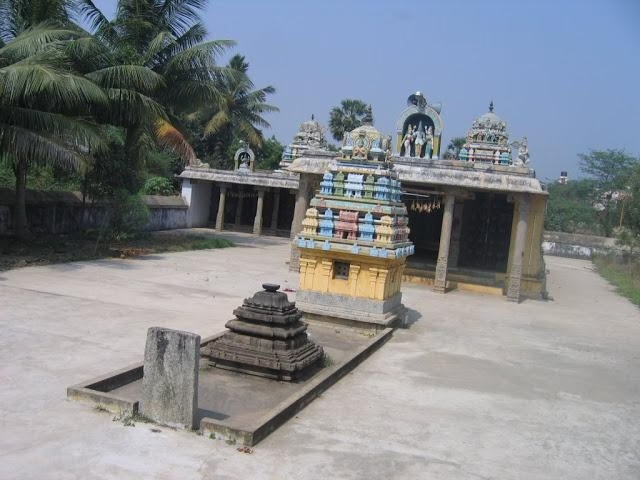
- The Mottai Gopuram: The temple entrance lacks the towering Rajagopuram seen in larger temples. It features a unique, unfinished dome-like structure known as the Mottai Gopuram, a rare architectural signature in Tamil Nadu.
- Garuda Sannidhi: A distinct three-tiered Garuda shrine stands tall in the prakaram (corridor).
- Stone Sculptures: The Mandapa ceilings and pillars are adorned with intricate carvings depicting scenes from the Ramayana—specifically the battle between Rama and Ravana, and the encounter with Sita, Lakshmana, and Hanuman.
- Sanctum Vimanam: The Vimana (tower above the sanctum) is decorated with colorful panels illustrating the Dashavatara (ten incarnations) of Vishnu.
Note: The temple underwent a significant renovation in 2001, preserving these ancient sculptures while strengthening the structure.
4. Darshan & Ritual Logistics (2026 Guide)
Daily Timings
Based on the latest Agama schedules, the temple remains open during the following hours:
| Session | Timing |
|---|---|
| Morning Darshan | 06:30 AM – 12:00 PM |
| Afternoon Break | 12:00 PM – 05:00 PM |
| Evening Darshan | 05:00 PM – 08:00 PM |
Key Sevas and 2026 Festival Calendar
While online booking infrastructure varies for smaller Chola-era temples compared to mega-shrines, most Sevas can be booked at the temple office upon arrival. For 2026, plan your visit around these major events:
- Rama Navami: April 6, 2026 (Grand Kalyana Utsavam – Celestial Wedding of Rama).
- Vaikunta Ekadashi: December 29, 2026 (Special Thirukalyana Utsavam).
- Puratasi Saturday: Occurring monthly (September–October 2026) with special Vishwaroopa Darshan.
- Karthigai Deepam: November 16, 2026.
Available Sevas: Abhishekam (Sacred Bath), Archana (Recitation of Names), and Thirumanjanam. Devotees can inquire about online seva booking via the local temple administration office or designated Tamil Nadu HR&CE portals closer to the festival dates.
5. Practical Visitor Guidance
Code of Conduct & Dress Code
To maintain the sanctity of this heritage site, devotees are expected to dress modestly. Traditional attire (Dhoti/Saree) is highly recommended. Men should avoid wearing shirts within the inner sanctum; a bare torso is customary while offering prayers.
Photography & Lockers
- Photography: Strictly prohibited inside the Garbhagriha and near the sanctum. Photography is allowed in the outer Prakaram for non-commercial purposes.
- Electronic Devices: Mobile phones should be kept on silent. Lockers are generally not available on-site; it is advisable to carry minimal belongings.
- Accessibility: The temple has a raised threshold. Wheelchair access is limited to the outer corridors; assistance may be required for the sanctum.
Crowd Management & Seasonality
As Vada Madurai is a village setting, crowds are generally manageable. However:
- Best Hours: Weekday mornings (07:00 AM – 08:30 AM) offer the most serene darshan.
- Seasonal Advice: During the summer months (April–June), carry a water bottle and an umbrella. The open corridors are airy, but the stone floors retain heat.
6. Pilgrimage Connectivity
How to Reach Vada Madurai
The temple is strategically located near the Chennai–Tirupati corridor.
- By Road: Located 300 meters from the Vada Madurai Bus Stop. From Chennai, take NH 716 towards Thiruvallur. Turn right at Thamaraipakkam Junction towards Periyapalayam. Vada Madurai is 3.5 km before Periyapalayam.
- By Rail: The nearest major railway station is Thiruvallur (28 km). Local trains from Chennai Central to Tiruvallur are available.
- By Air: Chennai International Airport (MAA) is approximately 54 km away.
Nearby Sacred Sites (Pilgrimage Circuit)
Maximize your spiritual journey by visiting these nearby locations:
- Periyapalayam Sri Kanyaka Parameswari Temple: Located 3.5 km away. A powerful center for Shakti worship.
- Agastheeswarar Temple: Located directly opposite the Aadhi Kesava Perumal Temple. A Shiva shrine dedicated to Agastya, completing the Shaiva-Vaishnava duality of the village.
- Vengal Venugopala Swamy Temple: 6 km away. A beautiful Chola temple known for its distinct architecture.
7. Frequently Asked Questions (FAQ)
1. Is there a VIP darshan entry at Aadhi Kesava Perumal Temple?
Being a heritage site managed by the Tamil Nadu HR&CE, there is no formal VIP or paid darshan quota. However, visiting during non-peak hours (early morning) allows for a relaxed darshan similar to a VIP experience.
2. What is the significance of the ‘Mottai Gopuram’?
The ‘Mottai Gopuram’ (bald tower) is a unique architectural feature where the gateway tower is lower and dome-shaped, lacking the ornate tiers typical of later Vijayanagara or Nayak period temples. It symbolizes the early Chola architectural aesthetic.
3. Can we perform Thirumanjanam for the deity personally?
While devotees can offer prayers and recite hymns, the actual Abhishekam (holy bath) is performed by the appointed Archakas (priests). Devotees can sponsor the Seva, and the priests will perform it on their behalf.
4. Is the temple open on all days?
Yes, the temple typically remains open daily. However, it is advisable to call the temple office (provided in the contact details) before visiting on major festival days or specific holidays.
5. Where can I find accommodation nearby?
Vada Madurai is a small village with limited lodging. For accommodation options, it is recommended to travel to Thiruvallur (28 km) or Redhills (25 km), where multiple lodges and guest houses are available.
Recent Posts

Shri Kaamkoteeshwar Mandir, Varanasi – History & Significance
In the heart of Kashi, the eternal city of Lord Shiva, where the Ganges flows with celestial grace, stands the Shri Kaamkoteeshwar Mandir. This sacred Sannidhi is not merely a temple but a profound spiritual bridge between the Northern…

ओ सांवरे तूने ही मुझको संभाला – Lyrics & Meaning
ओ सांवरे तूने ही मुझको संभाला – A Prayer to Shyam Origin & Spiritual Essence Why This Bhajan Resonates Devotees chant this when overwhelmed by life’s storms—the refrain ‘तूने ही मुझको संभाला’ is the soul’s sigh of relief: “You…

कथा ये है महाराज मेरे की – Lyrics & Meaning
कथा ये है महाराज मेरे की छत्रपति संभाजी महाराज – A Prayer to Chhatrapati Sambhaji Maharaj Origin & Spiritual Essence Why This Bhajan Resonates Devotees chant this when their spirit feels tested—its powerful refrain “महाराज मेरे” is a soul’s…

Rigveda Samhita Yathartha Anuvada (ऋग्वेद संहिता यथार्थ अनुवाद) – Complete Set with Anvayartha & Hindi/English Translation
The Rigveda is the oldest surviving scripture of humanity and the foundational text of Sanātana Dharma. For serious students, scholars, UPSC aspirants studying ancient Indian history, Sanskrit learners, and spiritual seekers, a precise and grammatically structured translation is indispensable.…

आना भी अकेला है जाना भी अकेला है – Lyrics & Meaning | BharatTemples
आना भी अकेला है जाना भी अकेला है – A Prayer to the Divine Witness Origin & Spiritual Essence Why This Bhajan Resonates Devotees turn to this bhajan in moments of deep reflection—when life’s attachments begin to ache. The…

माता शेरावाली के द्वार जो भी जाता है – Lyrics & Meaning
माता शेरावाली के द्वार जो भी जाता है – A Prayer to Maa Sherawali Origin & Spiritual Essence Why This Bhajan Resonates Devotees turn to this bhajan in times of fear or uncertainty—its promise that no one leaves Maa’s…

मार लेना सपणी उबार लेणा भवरा – Lyrics & Meaning
मार लेना सपणी उबार लेणा भवरा – A Prayer to the Divine Beloved Origin & Spiritual Essence Why This Bhajan Resonates Devotees chant this in moments of deep vulnerability—its cry of “मार लेना सपणी, उबार लेणा भवरा” is the…

हमें श्याम सुंदर भरोसा तुम्हारा – Lyrics & Meaning
हमें श्याम सुंदर भरोसा तुम्हारा – A Prayer to Shyam Sundar Origin & Spiritual Essence Why This Bhajan Resonates Devotees chant this when feeling alone—its refrain ‘de do sahara’ is the soul’s cry for divine support. Lyrics in Hindi…

Mere Satguru Ne Di Thi Davai Lyrics in Hindi & Meaning
Mere Satguru Ne Di Thi Davai: Invoking the Guru’s Liberating Wisdom This soul-stirring bhajan venerates the Satguru (True Spiritual Master) as the divine physician who dispenses the only remedy for life’s deepest sufferings. Composed by Sant Karmaveer Tufani, it…

Janm Diyo Thari Maa Dukh Dekhiyo Lyrics in Hindi & Meaning
जन्म दियो थारी माँ दुख देखियो (Maa’s Grief Upon Birthing You) This soul-stirring Chetavani Bhajan (admonitory hymn) is addressed to the Divine Mother (Maa) – a call for repentance when children forget their filial duties in the dark age…