Aami Mandir, Saran: History of Maa Ambika Bhawani & Darshan Timings

Receive daily temple updates, divine darshan, and morning bhajans directly on WhatsApp.
Contents
- 1 Aami Mandir: The Eternal Abode of Maa Ambika Bhawani in Saran, Bihar
- 1.1 1. Introduction & Spiritual Essence
- 1.2 2. Historical Origins & Scriptural Legend
- 1.3 3. Architectural Marvels
- 1.4 4. Darshan & Ritual Logistics
- 1.5 5. Practical Visitor Guidance
- 1.6 6. Pilgrimage Connectivity
- 1.7 7. Frequently Asked Questions (FAQ)
- 1.8 Architecture
- 1.9 Legend / Local stories
- 1.10 Photo Gallery
- 1.11 How to Reach:
- 1.12 Contact Details
Aami Mandir: The Eternal Abode of Maa Ambika Bhawani in Saran, Bihar
Nestled in the serene landscape of the Dighwara region in Saran district, the Aami Mandir, also revered as Maa Ambika Sthan, stands as a timeless testament to devotion. This sacred shrine is dedicated to Maa Ambika Bhawani, the presiding deity who embodies the supreme cosmic energy (Adi Parashakti). Whether worshipped as Parvati, Gauri, or Durga, the Goddess here is believed to be the granter of all boons, drawing devotees from across Bihar and beyond.
For the devotee, Aami Mandir is not merely a structure of stone; it is a living spiritual center where the divine feminine energy manifests to cleanse ancestral karma and fulfill heartfelt wishes.
1. Introduction & Spiritual Essence
The primary deity of the temple is Maa Ambika Bhawani. In the context of Hindu mythology, she represents the mild yet powerful aspect of Mahadevi. The temple is considered a potent Shakti Sthali where the Goddess listens to the sincere prayers of her devotees.
Phalaśruti (Spiritual Benefits):
According to local tradition and the beliefs of the pilgrims, visiting Aami Mandir brings specific spiritual benefits:
- Desire Fulfillment: It is widely believed that sincere worship at this altar results in the fulfillment of one’s wishes.
- Ancestral Cleansing: Rituals performed here, particularly during Navaratra, are said to pacify ancestors and cleanse negative karmic debts.
- Protection: As Maa Durga, she offers protection from external evils and internal turmoil.
2. Historical Origins & Scriptural Legend
The history of Aami Mandir is steeped in the mists of time and mythology.
Mythological Timeline:
According to temple records and local folklore, the site dates back to the Dwapara Yuga. While the exact century of the physical structure’s construction is difficult to pinpoint due to centuries of renovation, the spiritual energy of the site is described as timeless.
📖 Related: Mahadeva Temple, North Goa
The Legend of Dighwara
Tradition holds that the nearby town of Dighwara was originally named Dirgh-dwara (The Great Gate). This was historically the main entrance to the Yagna area (sacrificial ground) of King Daksha. It is in this sacred geography that the temple is situated, linking it directly to the great Puranic stories involving Lord Shiva and Sati.
The Mystery of the Well
Adjacent to the shrine lies a deep, wide well that, according to local belief, never dries up, regardless of the season. Furthermore, devotees observe a miraculous phenomenon during Yagna rituals: water offered by numerous devotees into the sacrificial fire (Kunda) appears to vanish, symbolizing the Goddess accepting the offering directly into her cosmic form.
3. Architectural Marvels
While specific architectural stylistics (Nagara or Dravida) are often blended in folk-built temples of this era, Aami Mandir represents the Indo-Bihar folk style of temple architecture.
Key Features:
- The Sanctum (Garbhagriha): The inner sanctum houses the deity in a form that invokes the primordial Shakti. The atmosphere inside is dimly lit, focusing all attention on the illuminated deity.
- The Courtyard: The temple complex includes a spacious courtyard and a garden, providing a peaceful environment for meditation.
- Sculptural Elements: Though largely functional, the temple walls feature carvings depicting various forms of the Goddess and floral motifs common in ancient Indian art.
- The Yagna Kunda: A permanent sacrificial altar situated within the complex, designed to accommodate large-scale fire rituals during major festivals.
4. Darshan & Ritual Logistics
To ensure a smooth spiritual journey, devotees are advised to plan their visit around the daily rituals and annual festivals.
Daily Darshan Timings (Estimated for 2026)
Please note: Timings may vary slightly based on seasonal changes and local temple committee announcements.
| Session | Timing | Ritual Details |
|---|---|---|
| Morning Darshan | 06:00 AM – 12:00 PM | Best time for peaceful darshan. Morning Aarti usually occurs at sunrise. |
| Afternoon Break | 12:00 PM – 03:00 PM | Temple sanctum may be closed for ritual cleaning and deity rest. |
| Evening Darshan | 04:00 PM – 08:00 PM | Includes Sandhya Aarti (Dusk Lamp Ceremony). |
Key Sevas & Online Booking
While traditional on-site booking is available, the temple administration is increasingly digitizing services for the convenience of pilgrims.
- Abhishekam (Ritual Bathing): Performed daily in the morning. Devotees can sponsor the Abhishekam with milk, honey, or ghee.
- Archana (Chanting): Personalized chanting of the Goddess’s 108 names.
- Online Seva Booking: Visit the official Bihar Temples Portal or the designated district administration website (Saran) to book specific Sevas in advance, especially during festivals.
2026 Festival Calendar
Aami Mandir is most vibrant during Navaratra and Durga Puja.
- Spring Navaratra: April 6 – April 14, 2026
- Aami Mela (Annual Fair): Dates align with the conclusion of Sharad Navaratra (October). Expect large crowds from October 1 – October 10, 2026.
- Sharad Navaratra: September 22 – October 1, 2026
- Maha Shivaratri: February 26, 2026 (Special night-long vigils).
📖 Related: Shri Rudreshwar Temple, North Goa
5. Practical Visitor Guidance
Ensuring your visit is comfortable allows you to focus entirely on your spiritual practice.
- Dress Code: Traditional Indian attire (Saree, Kurta-Pajama, Dhoti) is highly recommended. Modest clothing that covers shoulders and knees is mandatory. Avoid leather items inside the sanctum.
- Photography: Photography is generally restricted inside the inner sanctum. Filming may require prior permission from the Temple Secretary/Committee.
- Mobile Lockers: Due to security protocols, electronic items (mobiles, cameras) are often not allowed inside the main shrine. Security-managed lockers are usually available near the entrance.
- Crowd Management:
- Best Hours: Weekdays between 10:00 AM and 2:00 PM.
- Seasonal Advice: Summers (May-June) in Saran can be extremely hot. Carry a reusable water bottle, a hand fan, and wear light cotton clothes. Winters (Nov-Feb) are pleasant but mornings are foggy; check train schedules if traveling early.
6. Pilgrimage Connectivity
Aami Mandir is well-connected by road and rail, making it accessible for devotees from Patna, Muzaffarpur, and other parts of India.
How to Reach
- Nearest Railway Station: Dighwara Railway Station (Approx. 3 km from the temple). It is a stop for many passenger and express trains on the Barauni–Chhapra line.
- Nearest Major Junction: Chhapra Junction (Saran District HQ) or Patna Junction (approx. 50 km). From Patna, one can take NH 139 or NH 922 towards Chhapra/Dighwara.
- By Road: Buses and Taxis are available from Patna and Chhapra. The temple is located off the main Dighwara–Chhapra road.
Nearby Sacred Sites (Pilgrimage Circuit)
Extend your spiritual journey by visiting these nearby attractions in the Saran district:
- Maa Patan Devi Temple (Chhapra): Considered one of the 51 Shakti Peethas (located nearby in the district), revered as the site where the right shoulder of Goddess Sati fell.
- Kali Mata Temple (Chhapra): A prominent center for Shakti worship, especially active during Kali Puja.
- Sonepur Fair Grounds: Located across the Ganga (seasonal pilgrimage during Kartik Purnima).
7. Frequently Asked Questions (FAQ)
Is there a VIP or special darshan entry available?
Yes, the temple committee usually provides a special entry pass for elderly devotees and those with medical conditions. During peak festivals like Durga Puja, VIP passes may be issued by the district administration for security reasons, but these are limited.
What is the significance of the Aami Mela?
The Aami Mela is the annual fair held at the temple grounds, coinciding with the conclusion of Sharad Navaratra. It is a cultural hub where local artisans sell handicrafts, and community feasts (Bhandara) are organized.
Are there accommodation facilities near the temple?
Basic guest houses and Dharamshalas are available in Dighwara town (3 km away). For better facilities, hotels in Chhapra (15 km) or Patna (50 km) are recommended. It is advisable to book in advance during festival seasons.
📖 Related: Mahadev Temple Tambdi Surla: History, Darshan Timings & Complete Guide
Can I carry Prasad inside the temple?
Outside Prasad is generally not allowed inside the inner sanctum. However, the temple offers standard Prasad (Coconut, Sweets, Kalash) which can be purchased from the counters at the entrance.
Is the temple accessible for wheelchair users?
While the temple is ancient, efforts have been made to provide ramps for entry into the main complex. However, the inner sanctum might be difficult to access for wheelchair users due to narrow steps.
| Date built: | Dwapar Yuga |
|---|---|
| Deity: | Maa Ambika Bhawani |
| Architectural style: | – |
| Major festivals | Durga Puja, Aami Mela,Shivaratri |
| Locale: | Dighwara |
| District:: | saran |
| Address: | – |
| Phone | – |
Aami temple, also known as Maa Ambika Sthan is a temple, where the presiding deity is Maa Ambika Bhawani, also known as Parvati, Gauri, Durga, is a Hindu Goddess. She is the mild aspect of Mahadevi, who in Hindu mythology known as the great Goddess. The deity is considered to be the whole personification of Adi Parashakti, with all other deities being her manifestations or incarnations.This holy place is situated in Bihar’s Chapra District in the city Aami village. The name of the town is originated from the temple.
In the Ami village, there is an ancient place of worship, which is called ‘Amba Asthan’. Close to the shrine there is a garden along with a deep & wide well that remains filled with water throughout the year. The well never dries up according to people. The worshippers from far flung areas pay a visit to the Yagna Kunda over this place. The devotees come here to pay their reverence to Goddess in Navaratra of April & October. Water offered by numeral devotees in the Kunda gets disappeared.
There is a belief associated with the temple is that one who worships over here, his/her wishes get fulfilled by the Goddess. Hence in Dussehra, worshippers from different places gather here to obtain the divine blessing.There is also a small town around 3 km from Ambika Asthan, ‘Dighwara’. Previously it was supposed to be known as ‘Dirgh-dwara’, the main gate, which was the chief gate of King Daksh’s yagna area.
Architecture
Content placeholder for architectural details regarding the structural heritage and Vastu orientation of the Aami Mandir.
Legend / Local stories
Content placeholder for additional folklore and oral history regarding Maa Ambika Bhawani.
Photo Gallery

Aami Mandir, saran, Bihar
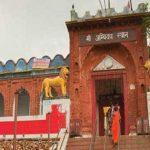
THE-STORY-BEHIND-GODDESS-AMBA-OF1, Aami Mandir, saran, Bihar
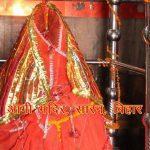
maxresdefault (17), Aami Mandir, saran, Bihar
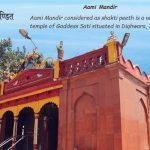
Aami-Mandir, Aami Mandir, saran, Bihar
How to Reach:
Content placeholder for specific map directions and transport logistics.
Contact Details
Official Address
For inquiries regarding the Aami Mandir, visitors are advised to contact the District Magistrate’s office in Saran (Chhapra) or the local Panchayat office in Dighwara.