
Contents
By Bharat Temples Heritage Team | Updated: January 2026
Introduction & Spiritual Essence
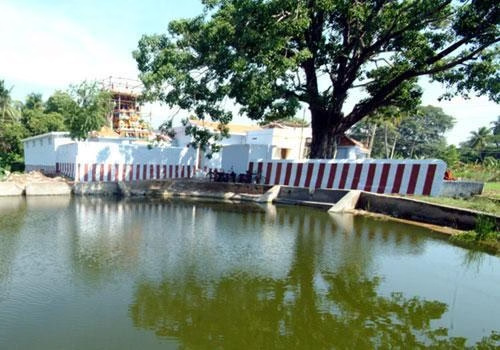
Nestled in the spiritual landscape of Kanyakumari district, the Adhisaya Sastha Temple in Suchindrum stands as a testament to unwavering faith and miraculous healings. This ancient shrine is dedicated to Lord Sastha, a primordial form of Lord Ayyappa, revered as the protector of Dharma and the remover of obstacles. Locally, the presiding deity is affectionately known as Anjanam Thadavia Kandan—the Lord who applies kajal (collyrium) to the eyes of his devotees.
Unlike the usual standing posture of Sastha, the idol here is in a unique samabhanga pose with the right leg bent and left toe pressed to the ground, a form said to be found exclusively here. The primary Phalaśruti (benefit) of visiting this temple is the healing of eye ailments and the restoration of vision. Furthermore, the sacred Yaga Gunda Theertham situated within the premises is believed to cleanse ancestral karma and bestow peace upon lineage.
Historical Origins & Scriptural Legend
While the exact date of construction is lost to antiquity, temple records and local lore trace the origins to a time when devotees worshipped a self-manifested (Swayambhu) idol. Tradition holds that the temple was initially a small structure built by devotees who revered Sastha as their family deity.
The Legend of Anjanam Thadavia Kandan:
According to local narratives, a visually impaired devotee was lying in the temple, meditating on the Lord with his “mind’s eye.” In a divine vision, he felt someone gently apply kajal to his physical eyes. Miraculously, his vision was restored. This event established the unique identity of the deity as “Anjanam Thadavia Kandan” (The Lord who applies Kajal), a form of Lord Manikandan (Ayyappa).
The Legend of Yaga Gunda Theertham:
The temple’s theertham is intrinsically linked to the great sage Maharishi Athri and his wife, Anusuya. Tradition holds that the Trinity—Brahma, Vishnu, and Shiva—visited the hermitage disguised as ascetics to test Anusuya’s chastity. When asked to serve them naked, Anusuya transformed them into mere infants using the holy water from her husband’s foot-washing plate. Upon realizing her power, the Gods revealed their true forms. The spring created by the sage outside the temple is known as Yaga Gunda Theertham.
Architectural Marvels
The Adhisaya Sastha Temple showcases the grandeur of Dravidian architecture. The temple complex is designed according to Vastu Shastra, aligning the sanctum with cosmic energies.
Key Features:
– The Sanctum: The sanctum sanctorum (Garbhagriha) houses the unique idol of Sastha, adorned with a sacred thread and necklace, with curling hair beautifully dressed.
– Vahana Sculptures: In front of the shrine, devotees are greeted by impressive sculptures of the elephant and horse vahanas.
– Mandapas and Corridor: The temple features pillared mandapas where rituals are conducted. The corridor (Prakaram) houses shrines for Madan Thambiran, Bhoodathar, Vanniar, and other guardian deities.
– Flora: The Sthala Vriksham (sacred tree) is the Vilwa (Bilva) tree. Interestingly, the leaves here grow in bunches of three, five, and nine, symbolizing the Trinity and the forms of Vishnu.
Darshan & Ritual Logistics (2026 Schedule)
The temple follows a strict traditional schedule. It is noted that the temple remains open for a brief period in the morning and evening to facilitate intimate darshan.
| Session | Timing |
|---|---|
| Morning Darshan | 7:00 AM – 10:00 AM |
| Evening Darshan | 6:00 PM – 7:00 PM |
Note: Timings may vary during festival days. It is advisable to call the temple administration prior to travel.
Seva & Pooja Booking
Devotees suffering from eye-related issues or seeking blessings for prosperity can perform specific Sevas.
- Abhishekam: Performed with milk, honey, and sandalwood paste.
- Archana: Recitation of holy hymns dedicated to Lord Sastha.
- Offerings: Devotees traditionally offer Vastras (clothes) and light ghee lamps.
Online Booking: While historical temples are often catching up with digital systems, bookings for special sevas can currently be managed via the Executive Officer at the temple counter or by calling the provided contact numbers. (Check the Tamil Nadu HR&CE website for future online integrations).
Major Festivals in 2026
- Thai Poosam (January): A major festival celebrated with grandeur, particularly significant in the Kanyakumari region.
- Panguni Uthiram (March/April): This is the primary festival at Adhisaya Sastha Temple. On the 7th and 8th days of this Tamil month, the Lord gives a special procession riding the Horse Vahanam.
- Vishu (April): Celebrated as the Malayalam New Year with special poojas.
Practical Visitor Guidance
Dress Code & Etiquette
As with most Tamil Nadu temples, a strict dress code is enforced. Men must remove shirts and wear dhotis or formal trousers. Women are required to wear sarees, half-sarees, or churidars.
Photography & Lockers
Photography is generally prohibited inside the sanctum sanctorum. Mobile phones should be kept on silent mode. Some temples in the region provide mobile lockers, but it is recommended to carry minimal belongings. Leaving footwear at designated stands outside the temple is mandatory.
Crowd Management
- Best Time to Visit: The Morning Session (7:00 AM – 8:00 AM) is the least crowded and offers the most peaceful darshan.
- Seasonal Advice: Kanyakumari experiences heavy humidity in May and June. Pilgrims are advised to carry water bottles and wear light cotton clothing.
- Accessibility: The temple premises are accessible, though there are steps leading to the sanctum. Assistants are available for elderly devotees.
Pilgrimage Connectivity
How to Reach
The Adhisaya Sastha Temple is located in Suchindrum, approximately 500 meters from the Suchindram Bus Stand.
- By Air: The nearest airport is Trivandrum International Airport (Thiruvananthapuram), located about 80 km away. Taxis and buses are available from the airport to Nagercoil.
- By Rail: The nearest railway station is Nagercoil Junction, roughly 8 km from the temple. Auto-rickshaws and local buses are readily available.
- By Road: Suchindrum is well-connected via the NH-66 (formerly NH-47). It is situated 14 km from Kanyakumari and 8 km from Nagercoil.
Nearby Sacred Sites (Pilgrimage Circuit)
Visitors are encouraged to explore the nearby spiritual circuit:
- Sthanumalayan Temple (Suchindram): Located just a short walk away, this is a massive temple complex known for its towering gopurams and distinct architecture. It is unique as it houses a single idol representing the Trinity (Shiva, Vishnu, and Brahma).
- Kumari Amman Temple (Kanyakumari): Situated 14 km away, this is the abode of the Virgin Goddess Kanyakumari, facing the confluence of three oceans.
- Mutharamman Temple (Kulasekharam): Located about 12 km away, famous for its unique rituals and grand Navaratri celebrations.
Frequently Asked Questions (FAQ)
1. What is the significance of “Adhisaya” in the temple name?
“Adhisaya” translates to “Miracle” or “Wondrous.” The name stems from the miraculous recovery of a blind devotee who regained his eyesight after worshipping here. It signifies the temple’s potency in granting divine boons.
2. Is there a VIP Darshan or special entry available?
While the temple does not have a formal “VIP Darshan” system like the larger Murugan temples, devotees can perform Special Abhishekam or Archana, which allows them to enter the sanctum sanctorum closer to the deity during the ritual. Tickets for these can be purchased at the temple counter.
3. Can I visit the temple if I am non-vegetarian?
Yes, the temple is accessible to all devotees regardless of dietary habits. However, strict purity rituals are followed inside the temple. It is recommended to take a bath and wear clean clothes before visiting. Alcohol and smoking are strictly prohibited within the temple complex.
4. What is the unique feature of the Sastha idol here?
The idol of Adhisaya Sastha is unique across India. The Lord stands with his right leg bent and the left toe pressed against the ground, holding a club in his right hand. This specific posture is not found in other temples dedicated to Sastha or Ayyappa.
5. Are there accommodation facilities available in Suchindrum?
While there are limited lodges directly in Suchindrum, the nearby town of Nagercoil (8 km) offers numerous lodges and hotels ranging from budget to mid-range. For luxury stays, Kanyakumari (14 km) is recommended. The Tamil Nadu Tourism Development Corporation (TTDC) hotel in Kanyakumari is a good option.
Photo Gallery
Contact Details
Adhisaya Sastha Temple
Suchindrum, Kanyakumari District
Tamil Nadu, India
Mobile: +91 94434 94473 / 94430 02731
Recent Posts

ओ सांवरे तूने ही मुझको संभाला – Lyrics & Meaning
ओ सांवरे तूने ही मुझको संभाला – A Prayer to Shyam Origin & Spiritual Essence Why This Bhajan Resonates Devotees chant this when overwhelmed by life’s storms—the refrain ‘तूने ही मुझको संभाला’ is the soul’s sigh of relief: “You…

कथा ये है महाराज मेरे की – Lyrics & Meaning
कथा ये है महाराज मेरे की छत्रपति संभाजी महाराज – A Prayer to Chhatrapati Sambhaji Maharaj Origin & Spiritual Essence Why This Bhajan Resonates Devotees chant this when their spirit feels tested—its powerful refrain “महाराज मेरे” is a soul’s…

Rigveda Samhita Yathartha Anuvada (ऋग्वेद संहिता यथार्थ अनुवाद) – Complete Set with Anvayartha & Hindi/English Translation
The Rigveda is the oldest surviving scripture of humanity and the foundational text of Sanātana Dharma. For serious students, scholars, UPSC aspirants studying ancient Indian history, Sanskrit learners, and spiritual seekers, a precise and grammatically structured translation is indispensable.…

आना भी अकेला है जाना भी अकेला है – Lyrics & Meaning | BharatTemples
आना भी अकेला है जाना भी अकेला है – A Prayer to the Divine Witness Origin & Spiritual Essence Why This Bhajan Resonates Devotees turn to this bhajan in moments of deep reflection—when life’s attachments begin to ache. The…

माता शेरावाली के द्वार जो भी जाता है – Lyrics & Meaning
माता शेरावाली के द्वार जो भी जाता है – A Prayer to Maa Sherawali Origin & Spiritual Essence Why This Bhajan Resonates Devotees turn to this bhajan in times of fear or uncertainty—its promise that no one leaves Maa’s…

मार लेना सपणी उबार लेणा भवरा – Lyrics & Meaning
मार लेना सपणी उबार लेणा भवरा – A Prayer to the Divine Beloved Origin & Spiritual Essence Why This Bhajan Resonates Devotees chant this in moments of deep vulnerability—its cry of “मार लेना सपणी, उबार लेणा भवरा” is the…

हमें श्याम सुंदर भरोसा तुम्हारा – Lyrics & Meaning
हमें श्याम सुंदर भरोसा तुम्हारा – A Prayer to Shyam Sundar Origin & Spiritual Essence Why This Bhajan Resonates Devotees chant this when feeling alone—its refrain ‘de do sahara’ is the soul’s cry for divine support. Lyrics in Hindi…

Mere Satguru Ne Di Thi Davai Lyrics in Hindi & Meaning
Mere Satguru Ne Di Thi Davai: Invoking the Guru’s Liberating Wisdom This soul-stirring bhajan venerates the Satguru (True Spiritual Master) as the divine physician who dispenses the only remedy for life’s deepest sufferings. Composed by Sant Karmaveer Tufani, it…

Janm Diyo Thari Maa Dukh Dekhiyo Lyrics in Hindi & Meaning
जन्म दियो थारी माँ दुख देखियो (Maa’s Grief Upon Birthing You) This soul-stirring Chetavani Bhajan (admonitory hymn) is addressed to the Divine Mother (Maa) – a call for repentance when children forget their filial duties in the dark age…
Bhadi Sabha Mein Thane Manaun Lyrics in Hindi & Meaning
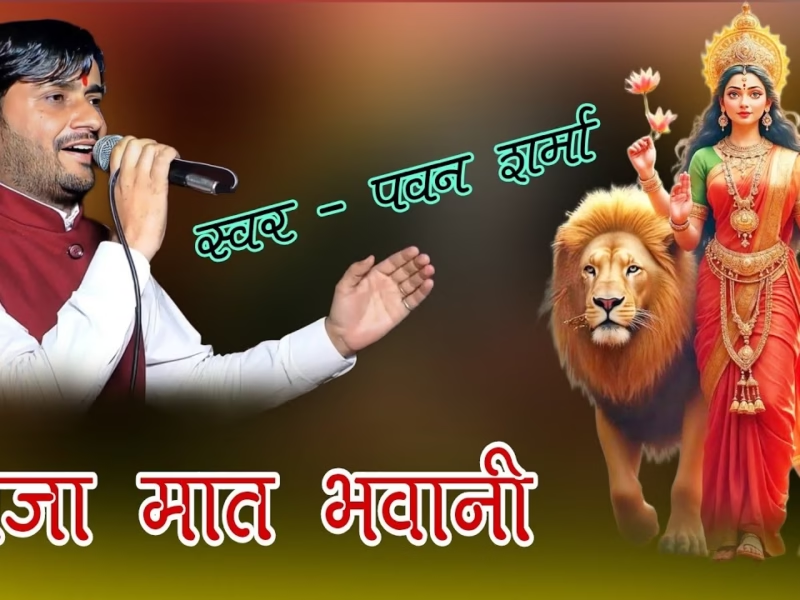
Bhadi Sabha Mein Thane Manaun: Invoking the Spear-Wielding Mother Mata Bhawani (श्री ज्वाला भवानी), the fiery manifestation of Shakti worshipped as the Protector of Dharma in Her Dhaulagarh sanctum. Origin & Spiritual Essence Composed in Rajasthani folk tradition by…