Adhisaya Vinayakar Mahadevar Temple, Keralapuram: History, Darshan Timings & Guide
Receive daily temple updates, divine darshan, and morning bhajans directly on WhatsApp.
Contents
- 1 Adhisaya Vinayakar Mahadevar Temple, Keralapuram: A Definitive Pilgrimage Guide
Adhisaya Vinayakar Mahadevar Temple, Keralapuram: A Definitive Pilgrimage Guide
Updated for 2026 Pilgrimage Season
Introduction & Spiritual Essence
Nestled in the tranquil village of Keralapuram in the Kanyakumari district of Tamil Nadu, the Adhisaya Vinayakar Mahadevar Temple stands as a testament to ancient faith and miraculous phenomena. While the complex houses a shrine for Lord Shiva (Mahadevar), the primary spiritual magnet is the Adhisaya Vinayakar—the Miracle Ganesha.
The Deity: The central deity is a Swayambhu (self-manifested) or ancient idol of Lord Ganesha, distinct for its unique chromatic property. It is a Murti carved from a dark stone that naturally changes color from black to white (and vice versa) every six months.
Phalaśruti (Spiritual Benefits): Devotees flock here for specific boons:
- Sakala Raja Karya Siddhi: Success in all endeavors and removing obstacles.
- Harmony & Offspring: It is believed that married couples wishing to conceive or seeking harmony in relationships find special grace here.
- Ancestral Cleansing: The connection to Rameshwaram and the legend of the idol washes away negative ancestral karma.
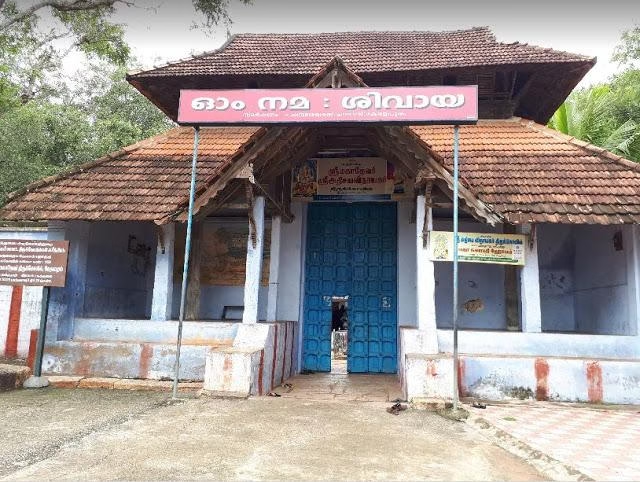
Adhisaya Vinayakar Temple (Mahadevar Temple) is a Hindu Temple Complex located in Keralapuram in Kanyakumari District of Tamilnadu. There are two temples inside the temple complex one for Lord Shiva and another is for Lord Ganesha. Although, it is primarily a Shiva temple, Importance is given to Lord Vinayaga. Though, the temple was built in the 12th century idols here are quite older than the temple.
Adhisaya Vinayakar Koyil’ literally translates to ‘Miracle Ganesha Temple’. Lord Vinayakar’s idol changes its color to black and white once in every six months. During Utharayana (March-June), the idol is black in color, and in Dakshiyana (July-Feb) idol turns to white. Hence this temple came to be known as ‘’Miracle Ganesh Temple. The Temple structure follows Kerala Style of Architecture.
Historical Origins & Scriptural Legend
The Legend of Rameshwaram
According to the Sthala Purana (local oral legend), a king ruling Keralapuram undertook a pilgrimage to Rameshwaram, the famous Shaivite temple on the Bay of Bengal. While washing his feet on the shore, an idol washed up at his feet. He gifted this idol to his counterpart, Sethu Mannan of Rameshwaram.
📖 Related: Viswanathar Navagraha Temple, Pazhur: History, Timings & Darshan Guide
Bound by dharma and hospitality, Sethu Mannan returned the idol, stating that the finder is its rightful guardian. He accompanied the return gift with a massive emerald idol. Later, during a Mogul invasion, the emerald idol became stuck in the ground and could not be looted; it remains a relic of history.
Construction & Renovations
According to temple records: The current structural complex dates back to the 12th Century, though the idol itself is believed by the priest to be over 2,300 years old. The temple underwent significant renovations over the centuries, incorporating elements of Agama Shastra into the later layouts.
Tradition holds: The idol was not installed using the standard Vedic rites but was placed on an elevated platform (Avudayar) under a massive Banyan tree, which has since become an integral part of the sanctum.
Architectural Marvels
Dravidian & Kerala Fusion
The temple complex is a fascinating blend of Dravidian and Kerala architectural styles, reflecting the geographical and cultural proximity to Kerala.
- The Sanctum: Unlike typical enclosed sanctums, the deity here is placed outside under the canopy of a historic Banyan tree, protected by an iron grid sliding door.
- Mandapas & Murals: The temple features a long passage adorned with magnificent ancient paintings on the walls, depicting stories from the Puranas.
- The Banyan Tree: This tree is a marvel in itself. Despite the tropical climate of Kanyakumari, its leaves fall during the Dakshiyana period (July–Feb) and sprout anew during Utharayana (March–June), synchronizing perfectly with the idol’s color change.
- Granite Carvings: At the base of the tree, there is a carved snake (Naga) made of granite, a common feature in Dravidian temples to appease subterranean energies.
📖 Related: Ranganathar Temple, Devadanam History & Darshan Timings: A Complete Guide
Darshan & Ritual Logistics
Note: Timings are based on the standard 2026 ritual cycle. Please verify locally during festivals.
Daily Darshan Timings
| Ritual | Morning | Evening |
|---|---|---|
| Temple Opening | 06:00 AM | 05:00 PM |
| Nirmalya Darshanam | 06:00 AM – 06:30 AM | 05:00 PM – 05:30 PM |
| Abhishekam (Sacred Bath) | 06:30 AM – 07:30 AM | 05:30 PM – 06:30 PM |
| Uchikala Pooja (Noon) | 11:30 AM – 12:30 PM | – |
| Closing | 12:30 PM | 08:00 PM |
Key Sevas & Online Booking
The temple administration facilitates both physical and digital bookings for major rituals. The primary Seva is the Abhishekam performed with coconut water, milk, and honey.
2026 Festival Calendar (Maha Utsavam)
- Navaratri: October 2 – October 11, 2026 (Special Abhishekams daily)
- Vinayaka Chaturthi: September 6, 2026 (Grand Procession)
- Pradosham: Bi-monthly (13th/28th of every month) – Evening 6:00 PM
- Aadi Perukku: July 28, 2026
How to Book: While physical tickets are available at the counter, it is advisable to book via the official Tamil Nadu HR&CE website (Arulmigu) portal or the nearest information center in Kanyakumari to avoid queues.
Practical Visitor Guidance
Rules & Regulations
- Dress Code: Traditional attire is mandatory. Men should wear Veshti (dhoti) or trousers with a shirt; women should wear saree, churidar, or full-length skirts. Avoid shorts and t-shirts.
- Photography: Photography is prohibited inside the inner sanctum (Garbhagriha). Photography in the outer corridors is permitted.
- Mobile/Storage: A locker facility is available near the entrance for electronic devices and bags (usually nominal fee).
- Accessibility: The temple is partially accessible. While the outer areas are paved, the sanctum involves climbing a few steps. The courtyard is sandy/gravel.
Crowd Management & Seasonal Advice
Best Hours to Visit: To witness the true serenity of the temple, visit between 7:00 AM and 9:00 AM or during the early evening hours (4:00 PM).
Seasonal Tips:
- Summer (April–June): The color change happens (Idol turns black). The heat can be intense; carry water and an umbrella.
- Monsoon (October–November): The region receives heavy rain. The temple grounds may be slippery; wear sturdy footwear.
📖 Related: Kari Krishna Perumal Temple: Thiruayarpadi History, Darshan Timings & Guide
Pilgrimage Connectivity
Keralapuram is well-connected by road, lying on the main artery of Kanyakumari district.
How to Reach
- By Air: The nearest airport is Trivandrum International Airport (TRV) in Kerala, located approximately 60 km (1.5 hours drive).
- By Rail: The closest railway junction is Eraniel (6 km). Nagercoil Junction (14 km) offers more connectivity to major cities like Chennai and Madurai.
- By Road: The temple is located just 1.5 km from Thuckalay on the NH-66 (formerly NH-44) highway. It is 40 km from Kanyakumari and 4 km from the historic Padmanabhapuram Fort.
Nearby Sacred Sites (Pilgrimage Circuit)
- Padmanabhapuram Palace: A stunning wooden palace and historical marvel (4 km).
- Thiruvithamcode Arulmigu Abirami Temple: A famous temple dedicated to Goddess Abirami, known for its association with the poet Thiruvalluvar (6 km).
- Kanyakumari Amman Temple: The southernmost tip of India, dedicated to Goddess Kanyakumari (38 km).
Frequently Asked Questions (FAQ)
1. Is there a VIP darshan entry available?
Yes, for a nominal donation fee (typically starting at ₹100), devotees can avail of “Special Darshan” tickets at the counter. This helps bypass the general queue, especially during weekends and festivals.
2. How old is the Adhisaya Vinayakar idol?
While the temple structure dates back to the 12th century, the priest and local traditions state that the idol is over 2,300 years old. It is an ancient archaeological treasure.
3. Can I perform the Abhishekam myself?
No, only temple priests (archakas) are permitted to touch the deity and perform the Abhishekam. Devotees can sponsor the ritual and witness it from the designated area.
4. Is the temple open on all days?
Generally, yes. However, the temple might close in the afternoon (12:30 PM to 5:00 PM). It is closed for a brief period during the Tamil month of Aadi for specific rituals (check local notices).
5. Where can I stay nearby?
Basic lodges are available in Thuckalay. For better amenities, Nagercoil (14 km) and Kanyakumari (40 km) have a wide range of hotels and budget guest houses.
Original Source: https://tamilnadu-favtourism.blogspot.com/2018/01/adhisaya-vinayakar-temple-mahadevar-temple-keralapuram-kanyakumari.html