

Contents
Introduction & Spiritual Essence
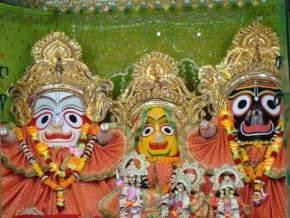
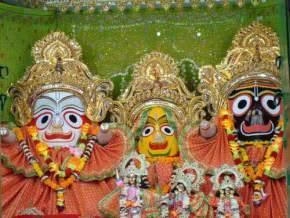
The Agartala Jagannath Mandir, located in the heart of Tripura’s capital, is a sanctuary of devotion echoing the sacred traditions of Puri. Situated within the majestic precincts of the historic Ujjayanta Palace in Krishna Nagar, this temple is dedicated to the divine triad: Lord Jagannath (Lord of the Universe), his elder brother Lord Balabhadra, and sister Devi Subhadra.
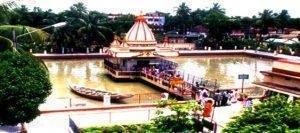
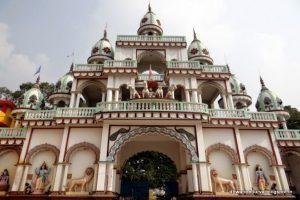
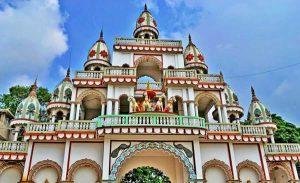
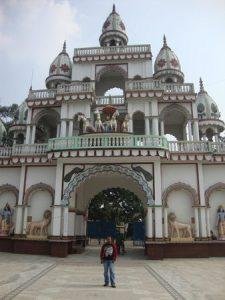
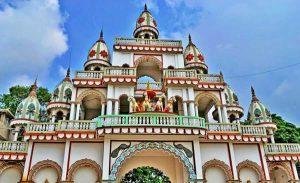
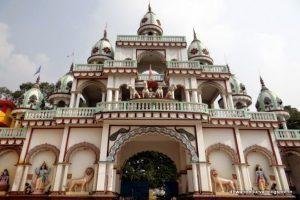
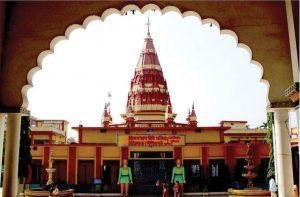
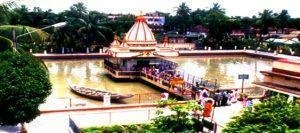
Built in the 19th century by Maharaja Radha Kishore Manikya, this temple is a rare architectural outlier in the Northeast. Unlike the traditional indigenous styles prevalent in the region, this temple features a distinct octagonal base and vibrant orange stepped shikharas (spires), creating a mesmerizing visual against the Agartala skyline. It is a living testament to the Sthala Purana (local lore) that links the spiritual lineage of Tripura directly to the holy city of Puri, Odisha.
Phalaśruti: The Spiritual Benefits
According to Vedic traditions and local devotee testimonies, visiting the Agartala Jagannath Mandir offers profound spiritual merits:
- Karmic Cleansing: It is believed that prayers offered here cleanse the ancestral karma (Pitr Dosha), bringing peace to forefathers.
- Protection (Raksha): Lord Jagannath is revered as the protector of his devotees. Worshipping him within the Ujjayanta Palace grounds is considered auspicious for gaining political and social stability in one’s life.
- Wish Fulfillment: The temple is historically associated with the granting of boons (Vancha Siddhi) to the Manikya kings; devotees today share similar experiences of obstacles being removed through sincere prayer.
Historical Origins & Scriptural Legend
The history of this temple is deeply intertwined with the glory of the Manikya Dynasty. It was constructed between 1899 and 1901 AD under the patronage of Maharaja Radha Kishore Manikya. While Udaipur was the former capital, the Maharajas shifted their base to Agartala to establish a grander center of power, adorning the capital with magnificent monuments, including this temple.
The Legend of Neelmadhav
Tradition holds a profound connection between Agartala and the Jagannath Temple of Puri. Local lore suggests that the Neelmadhav (a blue-hued form of Vishnu) originally worshipped in Tripura was donated to the Puri temple. This establishes a spiritual bridge between these two sacred geographies. The rituals performed here mirror the Seva Puja of Puri, adhering to strict traditions passed down through generations.
According to temple records, the structure underwent renovations in the early 20th century to preserve its unique architectural integrity, blending Hemadpanthi (South Indian) styles with Arabic architectural elements, creating a syncretic masterpiece.
Architectural Marvels
The Agartala Jagannath Mandir stands as a prime example of fusion architecture, heavily influenced by Islamic edifices yet housing a distinctly Hindu sanctum.
- The Octagonal Base: The most striking feature is its octagonal (eight-sided) foundation, a rarity for Nagara-style temples. This provides a wide, stable base that allows for a panoramic view of the surroundings.
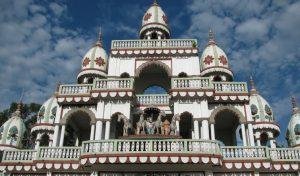
- The Shikhara: The temple rises four stories high, culminating in bright orange, stepped-up shikharas. These pyramidal conic structures crown the pillars, resembling flame-like forms pointing towards the heavens.
- The Sanctum & Mandapa: Inside, the temple retains a traditional Hindu flavor. The walls are brightly colored, and the sanctum houses the deities in the traditional Puri style. A Pradakshina Patha (circumambulatory path) surrounds the sanctum, allowing devotees to perform the ritual circumambulation (parikrama).
While not an ASI-protected monument or UNESCO site, it is considered a National Heritage of Tripura due to its historical and cultural significance.
Darshan & Ritual Logistics
The temple follows a rigorous daily schedule of worship (Nitya Puja). The Evening Aarti is a mesmerizing spectacle that devotees should not miss, as it illuminates the orange walls with the glow of countless lamps.
Daily Darshan Timings (2026 Schedule)
| Session | Time | Activity |
|---|---|---|
| Morning | 07:00 AM – 11:00 AM | Mangala Alati, Abhishekam & Darshan |
| Midday | 12:00 PM – 01:00 PM | Bhoga Offering (Madhyna Dhupa) – Sanctum Closed |
| Afternoon | 02:00 PM – 04:30 PM | Evening Darshan Opens |
| Evening | 05:30 PM – 08:00 PM | Sandhya Aarti & Pahuda (Closing) |
Key Sevas & Online Booking
Devotees can perform specific sevas (services) to the deity:
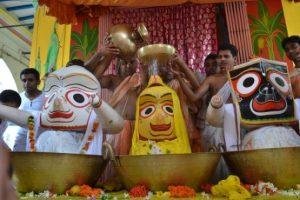
- Abhishekam: Ritual bathing of the deities (usually conducted in the morning).
- Archana: Recitation of names (individual or family).
- Pushpanjali: Offering of flowers.
- Phula Sajja: Decoration of the deities.
Online Booking: As of 2026, the temple administration facilitates online bookings for specific festivals and special abhishekams. While daily darshan is generally free, registered devotees can book special sevas via the official Tripura Government tourism portal or the temple’s administrative office located at the Palace Compound entrance.
Major Festivals 2026
- Ratha Yatra (Chariot Festival): June 27, 2026. This is the most grandeur event. The deities are placed on a massive wooden chariot and pulled through the Palace grounds. Thousands of devotees participate.
- Snana Yatra: June 22, 2026. The bathing ceremony of the deities prior to the Ratha Yatra.
- Janmashtami: Celebrated with special midnight aartis and cultural programs.
- Nabanna (Harvest Festival): A unique Tripuri-Hindu synthesis festival celebrated with fresh rice offerings.
Practical Visitor Guidance
Crowd Management & Best Hours
Being located within Ujjayanta Palace, the temple attracts tourists and pilgrims alike.
- Best Time to Visit: 7:00 AM to 9:00 AM for a serene darshan. The evening Aarti (5:30 PM) is visually stunning but more crowded.
- Seasonal Advice: Agartala experiences heavy monsoons (June-August). Carry a sturdy umbrella. Summers (March-May) are humid; carry water, though drinking water facilities are available near the Palace gates.
Rules & Etiquette
- Dress Code: Traditional attire is preferred (Dhoti-Kurta for men, Saree/Salwar for women). Western attire is allowed but modest clothing is strictly required.
- Photography: Photography is permitted in the temple complex and grounds, but is strictly prohibited inside the inner sanctum (Garbha Griha). Drone usage is banned within the Palace compound.
- Mobile Lockers: The temple management provides free mobile lockers at the entrance. Metal objects, leather belts, and large bags are not allowed inside the sanctum.
- Accessibility: The temple has ramp access for wheelchairs, though the inner sanctum has traditional stairs.
Pilgrimage Connectivity
Agartala is well-connected by air and rail, making this temple accessible for domestic and international pilgrims.
How to Reach
- By Air: Maharaja Bir Bikram Airport (IXB) is located just 12 km from the city center. Taxis and app-based cabs are readily available.
- By Rail: Agartala Railway Station is the primary railhead, roughly 6 km from the Palace. It connects to Kolkata and Delhi via the服務或mail trains.
- By Road: The temple is located at the Palace Compound, Krishna Nagar. It is accessible via NH 8 (connecting Assam and West Bengal). Local buses (ASTC) and auto-rickshaws connect the station to the Palace.
Nearby Sacred Sites (Pilgrimage Circuit)
Extend your spiritual journey by visiting these nearby sites:
- Laxminarayan Temple (Old Agartala): Located about 6 km away, this is another historic temple of the Manikya era, built in 1889.
- Ujjayanta Palace Museum: While not a temple, the Palace itself houses a shrine and offers insight into the dynasty that built the Jagannath Mandir.
- Mata Tripureswari Temple (Udaipur): Located 55 km from Agartala, this is one of the 51 Shakti Peethas, a must-visit for Shakti worshippers.
Frequently Asked Questions
1. Is there a VIP Darshan entry?
The temple administration maintains equality for all devotees. However, senior citizens (above 65 years) and specially-abled devotees are allowed priority entry through a designated gate upon showing valid ID proof. General VIP entries are restricted except for state dignitaries.
2. What are the entry timings for Ujjayanta Palace?
The temple is located inside the Palace complex. The Palace gates usually open at 9:00 AM and close at 5:00 PM. However, devotees are allowed early morning entry (7:00 AM) specifically for darshan. The palace museum remains closed on Mondays and government holidays.
3. Is non-Hindu entry allowed?
Yes. The Agartala Jagannath Mandir welcomes people of all faiths to appreciate its architectural beauty and spiritual ambiance. However, only Hindus are permitted inside the inner sanctum for prayer.
4. How do I book online seva for Ratha Yatra 2026?
Bookings for Ratha Yatra usually open 2 months in advance (April 2026). Visit the official Tripura Tourism website or contact the temple office at 0381-232-4497. Due to high demand, it is advisable to book accommodation in Agartala well in advance.
5. Is there a facility for accommodation near the temple?
While there are no guest houses directly inside the temple, the Palace Compound area has several government and private hotels. The State Guest House (Shikhar and Vishwakarma) and Hotel Sonar Tori are popular choices within walking distance.
Contact Details
Agartala Jagannath Mandir
Location: Palace Compound, Krishna Nagar, Agartala, Tripura 799001
Phone: 0381-232-4497
Email: agartalajagannath@tripuratourism.gov.in (general inquiry)









