Agastheeshwarar Temple, Perungudi: History, Darshan Timings & Legend

Receive daily temple updates, divine darshan, and morning bhajans directly on WhatsApp.
Contents
- 1 Agastheeshwarar Temple, Perungudi: A Definitive Pilgrimage Guide
- 1.1 1. Introduction & Spiritual Essence
- 1.2 2. Historical Origins & Scriptural Legend
- 1.3 3. Architectural Marvels
- 1.4 4. Darshan & Ritual Logistics
- 1.5 5. Practical Visitor Guidance
- 1.6 6. Pilgrimage Connectivity
- 1.7 7. Frequently Asked Questions (FAQ)
- 1.8 Photo Gallery
- 1.9 Contact Details & Location
Agastheeshwarar Temple, Perungudi: A Definitive Pilgrimage Guide
By The Lead Heritage Architect & SEO Strategist | BharatTemples.com
Nestled in the quiet village of Perungudi, just outside the bustling energy of Trichy, stands the Agastheeshwarar Temple. Unlike the towering gopurams that dominate the skyline of Tamil Nadu, this temple is a serene monument of the Imperial Chola era, preserved by the Archaeological Survey of India (ASI). It is a sanctuary of profound legend, architectural precision, and deep spiritual resonance.
1. Introduction & Spiritual Essence
The Agastheeshwarar Temple is a dedicated shrine to Lord Shiva, known here as Agastheeshwarar. The Mother Goddess is revered as Shivagama Sundari. This temple is unique in its absence of a Rajagopuram (grand gateway tower), focusing instead on the sanctity of the inner shrine.
The Primary Deity: Swayambhu and the Tilt
The presiding deity, Agastheeshwarar, is a Swayambhu Lingam (self-manifested). However, the most striking feature of this temple is the physical form of the Shiva idol. It is observed to be distinctly tilted or bent.
Phalaśruti: The Benefits of Visiting
Devotees flock to Perungudi to witness this unique form of Shiva. According to temple legends, worshipping the tilted Agastheeshwarar is believed to remove obstacles caused by planetary afflictions, specifically those of Saturn (Shani). It is said to cleanse ancestral karma and grant the devotee the strength to bear life’s burdens with grace, mirroring the Lord’s own posture.
📖 Related: Vinayagar Temple, Medhur: History, Darshan Timings & Guide
2. Historical Origins & Scriptural Legend
The Chola Connection
According to stone inscriptions and ASI records, the temple dates back to 969 CE. It was constructed during the reign of the great Chola King Sundara Chola (also known as Parantaka Chola II). Originally, the village was known as Thiruperumudi. The temple complex is a living museum of Chola history, containing inscriptions that depict the rich socio-economic and religious life of the 10th century.
Renovations and Later Kings
While the foundation is Chola, the temple saw significant additions later. The Hoysala King Vira Ramanatha renovated parts of the shrine. The sanctum of the Goddess, Mother Shivagama Sundari, was constructed during the reign of the Vijayanagara King Viruppanan.
The Legend of the Tilted Idol
Tradition holds a moving story regarding the deity’s posture. A poor, handicapped woman visited the temple daily, unable to offer material wealth but devoted to Lord Shiva. One day, she brought a handful of Nerval (a specific wild tuber/fruit) as a humble offering. To receive this offering from his devotee—whom the Lord viewed as his own mother—Shiva bent or tilted his form sideways. This moment of divine humility was etched in stone, leaving the idol in its permanent tilted position.
Another legend speaks of a Saneeswaran (Saturn) idol facing the Murugan shrine, a rare alignment that devotees believe mitigates the harsh effects of the planet Saturn.
3. Architectural Marvels
The Agastheeshwarar Temple is a classic example of early Dravidian architecture with distinct Imperial Chola stylistic elements. Unlike later Nayak or Vijayanagara temples, the focus here is on the vimana’s verticality and the sanctity of the inner prakaram.
Key Structural Elements
-
Orientation: The temple is strictly East-facing. The entrance is strategically placed in the South-East corner.
-
The Vimana: The tower over the sanctum sanctorum is typical of the Chola style, distinct from the tiered gopurams of later periods.
-
Prakaram (Corridor): The inner circumambulatory path houses essential shrines including:
-
Bala Vinayagar (Lord Ganesha)
-
Dakshinamurthy (Guru/Shiva as a teacher)
-
Lingothbavar (The form of Shiva appearing as a pillar of fire)
-
Brahma
-
Chandikeswara
-
Saneeswara (Saturn)
The temple is an ASI-protected monument, ensuring that the original sculptures and inscriptions remain preserved for architectural study and devotion.
📖 Related: Dharanishwarar Temple, Thamaraipakkam: History, Darshan Timings & Guide
4. Darshan & Ritual Logistics
While the temple is maintained by the ASI, daily rituals are performed by hereditary trustees and priests. It is a Manimandapam style temple often visited as part of the Vayalur pilgrimage circuit.
Daily Timings (Estimated)
Note: As an ASI site, timings may vary slightly based on daylight and preservation work. Please verify locally before travel.
| Session | Timings |
|---|---|
| Morning Darshan | 07:00 AM – 11:00 AM |
| Mid-day Closure | 11:00 AM – 04:30 PM |
| Evening Darshan | 04:30 PM – 06:00 PM |
Sevas and Offerings
Devotees can perform basic Abhishekam and Archana. Given the ASI regulations, large-scale cooking or fire rituals (Homas) are restricted to preserve the monument. Simple offerings of flowers and vibhuthi (sacred ash) are encouraged.
Key Festivals in 2026
- Arudra Darshanam: Celebrates the cosmic dance of Shiva (Nataraja).
Date: January 13, 2026 - Maha Shivaratri: The grand night of Shiva.
Date: March 06, 2026 - Pradosham: Occurring twice a month; highly auspicious for Abhishekam.
Specific Dates: Monthly (1st and 3rd Fridays/Thursdays depending on Tamil calendar)
5. Practical Visitor Guidance
Code of Conduct & Dress Code
As this is an ASI-protected site and a place of active worship:
- Dress Code: Traditional attire is recommended (Dhoti/Shirt for men; Saree/Salwar Kameez for women). Modest clothing is mandatory.
- Photography: Photography is allowed in the outer precincts (prakaram) but strictly prohibited inside the Sanctum Sanctorum (Garbhagriha).
- Footwear: There is a designated shoe rack near the entrance. Please use it.
Accessibility and Crowd Management
The temple has a relatively flat floor plan, making it accessible for elderly devotees, though there are a few steps at the main entrance.
Best Time to Visit:
- Time of Day: Early morning (7:00 AM – 8:00 AM) is ideal to avoid the midday Trichy heat and ensure a quiet darshan.
- Seasonal Advice: Carry a water bottle and wear cotton clothes if visiting between April and June. The months of Karthigai (November/December) offer the most pleasant weather.
6. Pilgrimage Connectivity
How to Reach Agastheeshwarar Temple
The temple is strategically located on the Trichy – Kumara Vayalur – Thogai Malai route.
- By Road: From Trichy Central Bus Stand, take a bus heading towards Kumara Vayalur. Ask for the Perungudi stop. From the main road, there is a small fork leading 1.5 km into the village.
- Nearest Airport: Trichy International Airport (TRZ) is approximately 13 km away (25-30 mins by taxi).
- Nearest Railway Station: Trichy Junction (TPJ) is about 10 km away.
- NH Reference: Accessible via NH 83 (Trichy – Coimbatore Highway) via Woraiyur link roads.
📖 Related: Kariamanicka Perumal Temple, Pakkam: History, Timings & Complete Guide
Developing a Pilgrimage Circuit
Visitors should combine a trip to Perungudi with nearby sacred sites:
- Kumara Vayalur Murugan Temple: Located just 5 km away. A magnificent temple dedicated to Lord Murugan, set near the Kaveri river.
- Vayalur Adhi Kumbeswarar Temple: Another ancient Shiva temple nearby, known for its beautiful tank.
- Uraiyur (Old Capital): Located about 7 km away, home to the famous Uraiyur Venkatachalapathy Temple and the historic Chola capital ruins.
7. Frequently Asked Questions (FAQ)
1. Is there a VIP Darshan entry at Agastheeshwarar Temple?
No, this is an ASI-protected monument with a simple structure. There is no segregated VIP entry. All devotees worship together in the prakaram, with entry into the sanctum permitted for all during open hours.
2. Is there a dress code for entering the temple?
Yes. As per standard Hindu temple traditions and ASI guidelines, visitors must dress modestly. Men are required to remove shirts before entering the inner sanctum, and women are advised to wear sarees or full-length traditional attire.
3. Can I book Seva or Abhishekam online?
Currently, due to the specific management nature of this temple (ASI/Local Trustee managed), online booking is not widely available. It is recommended to contact the local trustee or priest upon arrival for arranging special pujas.
4. Why is the Shiva idol tilted?
According to the Sthala Purana, Lord Shiva bent sideways to accept the humble offering of a handicapped devotee. This form is considered highly compassionate (Karunamurthy).
5. Is the temple open all year round?
Yes. However, occasional closures may occur during major renovation work or special ASI preservation activities. It is best to call the local contact point (if available) or check with the Vayalur temple trust office before making a long trip.
Photo Gallery
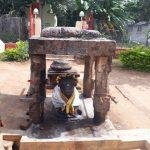
2018-01-14 (1), Agastheeshwarar Temple, Perungudi, Trichy
2018-01-fyfru14, Agastheeshwarar Temple, Perungudi, Trichy
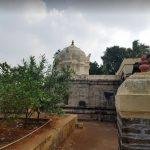
6565463, Agastheeshwarar Temple, Perungudi, Trichy
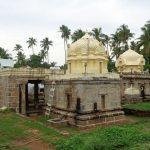
11081358_863503270379661_8705703808106668856_n
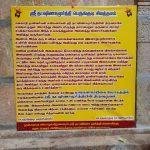
2018-01-14 (10), Agastheeshwarar Temple, Perungudi, Trichy

IMG_20160608_163450, Agastheeshwarar Temple, Perungudi, Trichy
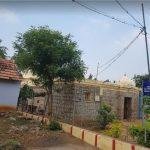
5654645763, Agastheeshwarar Temple, Perungudi, Trichy
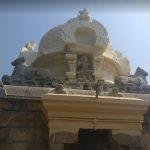
5654675765, Agastheeshwarar Temple, Perungudi, Trichy
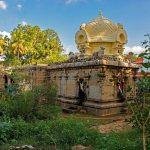
S-TN-56_Agastheesvarar_Perungudi_Trichy
Contact Details & Location
Location: Perungudi, Trichy District, Tamil Nadu.
Landmark: Near Somarasampettai, en route to Vayalur.
For specific inquiries regarding the ASI status of the monument, visitors may refer to the local ASI Trichy circle office.