
Contents
Agastheeshwarar Temple, Poonthottam: The Divine Guru Sthalam
Author: Lead Heritage Architect & SEO Strategist, bharattemples.com
Nestled along the bustling Mayiladuthurai–Thiruvarur main road, the Agastheeshwarar Temple in Poonthottam, Thiruvarur District, stands as a testament to the profound spiritual geometry of Tamil Nadu. Dedicated to Lord Shiva and revered as a potent Guru Sthalam, this temple offers a unique sanctuary where the celestial influences of Jupiter (Guru) harmonize with the timeless grace of the Supreme Being.
Introduction & Spiritual Essence
Agastheeshwarar Temple is not merely a structure of stone but a living center of cosmic energy. Here, the presiding deity is Agastheeshwarar (Lord Shiva), and the consort is Dharmasamvardhini Amman (Goddess Parvati).
Phalaśruti: The Benefits of Visitation
Why do devotees flock to this specific Guru Sthalam? According to temple lore and local belief:
- Remedial Astrology: As a Guru Sthalam (equivalent to Alangudi), it is highly potent for those seeking relief from Guru Dosha or seeking favorable planetary alignments.
- Rectification of Karma: It is believed that offering prayers here cleanses ancestral karma and liberates devotees from legal disputes.
- Wisdom and Knowledge: Students and intellectuals visit to receive the blessings of Dakshinamurthy, the primordial Guru.
Historical Origins & Scriptural Legend
While the exact inscription of the builder remains untraced in visible epigraphy, tradition holds that the temple dates back centuries, constructed during the later Chola or Nayak periods, characterized by the proliferation of regional shrines.
The Legend of Varuna Theertham
The primary Sthala Purana (local legend) revolves around the sacred waters. The Theertham (temple tank) here is believed to have been created by Varuna, the deity of oceans and one of the Ashtadikpalakas (eight guardians of directions). This divine origin story ties the temple to the elemental forces of nature, making the Varuna Theertham a site of purification before Darshan.
Architectural Marvels
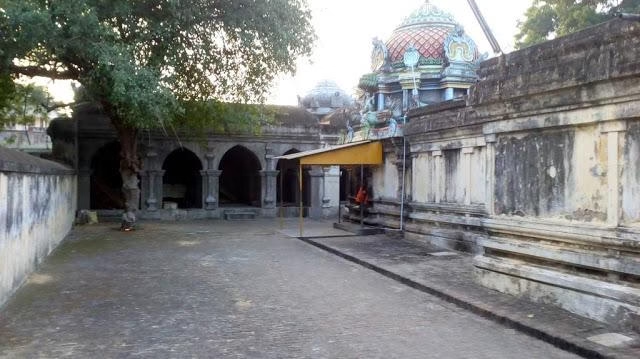
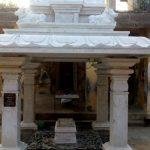
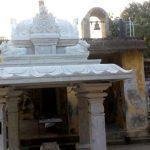
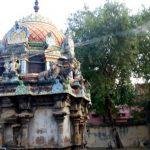
The temple is a classic example of Dravidian Architecture, designed in accordance with Vastu Shastra. It is a modest yet spiritually charged complex facing east.
- The Sanctum (Garbhagriha): The presiding deity, Agastheeshwarar, faces east, bathing in the rising sun. Opposite him, Goddess Dharmasamvardhini faces south.
- Dakshinamurthy Mandapam: The highlight of this temple is the unique Mandala Rasi Gurubagavan (Dakshinamurthy). Unlike standard forms, this deity is depicted sitting atop the 12 Zodiac signs, with his hand resting on the Rishaba Vaahana (Bull). This iconography is rare and symbolizes universal guardianship over time and destiny.
- Prakarams: The inner precincts house shrines for Ganesha, Muruga, Gajalakshmi, Navagraha, Surya (Sun), Chandran (Moon), Durga, and the primary Dakshinamurthy.
- Adjacent Shrine: An Ayyanar Temple stands just adjacent to the main complex, integrating village guardian deities into the pilgrim’s journey.
Darshan & Ritual Logistics
Visitors are encouraged to verify timings locally, especially during festival seasons. Below is the general operational schedule for 2026.
Daily Timings
| Session | Timing |
|---|---|
| Morning Darshan | 06:00 AM – 12:00 PM |
| Evening Darshan | 04:00 PM – 08:00 PM |
| Pooja / Abhishekam Break | 12:00 PM – 04:00 PM |
Key Sevas & Booking
Devotees can participate in specific rituals to enhance their spiritual experience:
- Abhishekam: Performed to the main deity with milk, honey, and sandalwood paste.
- Archana: Special Guru Gayatri Archana is recommended for students and professionals.
- Navagraha Homam: Conducted primarily on Thursdays.
Online Booking: While direct online infrastructure for this specific rural temple may be limited through the HR&CE department, devotees can often book Sevas via the Tamil Nadu Temples official portal or by contacting the temple executive officer directly. (Note: Always carry booking confirmation printouts).
2026 Festival Dates (Major Events)
- Pradosham: Monthly (13th day after New Moon/Full Moon) – High attendance expected.
- Shivaratri: February 26, 2026 (Maha Shivaratri is the peak festival).
- Guru Peyarchi (Transit): While not annual, special Guru Hora pujas are held daily, and Thursdays are considered highly auspicious throughout the year.
- Aadi Perukku: August 3, 2026 (Special Theertham rituals).
| Date built: | – |
|---|---|
| Deity: | Agastheeshwarar |
| Architectural style: | Dravidian architecture |
| Major festivals | – |
| Locale: | Poonthottam |
| District:: | Thiruvarur |
| Address: | – |
| Phone | – |
Practical Visitor Guidance
To ensure a seamless pilgrimage, adhere to the following guidelines:
Code of Conduct
- Dress Code: Traditional attire is mandatory. Men should wear Dhotis or formal trousers with shirts; women should wear Sarees or Salwar Kameez. Avoid shorts and sleeveless tops.
- Photography: Photography is generally restricted inside the inner sanctum. Seek permission for the outer prakaram.
- Mobile Lockers: As a smaller shrine, large locker facilities may not be available. It is advisable to carry minimal valuables.
Crowd Management & Seasonal Advice
- Best Hours: The morning slot between 6:00 AM and 8:00 AM offers the calmest atmosphere for meditation.
- Seasonal Tips:
- Summer (May–June): The plains of Thiruvarur are hot. Carry a reusable water bottle and a head covering.
- Monsoon (October–November): Roads in Poonthottam can be slippery; wear flat sandals with grip.
Pilgrimage Connectivity
How to Reach Agastheeshwarar Temple
The temple is conveniently located on the Mayiladuthurai–Thiruvarur highway.
- By Air: The nearest airport is Trichy (Tiruchirappalli) International Airport (approx. 120 km).
- By Rail: The Poonthottam Railway Station is the closest point, just 1.5 km from the temple. Alternatively, Mayiladuthurai Junction (20 km) offers better connectivity.
- By Road:
- Direct access via SH-63 (Mayiladuthurai–Thiruvarur Road).
- From Nagapattinam: 40 km.
- From Kumbakonam: 40 km.
- From Thanjavur: 80 km.
- From Trichy: 134 km.
Nearby Sacred Sites (Circuit Planning)
Expand your spiritual journey by visiting these nearby temples:
- Thirumeyachur Lakshmi Narayana Perumal Temple (5 km): Famous for the Sakshi Ganapati shrine and Meghanatha Swamy.
- Thiruveezhimizhalai (11 km): A twin temple featuring Vishnu and Shiva shrines with a unique legend involving the river.
- Sirupuliyur Arulmigu Ekambareswarar Temple (8 km): Another ancient Shiva temple associated with the legend of Prithvi (Earth) and Agni (Fire).
Frequently Asked Questions (FAQ)
1. Is there a VIP Darshan entry?
Being a smaller temple, the concept of VIP entry is limited. However, devotees who have booked specific Sevas (like Abhishekam) are usually given priority access during the designated Seva times.
2. What is the significance of the Dakshinamurthy here?
The Dakshinamurthy at Agastheeshwarar Temple is unique because he is depicted sitting on the 12 Zodiac signs. This represents his mastery over time (Kaala) and destiny, making it a powerful spot for those seeking clarity and education.
3. Is non-vegetarian food allowed near the temple?
No. As with all Shiva temples in Tamil Nadu, Poonthottam is a strict vegetarian zone. Alcohol and non-vegetarian food are prohibited in the vicinity.
4. Where can I stay?
There are no major hotels in Poonthottam itself. It is recommended to stay in Mayiladuthurai (20 km away) or Thiruvarur (21 km away), which offer various guest houses and hotels managed by the HR&CE department and private lodges.
5. Is the temple wheelchair accessible?
The inner sanctum has a threshold, and the flooring is traditional stone. While the outer areas are manageable, access to the main shrine may require assistance for wheelchair users.








Recent Posts

ओ सांवरे तूने ही मुझको संभाला – Lyrics & Meaning
ओ सांवरे तूने ही मुझको संभाला – A Prayer to Shyam Origin & Spiritual Essence Why This Bhajan Resonates Devotees chant this when overwhelmed by life’s storms—the refrain ‘तूने ही मुझको संभाला’ is the soul’s sigh of relief: “You…

कथा ये है महाराज मेरे की – Lyrics & Meaning
कथा ये है महाराज मेरे की छत्रपति संभाजी महाराज – A Prayer to Chhatrapati Sambhaji Maharaj Origin & Spiritual Essence Why This Bhajan Resonates Devotees chant this when their spirit feels tested—its powerful refrain “महाराज मेरे” is a soul’s…

Rigveda Samhita Yathartha Anuvada (ऋग्वेद संहिता यथार्थ अनुवाद) – Complete Set with Anvayartha & Hindi/English Translation
The Rigveda is the oldest surviving scripture of humanity and the foundational text of Sanātana Dharma. For serious students, scholars, UPSC aspirants studying ancient Indian history, Sanskrit learners, and spiritual seekers, a precise and grammatically structured translation is indispensable.…

आना भी अकेला है जाना भी अकेला है – Lyrics & Meaning | BharatTemples
आना भी अकेला है जाना भी अकेला है – A Prayer to the Divine Witness Origin & Spiritual Essence Why This Bhajan Resonates Devotees turn to this bhajan in moments of deep reflection—when life’s attachments begin to ache. The…

माता शेरावाली के द्वार जो भी जाता है – Lyrics & Meaning
माता शेरावाली के द्वार जो भी जाता है – A Prayer to Maa Sherawali Origin & Spiritual Essence Why This Bhajan Resonates Devotees turn to this bhajan in times of fear or uncertainty—its promise that no one leaves Maa’s…

मार लेना सपणी उबार लेणा भवरा – Lyrics & Meaning
मार लेना सपणी उबार लेणा भवरा – A Prayer to the Divine Beloved Origin & Spiritual Essence Why This Bhajan Resonates Devotees chant this in moments of deep vulnerability—its cry of “मार लेना सपणी, उबार लेणा भवरा” is the…

हमें श्याम सुंदर भरोसा तुम्हारा – Lyrics & Meaning
हमें श्याम सुंदर भरोसा तुम्हारा – A Prayer to Shyam Sundar Origin & Spiritual Essence Why This Bhajan Resonates Devotees chant this when feeling alone—its refrain ‘de do sahara’ is the soul’s cry for divine support. Lyrics in Hindi…

Mere Satguru Ne Di Thi Davai Lyrics in Hindi & Meaning
Mere Satguru Ne Di Thi Davai: Invoking the Guru’s Liberating Wisdom This soul-stirring bhajan venerates the Satguru (True Spiritual Master) as the divine physician who dispenses the only remedy for life’s deepest sufferings. Composed by Sant Karmaveer Tufani, it…

Janm Diyo Thari Maa Dukh Dekhiyo Lyrics in Hindi & Meaning
जन्म दियो थारी माँ दुख देखियो (Maa’s Grief Upon Birthing You) This soul-stirring Chetavani Bhajan (admonitory hymn) is addressed to the Divine Mother (Maa) – a call for repentance when children forget their filial duties in the dark age…
Bhadi Sabha Mein Thane Manaun Lyrics in Hindi & Meaning
Bhadi Sabha Mein Thane Manaun: Invoking the Spear-Wielding Mother Mata Bhawani (श्री ज्वाला भवानी), the fiery manifestation of Shakti worshipped as the Protector of Dharma in Her Dhaulagarh sanctum. Origin & Spiritual Essence Composed in Rajasthani folk tradition by…