
Contents
Introduction & Spiritual Essence
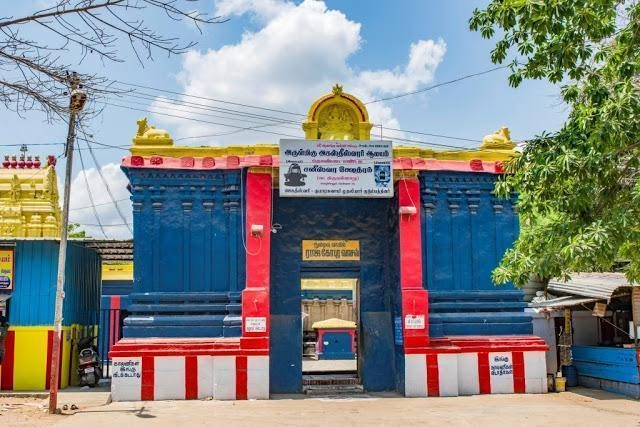
Located in the serene suburb of Pozhichalur, behind the bustling Chennai International Airport, stands the ancient Agastheeshwarar Temple. This sacred site is a spiritual beacon for devotees across Tamil Nadu and beyond, serving as a powerful center for Parihara (remedial worship). The primary deity, Lord Agastheeshwarar (a form of Shiva), and the consort, Goddess Ananthavalli, enshrine a sanctum steeped in divine legend and cosmic balance.
Phalaśruti: The Fruits of Visitation
Devotees flock to this temple primarily to mitigate the malefic effects of planetary doshas, specifically those caused by Sani (Saturn), Rahu, and Ketu. It is revered as Vada Thirunallaru (the Northern Thirunallaru), where the spiritual potency is said to rival that of the famous Thirunallaru temple in Karaikal. Visiting this temple is believed to cleanse ancestral karma, remove obstacles in professional life, and grant mental peace to those suffering from Shani Dasha or Kala Sarpa Dosha.
| Date built: | – |
|---|---|
| Deity: | Agastheeshwarar |
| Architectural style: | Dravidian architecture |
| Major festivals | – |
| Locale: | Pozhichalur |
| District:: | Chennai |
| Address: | Agastheeshwarar Temple,Pozhichalur, Chennai – 600 074 |
| Phone | +91 44 22631410 / 32564022, +91 93818 17940 / 93823 05974 |
Historical Origins & Scriptural Legend
The Chola Legacy and the Naming of Pozhichalur
According to temple records and regional history, this region was historically ruled by the mighty Chola Dynasty. The original name of the village was Pugazh Chola Nallur (The Town of the Famous Chola), which over centuries corrupted linguistically to the modern name “Pozhichalur.” Archaeological evidence and stylistic analysis suggest the current structure dates back to the 12th Century AD, a testament to the architectural fervor of the Chola era.
The Legend of Vada Thirunallaru
Tradition holds that Lord Shani (Saturn) was relieved of his sins by performing intense penance to Lord Shiva at this specific location. As directed by the Lord, Shani created a holy pond known as the Nallar Sani Theertham. Upon worshipping Lord Shiva here, Shani was cleansed of his past sins and transformed into Mangala Saneeswarar (Auspicious Saturn). Consequently, this temple is revered as Vada Thirunallaru (The Northern Thirunallaru), the only major temple in North Tamil Nadu dedicated to alleviating the afflictions of Saturn.
The Arrival of Sage Agastya
The temple’s identity is deeply intertwined with the Sthala Purana of Sage Agastya. When the celestial marriage of Lord Shiva and Parvati took place in the Himalayas, the earth tilted to the north due to the weight of the gathering gods. To restore balance, Shiva commanded Sage Agastya to travel south. Despite being physically distant, the Sage’s devotion allowed him to witness the divine wedding via spiritual vision (divya drishti) at multiple southern locations. Pozhichalur is one such site where Sage Agastya received the darshan of the divine union. The Shivalingam worshipped here is believed to have been installed by the Sage himself, hence named Agastheeshwarar (The Lord of Agastya).
Architectural Marvels
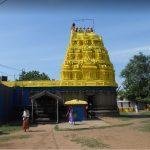
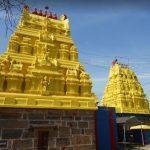
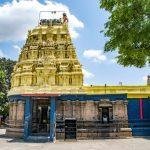
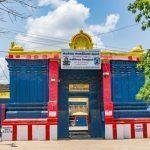
The temple exemplifies the classic Dravidian style of architecture. While modest in scale compared to the mega-temple complexes of Kumbakonam or Madurai, it features intricate sculptural details typical of the post-Chola/early Nayak period.
- The Sanctum (Sreekovil): The main shrine houses the Agastheeshwarar Lingam. The sanctum is oriented towards the east.
- Separate Shrines: The temple complex includes a distinct and highly significant shrine for Lord Sani (Saturn). This is designed to allow devotees to perform specific pariharams without disturbing the main deity.
- Presiding Deities: The Moolavar (primary deity) is Agastheeshwarar, and the Utsavar (procession deity) is revered as Arulmigu Saneeswarar.
- Theertham: The temple tank, Nallar Sani Theertham, is located near the entrance and is considered highly potent for cleansing rituals.
Darshan & Ritual Logistics
The temple follows a strict Agni Prathishta standard. To ensure a peaceful darshan, devotees are advised to check the 2026 festival calendar and book specific sevas in advance.
Daily Temple Timings (2026)
| Session | Timings |
|---|---|
| Morning Darshan | 06:00 AM – 11:30 AM |
| Afternoon Break | 11:30 AM – 04:00 PM |
| Evening Darshan | 04:00 PM – 08:30 PM |
| Note: On Saturdays (Shani Kaalam), timings extend to 01:00 PM for morning session. | |
Pooja Schedule
- Ushakalam Pooja: 5:45 AM
- Kalasanthi Pooja: 8:00 AM
- Uchikala Pooja: 11:30 AM
- Sayaratchai Pooja: 3:00 PM
- Arthajama Pooja: 8:30 PM
Key Sevas & Online Booking
While the temple administration is traditionally managed, specific sevas can be coordinated via the contact numbers provided. The following rituals are highly recommended:
- Sani Abhishekam: Performed specifically to remove debts and health ailments.
- Ghee Lamp Lighting (Deepam): To be performed during Sani Hora.
- Rahu-Ketu Parihara Pooja: Essential for those facing planetary doshas in their horoscope.
Visitors should call the provided contact numbers (+91 44 22631410) to confirm online booking availability or special slots for large groups.
2026 Festival Calendar
The temple celebrates major Saivite and planetary festivals with great fervor. Key dates for 2026 planning:
- Maha Shivaratri: March 8, 2026
- Sani Peyarchi (Transit): Saturn typically moves signs in March. Devotees flock to the temple during this transit period for special homams.
- Karthikai Deepam: November 5, 2026
- Pradosham: Occurring twice monthly (13th and 28th approx.) – highly potent for Shiva worship.
- Arudhra Dharisanam: Celebrated in December (Margazhi month) honoring Nataraja.
Practical Visitor Guidance
Dress Code and Etiquette
As a traditional temple, visitors must adhere to a respectful dress code. Men should wear Dhotis or formal trousers with shirts (avoid t-shirts and shorts). Women should wear sarees, salwar kameez, or long skirts. The atmosphere is devotional and quiet; mobile phones must be silenced.
Crowd Management & Best Time to Visit
Being located near the airport, the area sees moderate traffic.
- Best Time: Weekday mornings (Tuesday and Saturday are busiest due to Sani worship).
- Crowd Tip: Avoid Saturday afternoons if you have limited time. However, for Sani Pariharam, Saturday is the most auspicious day.
- Seasonal Advice: May and June are hot in Chennai; carry a water bottle. The temple corridors offer shade but staying hydrated is essential.
Photography and Lockers
Generally, photography inside the sanctum is prohibited. You may take photos of the outer mandapas and the temple tank. There are no high-tech digital lockers, but the temple office usually provides a safe space to keep footwear and small bags. It is advisable to travel light.
Pilgrimage Connectivity
How to Reach
Location: Agastheeshwarar Temple, Pozhichalur, Chennai – 600 074.
The temple is strategically located behind the Chennai International Airport (Meenambakkam).
- Nearest Airport: Chennai International Airport (Meenambakkam) – 8 Kms (approx. 15 mins).
- Nearest Railway Station: Chennai Central (25 km) or Tambaram (10 km).
- Metro Connectivity: Meenambakkam Metro Station is approximately 7 km away.
- By Road: Accessible via the Grand Southern Trunk (GST) Road (NH 32). Take the turn towards Pallavaram/Chromepet and proceed toward Pozhichalur.
Bus Routes to Pozhichalur
MTC bus services are frequent from key city hubs:
- M52: Pallavaram – Pozhichalur
- 52: Broadway – Pozhichalur
- M52BET: Pozhichalur – Hasthinapuram
Nearby Sacred Sites (Pilgrimage Circuit)
Combine your visit with these nearby spiritual centers:
- Kundrathur Murugan Temple: Located 8 km away, perched on a hill, famous for the nine petals of the lotus representing human life.
- Pallavaram Banyan Tree Temple (Kottai Vinayagar): An ancient shrine in nearby Pallavaram (6 km).
- Chengalpattu Karunaranyeswarar Temple: A historic temple on the outskirts (approx. 20 km) ideal for a longer pilgrimage day.

Frequently Asked Questions (FAQ)
1. Is there a VIP or Special Darshan entry?
Agastheeshwarar Temple maintains a community-first approach. While there isn’t a commercial VIP pass like in Tirupati, devotees with urgent needs or elderly visitors can request assistance at the temple office to skip the queue. Seva bookings often provide priority entry.
2. Can I perform Rahu-Ketu Parihara here?
Yes, this is one of the few temples in Chennai dedicated to Naadi Pariharam. The temple is frequently mentioned in ancient Nadi palm leaf manuscripts as a specific remedial center for Rahu and Ketu doshas.
3. What is the significance of feeding crows here?
Tradition holds that crows are the vehicle (vahana) of Lord Sani. In this temple, feeding crows is considered a direct method of pacifying Saturn. Devotees offer food, and crows often descend in large numbers to accept the offering, a sign of spiritual relief.
4. Is the temple accessible for senior citizens?
The temple is compact but involves steps. There are railings for support. It is advisable to carry a wheelchair or request help from the volunteers if needed, as the mandapa flooring is old stone.
5. Where can I park my vehicle?
There is a small parking area adjacent to the temple, sufficient for 4-5 cars. On weekends or festival days, parking is limited, and it is recommended to use public transport or park along the wider road shoulders without obstructing traffic.
6. What is the best remedy (Pariharam) for Shani here?
The most potent remedy is lighting a lamp with mustard oil (ennai vilakku) under the Peepal tree (or the designated lamp post) in the temple precincts during the Sani Hora (specific time window calculated daily).
Recent Posts

Shri Kaamkoteeshwar Mandir, Varanasi – History & Significance
In the heart of Kashi, the eternal city of Lord Shiva, where the Ganges flows with celestial grace, stands the Shri Kaamkoteeshwar Mandir. This sacred Sannidhi is not merely a temple but a profound spiritual bridge between the Northern…

ओ सांवरे तूने ही मुझको संभाला – Lyrics & Meaning
ओ सांवरे तूने ही मुझको संभाला – A Prayer to Shyam Origin & Spiritual Essence Why This Bhajan Resonates Devotees chant this when overwhelmed by life’s storms—the refrain ‘तूने ही मुझको संभाला’ is the soul’s sigh of relief: “You…

कथा ये है महाराज मेरे की – Lyrics & Meaning
कथा ये है महाराज मेरे की छत्रपति संभाजी महाराज – A Prayer to Chhatrapati Sambhaji Maharaj Origin & Spiritual Essence Why This Bhajan Resonates Devotees chant this when their spirit feels tested—its powerful refrain “महाराज मेरे” is a soul’s…

Rigveda Samhita Yathartha Anuvada (ऋग्वेद संहिता यथार्थ अनुवाद) – Complete Set with Anvayartha & Hindi/English Translation
The Rigveda is the oldest surviving scripture of humanity and the foundational text of Sanātana Dharma. For serious students, scholars, UPSC aspirants studying ancient Indian history, Sanskrit learners, and spiritual seekers, a precise and grammatically structured translation is indispensable.…

आना भी अकेला है जाना भी अकेला है – Lyrics & Meaning | BharatTemples
आना भी अकेला है जाना भी अकेला है – A Prayer to the Divine Witness Origin & Spiritual Essence Why This Bhajan Resonates Devotees turn to this bhajan in moments of deep reflection—when life’s attachments begin to ache. The…

माता शेरावाली के द्वार जो भी जाता है – Lyrics & Meaning
माता शेरावाली के द्वार जो भी जाता है – A Prayer to Maa Sherawali Origin & Spiritual Essence Why This Bhajan Resonates Devotees turn to this bhajan in times of fear or uncertainty—its promise that no one leaves Maa’s…

मार लेना सपणी उबार लेणा भवरा – Lyrics & Meaning
मार लेना सपणी उबार लेणा भवरा – A Prayer to the Divine Beloved Origin & Spiritual Essence Why This Bhajan Resonates Devotees chant this in moments of deep vulnerability—its cry of “मार लेना सपणी, उबार लेणा भवरा” is the…

हमें श्याम सुंदर भरोसा तुम्हारा – Lyrics & Meaning
हमें श्याम सुंदर भरोसा तुम्हारा – A Prayer to Shyam Sundar Origin & Spiritual Essence Why This Bhajan Resonates Devotees chant this when feeling alone—its refrain ‘de do sahara’ is the soul’s cry for divine support. Lyrics in Hindi…

Mere Satguru Ne Di Thi Davai Lyrics in Hindi & Meaning
Mere Satguru Ne Di Thi Davai: Invoking the Guru’s Liberating Wisdom This soul-stirring bhajan venerates the Satguru (True Spiritual Master) as the divine physician who dispenses the only remedy for life’s deepest sufferings. Composed by Sant Karmaveer Tufani, it…

Janm Diyo Thari Maa Dukh Dekhiyo Lyrics in Hindi & Meaning
जन्म दियो थारी माँ दुख देखियो (Maa’s Grief Upon Birthing You) This soul-stirring Chetavani Bhajan (admonitory hymn) is addressed to the Divine Mother (Maa) – a call for repentance when children forget their filial duties in the dark age…