

Contents
Introduction & Spiritual Essence
Located in the serene village of Pancheshti in Thiruvallur district, the Agastheeswarar Temple is a revered Parihara Sthalam (remedial shrine) dedicated to Lord Shiva. Here, the presiding deity is worshipped as Agastheeswarar, while the consort is known as Anandhavalli Amman.
Phalaśruti (Spiritual Benefits):
According to temple records and local devotee tradition, this shrine is unique because the sanctum sanctorum houses both deities in a way that allows devotees to receive darshan of both Lord and Mother simultaneously from a single viewpoint. The temple is considered a powerful Parihara Sthalam (facing South), where specific remedies can be performed for life’s challenges. Lighting a ghee lamp here is believed to remove sins, while offering Annadhanam (free feeding) is said to restore lost possessions and positions, helping the devotee attain God’s grace.
Historical Origins & Scriptural Legend
The Curse of Sukethu and Sage Agastya
Tradition holds that the temple’s energy is rooted in a celestial event involving Sage Agastya. Legend speaks of a Yatchan named Sukethu who was cursed by Lord Muruga for disrespecting Goddess Parvati. Sukethu’s three sons, born with immense powers, disturbed the celestial world. The Devas sought the help of Sage Agastya.
To quell the chaos, Sage Agastya drank the ocean to reveal the hiding demons. However, to restore the ocean, he spat a drop of water at Pancheshti, creating the sacred Agasthya Theertham. The demons, trapped within the sage, begged for pardon. Agastya instructed them to perform five great Yagnas (Deva, Brahma, Pithru, Bootha, and Manushya Yagna) at this very spot, cleansing their curse and establishing the site’s spiritual potency.
The King and the Tiger
Another prominent legend involves King Mithrathuvasan of Kanchipuram, a regular devotee of Pradosha Pooja. One day, he encountered a tiger ready to devour a poor man. The King offered his life in exchange to complete his ritual first. After performing the Pradosha Pooja, he returned with sacred ash (Vibhuti) and offerings. Upon offering his head to the tiger, the beast disappeared, revealing Lord Shiva as Rishabaroodar (the one who rides the bull, Nandi). This place is thus considered a supreme Annadhana Kshetram (field of charity).
The Story of Pancheshti
Sages Vasishtar, Gouthama, and Kanvar requested Lord Brahma to suggest a place for tapas (meditation). Brahma rolled a wheel made of Dharbai grass, which stopped at Pancheshti. Sage Agastya performed five Ishtis (yagnas) here, giving the village its name. Even today, the region is known for its groundwater abundance, believed to be blessed by Agastya.
Architectural Marvels
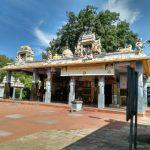
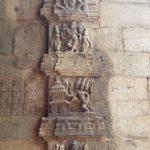
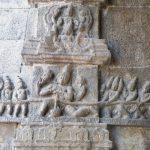
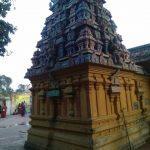
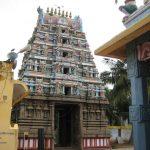
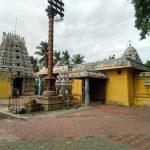
The Agastheeswarar Temple follows the classic Dravidian architectural style, featuring a five-tiered Rajagopuram (entrance tower). The sanctum houses a Swayambhu Lingam (self-manifested) of Agastheeswarar. The walls of the temple complex feature intricate sculptures depicting the legends of Sage Agastya and the various avatars of Shiva.
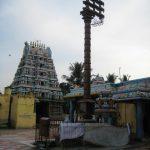
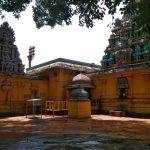
A notable feature is the shrine for Nandhi (the sacred bull), which faces the main deity directly. The Mandapas (halls) are supported by stone pillars adorned with carvings of divine figures and floral motifs, showcasing the craftsmanship of the era. While specific ASI designation details are pending official verification, the structural integrity and traditional Vastu alignment reflect ancient Tamil temple engineering.
Darshan & Ritual Logistics
Devotees can perform specific sevas and view the Agasthya Theertham within the temple complex. Below are the daily schedules and upcoming festival dates for the year 2026.
Daily Timings
| Session | Timings |
|---|---|
| Morning Opening | 05:00 AM |
| Morning Closing | 01:00 PM |
| Afternoon Opening | 04:00 PM |
| Evening Closing | 08:00 PM |
Key Sevas (Poojas)
- Kalasanthi: 07:00 AM (Morning worship)
- Uchikalam: 12:00 Noon (Mid-day offering)
- Sayaratchai: 08:00 PM (Evening closing ritual)
- Pradosham: Performed on the 13th lunar day of every fortnight (highly auspicious).
Online Seva Booking: While dedicated online booking portals may vary, devotees are encouraged to contact the temple trust directly at the numbers provided below to reserve special Abhishekam slots or Annadhanam services for 2026.
2026 Major Festival Dates
- Pradosham: Occurring twice monthly (e.g., Jan 11, Jan 26, Feb 9, etc.) – Check Tamil calendar for exact Suddha Tithi.
- Mahashivratri: February 26, 2026 (High significance; expect crowds).
- Navarathri: September 22 – October 1, 2026 (Celebrated with special homams).
- Thiruvathirai: December 14, 2026 (Dedicated to Lord Nataraja).
- Panguni Uthira Kalyana Uthsavam: March-April 2026 (Temple marriage festival).
Practical Visitor Guidance
Planning your visit ensures a spiritually fulfilling experience without logistical hurdles.
Dress Code & Etiquette
- Attire: Traditional Indian clothing is preferred (Dhoti/Veshti for men, Saree/Salwar Kameez for women). Avoid shorts and sleeveless tops.
- Photography: Generally permitted in the outer quadrilaterals but prohibited inside the sanctum sanctorum (Garbhagriha).
- Mobile Lockers: It is advisable to leave valuables in your vehicle. Small mobile lockers may be available near the entrance, but check availability upon arrival.
- Accessibility: The temple has ramps for basic access, but the inner sanctum involves a few steps. Senior citizens can request assistance from temple volunteers.
Crowd Management
- Best Hours: Weekday mornings (7:00 AM – 9:00 AM) offer the most peaceful darshan.
- Peak Times: Avoid Saturdays, Sundays, and Pradosham evenings if you prefer shorter queues.
- Seasonal Advice: In May and June (summer), the temperature in Thiruvallur exceeds 35°C. Carry a water bottle, wear a hat, and use the provided shade in the Mandapam.
Pilgrimage Connectivity
How to Reach
The Agastheeswarar Temple is located in Pancheshti, approximately 31 km from Chennai city center, on the Chennai-Kolkata highway (NH16).
- By Air: Chennai International Airport (MAA) is the nearest airport, approximately 44 km away.
- By Rail: Ponneri Railway Station is the closest railhead (approx. 8 km). Alternatively, Thiruvallur Railway Station is about 20 km away.
- By Road: From Chennai, take the NH16 (Chennai-Kolkata Highway) towards Red Hills. Cross Karanodai and take the right turn towards Thatchur Cross Road before Ponneri. The temple is about 500 meters from this turn. Buses are available from Chennai Broadway and Koyambedu CBT to Ponneri; from Ponneri, local transport to Pancheshti is frequent.
Nearby Sacred Sites
- Thiruvilankeshwarar Temple: Located a few kilometers away, associated with the legend of King Mithrathuvasan and the tiger.
- Korattur Munneswarar Temple: A powerful village deity temple on the way back to Chennai.
- Kailasanathar Temple, Thiruvenkatapuram: A historic Shiva temple in the vicinity, ideal for a half-day pilgrimage circuit.
Frequently Asked Questions (FAQ)
Is there a VIP darshan entry available?
Generally, as a traditional village temple, there is no formal VIP ticket system. However, devotees who sponsor special Sevas (like Abhishekam or Annadhanam) are accorded priority entry during ritual times.
What is the significance of the South-facing sanctum?
A South-facing sanctum is specifically sought for resolving legal issues, removing black magic, and overcoming obstacles caused by planetary afflictions (specifically Saturn/Shani effects).
Are non-Hindus allowed inside?
Generally, entry is restricted to those who practice the Hindu faith, as is customary for most active worship centers in Tamil Nadu. However, architectural viewing from the entrance may be permitted.
Is there a guesthouse for staying overnight?
There are no major guesthouses within the temple complex. For accommodation, it is recommended to stay in Thiruvallur town or on the outskirts of Chennai (Red Hills area), which are about 20-30 minutes away by car.
How do I book the Annadhanam (Free Meal) service?
Annadhanam can be sponsored for special occasions. Please contact the temple administration using the numbers listed below a few days in advance to make arrangements.
Contact Details
Agastheeswarar Temple,
Pancheshti, Ponneri,
Thiruvallur District – 601 204
Mobile: +91 93823 16493 / 98413 17500 / 94442 20780
Mobile: +91 94441 46752 / 98413 44867
Mobile: +91 99625 70445 / 97898 92925
Photo Gallery

Recent Posts

Shri Kaamkoteeshwar Mandir, Varanasi – History & Significance
In the heart of Kashi, the eternal city of Lord Shiva, where the Ganges flows with celestial grace, stands the Shri Kaamkoteeshwar Mandir. This sacred Sannidhi is not merely a temple but a profound spiritual bridge between the Northern…

ओ सांवरे तूने ही मुझको संभाला – Lyrics & Meaning
ओ सांवरे तूने ही मुझको संभाला – A Prayer to Shyam Origin & Spiritual Essence Why This Bhajan Resonates Devotees chant this when overwhelmed by life’s storms—the refrain ‘तूने ही मुझको संभाला’ is the soul’s sigh of relief: “You…

कथा ये है महाराज मेरे की – Lyrics & Meaning
कथा ये है महाराज मेरे की छत्रपति संभाजी महाराज – A Prayer to Chhatrapati Sambhaji Maharaj Origin & Spiritual Essence Why This Bhajan Resonates Devotees chant this when their spirit feels tested—its powerful refrain “महाराज मेरे” is a soul’s…

Rigveda Samhita Yathartha Anuvada (ऋग्वेद संहिता यथार्थ अनुवाद) – Complete Set with Anvayartha & Hindi/English Translation
The Rigveda is the oldest surviving scripture of humanity and the foundational text of Sanātana Dharma. For serious students, scholars, UPSC aspirants studying ancient Indian history, Sanskrit learners, and spiritual seekers, a precise and grammatically structured translation is indispensable.…

आना भी अकेला है जाना भी अकेला है – Lyrics & Meaning | BharatTemples
आना भी अकेला है जाना भी अकेला है – A Prayer to the Divine Witness Origin & Spiritual Essence Why This Bhajan Resonates Devotees turn to this bhajan in moments of deep reflection—when life’s attachments begin to ache. The…

माता शेरावाली के द्वार जो भी जाता है – Lyrics & Meaning
माता शेरावाली के द्वार जो भी जाता है – A Prayer to Maa Sherawali Origin & Spiritual Essence Why This Bhajan Resonates Devotees turn to this bhajan in times of fear or uncertainty—its promise that no one leaves Maa’s…

मार लेना सपणी उबार लेणा भवरा – Lyrics & Meaning
मार लेना सपणी उबार लेणा भवरा – A Prayer to the Divine Beloved Origin & Spiritual Essence Why This Bhajan Resonates Devotees chant this in moments of deep vulnerability—its cry of “मार लेना सपणी, उबार लेणा भवरा” is the…

हमें श्याम सुंदर भरोसा तुम्हारा – Lyrics & Meaning
हमें श्याम सुंदर भरोसा तुम्हारा – A Prayer to Shyam Sundar Origin & Spiritual Essence Why This Bhajan Resonates Devotees chant this when feeling alone—its refrain ‘de do sahara’ is the soul’s cry for divine support. Lyrics in Hindi…

Mere Satguru Ne Di Thi Davai Lyrics in Hindi & Meaning
Mere Satguru Ne Di Thi Davai: Invoking the Guru’s Liberating Wisdom This soul-stirring bhajan venerates the Satguru (True Spiritual Master) as the divine physician who dispenses the only remedy for life’s deepest sufferings. Composed by Sant Karmaveer Tufani, it…

Janm Diyo Thari Maa Dukh Dekhiyo Lyrics in Hindi & Meaning
जन्म दियो थारी माँ दुख देखियो (Maa’s Grief Upon Birthing You) This soul-stirring Chetavani Bhajan (admonitory hymn) is addressed to the Divine Mother (Maa) – a call for repentance when children forget their filial duties in the dark age…