

Contents
- 1 Alappancode Easwara Kala Bhoothathan Temple: A Definitive Pilgrimage Guide
Alappancode Easwara Kala Bhoothathan Temple: A Definitive Pilgrimage Guide
Introduction & Spiritual Essence
Nestled in the serene landscape of Anducode in Kanyakumari District, the Alappancode Easwara Kala Bhoothathan Temple stands as a beacon of faith for devotees across Tamil Nadu and Kerala. This ancient shrine is primarily dedicated to Lord Ayyappa, revered here in the form of Alappancode Ammavan, and the fierce aspect of Lord Shiva as Bhoothathan.
Phalaśruti (Spiritual Benefits): Why do devotees undertake this pilgrimage? It is believed that offering prayers here aids in cleansing ancestral karma. The temple is considered a powerful center for Shanthi (peace) and Dhana Prapti (prosperity). Devotees visit to seek protection from planetary afflictions and to receive the blessings of Ayyappa, the deity of Dharma and Justice.
Historical Origins & Scriptural Legend
Scriptural Legend: While specific Puranic verses vary, local tradition holds that the deity is a Swayambhu (self-manifested) idol discovered by the ancestors of the four joint-family trustees. The temple is deeply rooted in the lore of Lord Ayyappa, who is depicted here as a harmonious union of Shiva and Vishnu.
Administrative Heritage: Unlike many modern institutions, the temple retains its ancient administrative structure. It is governed by the hereditary trustees belonging to the four families of the same origin: Mattaeppally, Kizhakae Veedu-1, Kizhakae Veedu-2, and Kokkuvilakam. This lineage preserves the authentic rituals passed down through generations.
Architectural Marvels
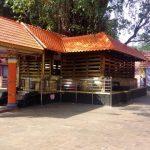
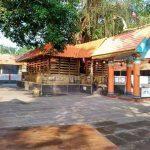
The temple exhibits the grandeur of traditional Dravidian Architecture. The structure is designed in accordance with Vastu Shastra, ensuring energy alignment.
- The Sanctum (Garbhagriha): It houses the main deity facing east, featuring distinct architectural elements typical of ancient South Indian temples.
- Mandapas: The temple complex includes spacious pillared halls used for religious discourses and rituals.
- Notable Features: The outer walls feature intricate sculptures depicting scenes from Hindu mythology. The temple grounds are designed to accommodate the large processions typical of this shrine.
While the temple is an ancient protected monument, its architectural splendor lies in its rustic, unpolluted aesthetics that evoke a sense of timeless sanctity.
Darshan & Ritual Logistics
To facilitate a smooth darshan, devotees should be aware of the opening hours and special rituals. Please note that times are subject to change during festivals.
Daily Opening Hours
| Session | Timing |
|---|---|
| Morning | 5:30 AM – 10:30 AM |
| Evening | 5:00 PM – 6:30 PM |
| Special Timing (Wed & Sat) | Sanctum opens until 12:30 AM |
Key Sevas and Rituals
- Abhishekam: Ritual bathing of the deity. Best performed during morning hours.
- Archana: Recitation of holy names for personal well-being.
- Vilakku (Deepa Aradhana): Offered during evening darshan.
Online Seva Booking: As of 2026, online bookings for standard darshan are generally available via the Tamil Nadu Hindu Religious & Charitable Endowments (HR&CE) portal. However, for specific Archana slots, it is recommended to check the official HR&E website or contact the temple administration directly, as the hereditary trustees manage certain special rituals on-site.
2026 Major Festival Dates
The temple is famous for its annual festival held on the last Saturday of December. In 2026, this falls on December 26, 2026.
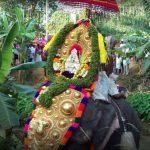
- Procession: The festival is renowned for its elephant procession. Over twenty-five caparisoned elephants participate in the Veedhi Ula (street procession).
- Route: The procession starts from the Kariyathara Temple in Anducode and culminates at Alappancode, covering approximately 7 kilometers.
Practical Visitor Guidance
To ensure a respectful and hassle-free visit, please adhere to the following guidelines:
Code of Conduct
- Dress Code: Traditional attire is mandatory. Men should wear Veshti (dhoti) or formal trousers with a shirt. Women should wear saree, churidar, or other modest traditional clothing.
- Photography: Strictly prohibited inside the sanctum sanctorum. Photography in the outer precincts may require permission from the trustees.
- Electronics: Mobile phones are allowed but must be silenced. Photography using mobile devices is restricted.
Crowd Management & Seasonal Advice
- Best Hours: For a peaceful darshan, visit between 7:00 AM and 9:00 AM on weekdays.
- Festival Season: The last Saturday of December draws massive crowds from Kerala and Tamil Nadu. Arrive at least 4 hours prior to the procession start time if you wish to view the elephants.
- Seasonal Tips: Kanyakumari experiences heavy rainfall during the monsoon (October–November). Carry an umbrella. Summers (April–May) are humid; carry water and stay hydrated.
- Accessibility: The temple has basic accessibility features, but the inner sanctum involves steps. Wheelchair access is limited to the outer halls.
Pilgrimage Connectivity
The temple is strategically located near the Tamil Nadu-Kerala border, making it easily accessible.
How to Reach
- Nearest Railway Station: Kuzhithurai (Approx. 5 km).
- Nearest Airport: Trivandrum International Airport (Thiruvananthapuram, approx. 43 km).
- Road Connectivity: The temple is well-connected via NH-66 and State Highways. Major distances include:
- Marthandam: 5 km
- Nagercoil: 33 km
- Kanyakumari: 57 km
- Thiruvananthapuram: 43 km
Nearby Sacred Sites (Pilgrimage Circuit)
Extend your spiritual journey by visiting these nearby temples:
- Suchindram Thanumalayan Temple: Located approximately 20 km away, famous for its musical pillars and towering Anjaneyar statue.
- Udayagiri Fort (Kanya Kumari): A historic site combining nature and history, roughly 30 km away.
- Sree Padmanabhaswamy Temple: The world-renowned temple in Thiruvananthapuram, Kerala, just 45 km from Alappancode.
Photo Gallery
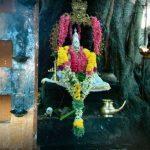
Visuals of the temple complex and festivals.


Frequently Asked Questions (FAQs)
1. Is there a VIP darshan entry available?
While the temple administration (HR&CE) facilitates special darshan tickets, the Alappancode temple is unique due to its administration by hereditary trustees. VIP darshan is strictly based on devotee consensus and trustee permissions. General paid darshan options are limited; it is advisable to follow the standard queue system.
2. What are the accommodation options nearby?
There are no lodges within the temple complex. However, budget hotels and guest houses are available in Marthandam and Nagercoil. For premium stays, Thiruvananthapuram (45 km) offers numerous options.
3. Can we bring our own elephants for the festival?
No. The temple organizers have a strict protocol for selecting elephants for the annual festival. All elephants are sourced through authorized temple trusts and owners in Kerala and Tamil Nadu.
4. Is the temple open on all public holidays?
Yes, the temple remains open, but the schedule may change on specific festival dates. The temple is closed on traditional days (Amavasya/New Moon) for specific hours, though the sanctum usually remains open for devotees.
5. What is the significance of the name “Bhoothathan”?
Bhoothathan refers to a form of Lord Shiva associated with the Ganas (attendants). In this temple, the energy is fierce yet protective, safeguarding the village and its devotees from negative influences.
Recent Posts

ओ सांवरे तूने ही मुझको संभाला – Lyrics & Meaning
ओ सांवरे तूने ही मुझको संभाला – A Prayer to Shyam Origin & Spiritual Essence Why This Bhajan Resonates Devotees chant this when overwhelmed by life’s storms—the refrain ‘तूने ही मुझको संभाला’ is the soul’s sigh of relief: “You…

कथा ये है महाराज मेरे की – Lyrics & Meaning
कथा ये है महाराज मेरे की छत्रपति संभाजी महाराज – A Prayer to Chhatrapati Sambhaji Maharaj Origin & Spiritual Essence Why This Bhajan Resonates Devotees chant this when their spirit feels tested—its powerful refrain “महाराज मेरे” is a soul’s…

Rigveda Samhita Yathartha Anuvada (ऋग्वेद संहिता यथार्थ अनुवाद) – Complete Set with Anvayartha & Hindi/English Translation
The Rigveda is the oldest surviving scripture of humanity and the foundational text of Sanātana Dharma. For serious students, scholars, UPSC aspirants studying ancient Indian history, Sanskrit learners, and spiritual seekers, a precise and grammatically structured translation is indispensable.…

आना भी अकेला है जाना भी अकेला है – Lyrics & Meaning | BharatTemples
आना भी अकेला है जाना भी अकेला है – A Prayer to the Divine Witness Origin & Spiritual Essence Why This Bhajan Resonates Devotees turn to this bhajan in moments of deep reflection—when life’s attachments begin to ache. The…

माता शेरावाली के द्वार जो भी जाता है – Lyrics & Meaning
माता शेरावाली के द्वार जो भी जाता है – A Prayer to Maa Sherawali Origin & Spiritual Essence Why This Bhajan Resonates Devotees turn to this bhajan in times of fear or uncertainty—its promise that no one leaves Maa’s…

मार लेना सपणी उबार लेणा भवरा – Lyrics & Meaning
मार लेना सपणी उबार लेणा भवरा – A Prayer to the Divine Beloved Origin & Spiritual Essence Why This Bhajan Resonates Devotees chant this in moments of deep vulnerability—its cry of “मार लेना सपणी, उबार लेणा भवरा” is the…

हमें श्याम सुंदर भरोसा तुम्हारा – Lyrics & Meaning
हमें श्याम सुंदर भरोसा तुम्हारा – A Prayer to Shyam Sundar Origin & Spiritual Essence Why This Bhajan Resonates Devotees chant this when feeling alone—its refrain ‘de do sahara’ is the soul’s cry for divine support. Lyrics in Hindi…

Mere Satguru Ne Di Thi Davai Lyrics in Hindi & Meaning
Mere Satguru Ne Di Thi Davai: Invoking the Guru’s Liberating Wisdom This soul-stirring bhajan venerates the Satguru (True Spiritual Master) as the divine physician who dispenses the only remedy for life’s deepest sufferings. Composed by Sant Karmaveer Tufani, it…

Janm Diyo Thari Maa Dukh Dekhiyo Lyrics in Hindi & Meaning
जन्म दियो थारी माँ दुख देखियो (Maa’s Grief Upon Birthing You) This soul-stirring Chetavani Bhajan (admonitory hymn) is addressed to the Divine Mother (Maa) – a call for repentance when children forget their filial duties in the dark age…
Bhadi Sabha Mein Thane Manaun Lyrics in Hindi & Meaning
Bhadi Sabha Mein Thane Manaun: Invoking the Spear-Wielding Mother Mata Bhawani (श्री ज्वाला भवानी), the fiery manifestation of Shakti worshipped as the Protector of Dharma in Her Dhaulagarh sanctum. Origin & Spiritual Essence Composed in Rajasthani folk tradition by…