Ambaji Temple History and Darshan Timings: The Ultimate Guide to 51 Shakti Peethas
Receive daily temple updates, divine darshan, and morning bhajans directly on WhatsApp.
Contents
- 1 Introduction & Spiritual Essence of Ambaji Mata
- 2 Historical Origins & Scriptural Legend
- 3 Architectural Marvels
- 4 Darshan & Ritual Logistics
- 5 Practical Visitor Guidance
- 6 Pilgrimage Connectivity
- 7 Photo Gallery
- 8 Frequently Asked Questions (FAQ)
- 9 Contact Details
Introduction & Spiritual Essence of Ambaji Mata
Nestled on the border of Gujarat and Rajasthan, Ambaji Temple stands as a beacon of divine energy, drawing millions of devotees annually. Known formally as the Arasuri Ambaji Mata Temple, it is revered as one of the 51 Shakti Peethas scattered across the Indian subcontinent. Unlike other temples where the deity is sculpted in stone, the presiding goddess here is enshrined in a mystical form—the Shree Visa Yantra. This sacred geometric diagram is the focal point of worship, representing the Vishwa Yantra (the universe itself).
Phalaśruti: The Boon of Visiting
Devotees undertake this arduous pilgrimage to seek the blessings of Mata Ambe. According to ancient scriptures, visiting this Shakti Peeth helps cleanse ancestral karma and liberates the soul from the cycle of rebirth. Specifically, it is believed that offering prayers here fulfills the deepest desires of the devotee and protects the family from malefic planetary influences. The Phalaśruti (benefits) of circumambulating the temple and performing Archana at the Visa Yantra is said to grant immense spiritual merit (Punya) equivalent to visiting all other holy shrines.
Historical Origins & Scriptural Legend
The history of Ambaji is a tapestry woven with threads of mythology, geography, and royal patronage.
📖 Related: Jawalamukhi Temple History & Darshan Timings: Complete Pilgrimage Guide
The Sthala Purana and the Heart of Sati
Tradition holds that this site is where the heart of Goddess Sati (the first incarnation of Goddess Parvati) fell. When Lord Shiva carried Sati’s body following her self-immolation, the heart dropped at this specific location on Mount Abu, known today as Gabbar Hill. The temple at the foothills serves as the primary center of worship for the Yantra located on the hilltop.
Dynastic Patronage and Renovations
While the origins are mythological, the current structure reflects the architectural prowess of the Paramara Dynasty and subsequent rulers of the Mewar region. According to temple records and historical inscriptions, the temple was significantly renovated in the 12th century under the patronage of King Jayasimha Siddharaja. The sanctum has survived centuries of weathering, with ongoing conservation efforts by the State Archaeology Department ensuring its preservation for future generations.
Architectural Marvels
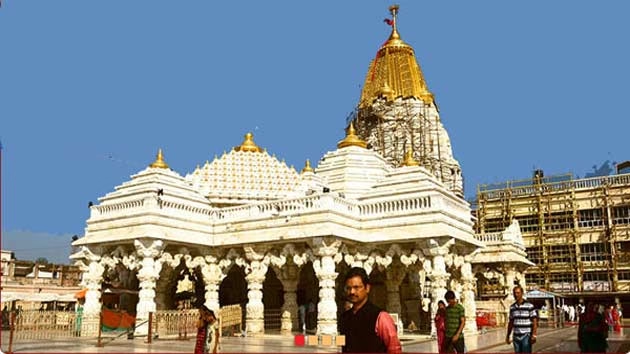
The Ambaji Temple is a masterpiece of Indo-Nagara architecture, blended with distinct Gujarati stone craftsmanship. The temple complex is built using intricately carved white marble, which gleams under the sun.
Sanctum and Mandapas
The Garbhagriha (sanctum sanctorum) is an octagonal chamber housing the Shree Visa Yantra. The walls are adorned with beautiful sculptures of various deities, though the central focus remains the Yantra, which is adorned with a crown and jewelry for daily rituals. The complex features spacious Mandapas (pillared halls) with ornate ceilings, supported by pillars that narrate stories from the Devi Mahatmya through carvings.
The Gabbar Hill Temple
Separate from the main temple but integral to its significance is the shrine on Gabbar Hill. Accessible via a ropeway (cable car) or a trek of 365 steps, the hilltop temple offers a panoramic view of the surrounding landscape. The hill itself is considered a natural representation of a Mandala in Vastu Shastra.
Darshan & Ritual Logistics
To ensure a smooth spiritual journey, devotees must adhere to the specific timings and protocols established for the temple.
Daily Darshan Timings (2026 Schedule)
The temple remains open throughout the day in three segments.
| Session | Timings |
|---|---|
| Morning | 06:00 AM – 11:30 AM |
| Midday Break | 11:30 AM – 12:30 PM (Closed) |
| Afternoon | 12:30 PM – 04:30 PM |
| Evening | 06:30 PM – 09:00 PM |
📖 Related: Trilokpur Temple: History, Timings & Guide to Maa Bala Sundri
Key Sevas and Online Booking
Devotees can perform various Sevas (offerings) such as Abhishekam (ritual bathing of the deity) and Archana (chanting of names). For convenience, the Trust managing the temple offers online seva booking through their official portal. It is highly recommended to book Sevas in advance, especially during festival seasons.
2026 Major Festival Dates
- Bhadarvi Purnima (Full Moon): September 6, 2026 (This is the most significant festival at Ambaji, marked by a massive fair).
- Navratri: Two celebrations per year (Chaitra and Ashwin). In 2026, Ashwin Navratri will be the primary focus for the annual Garba celebrations.
- Diwali: The entire town is illuminated; special Aarti is performed at the temple.
Practical Visitor Guidance
To maintain the sanctity of the shrine and ensure safety, specific guidelines are strictly enforced.
Dress Code and Etiquette
Visitors are expected to wear traditional or modest clothing. Men should remove shirts before entering the sanctum (though this is less strictly enforced now, wearing a Dhoti or Kurta is appreciated). Women are encouraged to wear Sarees or Salwar Kameez. Photography of the main deity (Visa Yantra) is strictly prohibited.
Crowd Management and Seasonal Tips
Peak Hours: The temple is most crowded between 7:00 AM and 9:00 AM, and 6:00 PM to 8:00 PM. For a peaceful Darshan, visit between 10:00 AM and 12:00 PM.
Seasonal Advice: Summers (April–June) in Banas Kantha can be harsh, with temperatures soaring above 40°C. Carry ample water, a hat, and sunglasses. The monsoon season (July–September) brings lush greenery but requires caution during the trek to Gabbar Hill due to slippery steps.
Accessibility and Facilities
The temple complex is wheelchair accessible to a large extent, with ramps provided for the main hall. Mobile lockers are available near the entrance for depositing electronic devices and leather items before entering the sanctum. Shoe storage is managed by the trust volunteers.
Pilgrimage Connectivity
Ambaji is well-connected by road and rail, making it accessible for pilgrims from across India.
How to Reach Ambaji
- By Air: The nearest airport is Sardar Vallabhbhai Patel International Airport, Ahmedabad (approx. 185 km). From there, you can hire a taxi or take a GSRTC bus.
- By Rail: The closest railway station is Abu Road (approx. 20 km). Several express trains halt here. Alternatively, Palanpur (65 km) is another major junction.
- By Road: Ambaji is located on the Ahmedabad-Abu Road Highway. Regular state transport buses run from Ahmedabad, Udaipur, and Mount Abu.
📖 Related: Manimahesh Kailash Temple: History, Darshan Timings & Complete Pilgrimage Guide
Nearby Sacred Sites (Pilgrimage Circuit)
Make the most of your trip by visiting these nearby spiritual destinations:
- Gabbar Hill: The original seat of the Goddess. A ropeway service is available for easy access.
- Kamakshi Mandir: Located just 1 km from Ambaji, this temple is dedicated to Goddess Kamakshi (a form of Shakti).
- Kumbhariya Jain Temple: Situated about 10 km away, this complex features 108 exquisitely carved marble temples dedicated to various Jain Tirthankaras.
Photo Gallery
images, Ambaji, Banas Kantha
ambaji_temple_colorable01, Ambaji, Banas Kantha

1488282104-2156, Ambaji, Banas Kantha
download, Ambaji, Banas Kantha
Frequently Asked Questions (FAQ)
1. Is photography allowed inside the Ambaji Temple?
No, photography of the main deity (Shree Visa Yantra) is strictly prohibited inside the sanctum. However, you are free to take photos in the outer courtyard and halls.
2. Is there a VIP or special entry darshan available?
Yes, the temple trust offers a “Special Darshan” ticket which allows devotees to bypass the general queue during peak hours. This can be purchased online or at the trust office near the temple entrance.
3. What is the significance of the Gabbar Hill temple?
Gabbar Hill is the exact location where the heart of Goddess Sati is believed to have fallen. The temple at the foothills (Ambaji) is where the Yantra is worshiped daily, but the hilltop is the original spiritual epicenter.
4. Are there accommodation facilities available near the temple?
Yes, there are numerous Dharamshalas, guest houses, and budget hotels run by the Ambaji Trust and private owners. It is advisable to book accommodation in advance during the Bhadarvi Purnima festival.
5. What are the food options available for pilgrims?
The temple trust runs a Bhojanalaya (dining hall) that serves simple, pure vegetarian Prasad meals at subsidized rates. Several private restaurants near the temple square also serve traditional Gujarati thalis.
Contact Details
Official Address:
Ambaji Mata Temple Trust, Ambaji Village,
Banas Kantha District, Gujarat – 385110.
Phone: +91 2749 272 469 (Temple Office)