

Contents
- 1 Introduction & Spiritual Essence: The Abode of Immortality
- 2 Historical Origins & Scriptural Legend
- 3 Architectural Marvels: A Hoysala Masterpiece
- 4 Darshan & Ritual Logistics (2026 Guide)
- 5 Practical Visitor Guidance
- 6 Pilgrimage Connectivity
- 7 Photo Gallery
- 8 Frequently Asked Questions (FAQs)
- 8.1 1. Is there a VIP or Special Darshan entry available?
- 8.2 2. Are there accommodation facilities near the temple?
- 8.3 3. What is the significance of the anti-clockwise Ramayana panels?
- 8.4 4. Is the temple accessible for senior citizens?
- 8.5 5. What is the best time of year to visit Amrutesvara Temple?
- 8.6 6. Is non-vegetarian food allowed near the temple?
Introduction & Spiritual Essence: The Abode of Immortality
Nestled in the serene village of Amruthapura in the Chikkamagaluru district of Karnataka, the Amrutesvara Temple (also spelled Amruteshwara) stands as a testament to the devotion of the Hoysala dynasty. Dedicated to Lord Shiva, the primary deity here is a Swayambhu (self-manifested) Shivalinga. The temple derives its name from the commander Amrutheshwara Dandanayaka, who built it in 1196 C.E., and the term “Amrutha” signifies the nectar of immortality.
Phalaśruti (Spiritual Benefits): Devotees visit this sacred shrine seeking relief from afflictions and blessings for prosperity. It is widely believed that offering prayers here helps in:
- Cleansing Ancestral Karma: Performing rituals for deceased ancestors.
- Academic Success: Special prayers for children struggling in education.
- Health & Wealth: Seeking healing for diseases and stability in finances.
- Removal of Doshas: Performing Bilva Archane and Kumkuma Archane to remove planetary maleficences.
| Date built: | 12th century |
|---|---|
| Deity: | shivalinga |
| Architectural style: | – |
| Major festivals | – |
| Locale: | – |
| District:: | Chikkamagaluru |
| Address: | Amruthapura Village, Near Tarikere, Chikmagalur District – 577228 |
| Phone | – |
Historical Origins & Scriptural Legend
The Hoysala Patronage
According to temple records and historical inscriptions, the Amrutesvara Temple was constructed in 1196 C.E. during the reign of the mighty Hoysala King Veera Ballala II. The visionary behind this architectural marvel was Amrutheshwara Dandanayaka, a trusted commander of the king. The Hoysalas were renowned for their patronage of arts and architecture, and this temple marks a pivotal era in the evolution of the “Old Hoysala Style.”
Sthala Purana & Local Legends
Tradition holds that the main Shivalinga is not merely consecrated but is a 300-year-old Trimurti originally brought from the River Kandikevale in Nepal. The temple complex is also associated with Ruvari Mallitamma, arguably Karnataka’s most famous sculptor, who is believed to have begun his illustrious career here, carving the domed ceilings of the main mantapa. The southern wall features a large stone inscription containing poems by the medieval Kannada poet Janna, who held the title Kavichakravarti (Emperor among Poets).
Architectural Marvels: A Hoysala Masterpiece
Style and Vastu Shastra
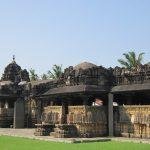
The temple exemplifies the Hoysala architectural style, built on a stellate (star-shaped) platform. It follows an Ekakuta vimana design (single shrine) with a unique integration of Vastu elements. The structure is oriented to the east, capturing the first rays of the sun, which is considered auspicious for Shiva worship.
The Mantapa and Shikhara
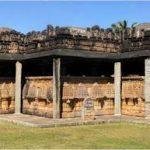
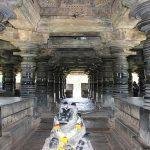
The temple features a spacious open mantapa (hall) with 29 bays and a closed mantapa with 9 bays. The ceiling is supported by rows of shining lathe-turned pillars, a signature Hoysala-Chalukya decorative idiom.
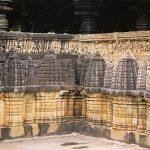
The Shikhara (tower) above the sanctum is adorned with miniature decorative towers (Aedicules) and the fearsome Kirtimukhas (demon faces). Notably, the base of the wall features five mouldings, characteristic of the older Hoysala style. The Sukanasi (vestibule tower) displays the Hoysala emblem of Sala fighting the lion.
Sculptural Grandeur
The outer parapet wall of the open mantapa houses 140 panel sculptures. Unlike other temples where panels are miniature, here they are comparatively larger. The Ramayana is depicted in 70 panels on the south wall in a unique anti-clockwise progression. The north wall features 25 panels of Lord Krishna’s life and 45 panels depicting scenes from the Mahabharata, all in the conventional clockwise direction.
Darshan & Ritual Logistics (2026 Guide)
Daily Timings
| Session | Timing |
|---|---|
| Morning Darshan | 06:00 AM – 12:00 PM |
| Afternoon Break | 12:00 PM – 04:00 PM |
| Evening Darshan | 04:00 PM – 08:30 PM |
Key Sevas & Online Booking
Devotees can perform several rituals dedicated to Lord Shiva. While online booking infrastructure varies for regional temples, the following Sevas are standard:
- Abhishekam: Ritual bathing of the Shivalinga (usually performed on Mondays and Pradosha timings).
- Bilva Archane: Offering of Bilva leaves (highly auspicious for Shiva).
- Kumkuma Archane: Offering Kumkuma to the deity, often performed by women seeking marital bliss and prosperity.
- Aksharbhyasam: A ceremony for young children to initiate education (writing the first letter).
Note: For online seva booking, devotees should check the official Karnataka Muzrai Department website or the temple administration office upon arrival.
2026 Festival Calendar
The following major festivals are significant for darshan at Amrutesvara Temple in 2026:
- Maha Shivaratri: February 26, 2026 (Special night-long vigils and Abhishekam).
- Karthika Deepam: November 5, 2026 (Lighting of lamps).
- Pradosha: Occurring twice a month (Tuesdays and Saturdays) – 5:30 PM to 7:30 PM.
Practical Visitor Guidance
Dress Code & Etiquette
As with all Hindu temples in Karnataka, modest dress is mandatory. Men should remove shirts (or wear traditional attire) and women should wear sarees, salwar kameez, or long skirts. Western attire like shorts and sleeveless tops are strictly prohibited.
Photography & Lockers
Photography is generally allowed in the outer courtyards and mantapa, but strictly prohibited inside the Garbhagriha (sanctum sanctorum). Mobile phones are permitted but should be on silent mode. There are no high-tech mobile lockers; however, the temple provides a cloakroom facility for bags and footwear.
Crowd Management & Seasonal Advice
- Best Hours: Visit between 9:00 AM and 11:00 AM to avoid morning rush, or post 6:00 PM for a serene evening darshan.
- Summer (March-May): Chikkamagaluru can be warm; carry a water bottle and an umbrella.
- Monsoon (June-September): The region becomes lush and scenic, but rains are heavy. Carry an umbrella and wear water-resistant footwear.
Pilgrimage Connectivity
How to Reach
- By Air: The nearest airport is Mangalore International Airport (IXE), approximately 220 km away. Alternatively, Kempegowda International Airport (BLR) in Bangalore is about 260 km via NH 79 and SH 24.
- By Rail: The nearest railway station is Tarikere Junction, located 11 km away. It is well-connected to Shimoga, Bangalore, and Mysore. From Tarikere, local taxis are available to Amruthapura (20 mins).
- By Road: The temple is located on NH 206. It is 67 km north of Chikkamagaluru and 35 km from Shimoga. Direct buses are available from Shimoga and Tarikere.
Nearby Sacred Sites (Pilgrimage Circuit)
Extend your spiritual journey by visiting these nearby landmarks:
- Chandramouleshwara Temple, Tarikere: A historic temple dedicated to Lord Shiva located in the town of Tarikere.
- Sri Rama Temple (Vibhishana’s Rama): Located in nearby Belavadi (approx. 30 km), showcasing another magnificent Hoysala structure.
- Bhadra Wildlife Sanctuary: While primarily a nature reserve, the surrounding areas are steeped in spiritual folklore regarding the Bhadra River.
Photo Gallery
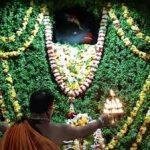
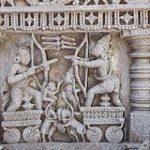
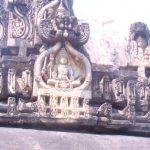
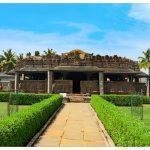
Frequently Asked Questions (FAQs)
1. Is there a VIP or Special Darshan entry available?
Generally, the Amrutesvara Temple operates on a free darshan system for all devotees. However, during major festivals like Maha Shivaratri, special lines may be arranged for senior citizens and differently-abled visitors. It is recommended to contact the temple office in advance for any VIP protocols.
2. Are there accommodation facilities near the temple?
Amruthapura is a small village with limited lodging options. It is advisable to stay in Chikkamagaluru (67 km) or Shimoga (35 km), which offer a wide range of hotels and guesthouses. Homestays are also popular in the Chikkamagaluru coffee estate region.
3. What is the significance of the anti-clockwise Ramayana panels?
The depiction of the Ramayana on the south wall in an anti-clockwise direction is an architectural anomaly in Hoysala temples. Scholars suggest this might symbolize a unique narrative flow or a specific theological interpretation of time and space within the temple’s Vastu.
4. Is the temple accessible for senior citizens?
The temple has a flat platform and an open mantapa. While there are no wheelchairs available on-site, the terrain is relatively even compared to other hill temples. However, assistance may be needed for navigating the steps to the sanctum.
5. What is the best time of year to visit Amrutesvara Temple?
The ideal time is between October and February when the weather is pleasant and cool, perfect for exploring the intricate stone carvings without the harsh sun.
6. Is non-vegetarian food allowed near the temple?
No. Being a holy site, the entire village of Amruthapura is strictly vegetarian. Alcohol and meat are prohibited within the vicinity.
Recent Posts

ओ सांवरे तूने ही मुझको संभाला – Lyrics & Meaning
ओ सांवरे तूने ही मुझको संभाला – A Prayer to Shyam Origin & Spiritual Essence Why This Bhajan Resonates Devotees chant this when overwhelmed by life’s storms—the refrain ‘तूने ही मुझको संभाला’ is the soul’s sigh of relief: “You…

कथा ये है महाराज मेरे की – Lyrics & Meaning
कथा ये है महाराज मेरे की छत्रपति संभाजी महाराज – A Prayer to Chhatrapati Sambhaji Maharaj Origin & Spiritual Essence Why This Bhajan Resonates Devotees chant this when their spirit feels tested—its powerful refrain “महाराज मेरे” is a soul’s…

Rigveda Samhita Yathartha Anuvada (ऋग्वेद संहिता यथार्थ अनुवाद) – Complete Set with Anvayartha & Hindi/English Translation
The Rigveda is the oldest surviving scripture of humanity and the foundational text of Sanātana Dharma. For serious students, scholars, UPSC aspirants studying ancient Indian history, Sanskrit learners, and spiritual seekers, a precise and grammatically structured translation is indispensable.…

आना भी अकेला है जाना भी अकेला है – Lyrics & Meaning | BharatTemples
आना भी अकेला है जाना भी अकेला है – A Prayer to the Divine Witness Origin & Spiritual Essence Why This Bhajan Resonates Devotees turn to this bhajan in moments of deep reflection—when life’s attachments begin to ache. The…

माता शेरावाली के द्वार जो भी जाता है – Lyrics & Meaning
माता शेरावाली के द्वार जो भी जाता है – A Prayer to Maa Sherawali Origin & Spiritual Essence Why This Bhajan Resonates Devotees turn to this bhajan in times of fear or uncertainty—its promise that no one leaves Maa’s…

मार लेना सपणी उबार लेणा भवरा – Lyrics & Meaning
मार लेना सपणी उबार लेणा भवरा – A Prayer to the Divine Beloved Origin & Spiritual Essence Why This Bhajan Resonates Devotees chant this in moments of deep vulnerability—its cry of “मार लेना सपणी, उबार लेणा भवरा” is the…

हमें श्याम सुंदर भरोसा तुम्हारा – Lyrics & Meaning
हमें श्याम सुंदर भरोसा तुम्हारा – A Prayer to Shyam Sundar Origin & Spiritual Essence Why This Bhajan Resonates Devotees chant this when feeling alone—its refrain ‘de do sahara’ is the soul’s cry for divine support. Lyrics in Hindi…

Mere Satguru Ne Di Thi Davai Lyrics in Hindi & Meaning
Mere Satguru Ne Di Thi Davai: Invoking the Guru’s Liberating Wisdom This soul-stirring bhajan venerates the Satguru (True Spiritual Master) as the divine physician who dispenses the only remedy for life’s deepest sufferings. Composed by Sant Karmaveer Tufani, it…

Janm Diyo Thari Maa Dukh Dekhiyo Lyrics in Hindi & Meaning
जन्म दियो थारी माँ दुख देखियो (Maa’s Grief Upon Birthing You) This soul-stirring Chetavani Bhajan (admonitory hymn) is addressed to the Divine Mother (Maa) – a call for repentance when children forget their filial duties in the dark age…
Bhadi Sabha Mein Thane Manaun Lyrics in Hindi & Meaning
Bhadi Sabha Mein Thane Manaun: Invoking the Spear-Wielding Mother Mata Bhawani (श्री ज्वाला भवानी), the fiery manifestation of Shakti worshipped as the Protector of Dharma in Her Dhaulagarh sanctum. Origin & Spiritual Essence Composed in Rajasthani folk tradition by…