

Contents
- 1 Introduction & Spiritual Essence
- 2 Historical Origins & Scriptural Legend
- 3 Architectural Marvels
- 4 Architecture
- 5 Legend / Local stories
- 6 Photo Gallery
- 7 Darshan & Ritual Logistics
- 8 Practical Visitor Guidance
- 9 How to Reach:
- 10 Contact Details
- 11 Pilgrimage Connectivity
- 12 Frequently Asked Questions (FAQ)
Introduction & Spiritual Essence
In the heart of Bhubaneswar, the capital of Odisha, stands the Ananta Vasudeva Temple, a timeless sanctuary dedicated to Lord Krishna, an avatar of Lord Vishnu. Unlike many temples in the region dedicated to Lord Shiva, this is a premier Vaishnava shrine, radiating an aura of divine benevolence and historical grandeur.
The primary deity here is worshipped as Ananta Vasudeva. The temple houses a unique triad of murtis: Lord Krishna, his elder brother Balarama, and sister Subhadra. These murtis are revered not just as deities but as family protectors and givers of spiritual liberation.
Phalaśruti: The Benefits of Darshan
According to temple lore and devotee faith, visiting Ananta Vasudeva brings specific spiritual benefits:
- Cleansing of Sins: Devotees believe that sincere darshan (viewing) of the Ananta Vasudeva trinity washes away accumulated karmic burdens.
- Family Harmony: As the deity represents the divine family of Nanda (Krishna), it is believed to bless devotees with unity and prosperity within their households.
- Relief from Afflictions: The name “Ananta” signifies the infinite, the endless serpent Shesha upon whom Lord Vishnu rests. Devotees pray here for relief from endless troubles and debts.
Historical Origins & Scriptural Legend
The temple is a testament to the glorious heritage of the Eastern Ganga Dynasty. While Bhubaneswar is famous for its Shiva temples (the Temple City), Ananta Vasudeva stands as a majestic outlier to this trend.
The Dynasty and Construction
According to temple records, the shrine was constructed in the 13th Century A.D. The credit goes to Queen Chandrika Devi, the daughter of King Anangabhima III and the queen of King Bhanudeva. It is believed that the Queen was divinely inspired to build this temple at a spot where an ancient image of Lord Vishnu was already being worshipped.
Restoration by the Marathas
While the Eastern Gangas built the original structure, the temple owes its current state of preservation to the Marathas in the late 17th Century. Having expanded their empire up to the Mahanadi river, the Maratha rulers recognized the temple’s significance and undertook a massive renovation project to restore its former glory.
Architectural Marvels
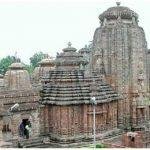
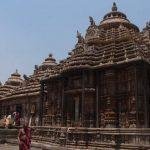
The Ananta Vasudeva Temple is a masterpiece of Kalinga Architecture, closely resembling the nearby Lingaraj Temple but with distinct Vaishnava influences.
Style and Vastu
The temple follows the Nagara style of architecture prevalent in Odisha. The structure is oriented according to Vastu Shastra principles, with the main shrine facing east towards the rising sun, symbolizing illumination.
Exterior Design
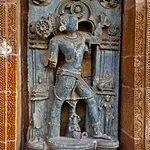
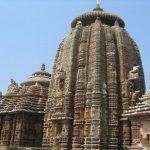
The outer walls feature longitudinal bands of miniature shikharas (spires). While similar to the Lingaraj temple, the Ananta Vasudeva temple features bands of three shikharas rather than the more complex configurations found elsewhere. The exterior walls are adorned with intricate sculptures, though historical notes suggest that many female figures are heavily ornamented, reflecting a stylistic evolution from earlier, purer forms.
The temple complex includes a spacious courtyard and a prayer hall (Mandapa) featuring vivid murals depicting scenes from Hindu mythology.
Ananta Vasudeva Temple is a Hindu temple dedicated to Lord Krishna, an avatar of Lord Vishnu located in Bhubaneswar, the state capital of Odisha, India.The temple was constructed in the thirteenth century, and the complete murties of Krishna, Balarama and Subhadra are worshipped there. Balarama stands under a seven hooded serpent, Subhadra holds Jewels pot and lotus in her two hands keeping her left foot over another jewel pot, while Krishna holds a mace, chakra, lotus and a conch. The temple dates back to the period of Chandrika Devi, the daughter of Anangabhima III, during the reign of the king Bhanudeva.
Architecture
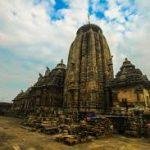
In form, the temple resembles the Lingaraj temple, but includes vaishnavite (Lord Vishnu related) sculptures.The temple has longitudinal bands of miniature shikharas (shrines), exactly like those in Lingaraj temple, with the minor difference that the number of the shikharas forming one longitudinal band in its case is only three.The sculpture in the exterior walls varies in character in each temple in Bhubaneswar. Most of the female sculptures in the temple walls are overly ornamanted and lack originality.
Legend / Local stories
It appears that the original image of Vishnu was worshipped on the spot where the great temple of Ananta Vasudeva was built in the 13th century A.D. Thus in the 13th century, Queen Chandrika of Eastern Ganga dynasty was prompted to construct a new temple – the temple of Ananta Vasudeva in this place. There must have been an old temple where this Vishnu image was installed. The Marathas, who extended their empire up to river Mahanadi, were responsible for renovating the Vishnu temple at Bhubaneswar in the late 17th Century.
Photo Gallery
Darshan & Ritual Logistics
Devotees are welcome to participate in daily rituals. The atmosphere is particularly serene during the early morning and evening aartis.
Daily Timings
Note: Timings are standard for 2026. Special hours apply during festivals.
| Session | Activity | Timing |
|---|---|---|
| Morning | Opening / Mangala Alati | 06:00 AM |
| Morning | Dhupa Darshan | 07:00 AM – 12:30 PM |
| Afternoon | Closure (Midday Rest) | 12:30 PM – 02:00 PM |
| Evening | Reopening / Sandhya Alati | 05:00 PM |
| Evening | Dhupa Darshan | 06:00 PM – 09:00 PM |
Key Sevas & Booking
While the temple administration often manages rituals locally, specific online seva booking for major festivals is available through the Odisha government temple portal. Key rituals include:
- Abhishekam: Ritual bathing of the deities (usually performed on Ekadashi).
- Archana: Recitation of holy names accompanied by offerings of flowers and betel leaves.
- Maha Naivedya: Offering of special food preparations (Prasad) to the Lord.
2026 Festival Calendar
Plan your visit around these auspicious days:
- Ratha Yatra (July 6, 2026): The chariot festival of Lord Jagannath is celebrated with great fervor in Bhubaneswar; special processions pass near the temple.
- Janmashtami (August 14, 2026): The birth of Lord Krishna. Expect night-long vigils and special decorations.
- Diwali (October 21, 2026): The festival of lights is celebrated as the return of Lord Rama (Vishnu’s avatar).
- Chandrika Yatra (November 2026): A local festival commemorating the founding queen of the temple.
Practical Visitor Guidance
To ensure a respectful and seamless visit, please adhere to the following guidelines:
- Dress Code: Traditional attire is highly recommended. Men should wear Dhoti or formal trousers with a shirt; women should wear Saree, Salwar Kameez, or skirts covering the knees. Avoid shorts and sleeveless tops.
- Photography: Photography is generally permitted in the courtyard and outer corridors. However, strictly prohibited inside the inner sanctum (Garbhagriha) where the deities reside.
- Mobile Phones & Lockers: Electronic devices should be kept silent. While there is no large-scale locker system inside, small hand bags are inspected. It is advisable to carry minimal belongings.
- Accessibility: The temple has a raised threshold; wheelchair access is limited to the outer courtyard. The stone flooring can be uneven, so sturdy footwear is advised.
Crowd Management & Best Hours
Bhubaneswar is a busy city. To avoid the rush:
- Best Time: Visit between 8:00 AM and 10:00 AM on weekdays for a quiet darshan.
- Weekends: Saturday and Sunday mornings attract local families; arrive before 7:00 AM.
- Seasonal Advice: Odisha summers (May-June) can be intensely hot. Carry a reusable water bottle and an umbrella. The post-monsoon season (October-February) offers the most pleasant weather.
How to Reach:
Contact Details
Official Address
Pilgrimage Connectivity
Ananta Vasudeva Temple is located in the Gouri Nagar, Old Town area of Bhubaneswar, a hub of ancient architecture.
How to Reach
- By Air: The nearest airport is Biju Patnaik International Airport (BBI), approximately 5-6 km away (15-20 mins by taxi).
- By Rail: Bhubaneswar Railway Station (BBS) is the main junction, roughly 5 km from the temple. Auto-rickshaws and ride-sharing apps (Uber/Ola) are readily available.
- By Road: The temple is located off the main arterial road connecting to National Highway 16 (NH 16). Local buses frequent the Old Town area, but a cab is the most convenient option for first-time visitors.
Nearby Sacred Sites
Enhance your pilgrimage circuit by visiting these nearby sites within a 2-kilometer radius:
- Lingaraj Temple: The most iconic landmark of Bhubaneswar, dedicated to Lord Shiva (Hara). Located just a short walk away.
- Mukteshwar Temple: Famous for its intricate stone archway and free-standing bell. A jewel of Kalinga architecture.
- Rajrani Temple: Known for its ornate spire and lack of an idol in the sanctum, surrounded by lush gardens.
Frequently Asked Questions (FAQ)
1. Is there a VIP darshan entry available?
Generally, Ananta Vasudeva Temple does not have a formal VIP entry system like larger temples. All devotees are allowed entry in an orderly queue. However, senior citizens and specially-abled visitors may request assistance from the temple staff for priority access.
2. Are there accommodation facilities near the temple?
While the temple itself does not have a guesthouse, the Old Town area has numerous budget hotels and government-run lodges. For more premium options, the Vani Vihar and Janpath areas of Bhubaneswar offer luxury hotels within a 15-minute drive.
3. Is there an entry fee for darshan?
No, general darshan is free for all devotees. There may be a nominal charge for special Sevas like Abhishekam, which typically ranges from ₹100 to ₹500 depending on the ritual.
4. Can non-Hindus visit the temple?
Most temples in Odisha have traditions regarding entry. While Ananta Vasudeva is generally welcoming, non-Hindu visitors are advised to respect local sentiments, dress modestly, and seek permission from the temple priests before entering the inner sanctum.
5. What is the significance of the “Seven-Hooded Serpent”?
Lord Balarama is depicted standing under a seven-hooded serpent (Shesha). This symbolizes protection and the control over primal energies. Shesha is the king of serpents and the eternal couch of Lord Vishnu, signifying the deep connection between the Vaishnava deities in this temple.
Recent Posts

ओ सांवरे तूने ही मुझको संभाला – Lyrics & Meaning
ओ सांवरे तूने ही मुझको संभाला – A Prayer to Shyam Origin & Spiritual Essence Why This Bhajan Resonates Devotees chant this when overwhelmed by life’s storms—the refrain ‘तूने ही मुझको संभाला’ is the soul’s sigh of relief: “You…

कथा ये है महाराज मेरे की – Lyrics & Meaning
कथा ये है महाराज मेरे की छत्रपति संभाजी महाराज – A Prayer to Chhatrapati Sambhaji Maharaj Origin & Spiritual Essence Why This Bhajan Resonates Devotees chant this when their spirit feels tested—its powerful refrain “महाराज मेरे” is a soul’s…

Rigveda Samhita Yathartha Anuvada (ऋग्वेद संहिता यथार्थ अनुवाद) – Complete Set with Anvayartha & Hindi/English Translation
The Rigveda is the oldest surviving scripture of humanity and the foundational text of Sanātana Dharma. For serious students, scholars, UPSC aspirants studying ancient Indian history, Sanskrit learners, and spiritual seekers, a precise and grammatically structured translation is indispensable.…

आना भी अकेला है जाना भी अकेला है – Lyrics & Meaning | BharatTemples
आना भी अकेला है जाना भी अकेला है – A Prayer to the Divine Witness Origin & Spiritual Essence Why This Bhajan Resonates Devotees turn to this bhajan in moments of deep reflection—when life’s attachments begin to ache. The…

माता शेरावाली के द्वार जो भी जाता है – Lyrics & Meaning
माता शेरावाली के द्वार जो भी जाता है – A Prayer to Maa Sherawali Origin & Spiritual Essence Why This Bhajan Resonates Devotees turn to this bhajan in times of fear or uncertainty—its promise that no one leaves Maa’s…

मार लेना सपणी उबार लेणा भवरा – Lyrics & Meaning
मार लेना सपणी उबार लेणा भवरा – A Prayer to the Divine Beloved Origin & Spiritual Essence Why This Bhajan Resonates Devotees chant this in moments of deep vulnerability—its cry of “मार लेना सपणी, उबार लेणा भवरा” is the…

हमें श्याम सुंदर भरोसा तुम्हारा – Lyrics & Meaning
हमें श्याम सुंदर भरोसा तुम्हारा – A Prayer to Shyam Sundar Origin & Spiritual Essence Why This Bhajan Resonates Devotees chant this when feeling alone—its refrain ‘de do sahara’ is the soul’s cry for divine support. Lyrics in Hindi…

Mere Satguru Ne Di Thi Davai Lyrics in Hindi & Meaning
Mere Satguru Ne Di Thi Davai: Invoking the Guru’s Liberating Wisdom This soul-stirring bhajan venerates the Satguru (True Spiritual Master) as the divine physician who dispenses the only remedy for life’s deepest sufferings. Composed by Sant Karmaveer Tufani, it…

Janm Diyo Thari Maa Dukh Dekhiyo Lyrics in Hindi & Meaning
जन्म दियो थारी माँ दुख देखियो (Maa’s Grief Upon Birthing You) This soul-stirring Chetavani Bhajan (admonitory hymn) is addressed to the Divine Mother (Maa) – a call for repentance when children forget their filial duties in the dark age…
Bhadi Sabha Mein Thane Manaun Lyrics in Hindi & Meaning
Bhadi Sabha Mein Thane Manaun: Invoking the Spear-Wielding Mother Mata Bhawani (श्री ज्वाला भवानी), the fiery manifestation of Shakti worshipped as the Protector of Dharma in Her Dhaulagarh sanctum. Origin & Spiritual Essence Composed in Rajasthani folk tradition by…