
Contents
- 1 Anniyur Abathsahayeswarar Temple: The Definitive Pilgrimage Guide
Anniyur Abathsahayeswarar Temple: The Definitive Pilgrimage Guide
Welcome to the sacred sanctuary of Anniyur Abathsahayeswarar Temple, a profound spiritual destination nestled in the Nagapattinam district of Tamil Nadu. As a revered Paadal Petra Sthalam—hallowed by the verses of the Saivite Nayanars—this temple stands as a testament to the enduring power of devotion and the architectural grandeur of the Chola dynasty.
This comprehensive guide is engineered for the modern pilgrim, blending ancient scriptural legends with practical logistics for a seamless darshan experience. Whether you are seeking ancestral peace or admiring the Dravidian architectural style, this guide to the Anniyur Abathsahayeswarar Temple history and darshan timings is your essential companion.
1. Introduction & Spiritual Essence
The Anniyur Abathsahayeswarar Temple is dedicated to Lord Shiva, worshipped here as Abathsahayeswarar (The Helper in Distress) and Vikucharanyeswarar. The presiding deity is a Swayambhu Lingam (self-manifested) of immense spiritual potency.
The temple is not merely a structure of stone but a living abode of divine grace. The consort, Perianayaki (also known as Akilandeshwari), faces south, offering benevolence to devotees. The temple is counted among the 275 Paadal Petra Sthalams glorified in the early medieval Tevaram poems by the saint poets Sambandar and Appar (Tirunavukkarasar).
Phalaśruti: The Boon of Visiting
Devotees flock to this Kshetram (temple complex) for specific spiritual benefits:
- Ancestral Liberation (Atma Shanti): It is believed that performing rituals here washes away ancestral karma, granting peace to departed souls.
- Relief from Shani (Saturn): Unlike other temples where Shani is feared, here the Lord is said to have blessed Shani, making this a powerful site for those facing adverse Sade Sati or Shani Dasha.
- Marital Harmony: Women observe special vows for the longevity of their Sumangali status (long life of the husband).
- Knowledge and Education: The unique presence of Medha Dakshinamurthy attracts students and parents seeking wisdom.
2. Historical Origins & Scriptural Legend
The history of Anniyur is steeped in the Agama traditions and oral folklore. While the exact founding date remains elusive in public records, the temple’s architecture and inscriptions suggest strong influences from the Chola and later Vijayanagara dynasties, likely spanning the 9th to 14th centuries.
The Legend of Manmatha
According to temple records and the Stala Purana, this is the site where Lord Shiva, in a fit of cosmic rage, opened his third eye to burn Manmatha (Cupid) to ashes. When Manmatha’s wife, Rathi, performed intense penance here, Shiva granted her wish to restore her husband. The Swayambhu Lingam in the sanctum is believed to have manifested to bless Manmatha and Rathi upon the restoration of Manmatha’s form.
The Connection to Agni and Harichandra
Another significant legend states that Lord Shiva appeared before Agni (the God of Fire) under a lemon tree (the temple’s Sthala Vriksham). Hence, the name Agnipureeswarar. Additionally, the temple is closely linked to King Harichandra, known for his unwavering truthfulness. Shiva blessed him here, earning the deity the name Aabatsakayeswarar (The Savior in Peril).
3. Architectural Marvels
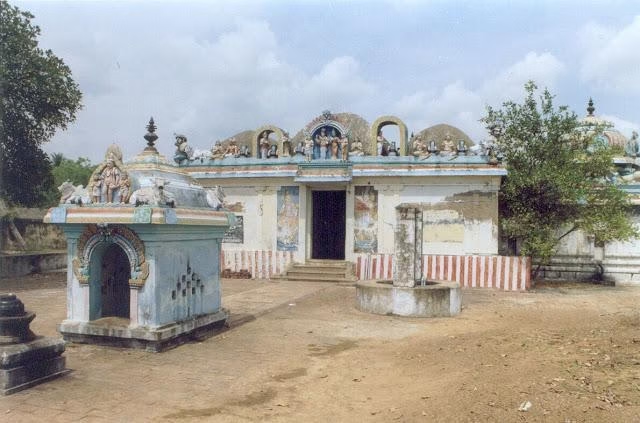
The temple showcases the classic Dravidian style of architecture, characterized by its imposing gateway towers and intricate sculptures.
Structure and Design
- The Sanctum (Garbhagriha): Houses the Swayambhu Lingam. Notably, the Sanctum Sanctorum is positioned such that sunlight directly illuminates the Lingam for five days.
- Prakaram (Corridors): The inner precincts house unique shrines for Planets (Navagraha), where Shani Bhagwan (Saturn) stands alongside the Sun (Surya), both under the grace of Lord Shiva.
- Dakshinamurthy Shrine: Unique to this temple, there are two Dakshinamurthy shrines side-by-side—one representing the Guru aspect and the other Medha Dakshinamurthy (for wisdom and education).
- Murugan Shrine: Lord Muruga (Karthikeya) is depicted wearing Kuzhai (round-shaped ear rings), a distinct iconographic feature.
The Bhaskara Stalam Phenomenon
The temple is a Bhaskara Stalam. From the 24th to the 28th day of the Tamil month of Panguni (March-April), the rays of the setting sun pass through the temple’s western gopuram and fall directly on the presiding deity in the sanctum.
4. Darshan & Ritual Logistics (2026 Update)
To ensure a smooth spiritual journey, devotees should be aware of the operational timings and major festivals for the year 2026.
Daily Temple Timings
The temple follows specific opening hours. It is advisable to confirm these locally before travel, especially during festival seasons.
| Session | Timing |
|---|---|
| Morning Darshan | 7:00 AM – 10:00 AM |
| Evening Darshan | 5:30 PM – 7:00 PM |
| Pooja Services | Three worship services daily |
Key Sevas and Offerings
- Abhishekam: Performed with milk, honey, and sandalwood paste.
- Archana: Special Peria Nayaki archana for women seeking marital prosperity.
- Vilakku (Deepa Aradhana): Offered to Medha Dakshinamurthy for educational success.
- Ancestral Rituals: Tharpanam rituals are highly effective here, specifically for Atma Shanti.
2026 Major Festival Dates
Plan your visit around these auspicious events:
- Flag Hoisting (Kumbhabhishekam Anniversary): Usually precedes the annual temple festival by 10 days (Expected: March 2026).
- Maha Shivaratri: February 26, 2026 (Thursday). Special night-long vigils are held.
- Spring Festival (Vikasi Visakam): May 2026 (Focus on Lord Muruga).
- Karthikai Deepam: November 2026 (Special homam for the restoration of Manmatha).
- Panguni Uthiram (Sun Ray Event): April 11 – April 15, 2026. The peak time to witness the Bhaskara Stalam phenomenon.
5. Practical Visitor Guidance
Respect for the sanctity of the temple is paramount. The following guidelines ensure a harmonious visit.
Code of Conduct & Dress Code
- Dress Code: Traditional attire is mandatory. Men should wear Dhoti or trousers with a shirt; women should wear Saree, Salwar Kameez, or full-length skirts.
- Photography: Strictly prohibited inside the Garbhagriha (sanctum). Photography in the outer prakaram is generally permitted but avoid using flash near the shrines.
- Footwear: To be left at the designated shoe rack outside the temple entrance.
Crowd Management & Seasonal Advice
- Best Hours: The morning slot (7:00 AM – 8:30 AM) offers the most peaceful darshan. Evenings can be crowded on Fridays and festival days.
- Summer (April – June): Nagapattinam experiences high temperatures. Carry a water bottle, wear a hat/cap, and apply sunscreen while waiting in the queue.
- Monsoon (October – December): Light rain is common. Carry an umbrella.
- Mobile Lockers: There are no high-tech lockers available at this heritage site. It is advisable to travel light and avoid carrying valuables or large bags.
6. Pilgrimage Connectivity
The temple is accessible via the well-developed transport network of the Nagapattinam district.
How to Reach Anniyur
- By Air: The nearest airport is Trichy (Tiruchirappalli) International Airport (approx. 140 km / 3 hours).
- By Rail: The nearest railway junction is Mayiladuthurai (approx. 5 km). Auto-rickshaws and local town buses are readily available from the station.
- By Road: The temple is located 5 km northwest of Mayiladuthurai. It is accessible via State Highway 22 (SH-22) or connecting routes to Needur. Private taxis and town buses operate on specific schedules.
Nearby Sacred Sites (Pilgrimage Circuit)
Extend your spiritual journey to these nearby Paadal Petra Sthalams:
- Thiruneedur (Needur): A prominent Shiva temple located just a few kilometers east of Anniyur. Dedicated to Needeeswarar.
- Tirukkurukkai Veerattam: Located to the north, this is the 47th in the series of Veeratta Stalams, glorifying Shiva’s destruction of Manmatha.
- Kariyamanicka Perumal Temple: Located in the vicinity, dedicated to Lord Vishnu (near Ponnur).
7. Frequently Asked Questions (FAQ)
Is there a VIP darshan entry available?
As this is a heritage temple managed by the Hindu Religious and Charitable Endowments (HR&CE) department or local trustees, there is no formal online VIP ticket system. However, priority is often given to elderly devotees and those requiring assistance. Arriving early is the best way to avoid long queues.
What is the significance of the two Dakshinamurthys?
One shrine is dedicated to Guru Dakshinamurthy (the teacher), while the other is Medha Dakshinamurthy, associated with intellect and memory. Worshipping both is believed to grant academic excellence and remove confusion.
Can I perform Shani Grah Shanti rituals here?
Yes. Because Shani Bhagwan is enshrined next to Lord Agnipureeswarar (Sun), this is considered an auspicious place to pacify the negative effects of Saturn. Devotees perform abhishekam to both the Sun and Shani idols.
Is online seva booking available?
Currently, online seva booking is not active for this specific temple. All sevas and offerings (including Archana and Abhishekam) must be booked directly at the temple office upon arrival.
What are the accommodation options?
The temple does not have an attached guest house. However, ample accommodation is available in Mayiladuthurai (5 km away), which serves as a base for pilgrims visiting the Nagapattinam district.
Why is it called ‘Abathsahayeswarar’?
The name translates to “The Savior in Distress.” Legend says Lord Shiva blessed King Harichandra and Manmatha when they were in dire peril, hence he is the one who provides help during critical moments of a devotee’s life.
Recent Posts

Shri Kaamkoteeshwar Mandir, Varanasi – History & Significance
In the heart of Kashi, the eternal city of Lord Shiva, where the Ganges flows with celestial grace, stands the Shri Kaamkoteeshwar Mandir. This sacred Sannidhi is not merely a temple but a profound spiritual bridge between the Northern…

ओ सांवरे तूने ही मुझको संभाला – Lyrics & Meaning
ओ सांवरे तूने ही मुझको संभाला – A Prayer to Shyam Origin & Spiritual Essence Why This Bhajan Resonates Devotees chant this when overwhelmed by life’s storms—the refrain ‘तूने ही मुझको संभाला’ is the soul’s sigh of relief: “You…

कथा ये है महाराज मेरे की – Lyrics & Meaning
कथा ये है महाराज मेरे की छत्रपति संभाजी महाराज – A Prayer to Chhatrapati Sambhaji Maharaj Origin & Spiritual Essence Why This Bhajan Resonates Devotees chant this when their spirit feels tested—its powerful refrain “महाराज मेरे” is a soul’s…

Rigveda Samhita Yathartha Anuvada (ऋग्वेद संहिता यथार्थ अनुवाद) – Complete Set with Anvayartha & Hindi/English Translation
The Rigveda is the oldest surviving scripture of humanity and the foundational text of Sanātana Dharma. For serious students, scholars, UPSC aspirants studying ancient Indian history, Sanskrit learners, and spiritual seekers, a precise and grammatically structured translation is indispensable.…

आना भी अकेला है जाना भी अकेला है – Lyrics & Meaning | BharatTemples
आना भी अकेला है जाना भी अकेला है – A Prayer to the Divine Witness Origin & Spiritual Essence Why This Bhajan Resonates Devotees turn to this bhajan in moments of deep reflection—when life’s attachments begin to ache. The…

माता शेरावाली के द्वार जो भी जाता है – Lyrics & Meaning
माता शेरावाली के द्वार जो भी जाता है – A Prayer to Maa Sherawali Origin & Spiritual Essence Why This Bhajan Resonates Devotees turn to this bhajan in times of fear or uncertainty—its promise that no one leaves Maa’s…

मार लेना सपणी उबार लेणा भवरा – Lyrics & Meaning
मार लेना सपणी उबार लेणा भवरा – A Prayer to the Divine Beloved Origin & Spiritual Essence Why This Bhajan Resonates Devotees chant this in moments of deep vulnerability—its cry of “मार लेना सपणी, उबार लेणा भवरा” is the…

हमें श्याम सुंदर भरोसा तुम्हारा – Lyrics & Meaning
हमें श्याम सुंदर भरोसा तुम्हारा – A Prayer to Shyam Sundar Origin & Spiritual Essence Why This Bhajan Resonates Devotees chant this when feeling alone—its refrain ‘de do sahara’ is the soul’s cry for divine support. Lyrics in Hindi…

Mere Satguru Ne Di Thi Davai Lyrics in Hindi & Meaning
Mere Satguru Ne Di Thi Davai: Invoking the Guru’s Liberating Wisdom This soul-stirring bhajan venerates the Satguru (True Spiritual Master) as the divine physician who dispenses the only remedy for life’s deepest sufferings. Composed by Sant Karmaveer Tufani, it…

Janm Diyo Thari Maa Dukh Dekhiyo Lyrics in Hindi & Meaning
जन्म दियो थारी माँ दुख देखियो (Maa’s Grief Upon Birthing You) This soul-stirring Chetavani Bhajan (admonitory hymn) is addressed to the Divine Mother (Maa) – a call for repentance when children forget their filial duties in the dark age…