
Contents
Introduction & Spiritual Essence
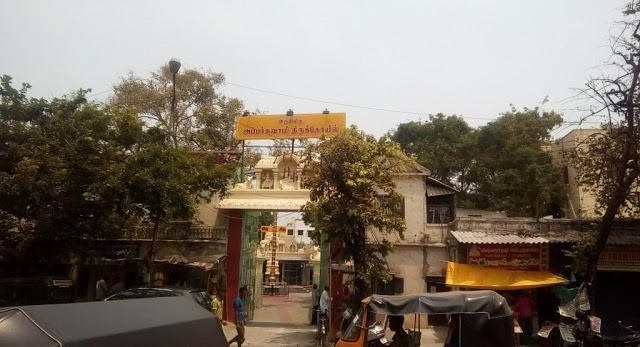
Nestled in the heart of Old Mylapore, Chennai, the Apparswami Temple stands as a testament to unwavering devotion and architectural grandeur. Dedicated to Lord Apparswami (a form of Lord Shiva), this 19th-century sanctum is revered locally as the “Kashi of the South.” The primary deity is a Swayambhu Lingam (self-manifested), radiating immense spiritual energy.
Phalaśruti (Spiritual Benefits): Devotees believe that a visit to this temple offers relief from pitru dosha (ancestral afflictions) and bestows peace, prosperity, and longevity. Performing sevas here is considered equivalent to worshipping at the Kashi Vishwanath Temple in Varanasi, making it a crucial stop for those seeking liberation from past karma.
Historical Origins & Scriptural Legend
Origins: The temple traces its roots to the 19th century, built during the era of the Madras Presidency. While specific dynastic records are sparse, local temple inscriptions suggest patronage by wealthy merchant families and the aristocracy of old Madras. It has undergone significant renovation over the decades to preserve its Dravidian heritage.
The Legend of Apparswami: According to the Sthala Purana, the local community faced severe hardships due to a venomous serpent. It is believed that Lord Shiva appeared in a dream to a pious devotee, instructing him to dig at a specific spot in Mylapore. Upon digging, a radiant Lingam emerged. The Lord, taking the form of a compassionate protector, vanquished the serpent’s influence, earning the name Apparswami (literally “Lord of the Eyes,” symbolizing supreme protection).
Architectural Marvels
The Apparswami Temple is a classic example of Dravidian Architecture. The structure is defined by its towering gopuram (gateway tower) and the intricate stonework typical of South Indian temple art.
- Vimana and Shikhara: The Vimana (tower over the sanctum sanctorum) is adorned with detailed carvings of deities, mythical beasts (yalis), and floral motifs, characteristic of the Dravida style.
- Mandapas: The temple features a spacious Mandapa (pillared hall) used for rituals and cultural performances. The pillars are carved with scenes from Hindu epics.
- Sculptures: Notable are the sculptures of Nandi (the bull vehicle of Shiva) facing the sanctum, and niche figures depicting various forms of Shiva and Parvati.
Darshan & Ritual Logistics
Devotees can participate in daily rituals and special sevas. The temple administration facilitates both physical and online bookings for convenience.
Daily Darshan Timings
| Session | Timing |
|---|---|
| Morning Darshan | 6:00 AM – 12:00 PM |
| Afternoon Break | 12:00 PM – 4:00 PM |
| Evening Darshan | 4:00 PM – 8:00 PM |
Key Sevas & Booking
Popular sevas include Abhishekam (ritual bathing of the deity) and Archana (chanting of names). Devotees can book these services via the temple’s official website or designated counters.
[Online Seva Booking Link Placeholder]
2026 Festival Dates
- Maha Shivaratri: February 26, 2026
- Arudra Darshanam: January 4, 2026
- Navaratri: October 2, 2026 – October 11, 2026
- Pradosham: Monthly (13th day after New Moon/Full Moon) – Check local panchangam.
Photo Gallery

Practical Visitor Guidance
To ensure a serene darshan experience, please adhere to the following guidelines:
- Dress Code: Traditional attire is mandatory. Men should wear dhotis or trousers with shirts; women should wear sarees, salwar kameez, or skirts.
- Photography: Photography is strictly prohibited inside the Garbhagriha (sanctum). Mobile phones should be kept on silent mode.
- Lockers: Free mobile lockers are available near the entrance for devotees’ convenience.
- Crowd Management: The best time to visit is early morning (6:00 AM – 7:30 AM) or late evening (after 7:00 PM) to avoid peak crowds. During summer (April-May), carry water and an umbrella, as Chennai temperatures can be high.
- Accessibility: The temple has ramps for wheelchair access in the outer precincts, though the inner sanctum may require assistance due to traditional steps.
Pilgrimage Connectivity
How to Reach
By Air: The nearest airport is Chennai International Airport (MAA), approximately 15 km away.
By Rail: The closest railway station is Mylapore (suburban) or Chennai Central (major terminus), 4 km away.
By Road: Located off South Mada Street in Mylapore. The temple is accessible via Anna Salai (NH 48). Bus routes 27, 18B, and M15 stop nearby.
Nearby Sacred Sites
Extend your pilgrimage circuit with these nearby temples:
- Kapaleeshwarar Temple: Located just a few minutes away, dedicated to Lord Shiva and Karpagambal.
- Kalakshetra: A hub for traditional arts, located in the Adyar area nearby.
- Mylapore Tank: A historic water tank associated with the temple’s history.
Frequently Asked Questions (FAQ)
1. Is there a VIP darshan entry?
Yes, the temple offers special darshan tickets for senior citizens and differently-abled devotees. VIP darshan is generally not available, but priority is given to those booking specific sevas like Abhishekam.
2. What is the history of the temple construction?
The temple was constructed in the 19th century. While specific architect details are lost to time, the structure reflects the revival of Dravidian temple architecture during the British Raj.
3. Are non-Hindus allowed inside?
Generally, temples of this denomination restrict entry to Hindus only. Please respect the local customs and traditions at the entrance.
4. Is parking available?
Parking in Mylapore is limited. It is recommended to use public transport or park at designated paid lots near the Kapaleeshwarar Temple area and walk.
5. Can I perform Rudra Abhishekam?
Yes, Rudra Abhishekam is performed on auspicious days and by appointment. Please contact the temple administration well in advance for slot bookings.
Contact Details
Official Address:
Apparswami Temple,
South Mada Street, Mylapore,
Chennai – 600004, Tamil Nadu.
Phone: +91-44-2464-XXXX (Replace with actual number if available)
Recent Posts

माता शेरावाली के द्वार जो भी जाता है – Lyrics & Meaning
माता शेरावाली के द्वार जो भी जाता है – A Prayer to Maa Sherawali Origin & Spiritual Essence Why This Bhajan Resonates Devotees turn to this bhajan in times of fear or uncertainty—its promise that no one leaves Maa’s…

मार लेना सपणी उबार लेणा भवरा – Lyrics & Meaning
मार लेना सपणी उबार लेणा भवरा – A Prayer to the Divine Beloved Origin & Spiritual Essence Why This Bhajan Resonates Devotees chant this in moments of deep vulnerability—its cry of “मार लेना सपणी, उबार लेणा भवरा” is the…

हमें श्याम सुंदर भरोसा तुम्हारा – Lyrics & Meaning
हमें श्याम सुंदर भरोसा तुम्हारा – A Prayer to Shyam Sundar Origin & Spiritual Essence Why This Bhajan Resonates Devotees chant this when feeling alone—its refrain ‘de do sahara’ is the soul’s cry for divine support. Lyrics in Hindi…

Mere Satguru Ne Di Thi Davai Lyrics in Hindi & Meaning
Mere Satguru Ne Di Thi Davai: Invoking the Guru’s Liberating Wisdom This soul-stirring bhajan venerates the Satguru (True Spiritual Master) as the divine physician who dispenses the only remedy for life’s deepest sufferings. Composed by Sant Karmaveer Tufani, it…

Janm Diyo Thari Maa Dukh Dekhiyo Lyrics in Hindi & Meaning
जन्म दियो थारी माँ दुख देखियो (Maa’s Grief Upon Birthing You) This soul-stirring Chetavani Bhajan (admonitory hymn) is addressed to the Divine Mother (Maa) – a call for repentance when children forget their filial duties in the dark age…
Bhadi Sabha Mein Thane Manaun Lyrics in Hindi & Meaning
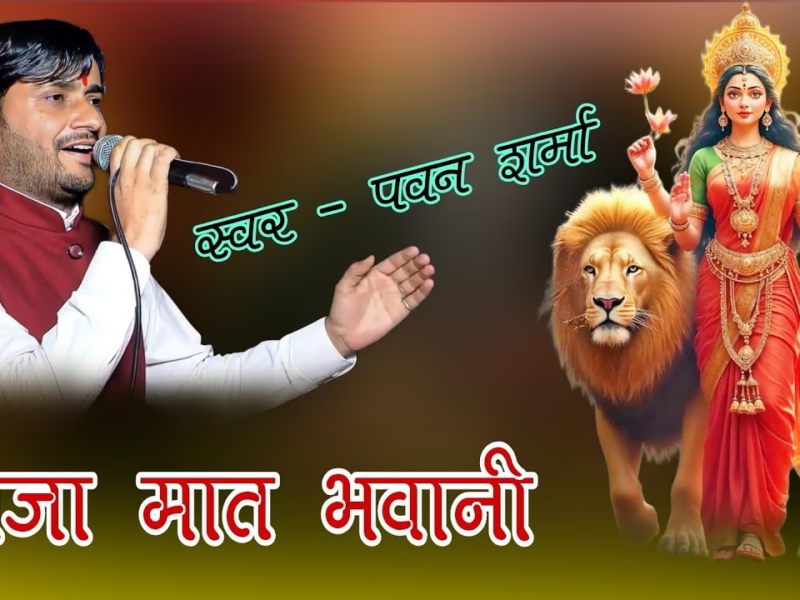
Bhadi Sabha Mein Thane Manaun: Invoking the Spear-Wielding Mother Mata Bhawani (श्री ज्वाला भवानी), the fiery manifestation of Shakti worshipped as the Protector of Dharma in Her Dhaulagarh sanctum. Origin & Spiritual Essence Composed in Rajasthani folk tradition by…
श्याम सुन्दरवा छोटे छोटे कनुवा Lyrics & Meaning
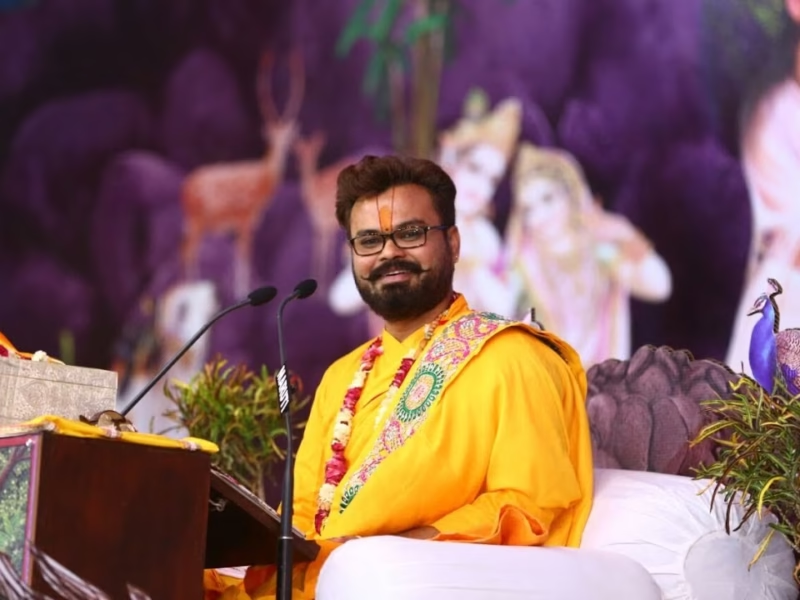
श्याम सुन्दरवा छोटे छोटे कनुवा (Shyam Sundarva Chhote Chhote Kanuva) is a heartfelt invocation to Lord Krishna in his most enchanting form—Shyam Sundar (the dark, beautiful one). This bhajan is a plea for the divine child Kanha to grace…
Maat Meri Chintapurni Lyrics in Hindi & Meaning
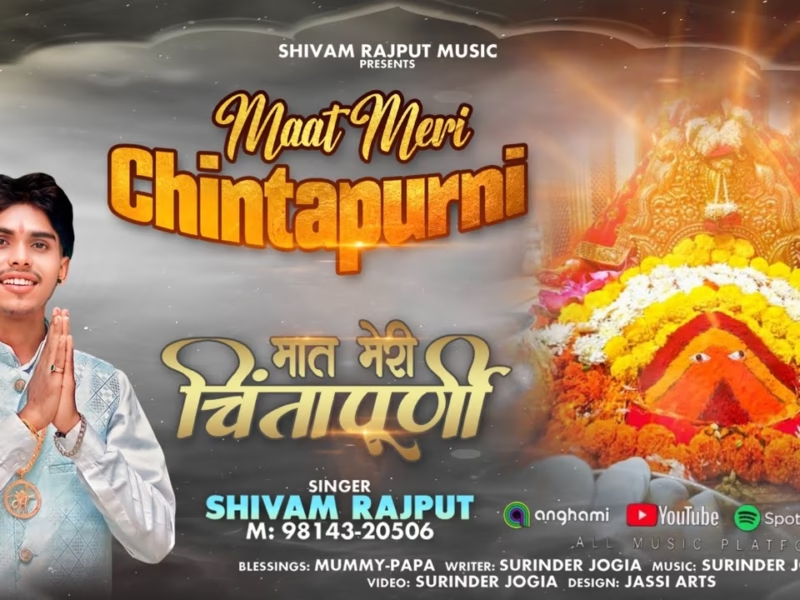
Maat Meri Chintapurni is a heartfelt devotional prayer dedicated to Maa Chintapurni, a form of the Divine Mother. She is revered as the remover of worries and the granter of wishes, especially venerated in the Himalayan region of Himachal…
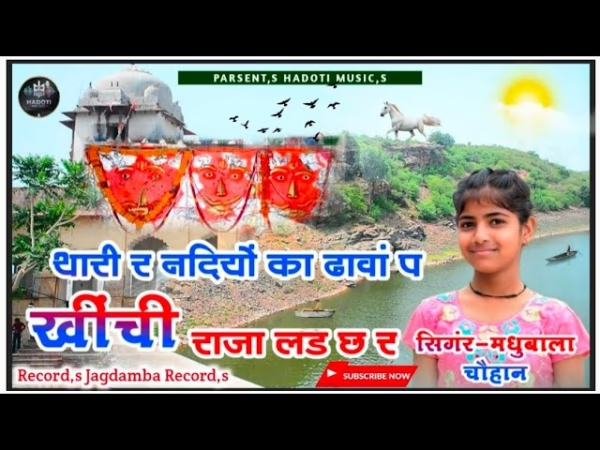
थारी रे नदियां का ढावा पे खीची राजा Lyrics & Meaning
खीची राजा का अद्भुत युद्ध: एक शौर्य गाथा यह भजन एक पौराणिक या ऐतिहासिक शूरवीर राजा की वीरता का वर्णन करता है, जो प्रायः गुजराती लोक संस्कृति में लोककथाओं का हिस्सा है। इसकी रचना दुर्गेश कटारा ने की है…
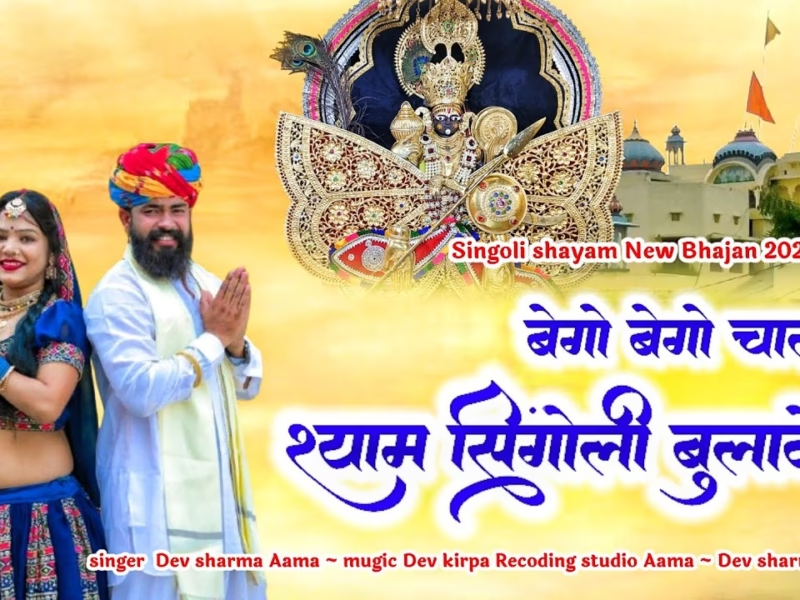
बेगो बेगो चाल श्याम सिंगोली बुलावे रे Lyrics in Hindi & Meaning
Bhajan Title & Deity This bhajan, बेगो बेगो चाल श्याम सिंगोली बुलावे रे, is dedicated to Lord Shyam, a revered form of Lord Krishna. Origin & Spiritual Essence The composer of this bhajan is not specified, but it is…