
Contents
- 1 Introduction & Spiritual Essence
- 2 Historical Origins & Scriptural Legend
- 3 Architectural Marvels
- 4 Darshan & Ritual Logistics
- 5 Festivals in 2026
- 6 Practical Visitor Guidance
- 7 Pilgrimage Connectivity
- 8 Frequently Asked Questions (FAQ)
- 9 Photo Gallery
- 10 Architecture
- 11 Legend / Local stories
- 12 How to Reach:
- 13 Contact Details
Introduction & Spiritual Essence
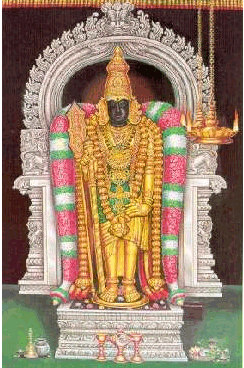
The Arupadai Veedu Swamy Malai Temple, located near the sacred town of Palani in Tamil Nadu, is one of the most revered shrines in the Arupadai Veedu—the six sacred abodes of Lord Murugan. Here, the deity is worshipped as Swaminathan, the divine teacher who imparted the essence of the Pranava Mantra (Om) to his father, Lord Shiva. This temple is unique because it represents the aspect of Gnyana (wisdom) rather than war, distinguishing it from the other five abodes.
Phalaśruti (Spiritual Benefits): Devotees visit this temple to gain wisdom, clarity of thought, and relief from the negative effects of planetary influence, particularly the planet Mars (Mangal). It is believed that offering prayers here helps in cleansing ancestral karma and bestows the devotee with spiritual enlightenment and confidence.
Historical Origins & Scriptural Legend
The history of Swamy Malai is deeply rooted in the Thirumurukatruppadai, a Sangam-era poem composed by the saint Nakkeerar. The temple is identified as the place where Lord Murugan expounded the meaning of “Om” to Lord Shiva, who accepted him as his Guru.
The Legend of Swamimalai
According to the Sthala Purana, once, the creator Lord Brahma was stopped by Lord Murugan near this hill. When Murugan asked Brahma the meaning of “Om,” Brahma could not answer due to his ignorance. Enraged, Murugan imprisoned Brahma, halting the process of creation. When Lord Shiva intervened, Murugan challenged him to explain the mantra. Shiva too could not answer. Murugan then explained the profound meaning of Om as the sound of the universe and the essence of the Vedas. Impressed, Shiva accepted Murugan as his teacher (Guru), giving the place the name Swamimalai (The Hill of the Master).
Tradition holds that the temple was built by the Nayakar rulers of Madurai during the 16th century, following the style of Dravidian architecture. It stands as a testament to the devotion of kings who wished to honor the divine childhood of Lord Murugan.
Architectural Marvels
The temple is an architectural masterpiece of the Dravidian style, built on an artificial hillock approximately 60 feet high. The structure follows the principles of Vastu Shastra with distinct energy alignments.
Key Features
- The Hill (Malai): The temple is built on a man-made mound. It is accessed via a flight of 60 stone steps, representing the 60 years in the traditional Hindu calendar cycle.
- Sanctum Sanctorum: The inner sanctum houses Swaminathaswami (Murugan) facing east. Below this, on the ground floor, are shrines for Sundareswarer (Shiva) and Meenakshi (Parvati).
- Gopurams: The temple features the classic towering gopurams (gateway towers) adorned with intricate stucco work depicting stories from the Skanda Purana.
- The Golden Chariot: A major highlight is the Golden Chariot (Pallaku), made of 7 kg of gold, 85 kg of silver, and copper. It is illuminated with electric bulbs and used for procession ceremonies.
Darshan & Ritual Logistics
Daily pujas (rituals) are performed at regular intervals, known as Kalams. The temple priests conduct six daily rituals, starting from early morning until late at night.
Daily Timings (2026 Schedule)
Please note: Timings may vary slightly during festival seasons.
| Pooja / Darshan Slot | Timing |
|---|---|
| Usha Kalam (Early Morning) | 5:30 AM – 6:00 AM |
| Kalasandhi (Morning) | 6:00 AM – 7:00 AM |
| Uchikala (Mid-day) | 11:00 AM – 12:00 PM |
| Sayarakshai (Afternoon) | 4:00 PM – 5:00 PM |
| Rendam Kalam (Evening) | 7:00 PM – 7:30 PM |
| Arthajama Pooja (Closing) | 8:00 PM – 8:30 PM |
Key Sevas and Online Booking
Devotees can perform specific Sevas such as Abhishekam (ritual bathing of the deity) and Archana (offering of prayers with names). For 2026, the temple administration has expanded digital services.
- Golden Chariot Darshan: Available for ₹1001. Includes a procession, shawl, and prasadam.
- Online Booking: All Sevas can now be booked via the official Tamil Nadu Temple Portal (HR&CE). Look for “Arulmigu Swaminatha Swami Temple, Swamimalai” on the portal.
Festivals in 2026
- Chithirai Thiruvizha (April): The Temple Car festival is the major annual event.
- Visakam (May): Celebrates the birth of the deity.
- Skanda Shashti (October): Commemorates the victory of Murugan over Surapadman.
- Karthigai Deepam (November/December): A festival of lights.
- Taippūcam (January): A full moon festival.
Practical Visitor Guidance
- Dress Code: Traditional attire is mandatory. Men must wear Veshti (dhoti) or pants with a shirt; women must wear saree, half-saree, or chudithar.
- Photography: Strictly prohibited inside the inner sanctum. Allowed in the outer corridors.
- Mobile Lockers: Available near the entrance for depositing electronic devices (cameras, phones) as they are not permitted in the main shrine.
- Accessibility: The 60-step ascent can be challenging for the elderly. Palanquins (doli) are available for hire at the base to carry devotees to the top.
- Crowd Management: Weekends and festival days see massive crowds. It is advisable to visit between 8:00 AM and 11:00 AM on weekdays.
- Seasonal Advice: Summer (April–June) in Palani can be very hot; carry water and wear protective headgear.
Pilgrimage Connectivity
Swamimalai is located 5 km west of Kumbakonam and is well-connected to Palani, a major pilgrimage hub.
How to Reach
- By Air: The nearest airport is Coimbatore International Airport (CJB), approximately 140 km away. The airport is well-connected to Chennai, Mumbai, Delhi, and Bangalore.
- By Train: The nearest major railway junction is Kumbakonam (KMU) (5 km). Alternatively, Palani Railway Station connects to Coimbatore, Chennai, and Madurai via the Pollachi line.
- By Road: Swamimalai is on the state highway connecting Kumbakonam and Mayiladuthurai. Buses are frequent from Kumbakonam bus stand.
Nearby Sacred Sites
Extend your pilgrimage to these nearby temples:
- Sveta Vinayagar Temple (Tiruvalanchuli): Famous for a Ganesha idol made of sea foam from the churning of the ocean.
- Kumbakonam Navagraha Temples: A circuit of 9 temples dedicated to planetary deities, located within 15 km of Swamimalai.
- Brihadeeswarar Temple (Thanjavur): A UNESCO World Heritage site, located about 35 km away.
Frequently Asked Questions (FAQ)
Is there a VIP darshan entry available?
Yes, the temple provides a special darshan lane for senior citizens, differently-abled devotees, and those with special tickets (like the Golden Chariot package). However, during peak festival times, even VIP tickets may require longer waiting times.
What is the significance of the 60 steps?
The 60 steps leading to the main shrine represent the 60 years of the Tamil calendar (Ayanam). Climbing them is considered an act of penance and devotion, symbolizing the cycle of time governed by the Lord.
How can I book the Golden Chariot online?
The Golden Chariot seva can be booked through the official website of the TN HR&CE Department. It is advisable to book at least 24 hours in advance, as slots are limited to specific times in the evening.
Are there accommodation facilities at Swamimalai?
While there are no major hotels directly in Swamimalai, the temple administration (HR&CE) runs guest houses and cottages. Alternatively, staying in Kumbakonam (5 km away) offers a wider range of hotels and lodges.
What is the best time to visit to avoid crowds?
The best time for a peaceful darshan is on a weekday morning (Tuesday to Thursday) between 6:00 AM and 9:00 AM. Avoid Sundays and public holidays.
Photo Gallery
Architecture
The temple’s architecture is a classic example of the Dravidian style. The 60-foot artificial hillock (made of brick and mortar) is surrounded by a stone enclosure. The Vimana (shikhara/tower) over the sanctum is covered in gold foil, shimmering in the sunlight. The base of the temple is built with granite, ensuring stability. The Mandapas (pillared halls) feature massive stone columns carved with depictions of deities and mythical creatures, showcasing the craftsmanship of the Nayak period.
Legend / Local stories
Beyond the primary legend of the Pranava Mantra, local lore speaks of the Bhakta who brought the river Cauvery to the temple’s vicinity. It is said that the river flows in a semicircular bend (Valanchuli) near the Sveta Vinayagar temple, protecting the deity just as a mother protects her child. Another local story suggests that the hill was built by a devotee king using the soil from the footprints of Lord Murugan, making the earth itself sacred.
How to Reach:
Swamimalai is approximately 5 kilometers from Kumbakonam and 100 kilometers from Coimbatore. The mode of transport from Coimbatore to Swamimalai/Kumbakonam includes taxi, bus, and train.
By plane
The nearest air port is in Coimbatore. Coimbatore has regular flights from Ahmedabad, Bangalore, Calicut, Chennai, Cochin, Hyderabad, Mumbai, New Delhi and Sharjah. Air India, Indigo, Spicejet, and other airlines operate flights out of Coimbatore Airport.
By Train
There is a rail line through Palani station, stretching from Madurai to Coimbatore via Pollachi. Additionally, trains run from Tiruchendur to Palani via Madurai, and the Chennai Central – Palani Express operates on this line.
By bus
The state transport corporation and many private bus operators ply buses from Palani to major cities in Tamil Nadu (Chennai, Coimbatore, Madurai, Trichy, Tuticorin etc.) and also to neighboring Kerala (Palakkadu, Kochi).
Contact Details
Swamimalai – 612 302
Thanjavur district Tamil Nadu, India
Ph: (0435) 254421
Recent Posts

Shri Kaamkoteeshwar Mandir, Varanasi – History & Significance
In the heart of Kashi, the eternal city of Lord Shiva, where the Ganges flows with celestial grace, stands the Shri Kaamkoteeshwar Mandir. This sacred Sannidhi is not merely a temple but a profound spiritual bridge between the Northern…

ओ सांवरे तूने ही मुझको संभाला – Lyrics & Meaning
ओ सांवरे तूने ही मुझको संभाला – A Prayer to Shyam Origin & Spiritual Essence Why This Bhajan Resonates Devotees chant this when overwhelmed by life’s storms—the refrain ‘तूने ही मुझको संभाला’ is the soul’s sigh of relief: “You…

कथा ये है महाराज मेरे की – Lyrics & Meaning
कथा ये है महाराज मेरे की छत्रपति संभाजी महाराज – A Prayer to Chhatrapati Sambhaji Maharaj Origin & Spiritual Essence Why This Bhajan Resonates Devotees chant this when their spirit feels tested—its powerful refrain “महाराज मेरे” is a soul’s…

Rigveda Samhita Yathartha Anuvada (ऋग्वेद संहिता यथार्थ अनुवाद) – Complete Set with Anvayartha & Hindi/English Translation
The Rigveda is the oldest surviving scripture of humanity and the foundational text of Sanātana Dharma. For serious students, scholars, UPSC aspirants studying ancient Indian history, Sanskrit learners, and spiritual seekers, a precise and grammatically structured translation is indispensable.…

आना भी अकेला है जाना भी अकेला है – Lyrics & Meaning | BharatTemples
आना भी अकेला है जाना भी अकेला है – A Prayer to the Divine Witness Origin & Spiritual Essence Why This Bhajan Resonates Devotees turn to this bhajan in moments of deep reflection—when life’s attachments begin to ache. The…

माता शेरावाली के द्वार जो भी जाता है – Lyrics & Meaning
माता शेरावाली के द्वार जो भी जाता है – A Prayer to Maa Sherawali Origin & Spiritual Essence Why This Bhajan Resonates Devotees turn to this bhajan in times of fear or uncertainty—its promise that no one leaves Maa’s…

मार लेना सपणी उबार लेणा भवरा – Lyrics & Meaning
मार लेना सपणी उबार लेणा भवरा – A Prayer to the Divine Beloved Origin & Spiritual Essence Why This Bhajan Resonates Devotees chant this in moments of deep vulnerability—its cry of “मार लेना सपणी, उबार लेणा भवरा” is the…

हमें श्याम सुंदर भरोसा तुम्हारा – Lyrics & Meaning
हमें श्याम सुंदर भरोसा तुम्हारा – A Prayer to Shyam Sundar Origin & Spiritual Essence Why This Bhajan Resonates Devotees chant this when feeling alone—its refrain ‘de do sahara’ is the soul’s cry for divine support. Lyrics in Hindi…

Mere Satguru Ne Di Thi Davai Lyrics in Hindi & Meaning
Mere Satguru Ne Di Thi Davai: Invoking the Guru’s Liberating Wisdom This soul-stirring bhajan venerates the Satguru (True Spiritual Master) as the divine physician who dispenses the only remedy for life’s deepest sufferings. Composed by Sant Karmaveer Tufani, it…

Janm Diyo Thari Maa Dukh Dekhiyo Lyrics in Hindi & Meaning
जन्म दियो थारी माँ दुख देखियो (Maa’s Grief Upon Birthing You) This soul-stirring Chetavani Bhajan (admonitory hymn) is addressed to the Divine Mother (Maa) – a call for repentance when children forget their filial duties in the dark age…